Goa

Our visit to Goa was mainly churches and temples. And since we couldn’t take pictures in the churches or the temple, our photo journal is limited. Our favorite part of the day was a visit to a local spice farm. The spice plantations in Goa grow and export chilis, cardamom, cinnamon, turmeric, allspice, peppers and more as well as cash crops, like cashews, coconuts and other tropical fruits. The plantations combine tourism and event spaces with farming. The one we visited, Nandanvan, served us a lovely lunch and advertised adventures like ziplining and rappelling. The pictures of the operations safety measures did not inspire us to participate.
 |
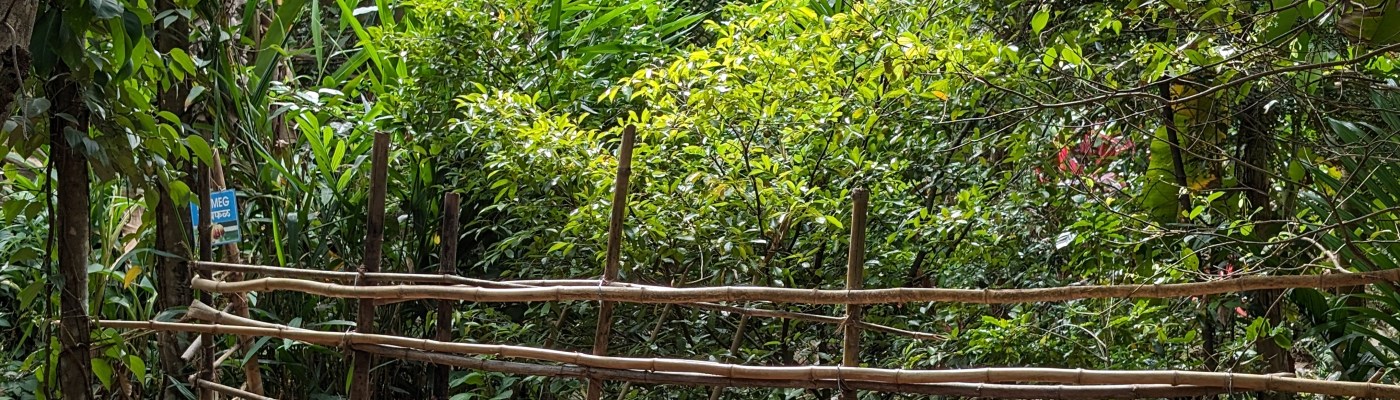
| Our spice farm guide pointed out the bay leaves on this tree. They aren’t the bay laurels we use for cooking. Those wouldn’t grow in Goa’s climate. They are a spicier Indian version. |
Nandanvan sells its own oils and medicinal concoctions. These brochures, thoughtfully left on our lunch tables, explain how the special oils for men and women can cure lack of sexual desire and performance. Just rub on the affected area for five minutes and blood will flow. Hmm…rubbing an oil on sexual parts for 5 minutes increases desire…who would have thought?

.jpg)
The Se Cathedral below was built to commemorate the victory of the Portuguese over a Muslim army, leading to the capture of Goa in 1510. It took over 100 years to complete and today is a World Heritage Site.
 |

The Basilica of Bom Jesus below is another World Heritage Site and a major pilgrimage center. Francis Xavier Church. Our guide assured us that many people from all religions come here to be healed and helped and receive miracles. It’s a fine example of Baroque and Portuguese colonial architecture and was completed in 1605. It’s here that St Francis Xavier, one of the Jesuit founders, has his body in a beautifully decorated casket and it is said to still be uncorrupted by death.


The ornate Hindu temple Shantadurga is dedicated to the goddess Durga, the mother of the universe.
 |


 J and J Travel