The Kek Lok Si Temple is the most visited attraction on the island of Penang. It’s an amazing, huge complex, one of the most important Buddhist temples in southeast Asia and a pilgrimage center for surrounding countries, including the Philippines, Thailand, Singapore and Hong Kong. The temple is more than a hundred years old and is perched high on the Penang Hill. There were at least a thousand steps to reach the top of the famous 10,000 Buddhas pagoda and our fitness apps were proof that we navigated all of them.
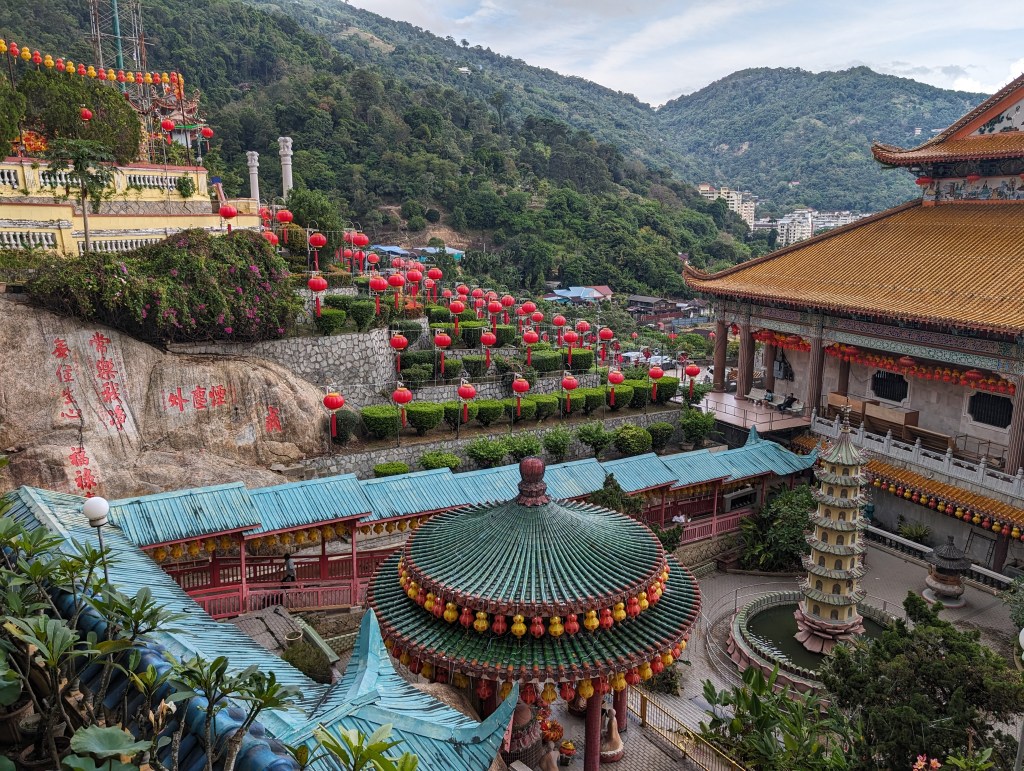
The temple was being festooned with lights and lanterns for the upcoming Chinese New Year celebration. For a month, that is the only time when the temple is open at night and the lights give it a magical appearance.
The Tortoise Liberation Pond is on the way up the hill to the temple. No, it’s not for liberating tortoises. It’s believed that by liberating a tortoise into the pond, you will gain merit.
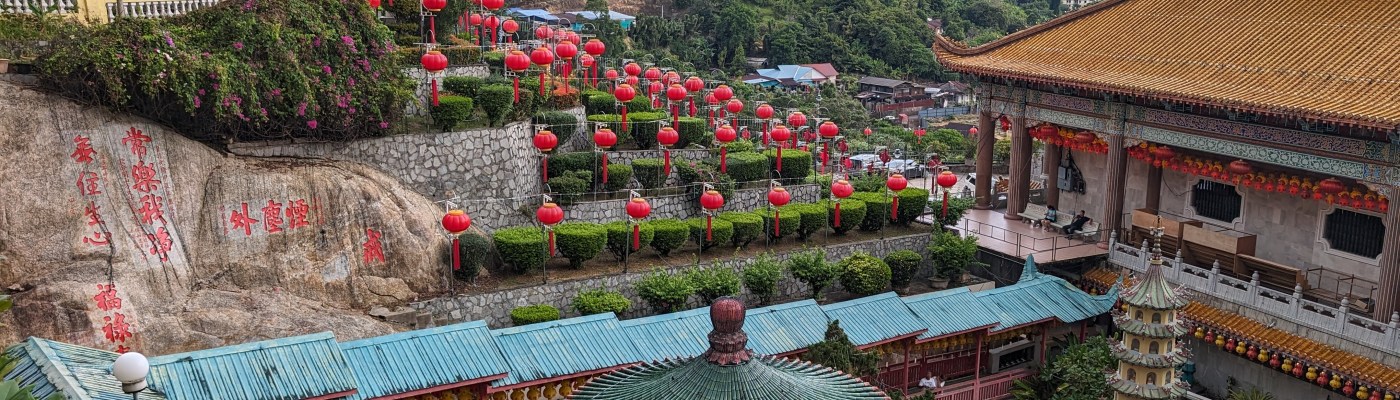
As we made our way up the hill we could look down on the plaza below.
As we (often painfully) made our way up to the top of the pagoda, the view of Georgetown, Penang’s main city, unfolded below us.
Made it to the top! Nirvana!
At the top of the pagoda, we could see the beautiful Guan Yin statue in her own pagoda. She is a 120-foot tall bronze statue of the Goddess of Mercy, who receives many prayers. This statue is a replacement for the white plaster goddess who lived there for years and was destroyed in a 2021 fire.
A short distance from the temple was the Penang Hill Railway, a 1.25 mile ride up Penang hill, passing through the steepest tunnel in the world. The railway is 100 years old. It started with wooden trains and no air conditioning. Luckily, it has been modernized.
Looking down from the top, you can see the funicular’s steep climb up the hill, with the view of Georgetown below.
Look carefully and you can see the Oceania Riviera docked in the harbor.
The top of Penang Hill has many attractions, including the Sri Aruloli Thirumurugan Hindu Temple. This ornate temple was originally started over 200 years ago by Indian workers as a shrine to the Lord Murugan, god of war. It evolved into the temple below, built in the Indian Dravidian architectural style, a strikingly crafted, large scale style from the southern India subcontinent.


 J and J Travel