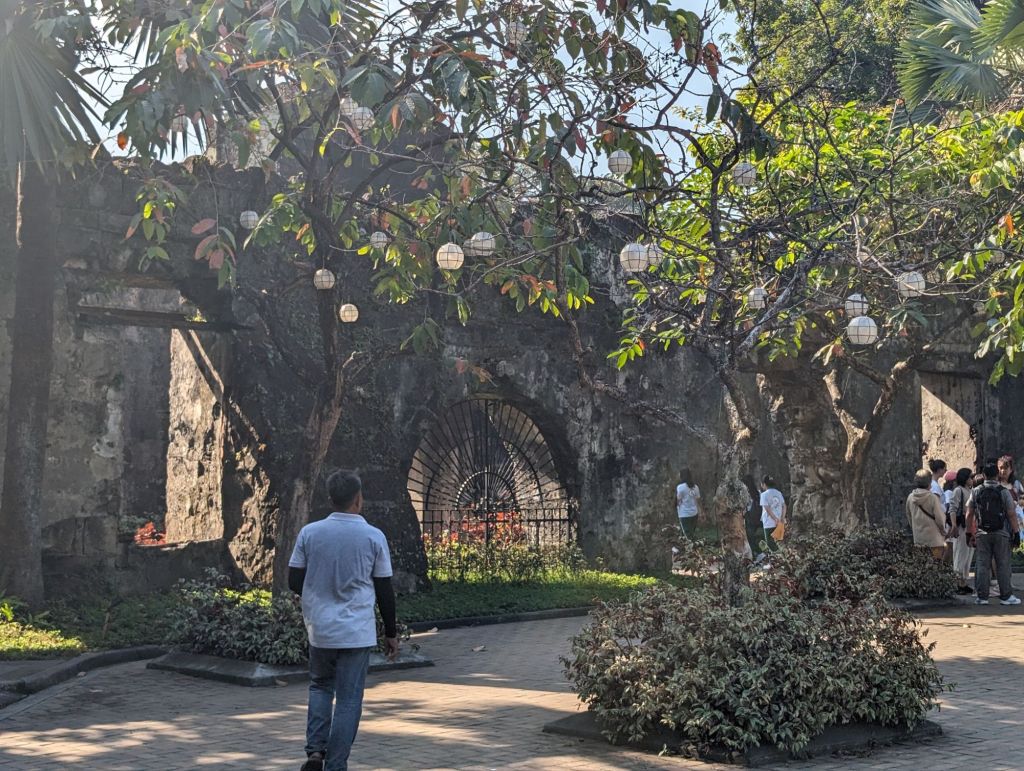
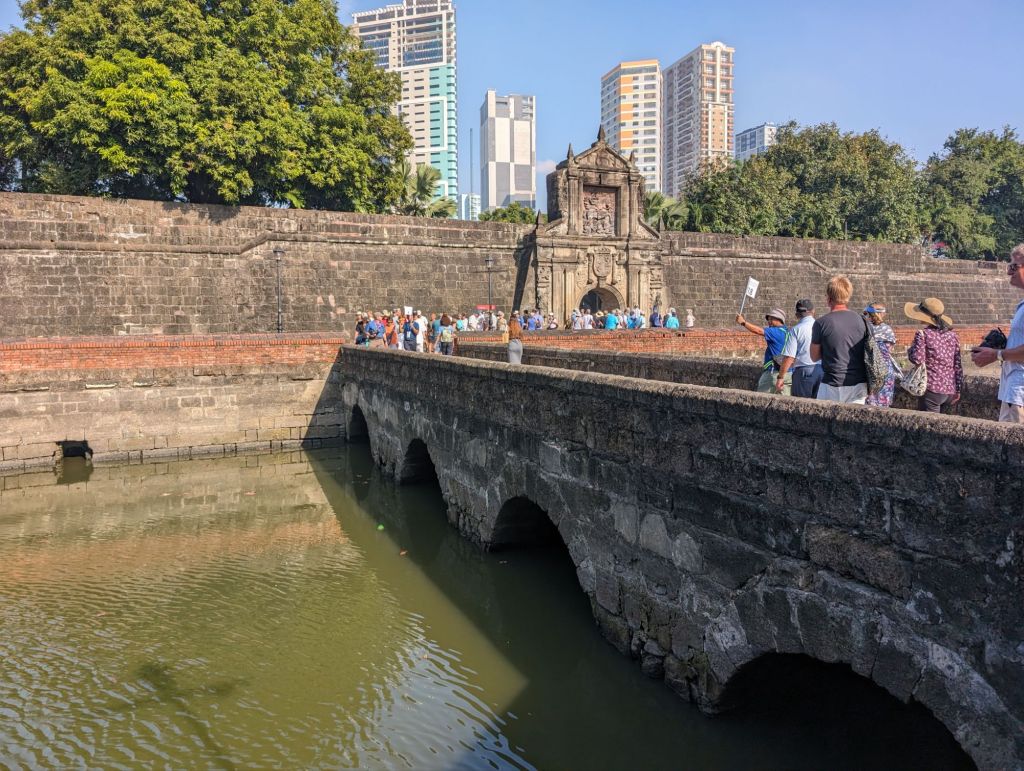
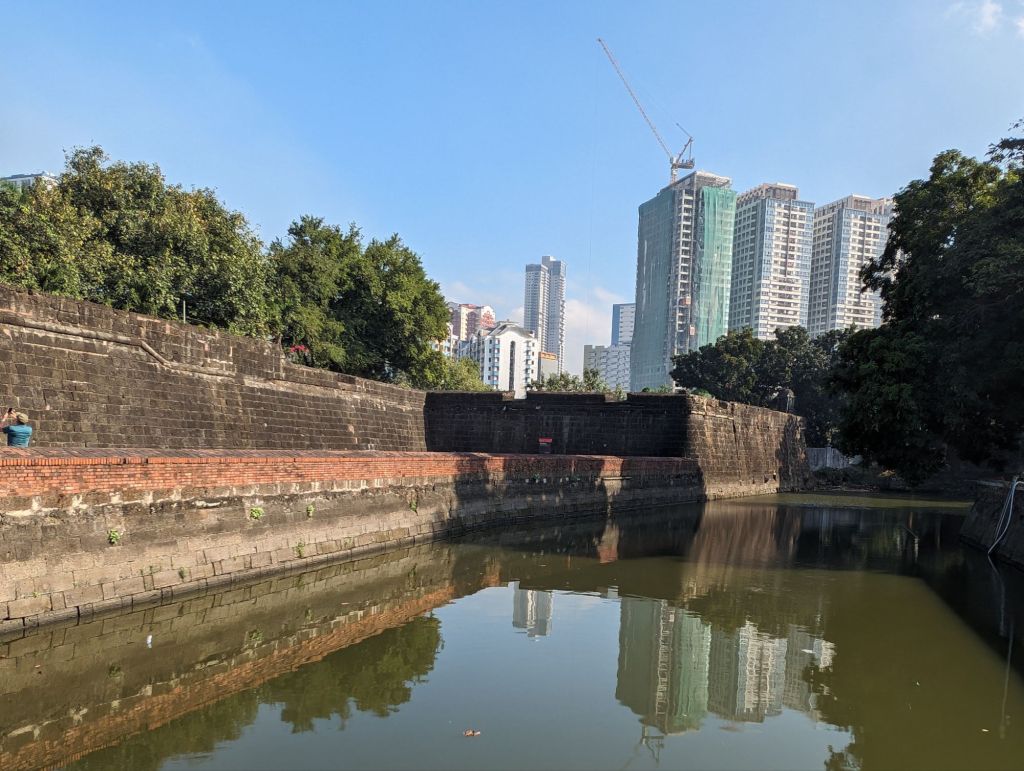
Our time in Manila was spent in the old town or Intramuros district, meaning “within the walls.” The walled city goes back to the days of the Spanish Empire, a three century era that began in the late 1500’s. Manila has been caught in many power battles and disasters, especially during WWII, and a great deal of the old town was destroyed. But the ruins from Fort Santiago, built by the Spanish in 1571, is still here and one of the city’s most important historical sites.
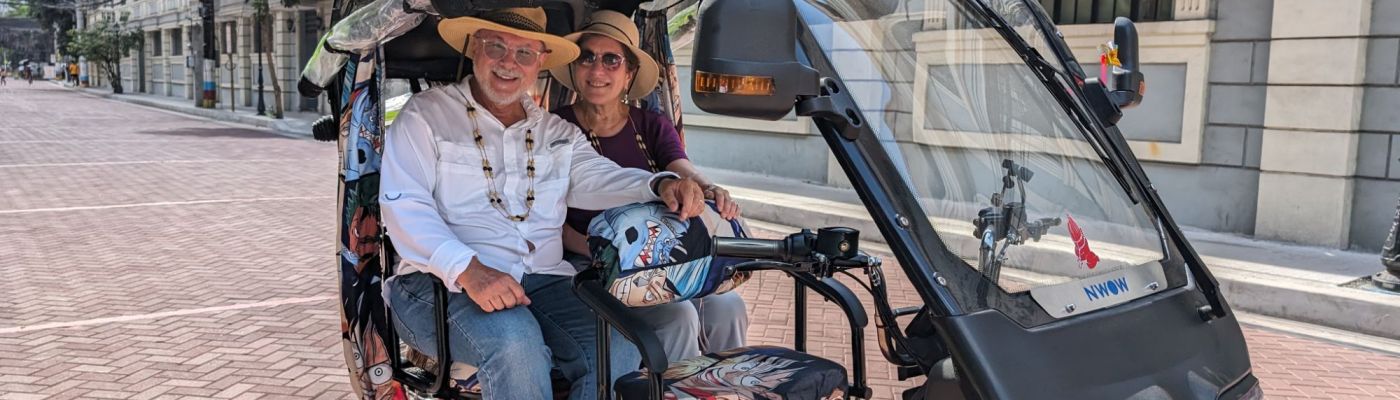
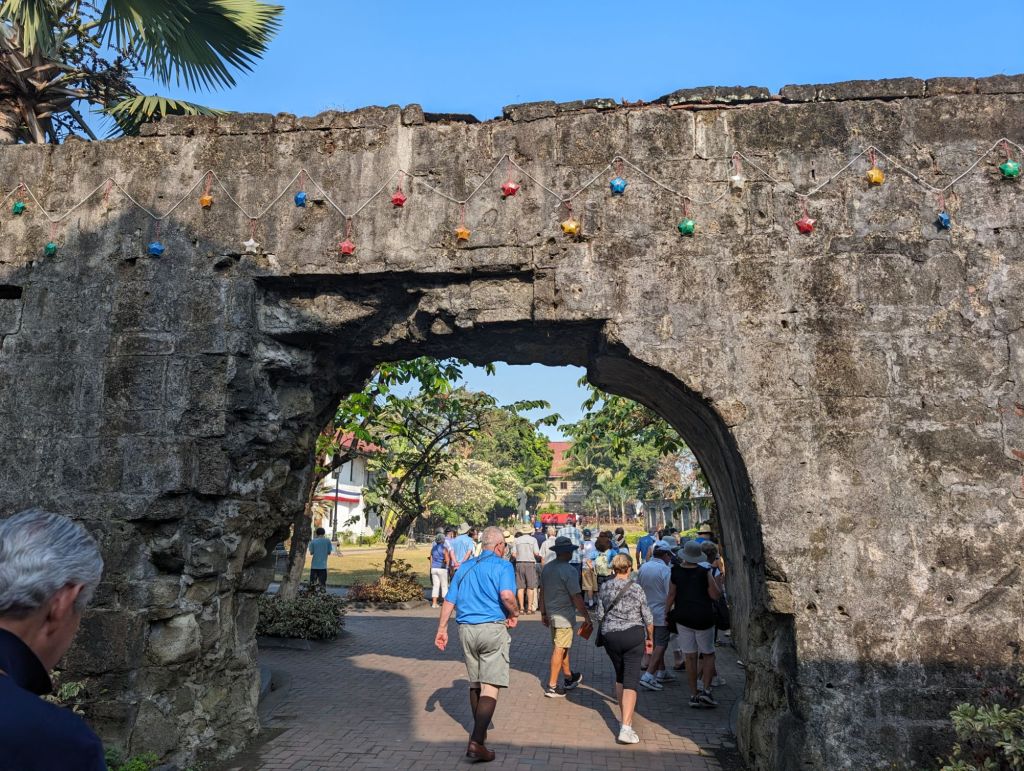
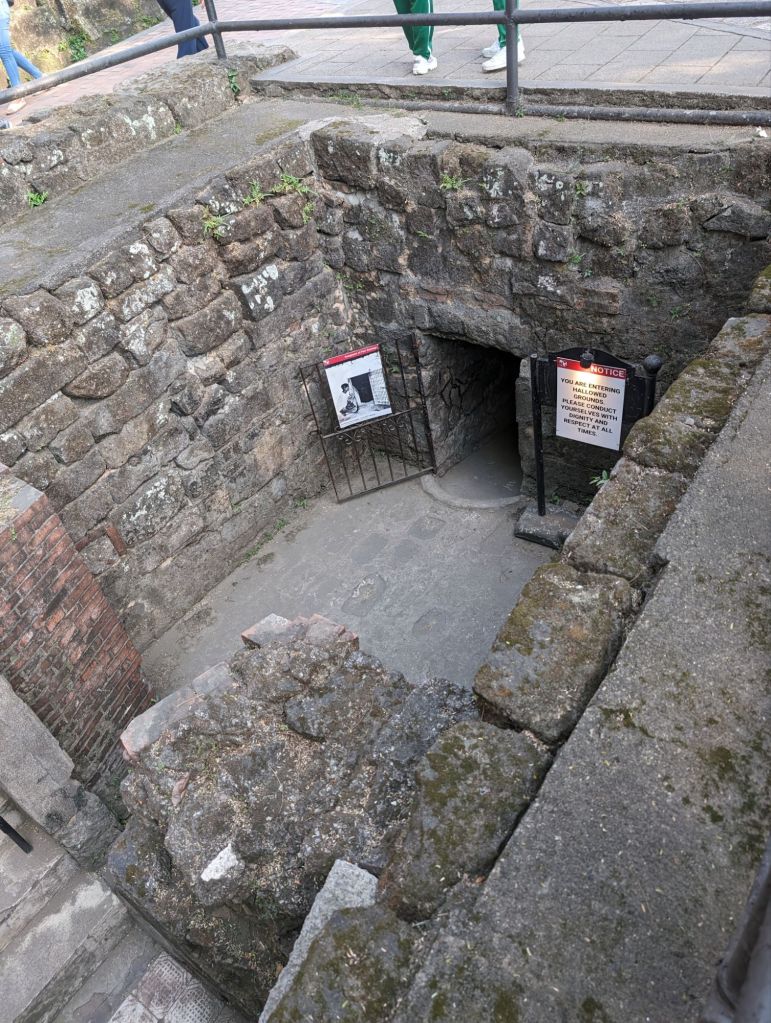
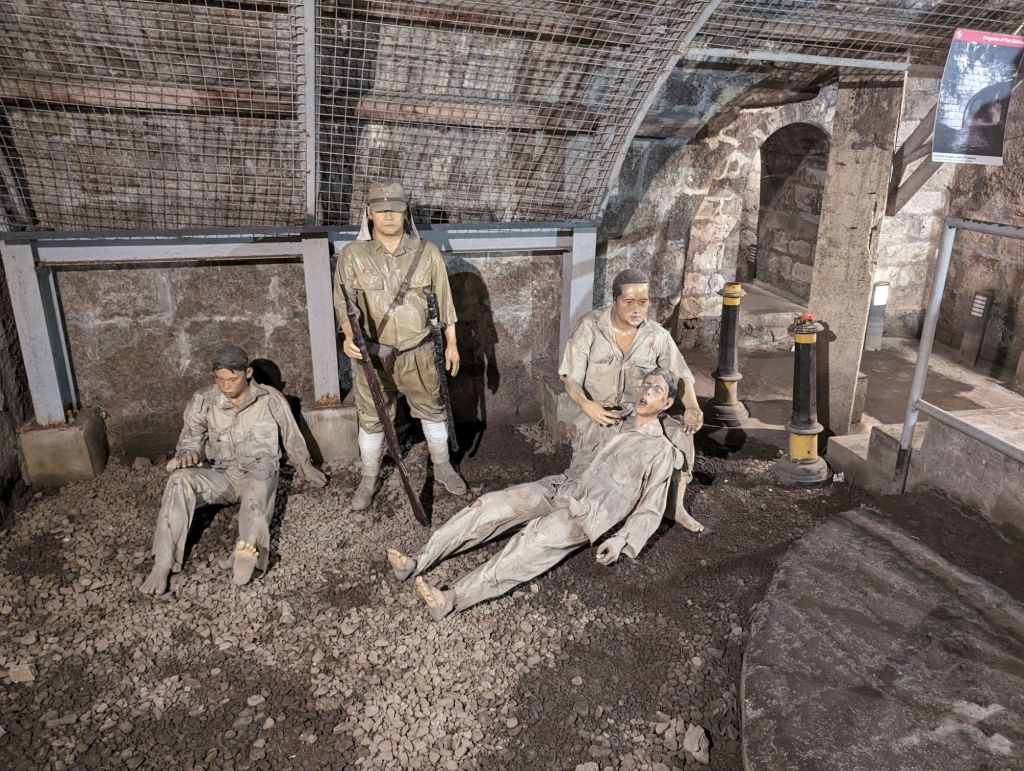
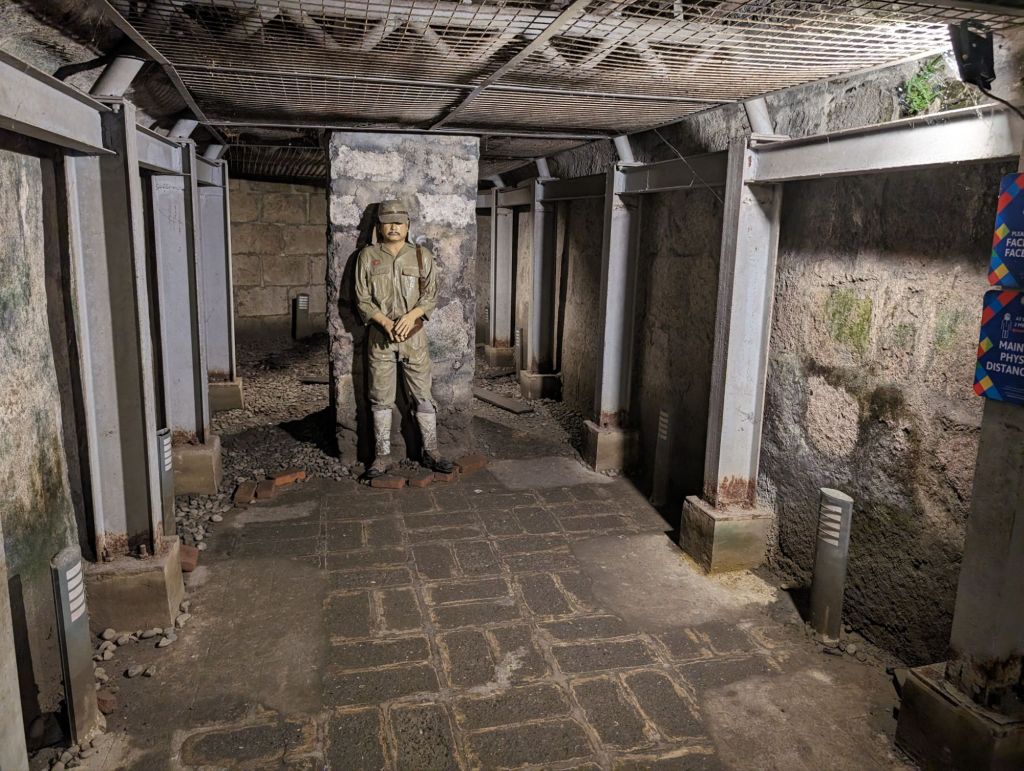
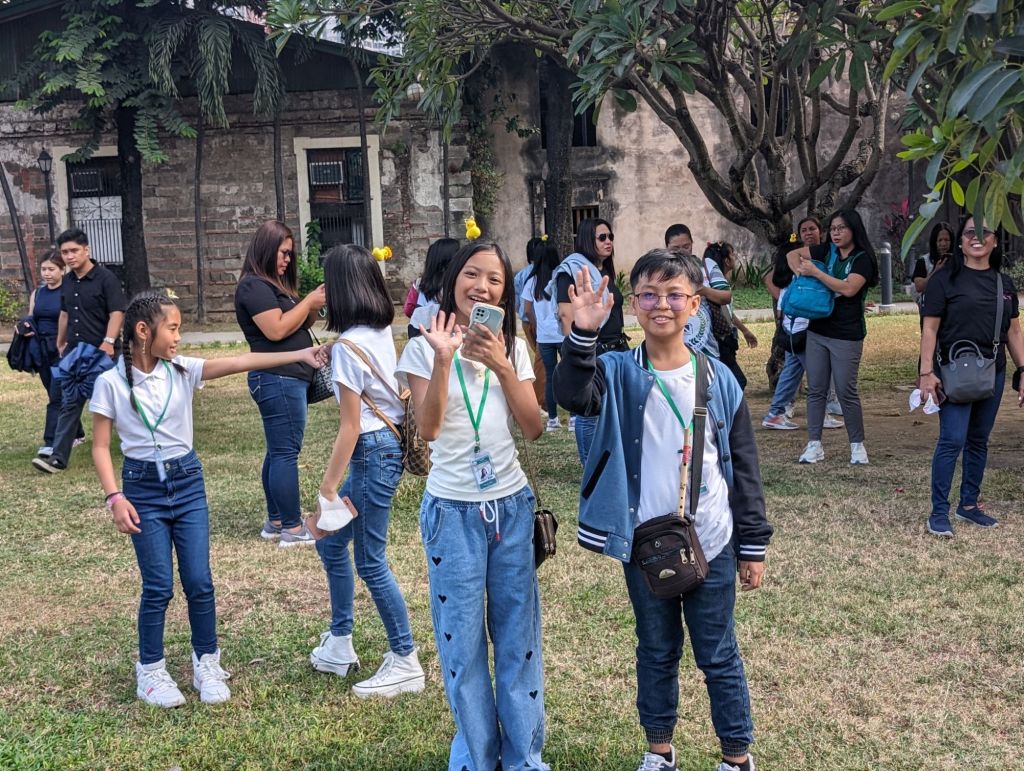
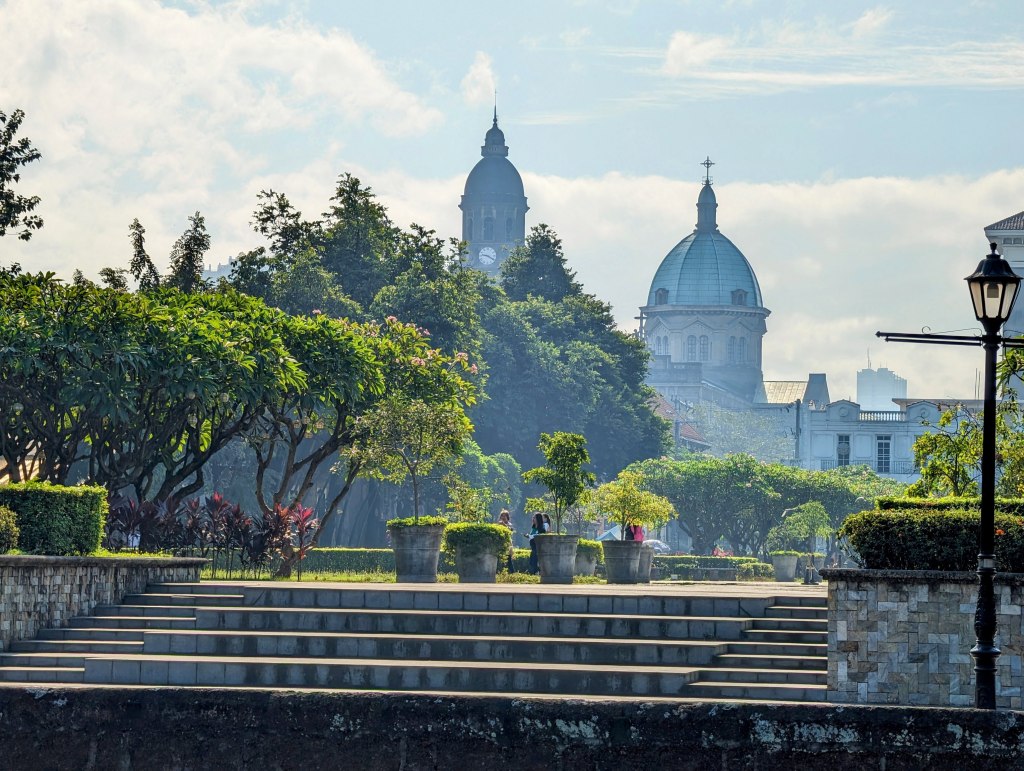
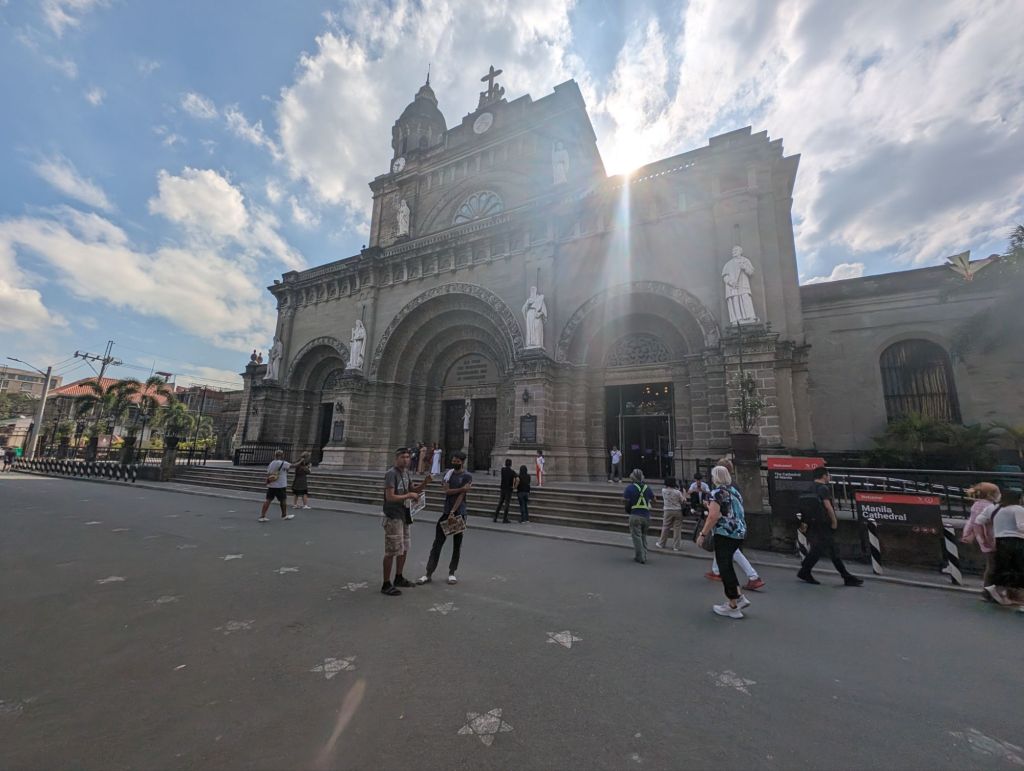
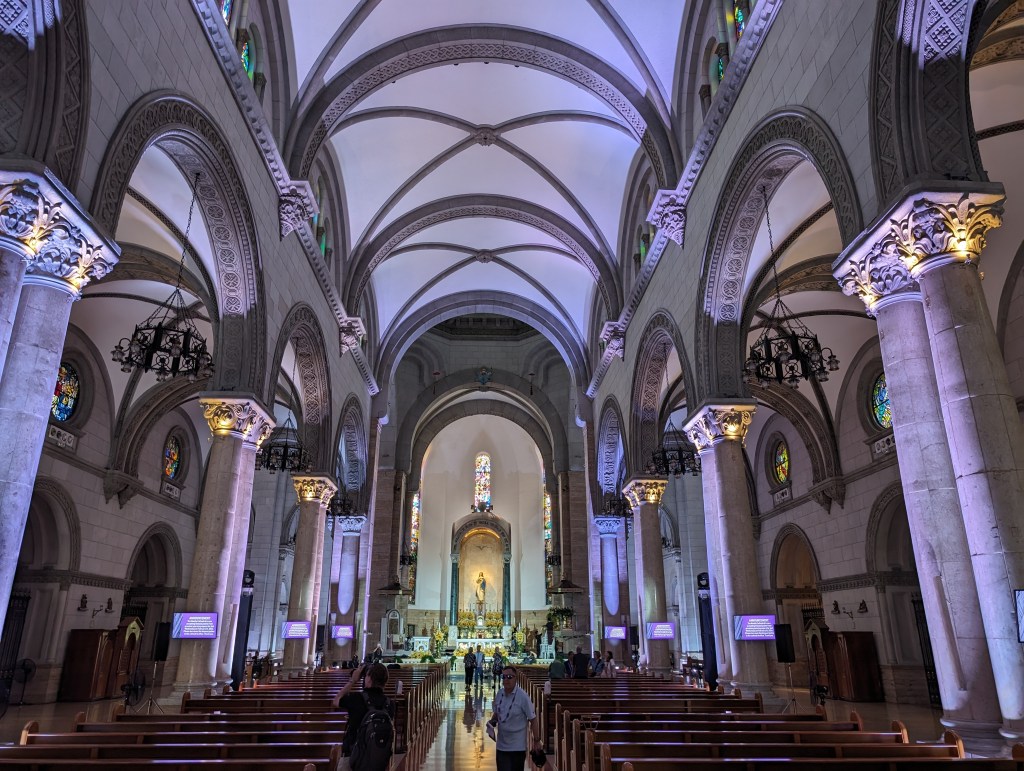
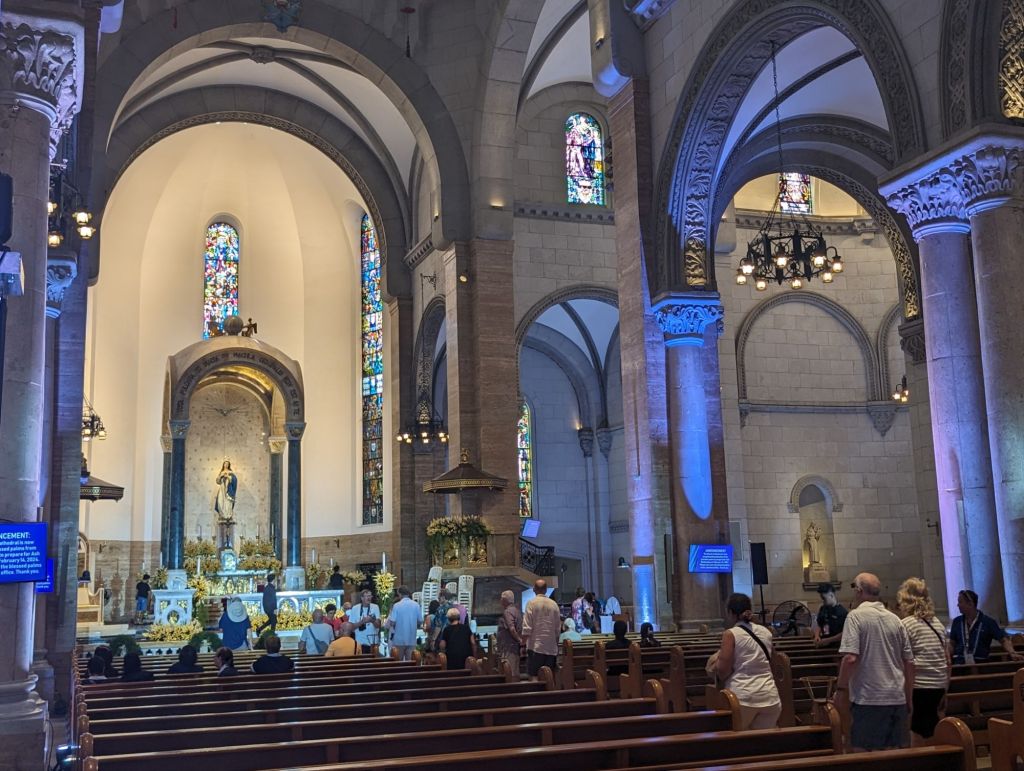
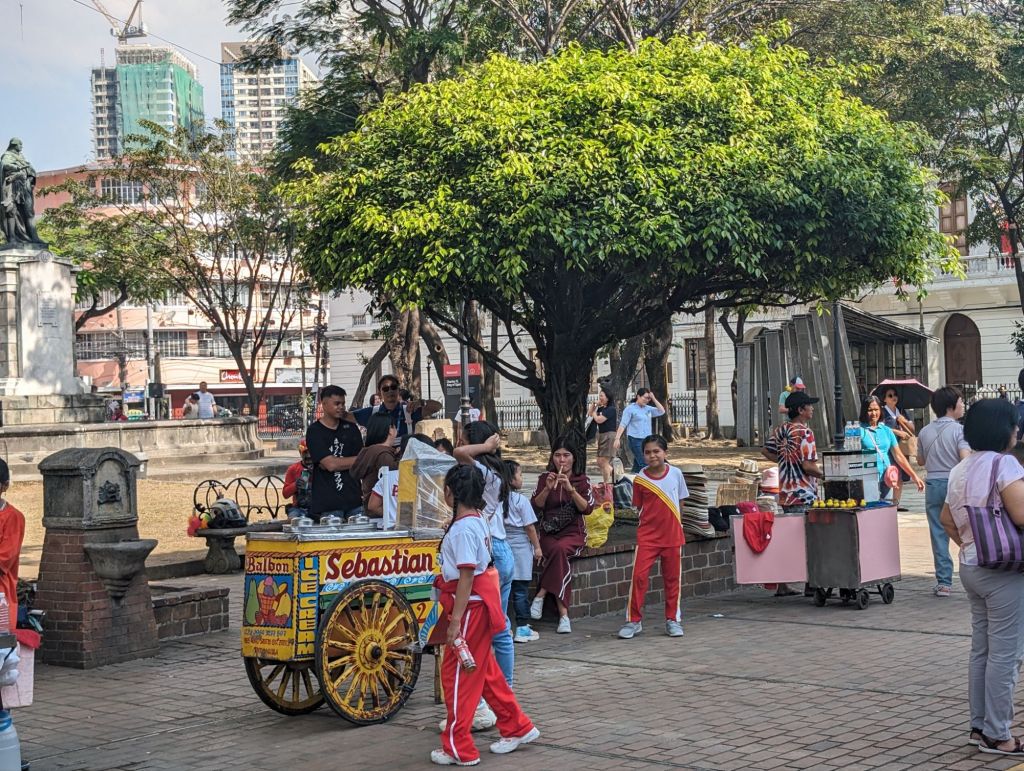
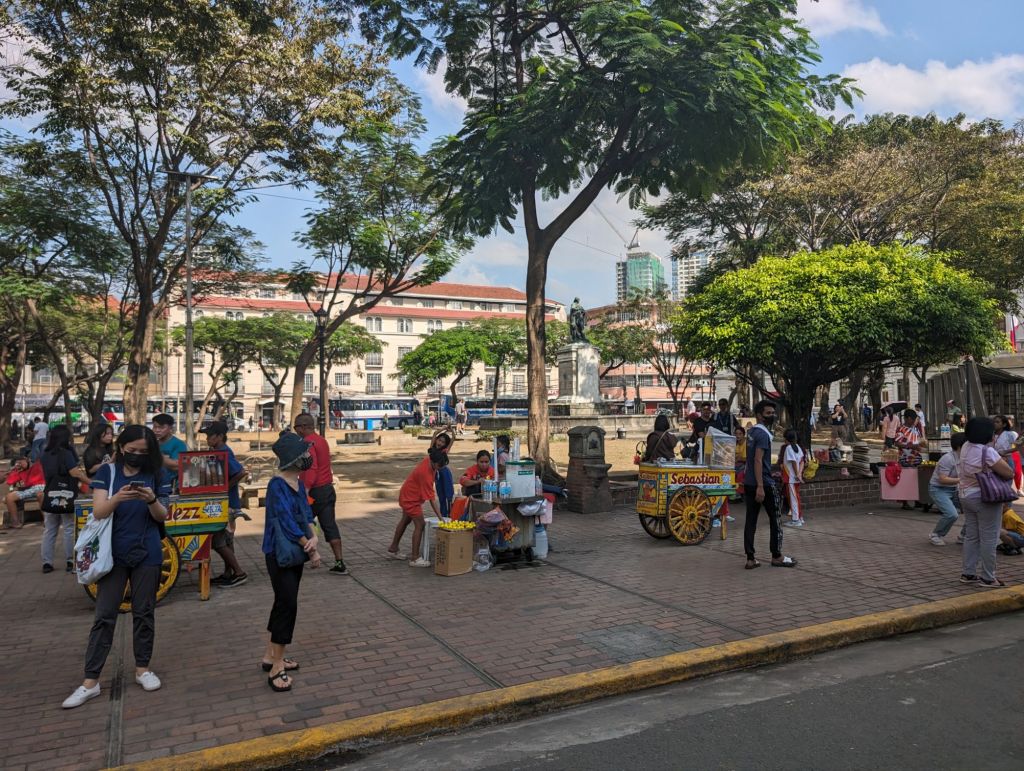
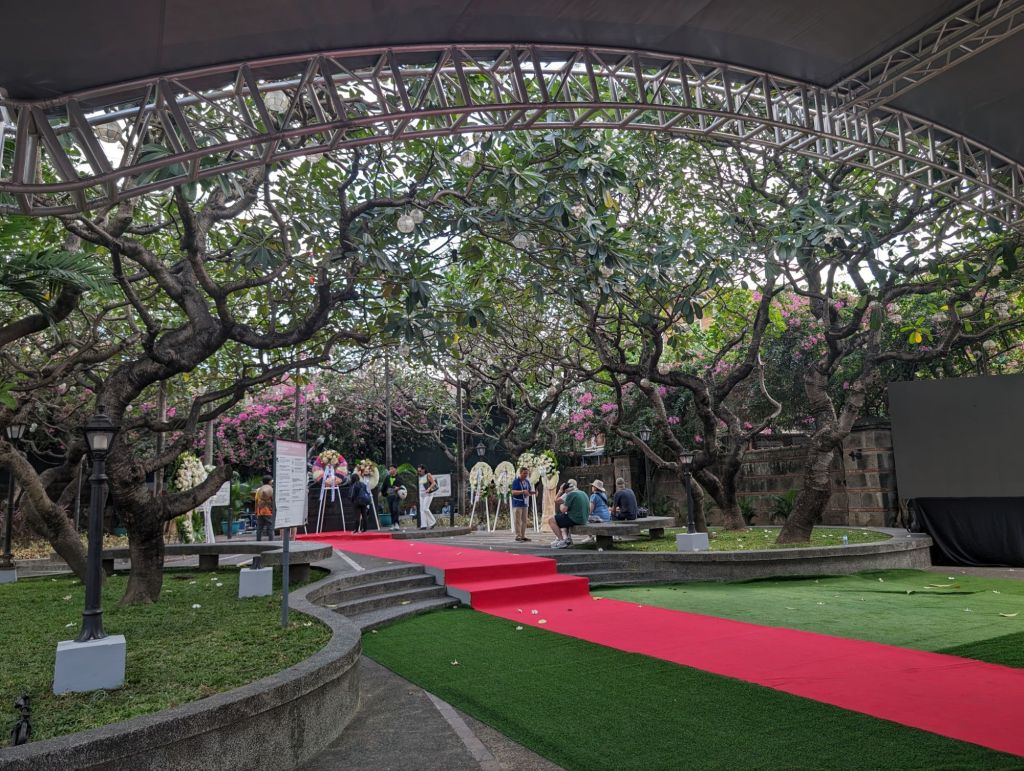
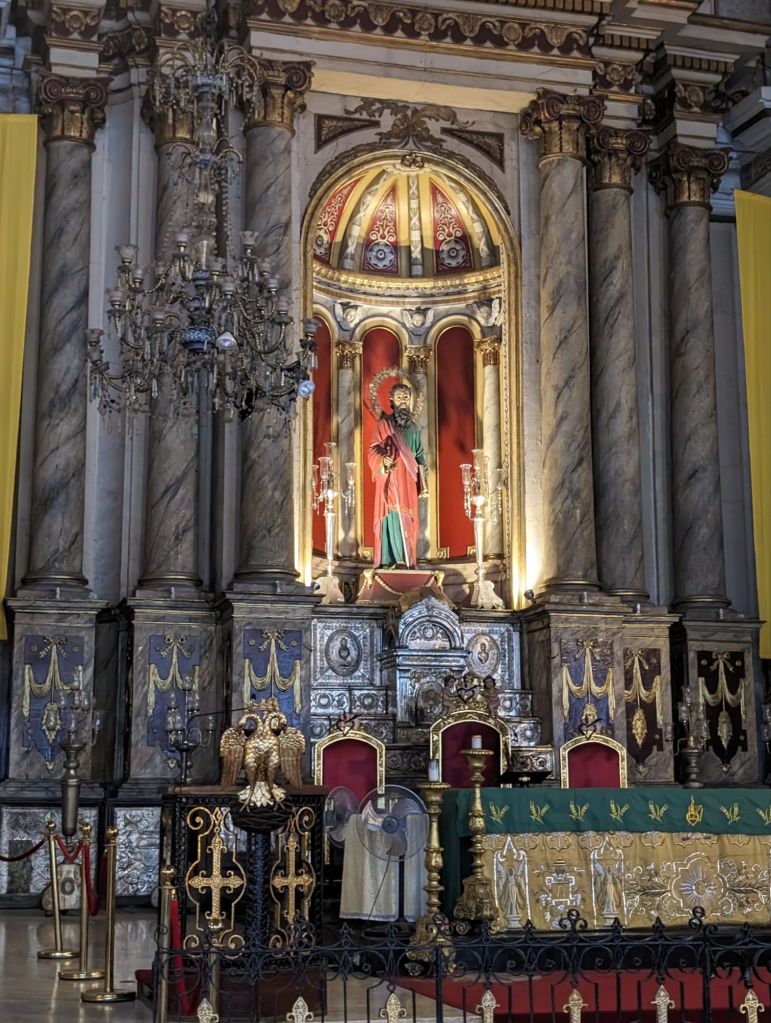
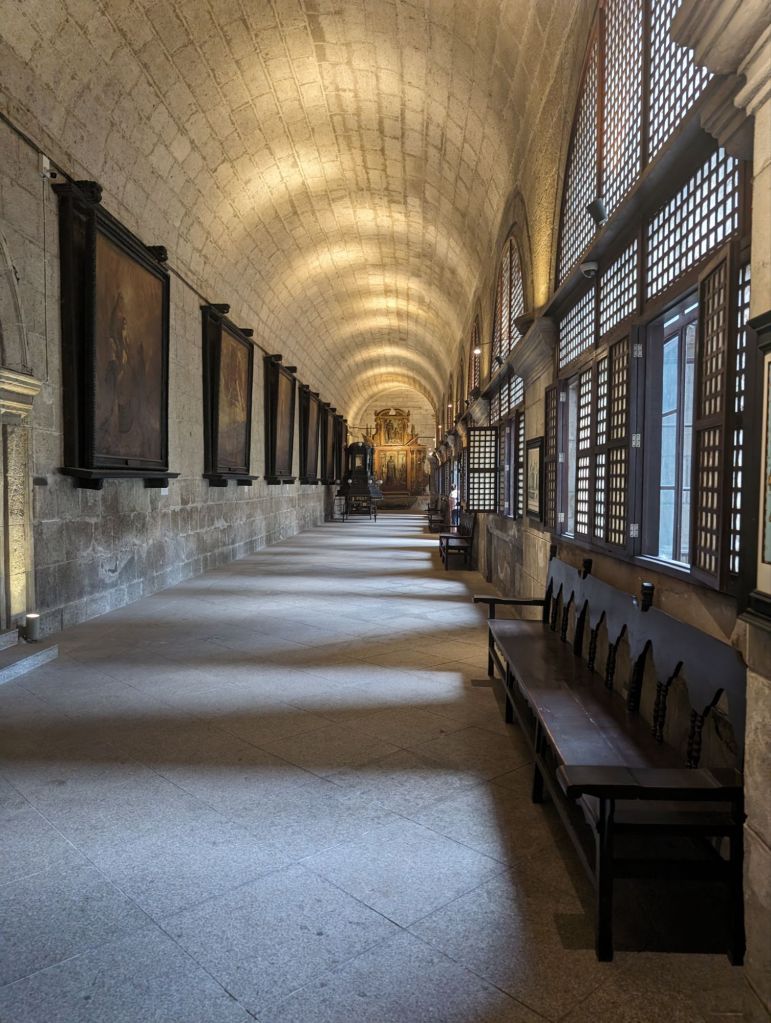
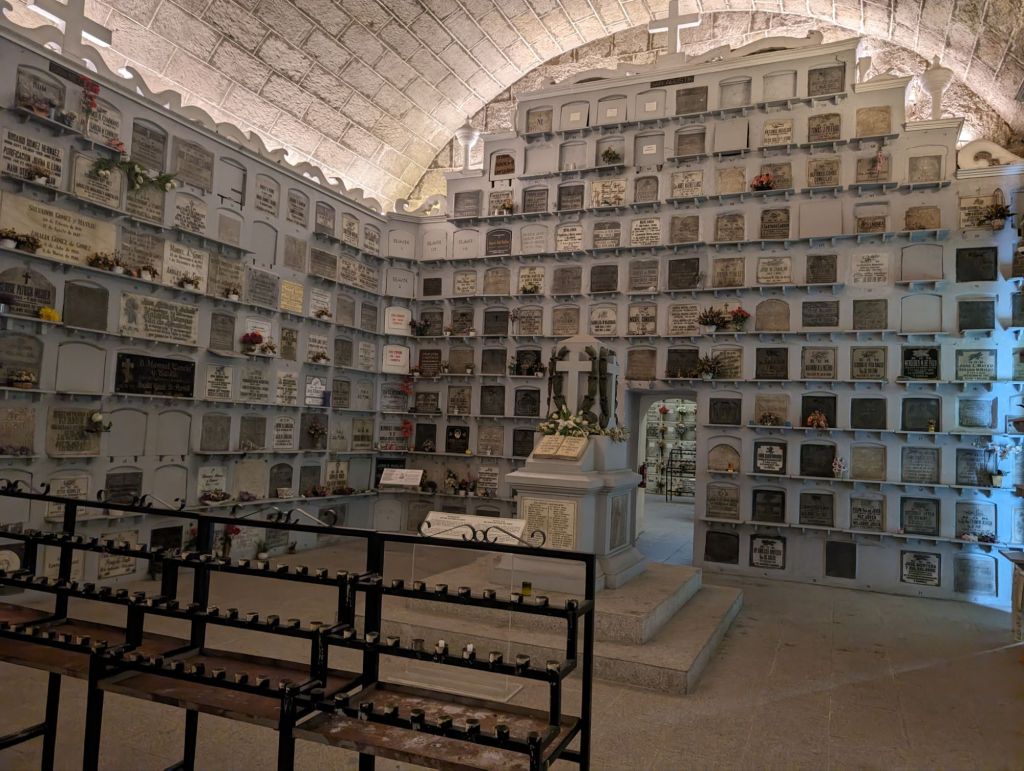
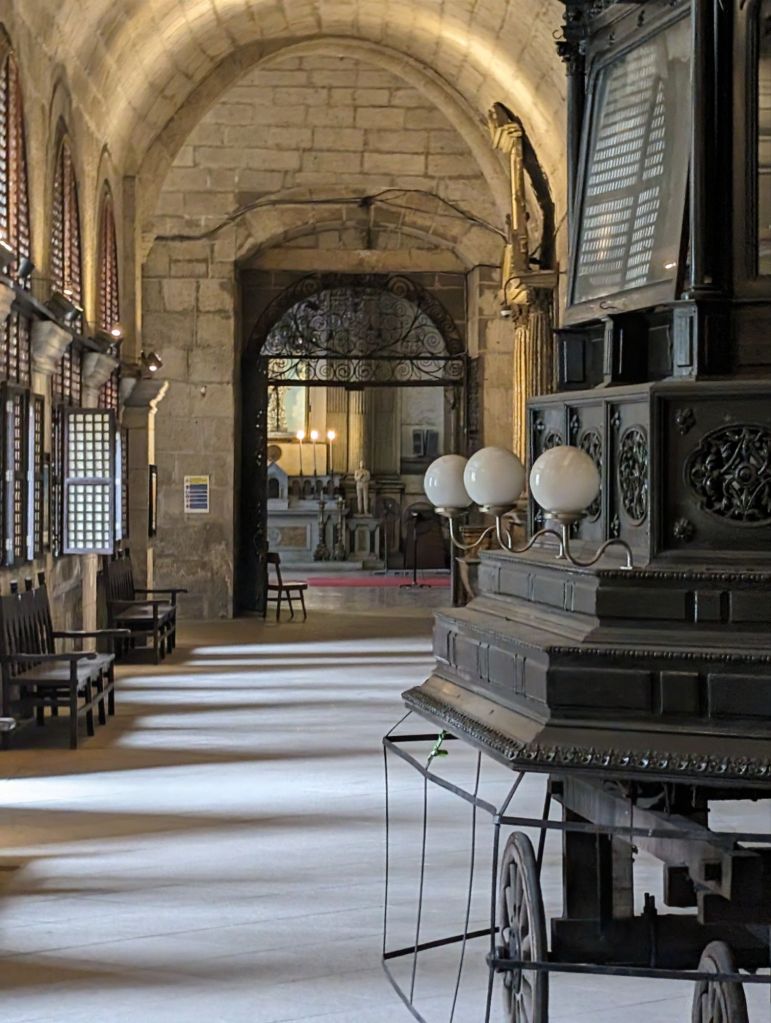
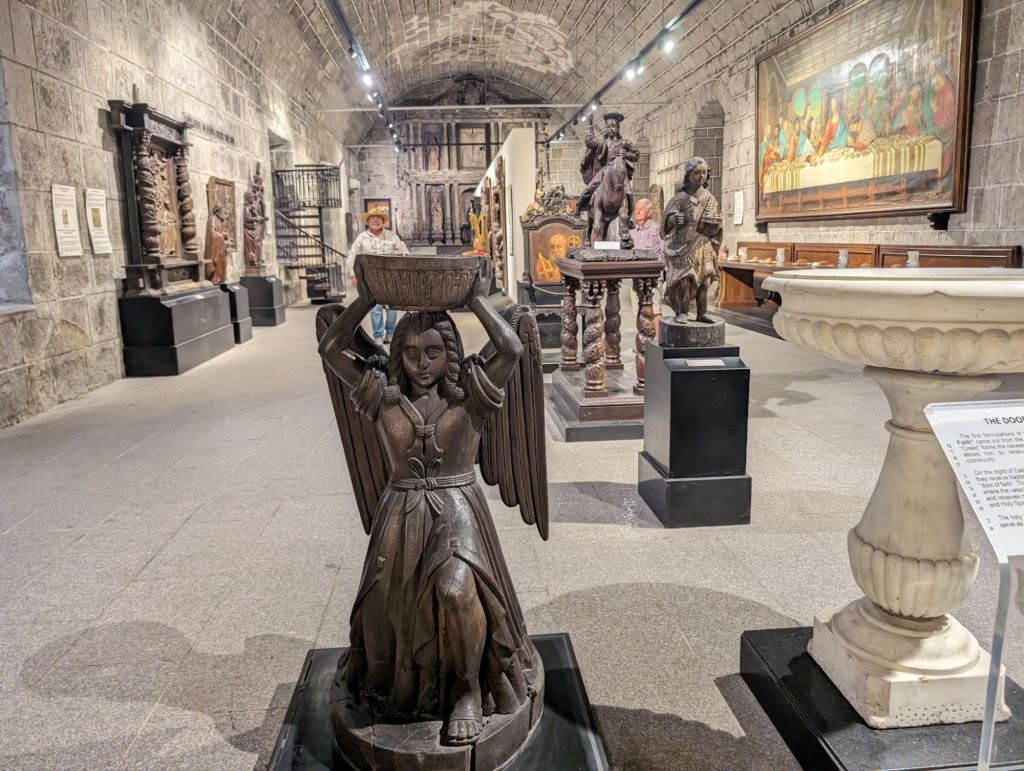
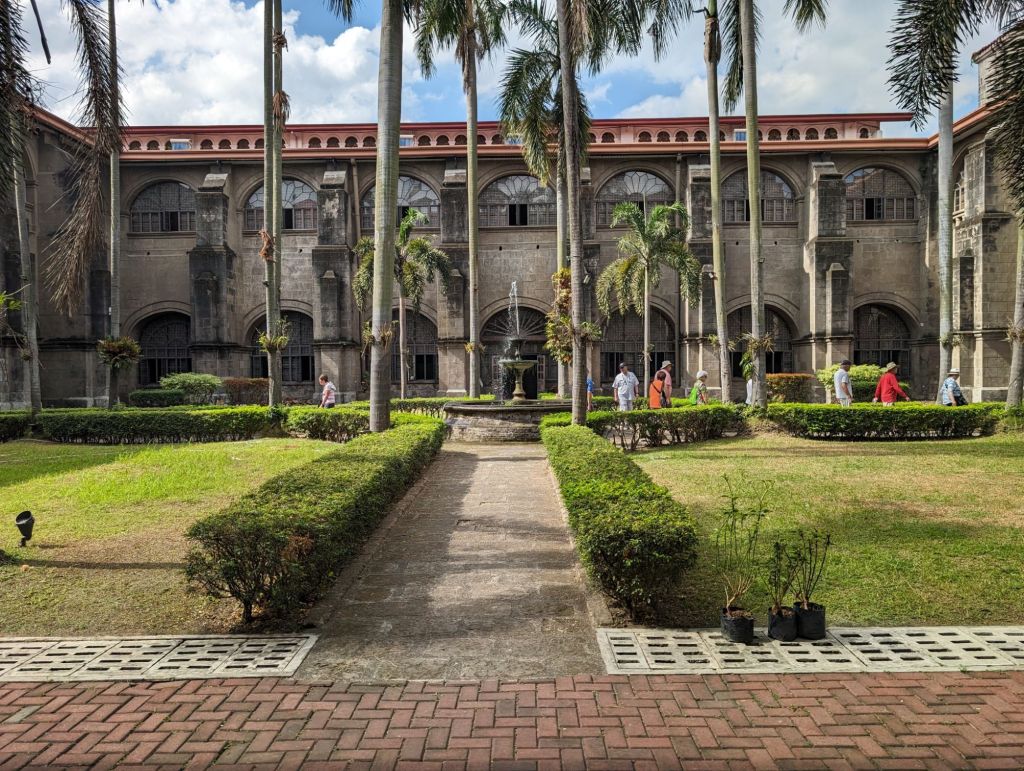
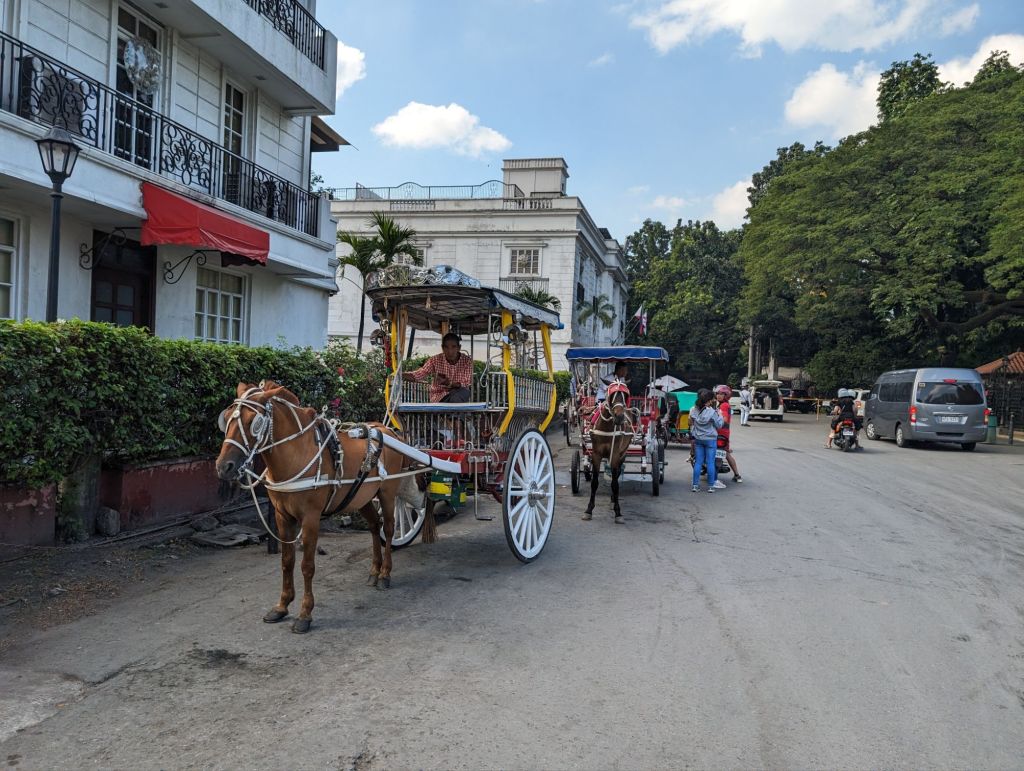
We enter the fort, above and below.A view of the fort from the river with modern Manila behind it.After the Japanese invaders retreated in 1945, this dungeon was opened. There were 600 bodies found crammed in there, killed by heat and suffocation, prisoners of the Japanese. Today the dungeons are a memorial to those poor souls.We walked through the dungeons and saw recreations of the nightmare there. There were pictures and descriptions of the suffering.Everywhere we went, people were happy to greet us. This was a school outing day and the children were especially friendly.The green domed building is Manila’s cathedral. It was destroyed and rebuilt several times after the first cathedral opened in 1581. This one was built in 1958 and three popes have visited here. Below are pictures outside and inside the cathedral.Outside the cathedral in the plaza was a lively holiday atmosphere.This lovely park is a memorial to the 100,000 civilian Manilans who were killed in the Battle of Manila in 1945. Between the Japanese Manila massacre and the heavy American bombardment of the city to flush the Japanese out, the Filipinos took horrendous losses.The Saint Augustine Church, opened in 1606, is the oldest church in the Philippines. The bombardment of Manila in WWII took down all of the original Spanish churches except this one which, in all of its baroque beauty, did survive.Walking through the Saint Augustine peaceful cloisters.Within the church is this mausoleum, with many notables among its residents. The monastery adjacent to the church, destroyed during WWII, was rebuilt and turned into a museum. Pictures from it are below.This is the courtyard of the church.These tiny cabs are a great way to get around in the old town. Our driver’s car was electric, which gave us a quieter, smoother ride than the gas and horse powered vehicles.
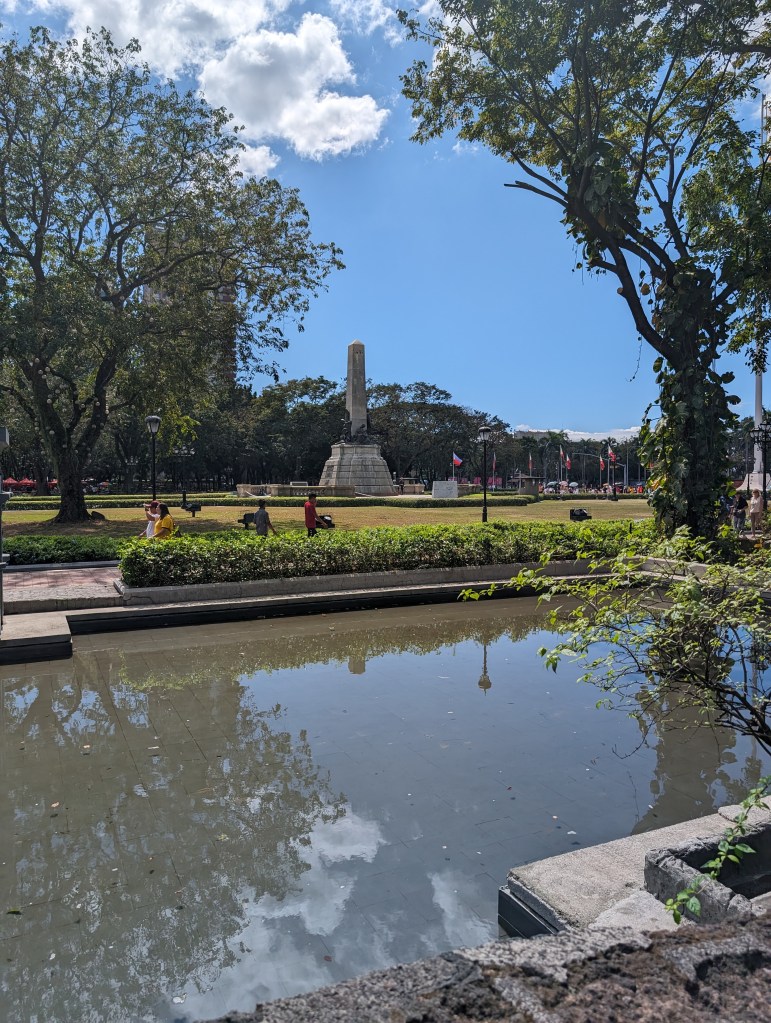
Rizal Park, Luneta is one of the largest urban parks in the Philippines, encompassing almost 10 acres. It is dedicated to the much revered national hero, Dr. Jose Rizal. It was in this park where Rizal was executed by the Spanish authorities in 1896 for writing and speaking out against Spanish oppression. His monument, below, is the central focal point for the park. His remains are interred here beneath his statue.
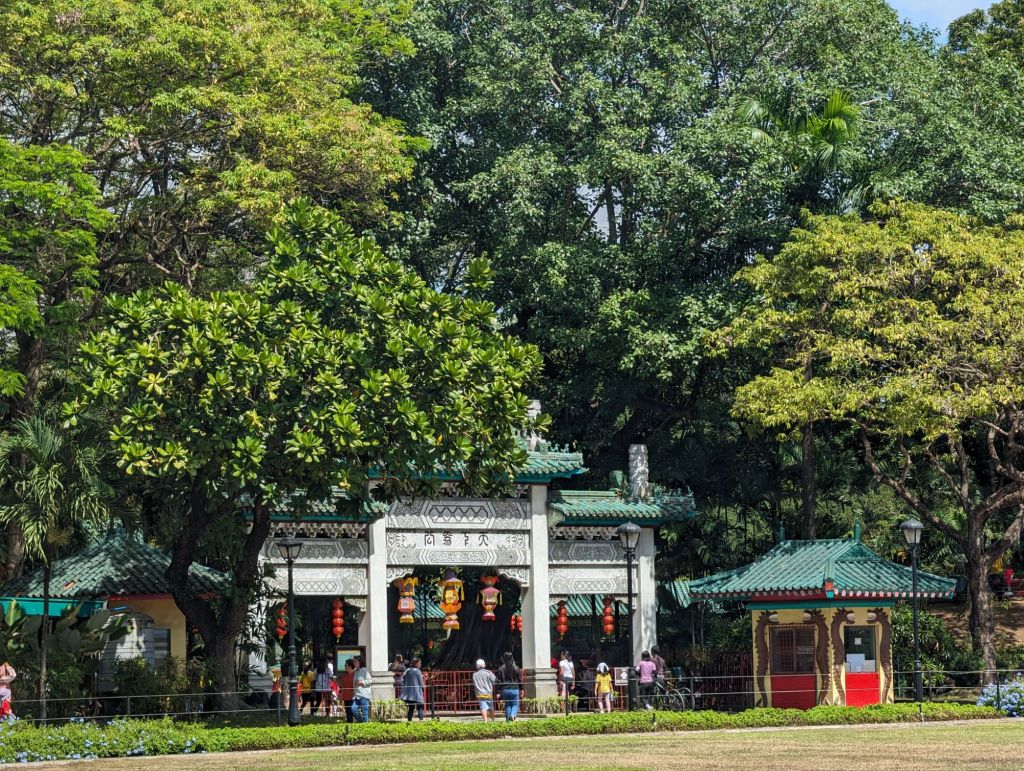
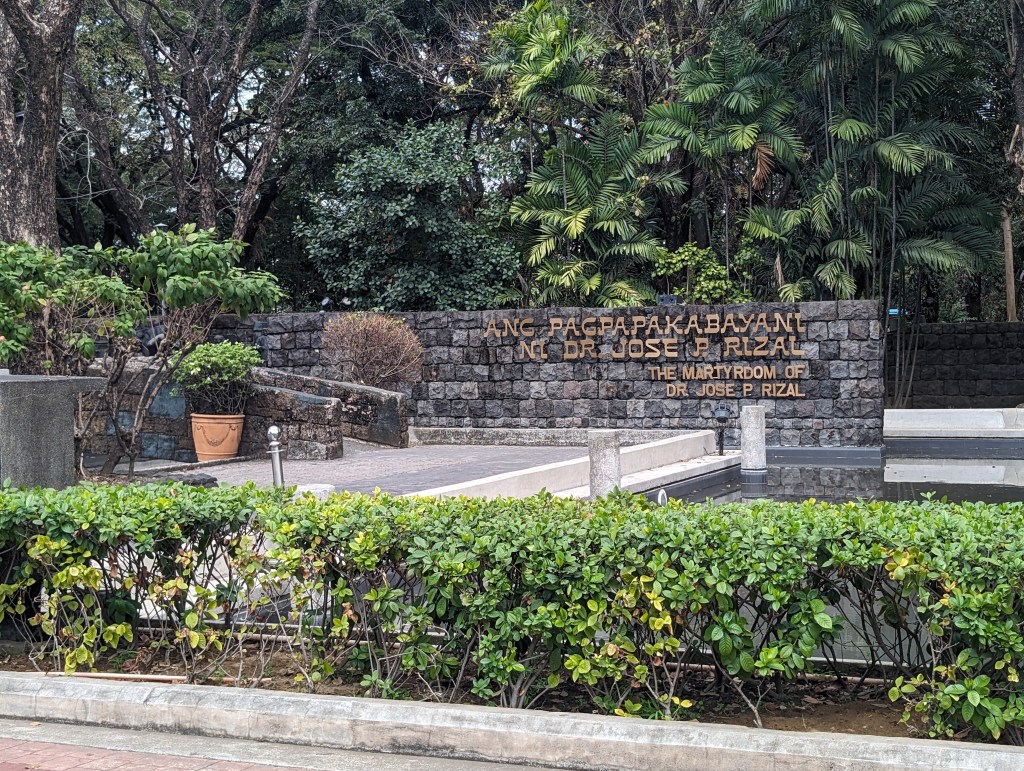
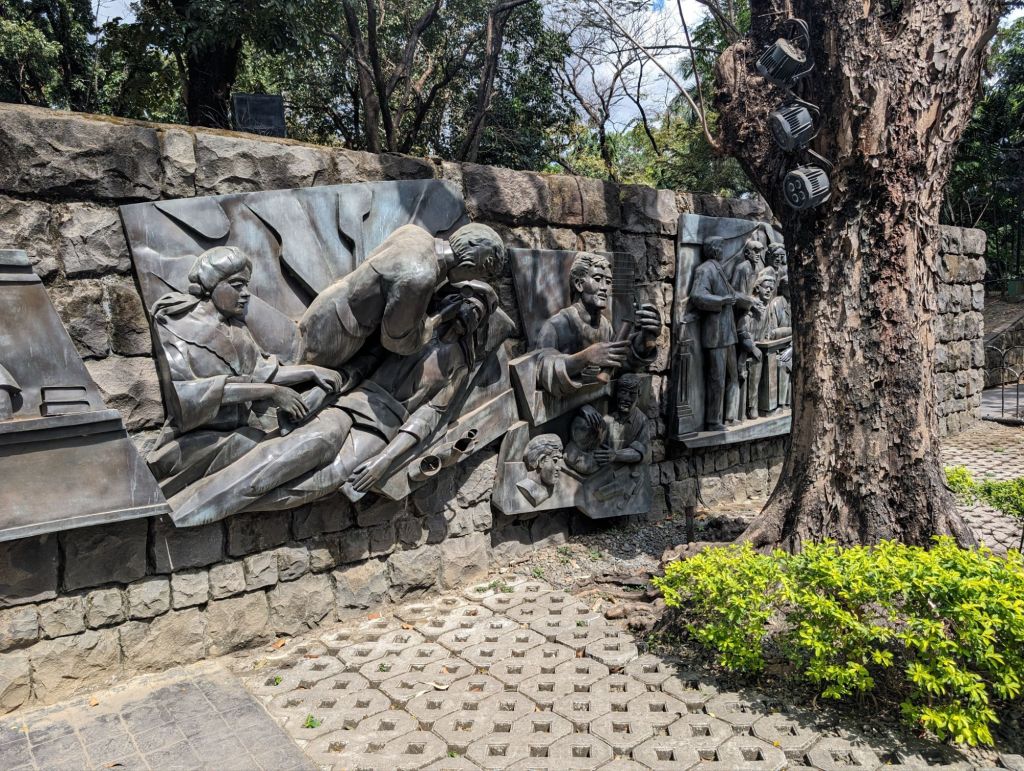
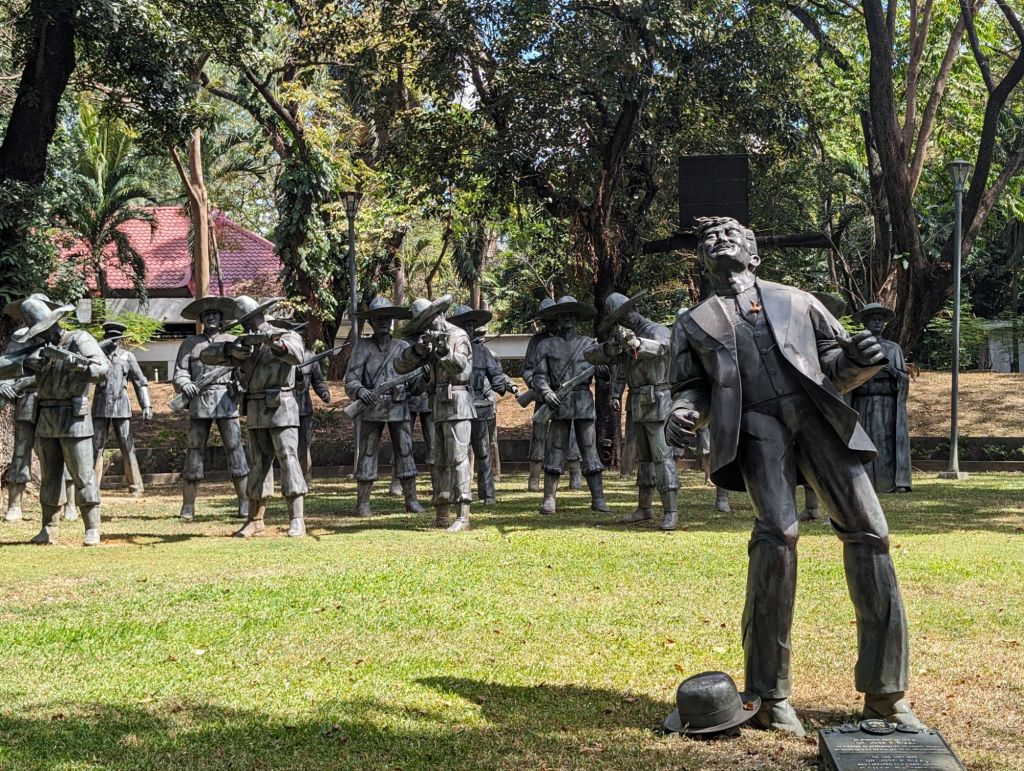
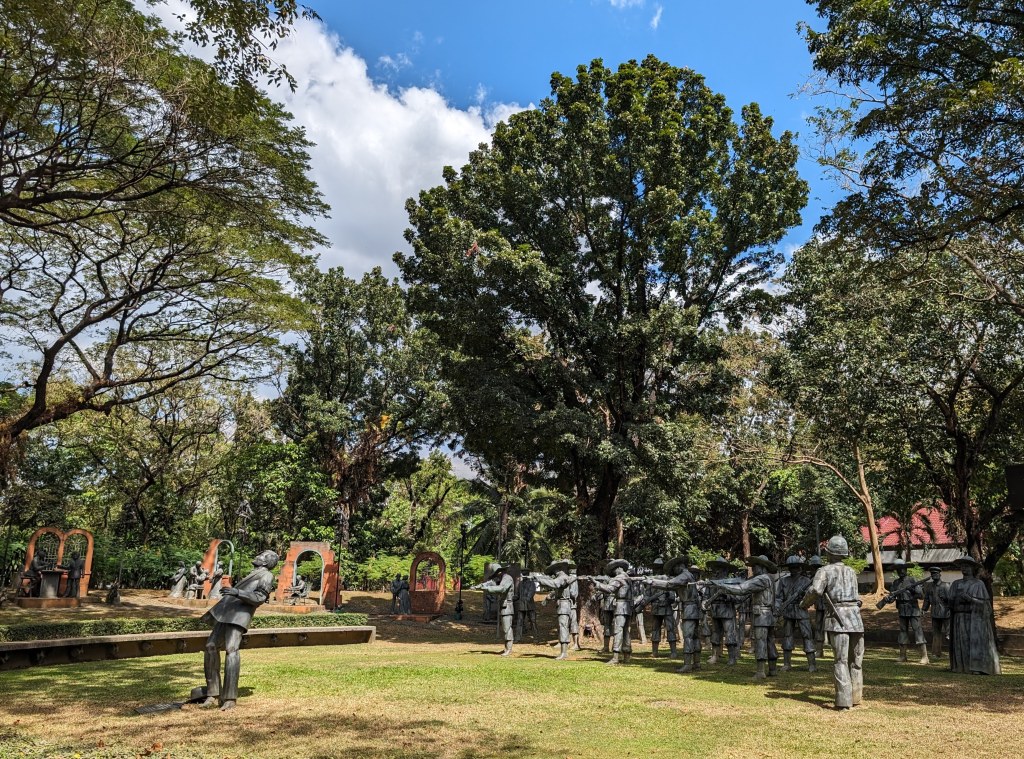
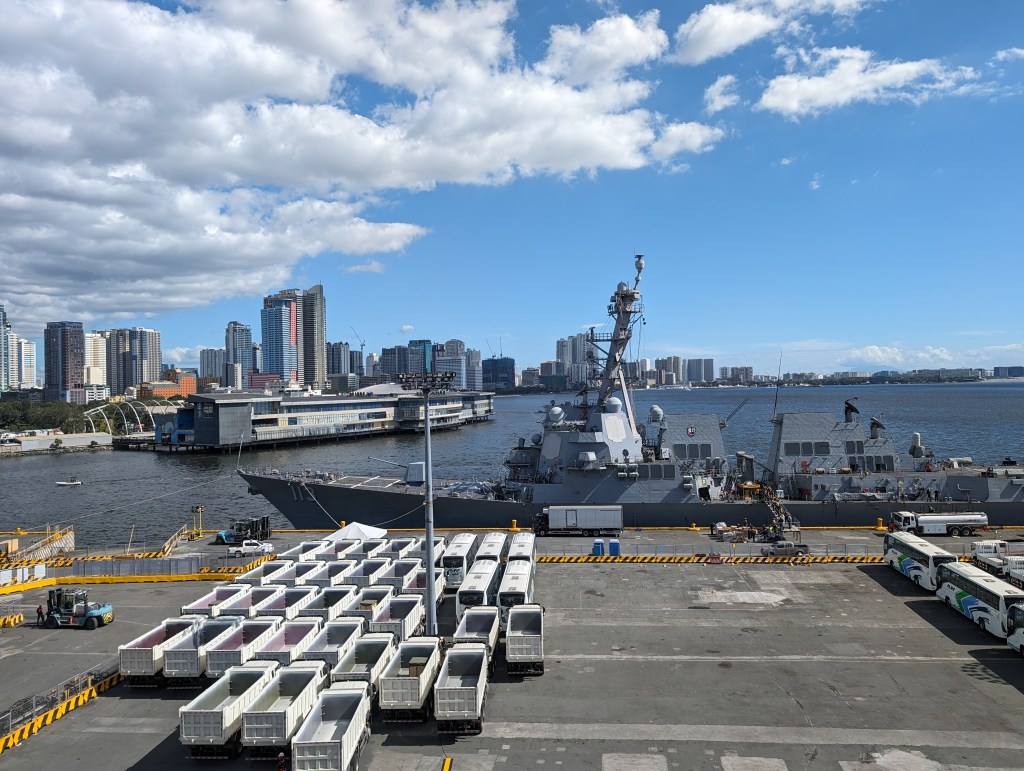
One of the many features of this popular park is the Chinese Garden (entrance above). We would have enjoyed exploring the ornamental gardens, lawns, museums and other areas in the park, but time was limited.The story of Dr. Rizal and his martyrdom is told here. This remarkable man was an activist, an ophthalmologist surgeon and a general practitioner, a writer, a poet, a speaker of 10 languages and a preacher of non violence. Even when the Spanish exiled him he volunteered to treat Spanish soldiers fighting in Cuba. His last poem, “My Final Goodbye,” which he wrote right before his execution at age 35, is recited today by schoolchildren.These sculptures demonstrate different aspects of Rizal’s life. On the left you see his work as an eye doctor.His execution is recreated here on the very spot where he was killed. He asked to turn and face his executioners, but the request was denied.On returning to our ship we saw our neighbor was an American destroyer loading up supplies at dock.



 J and J Travel