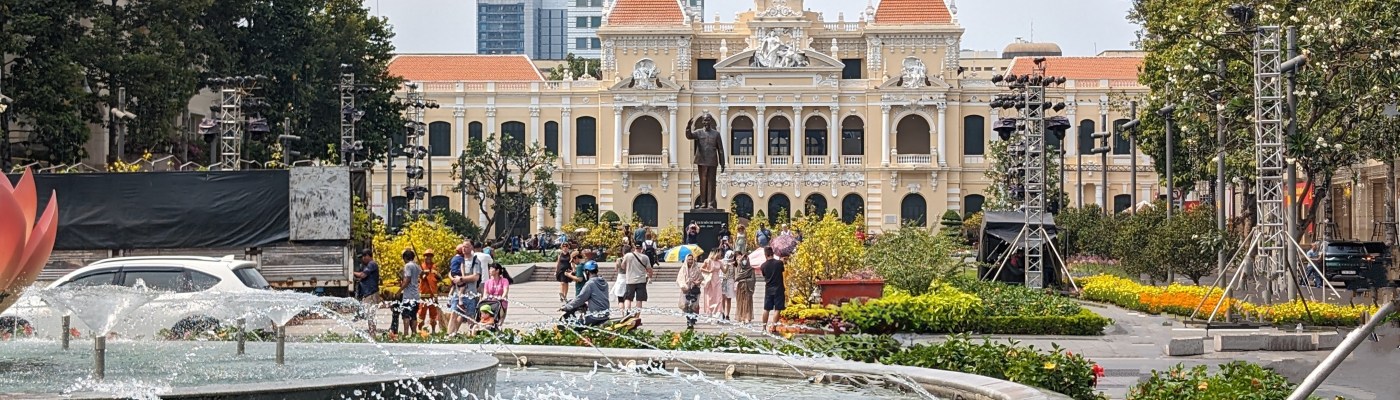
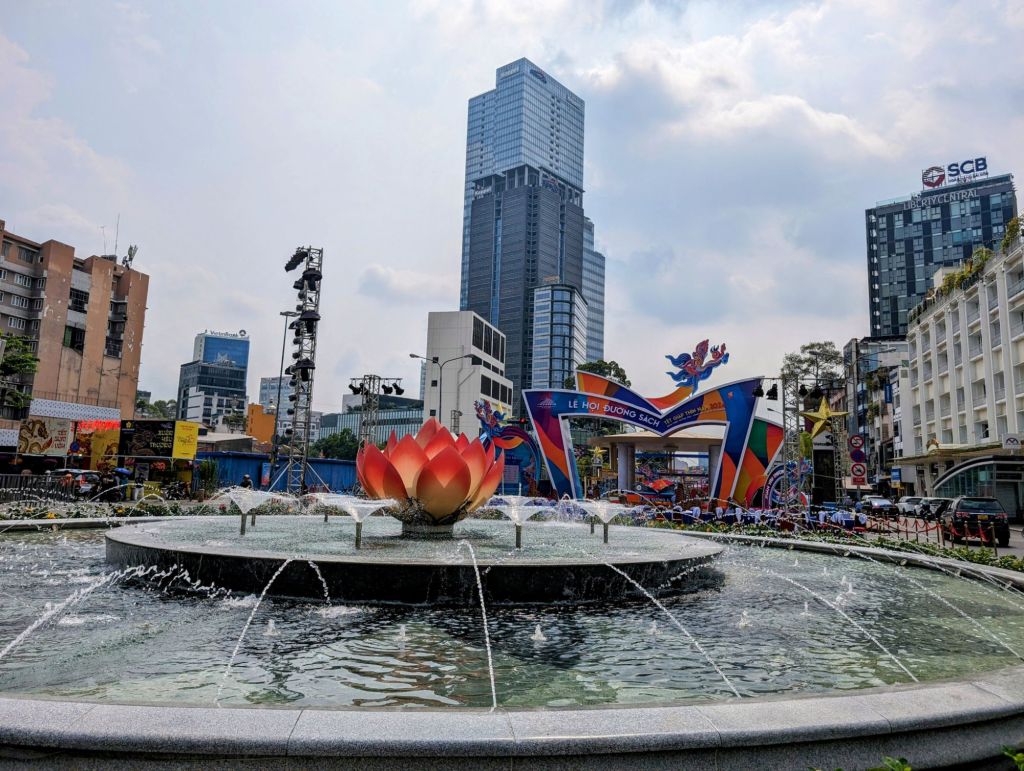
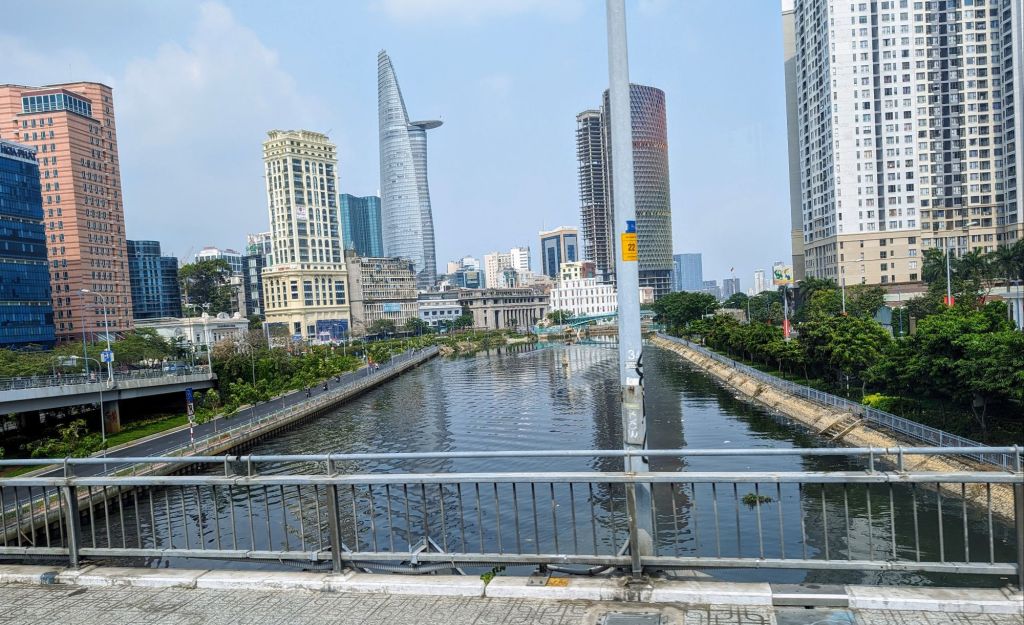
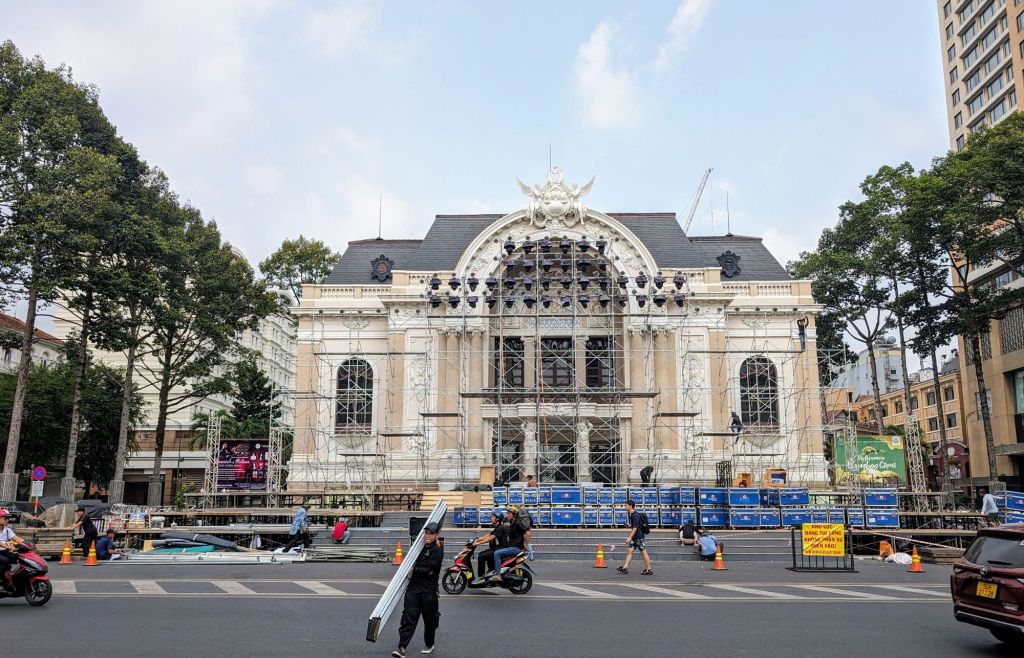
Saigon, as most residents still call it, is the largest city in Vietnam and highly diverse, with historic neighborhoods, modern skyscrapers, and architecture ranging from French Colonial to art deco to classic Chinese, with combinations of them all. We loved its energy and inclusivity.
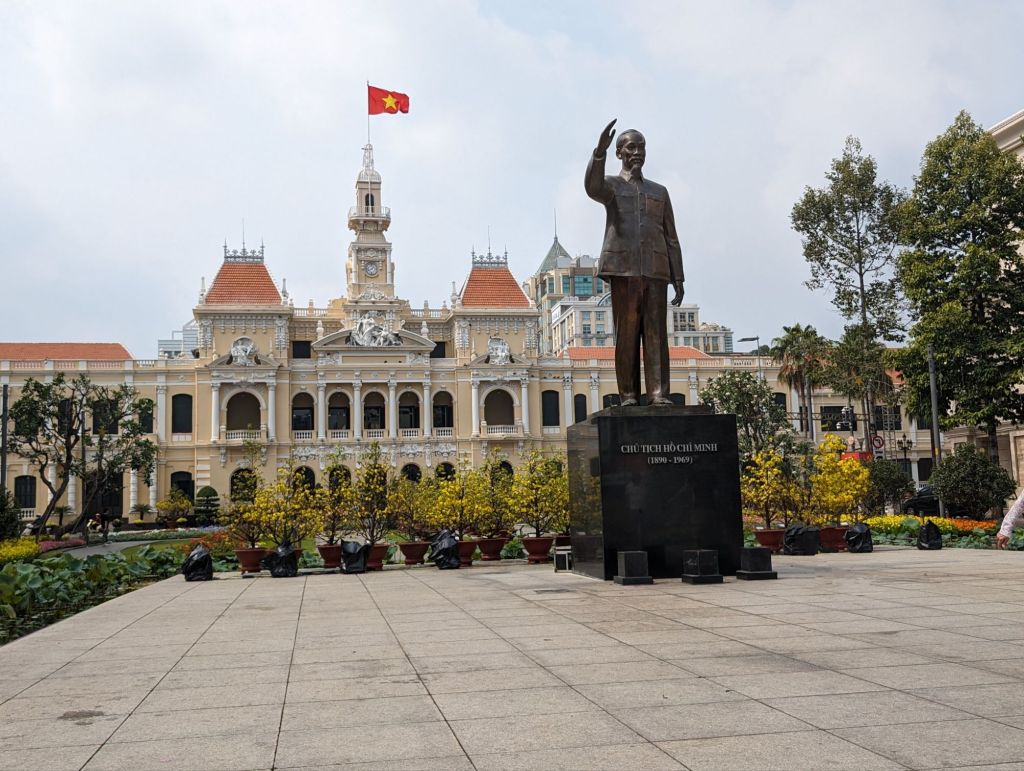
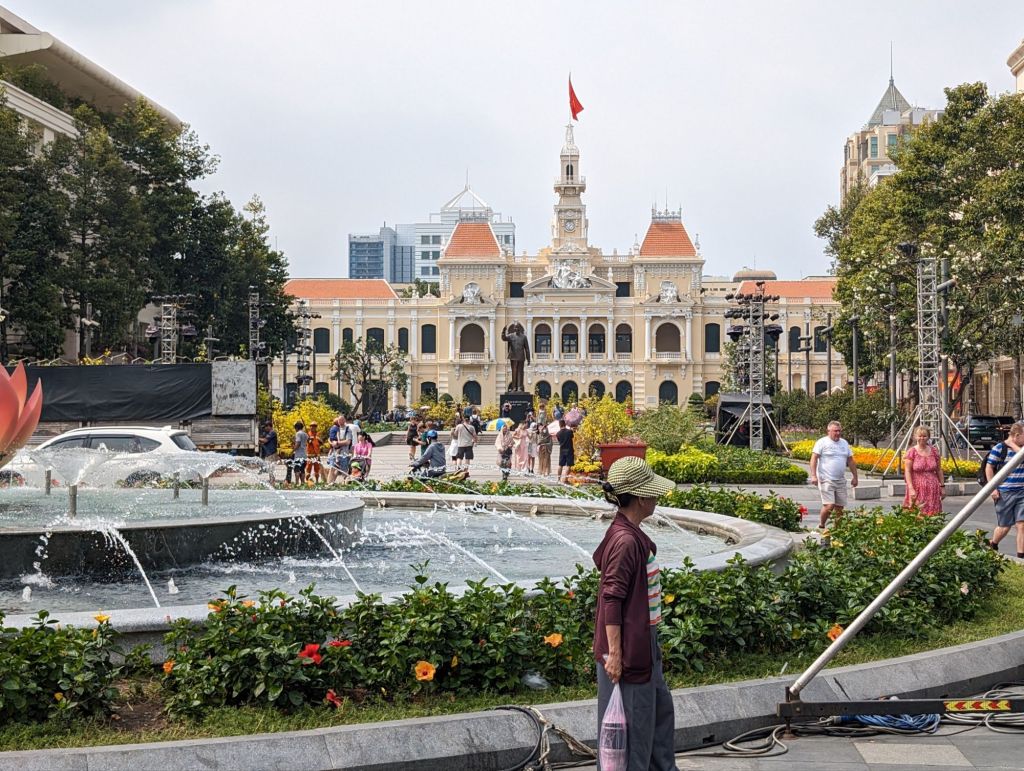
This classic French colonial building started life at the beginning of the twentieth century as a hotel. After the war when the country was unified, it became the Ho Chi Minh City People’s Committee Building, or the City Hall. There is a statue of Ho Chi Minh in front.
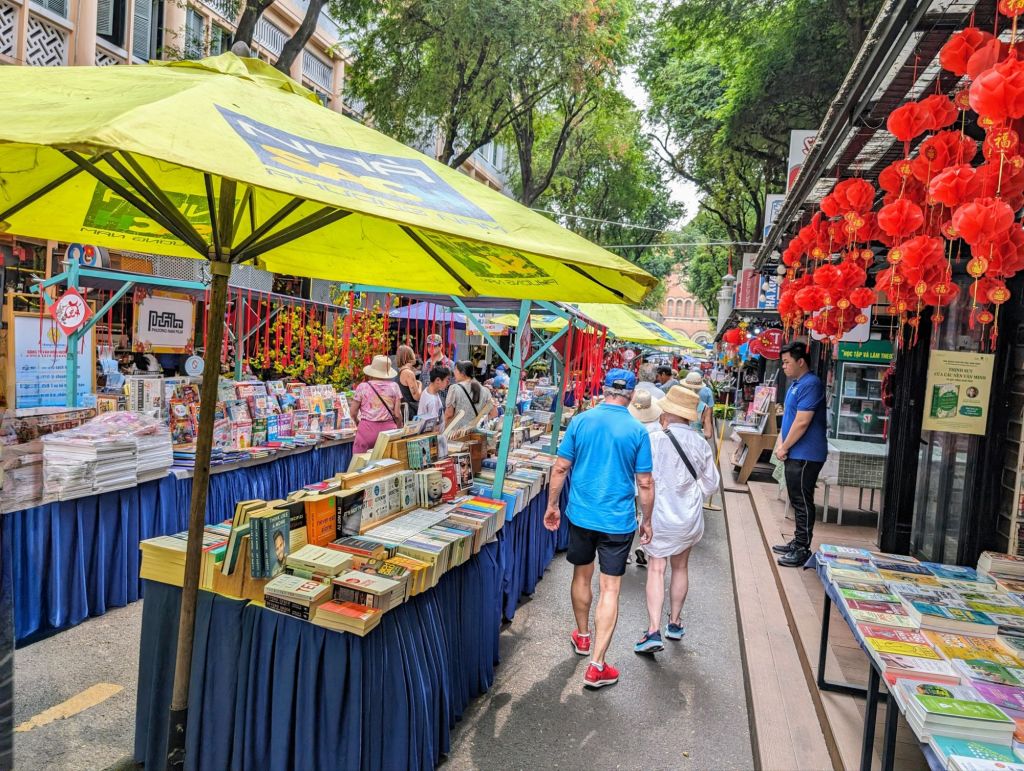
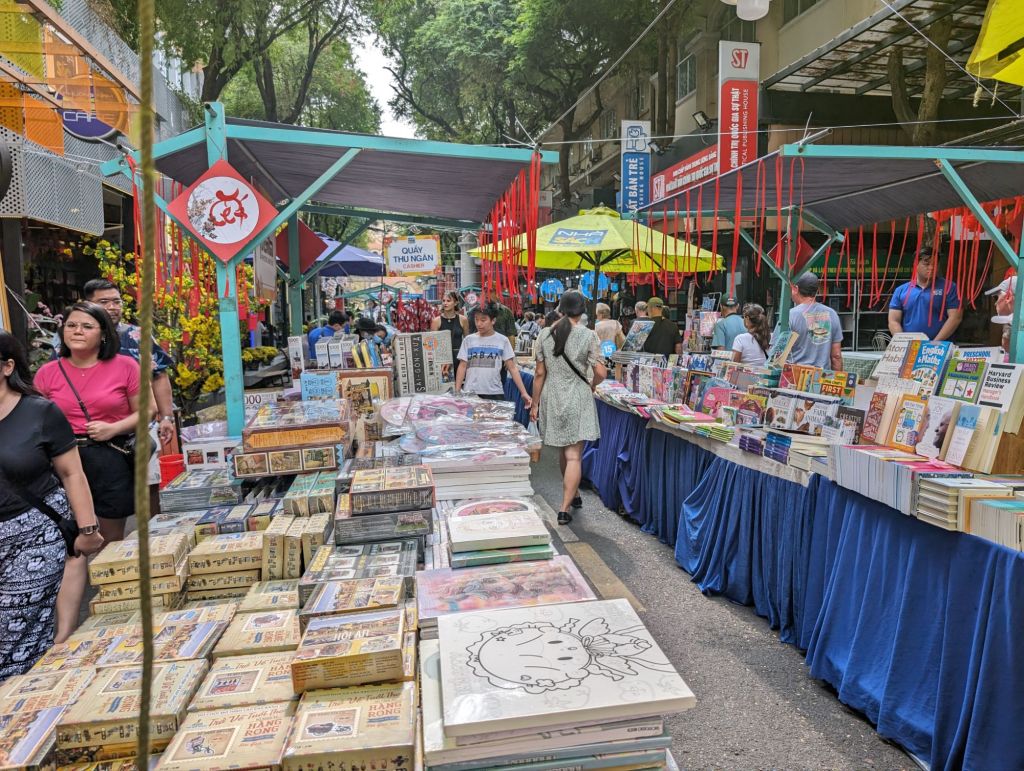
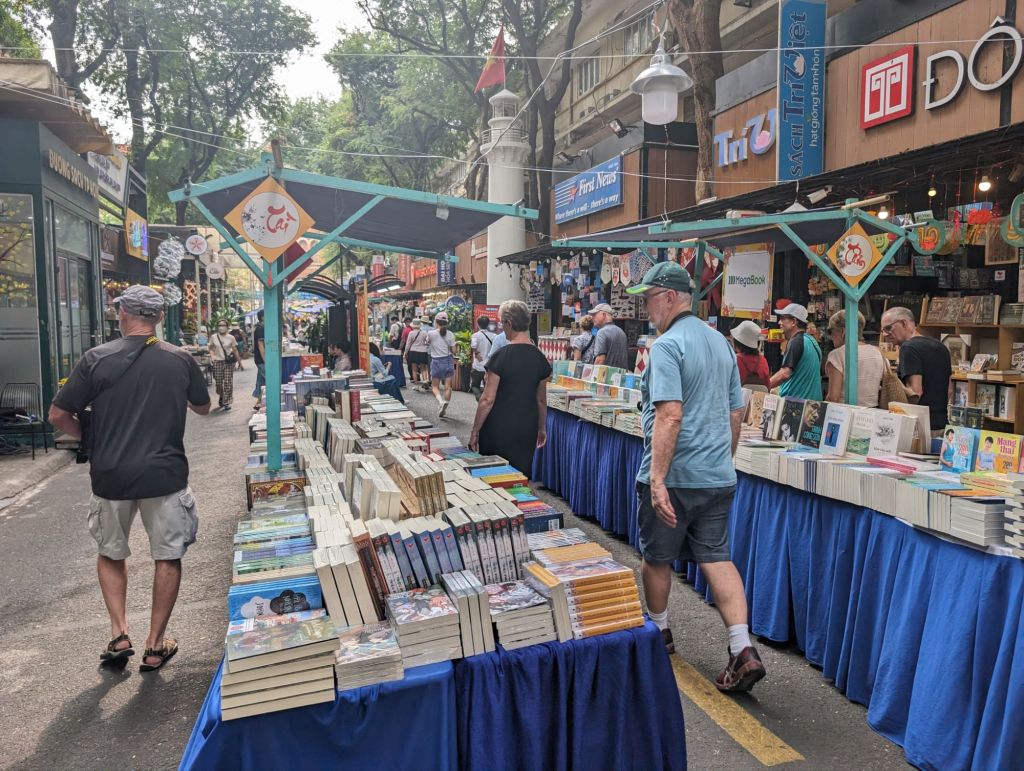
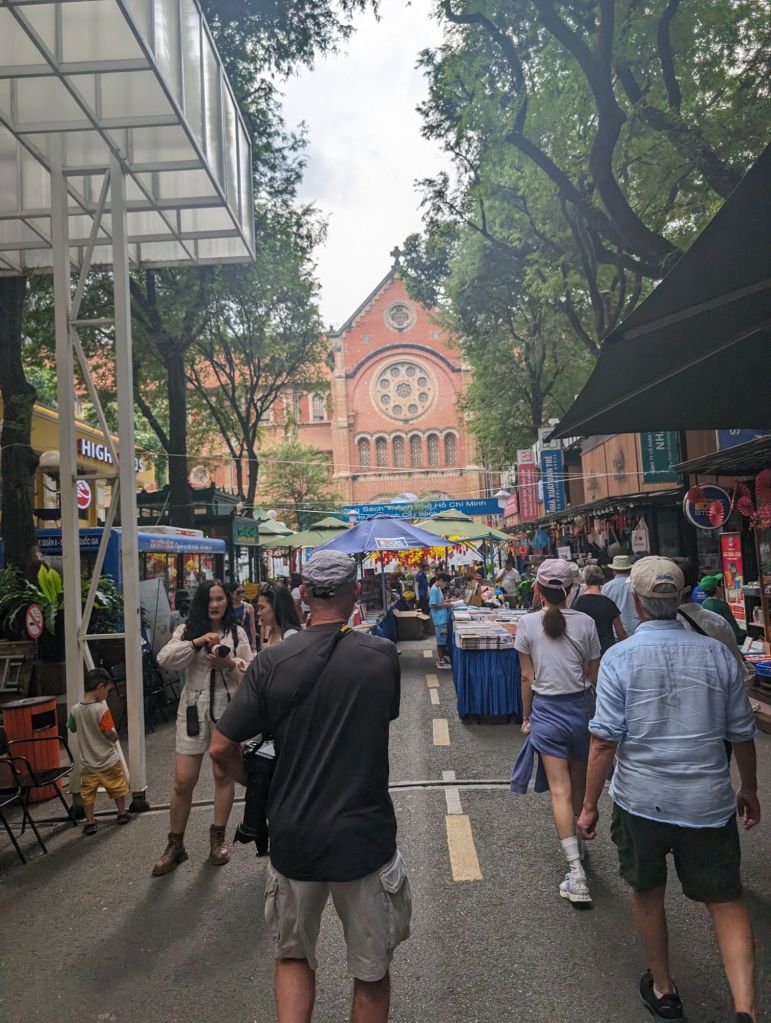
This was a treat–a whole street of independent booksellers. All kinds of books, and some cards lined the street and yes, people were browsing. At the end of the street is the Notre Dame Cathedral, built in 1880.
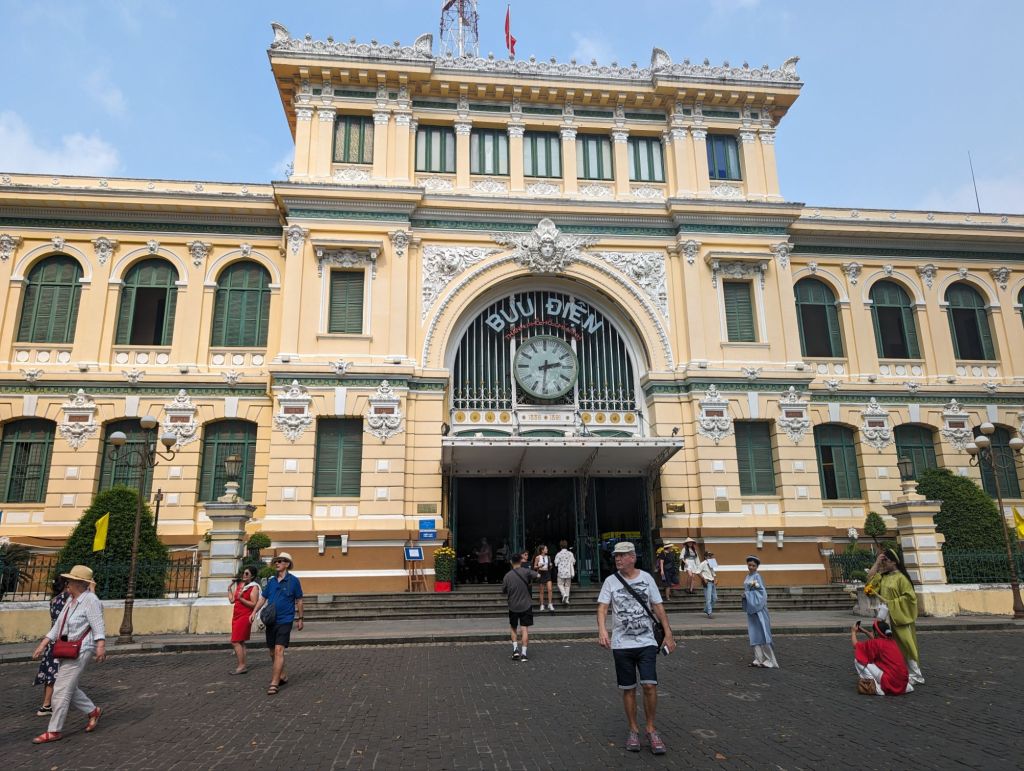
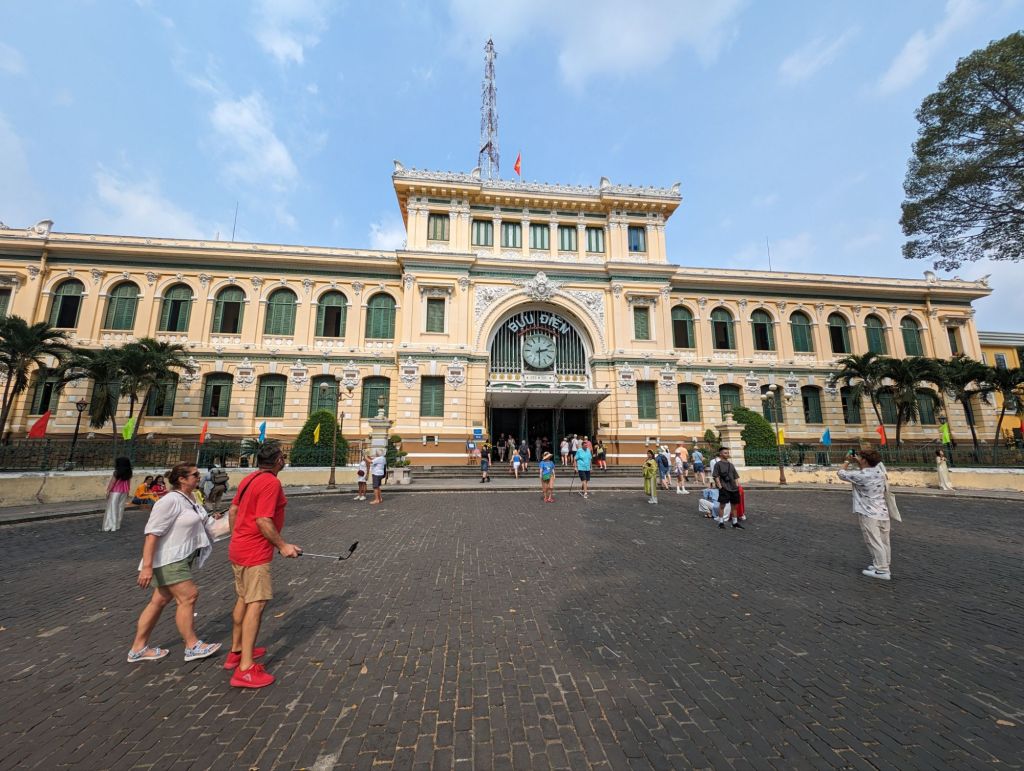
Just a block from the cathedral in the center of the city is its most iconic and photographed building, the central post office. Another French colonial masterpiece, it was designed by Gustave Eiffel, he of the Eiffel tower and the Statue of LIberty. The clock in the central tower has been working steadily for 130 years.
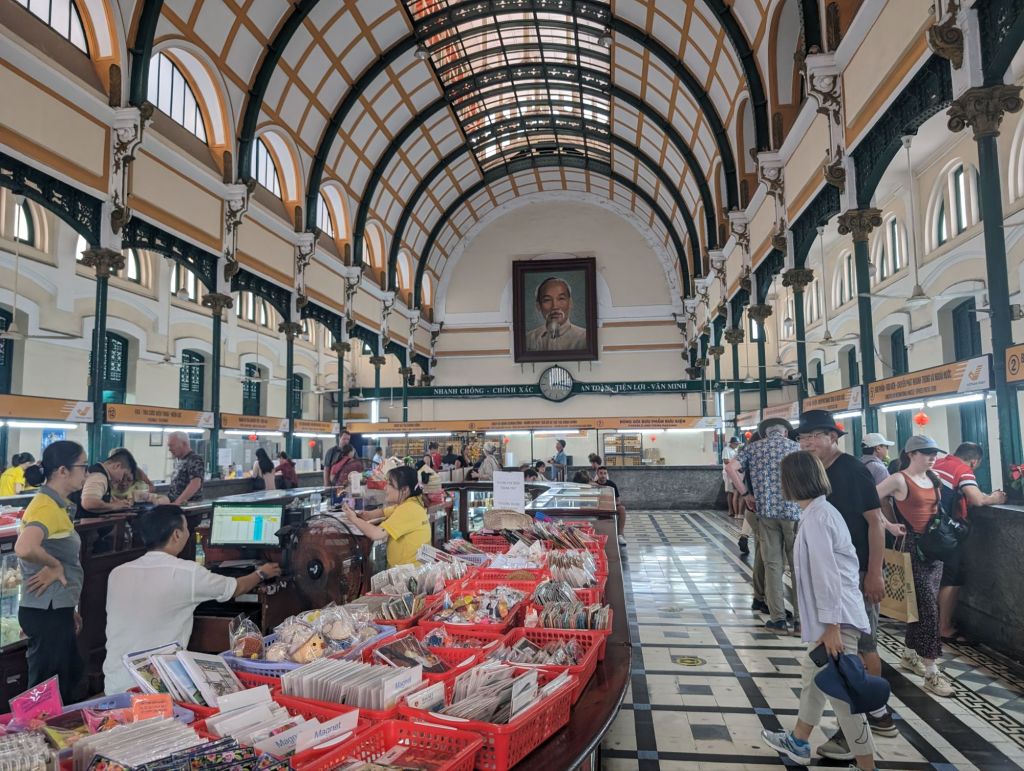
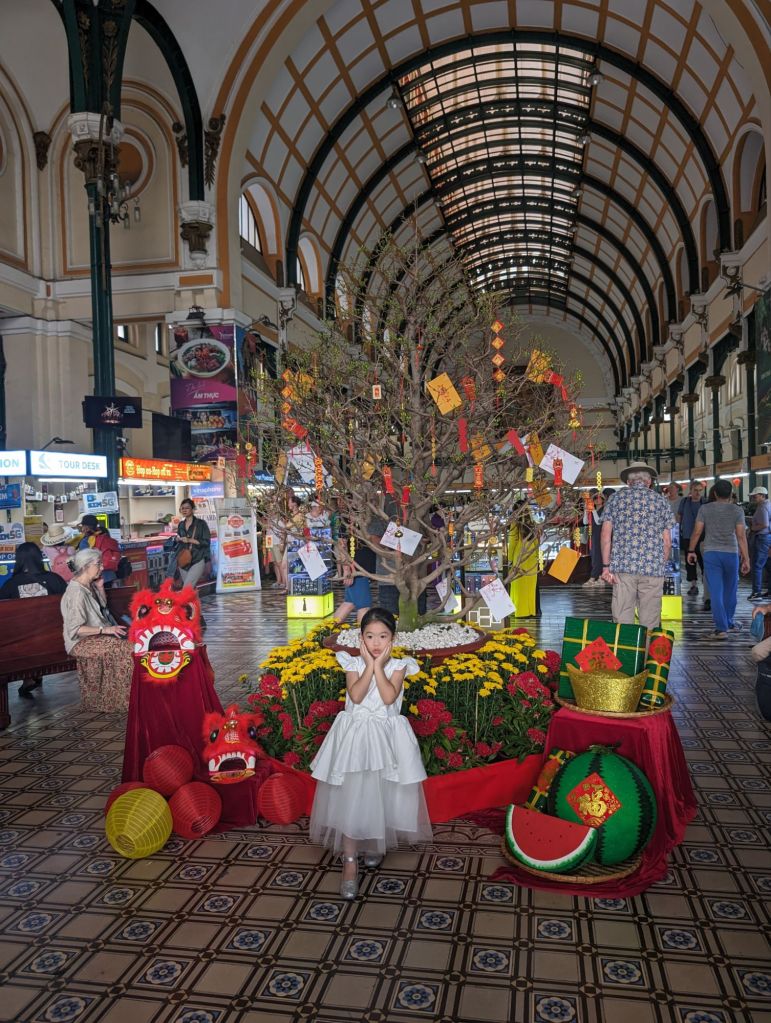
Inside, under the graceful domed ceiling, people are still doing their mail business as they have done for over a century. Of course a picture of Ho Chi Minh hangs prominently. There are also shopping opportunities in the center. Get your souvenir pictures and cards!
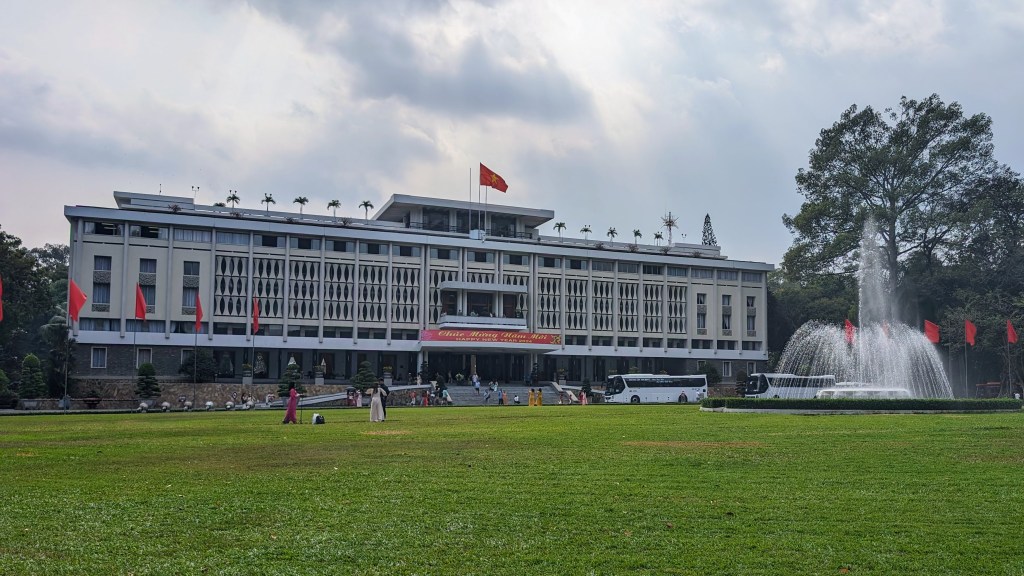
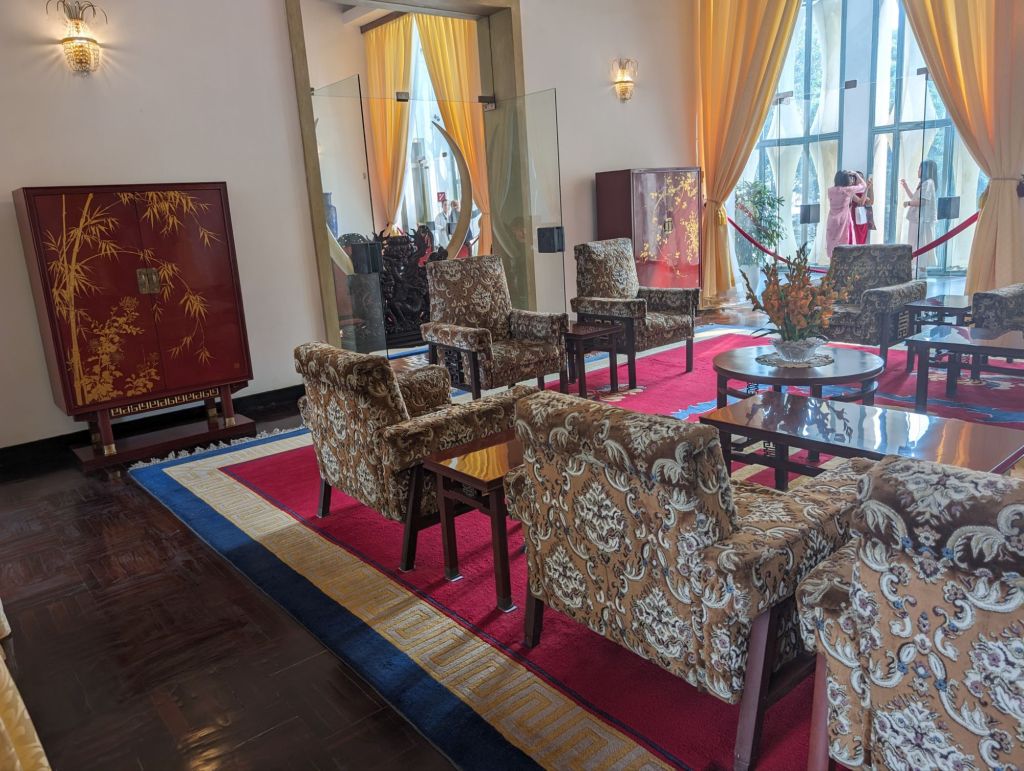
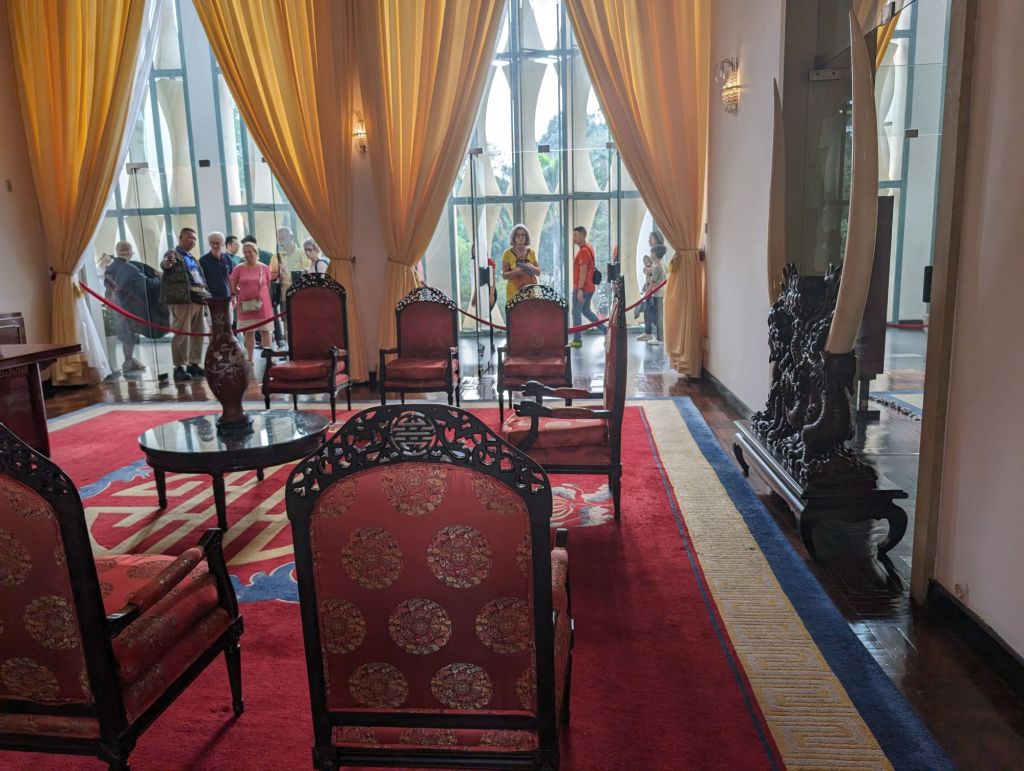
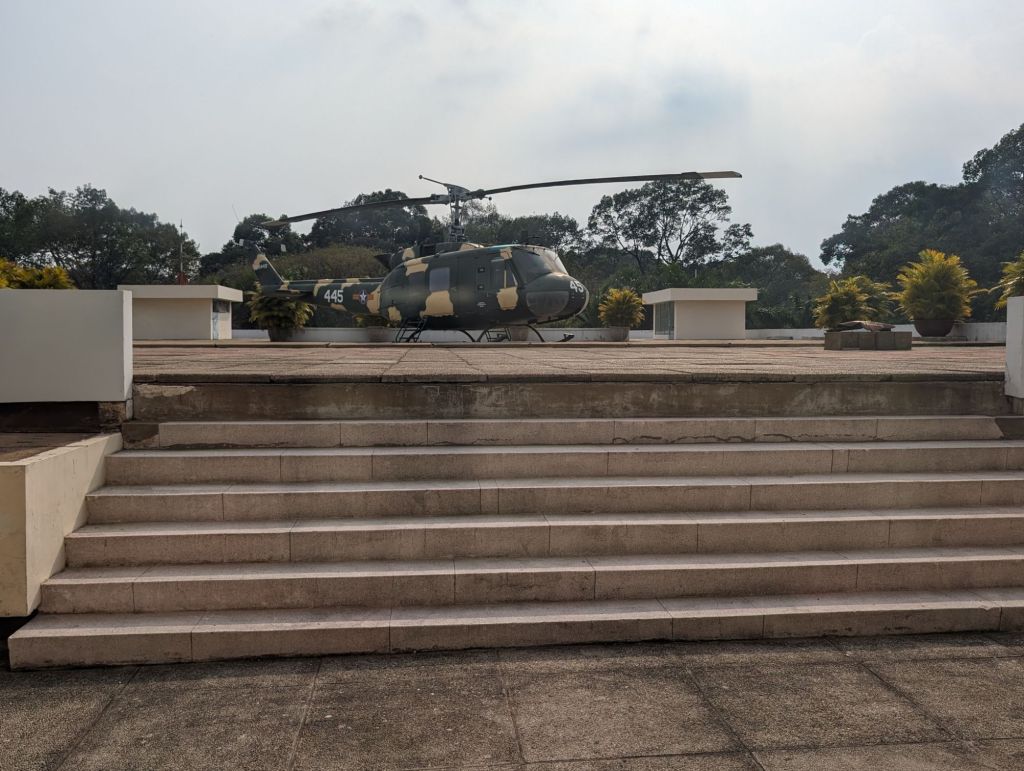
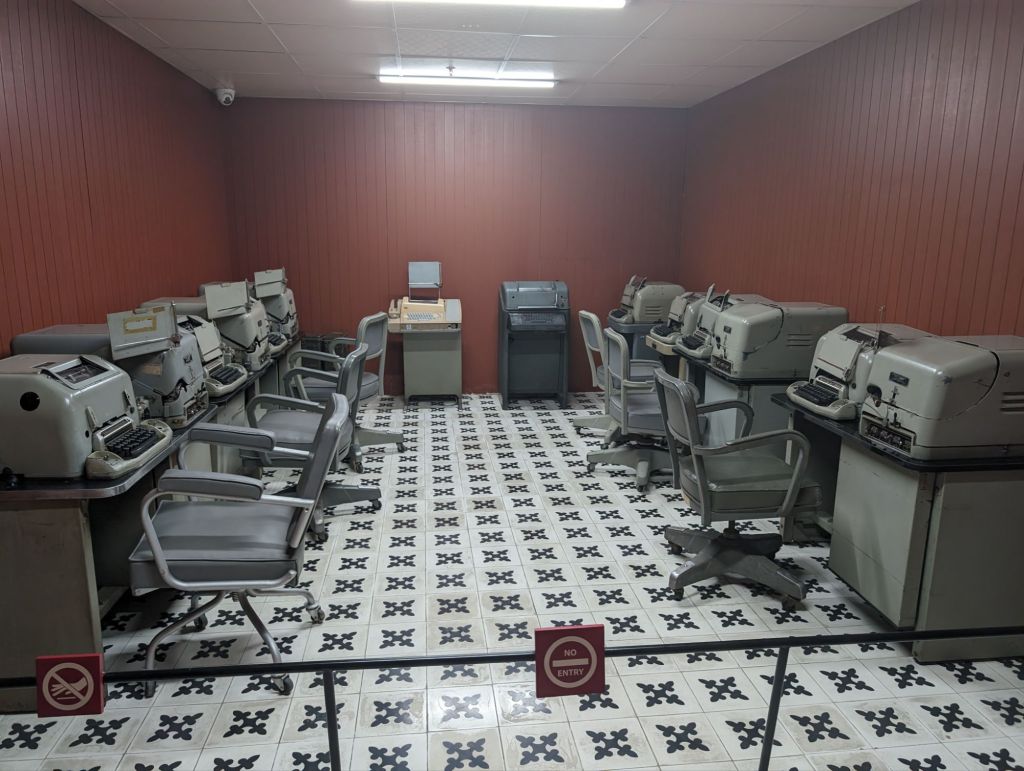
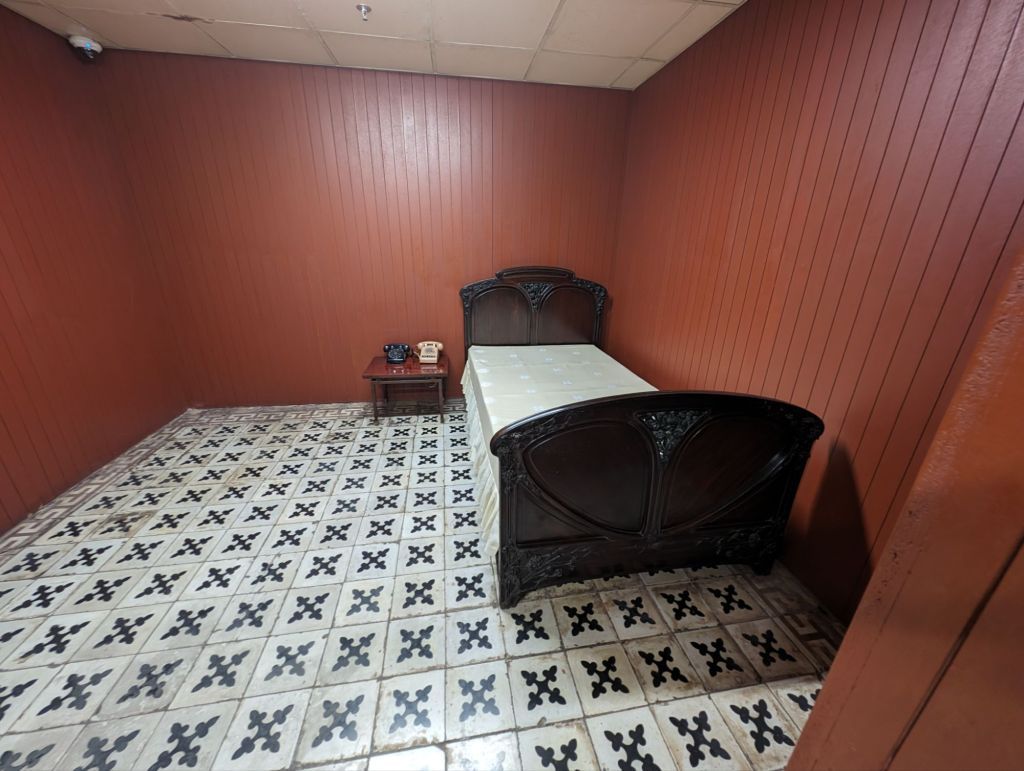
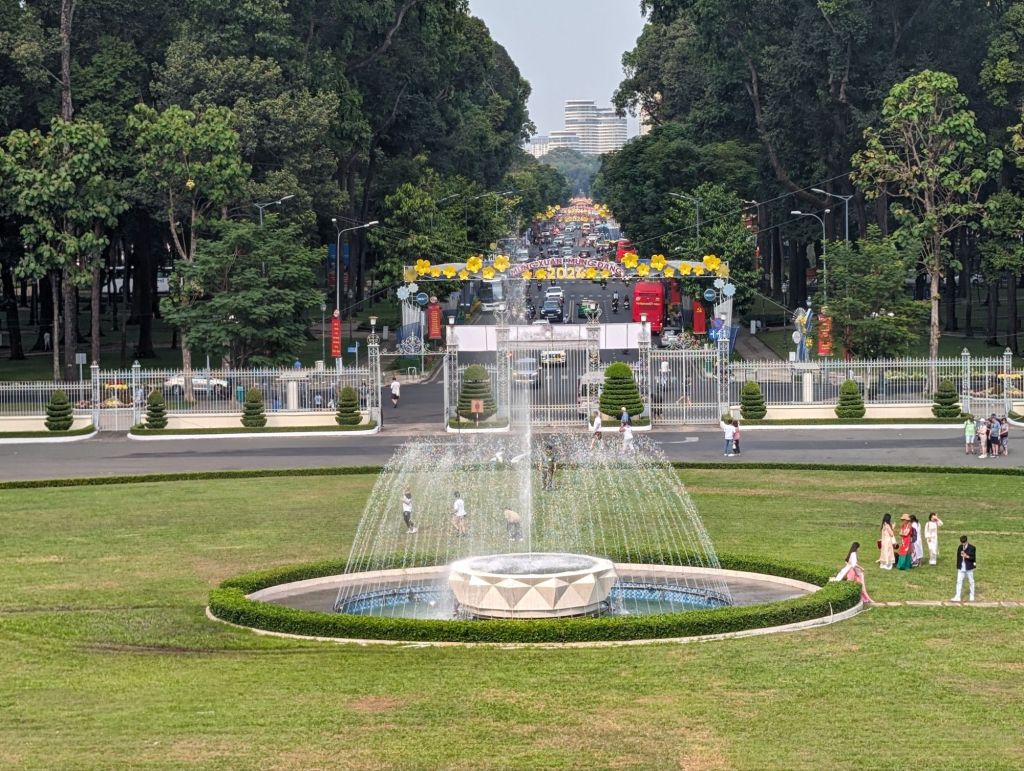
The Independence Palace is another landmark of Saigon and can be toured today. It was ordered built in 1962 by then president Ngo Dinh Diem to replace the palace which had been bombed by dissidents. Diem was assassinated in a coup before he ever moved in. The new leader, General Durong Van Minh, lived and worked there until he escaped when the North Vietnamese army bulldozed through the front gate in 1975. Inside we saw the rooms where he worked and met with foreign leaders including Kissinger and Nixon.
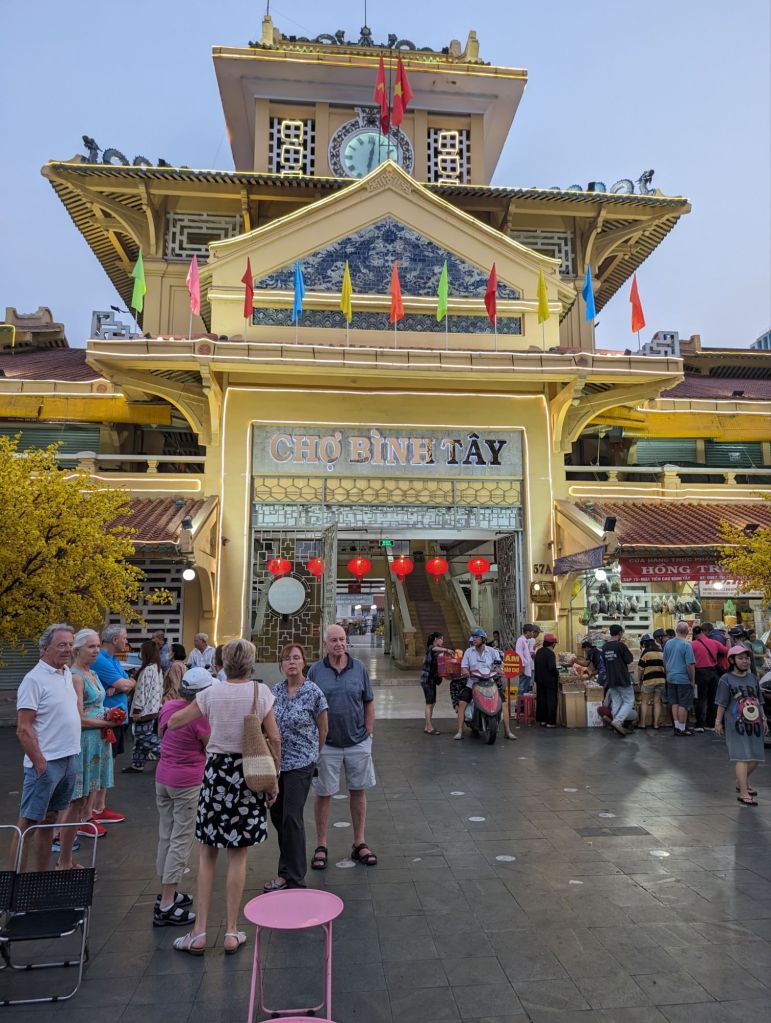
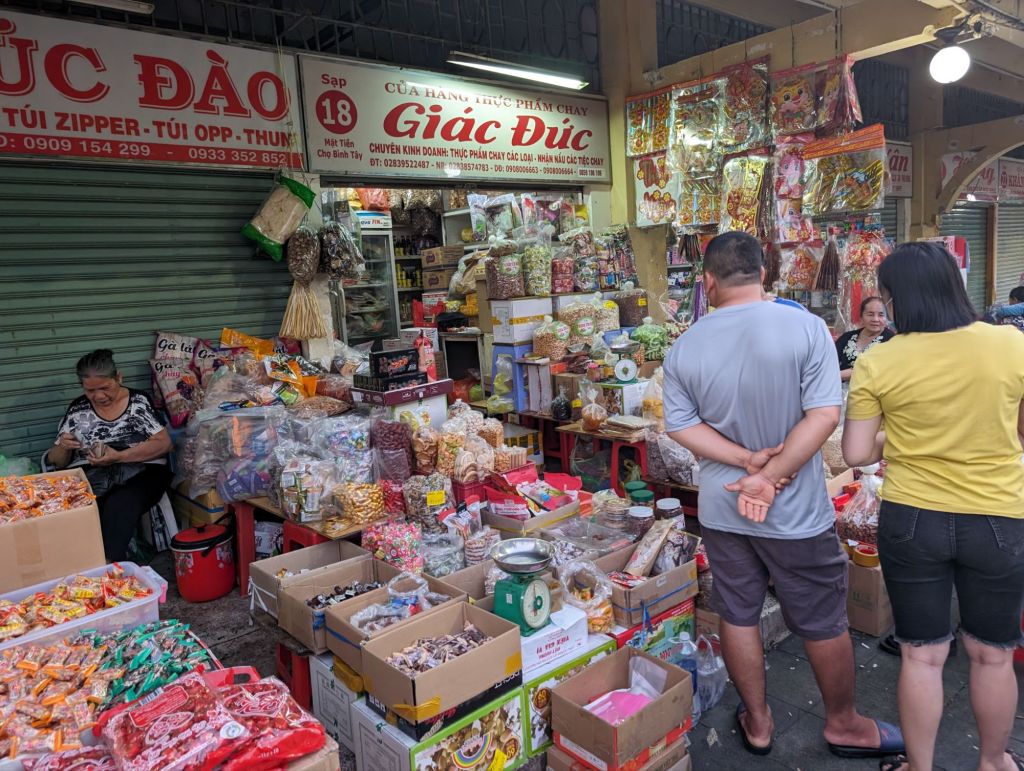
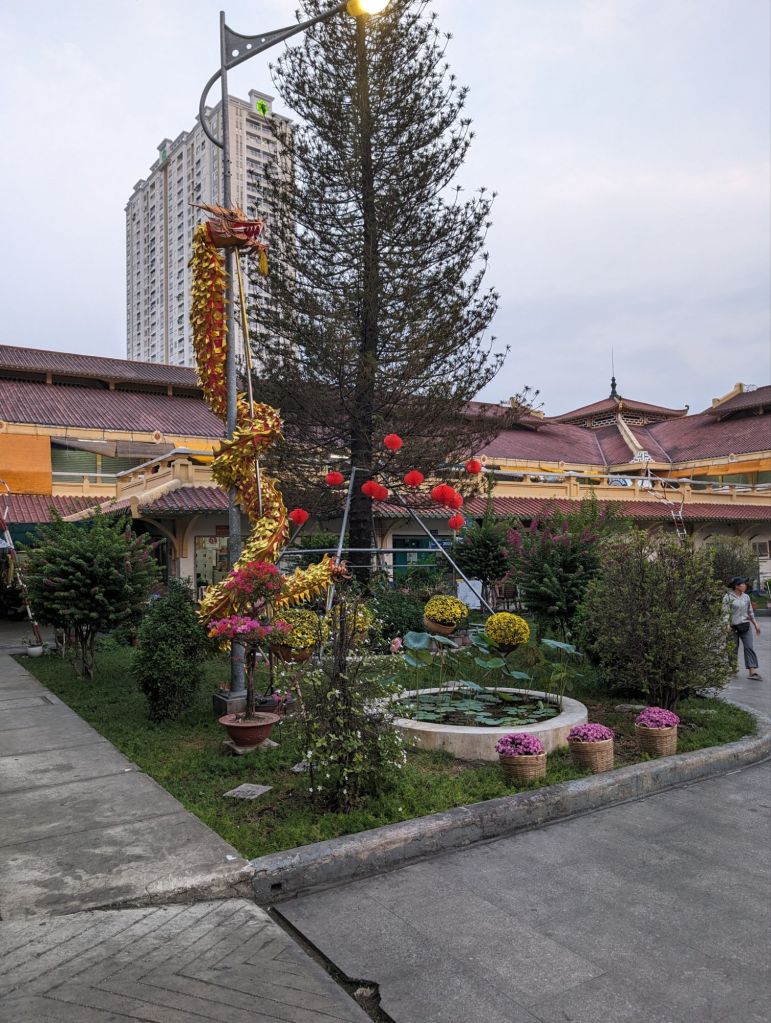
By the time we got to the Binh Tay market at the end of our day, most of the vendors were shutting down or gone. Our guide explained the vendors were leaving town early so they could get home for the Lunar New Year. This is a huge wholesale market mainly used by the locals and one of the oldest markets in Saigon. We did get to see the lights illuminate the front clock tower, below.
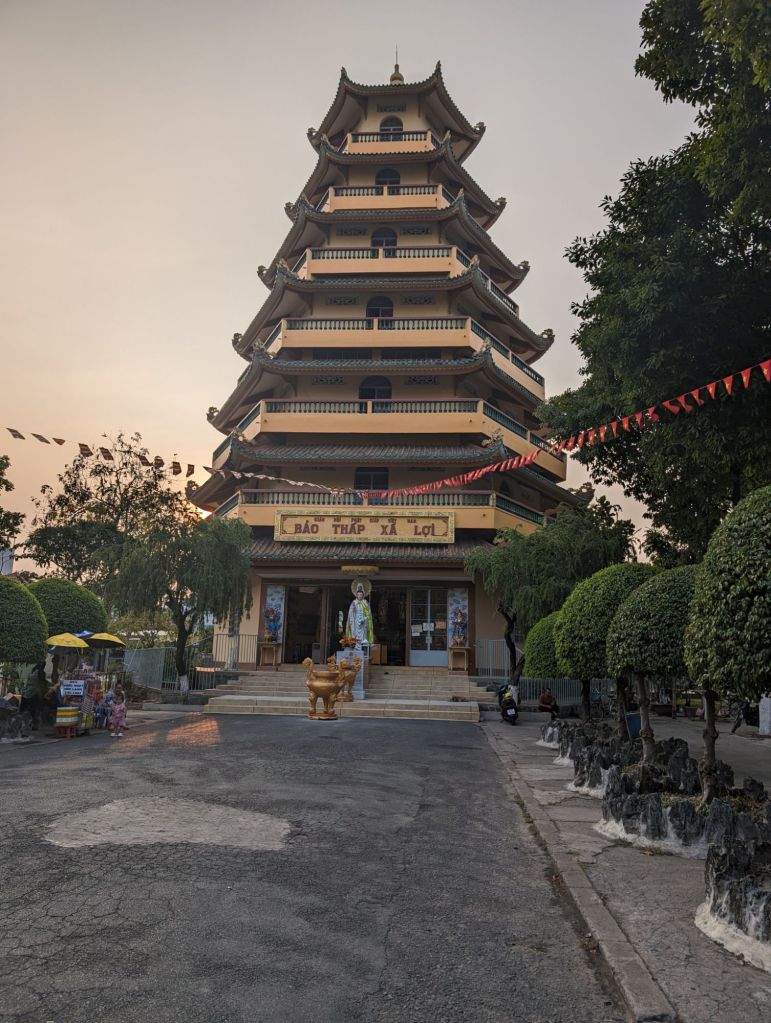
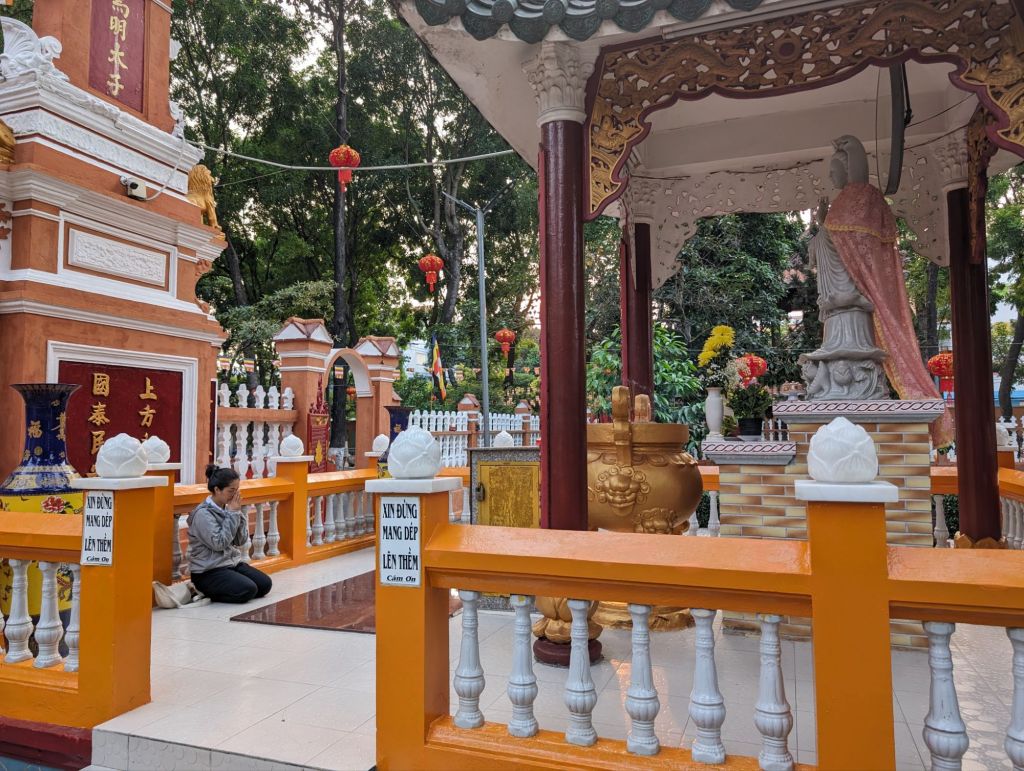
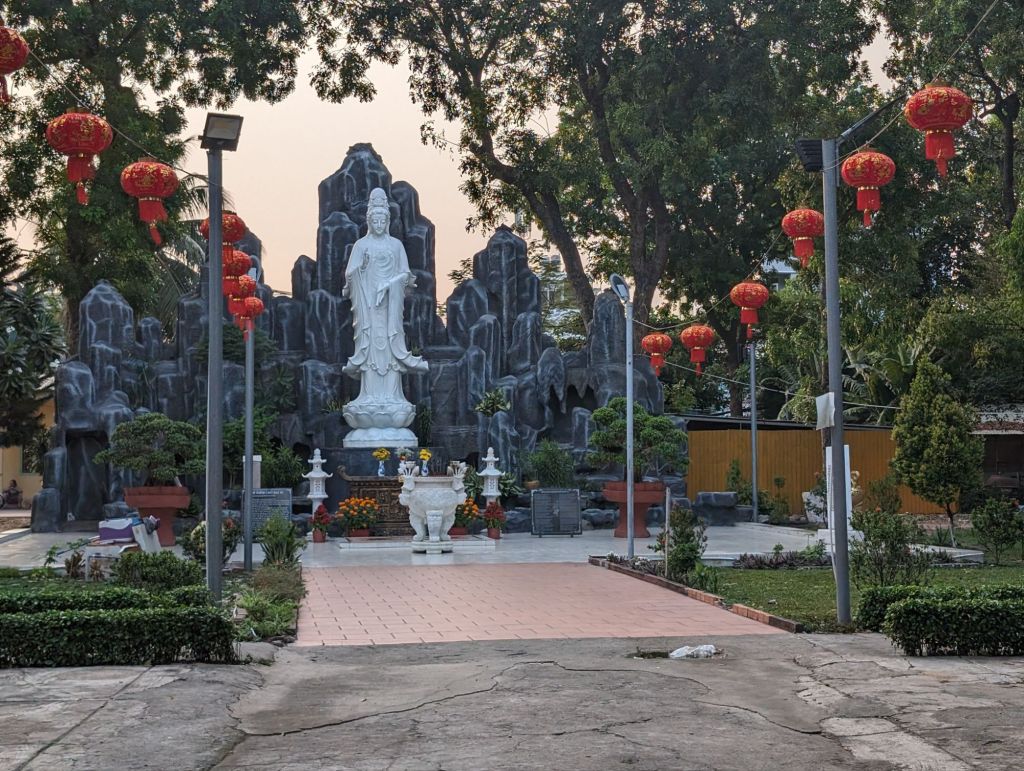
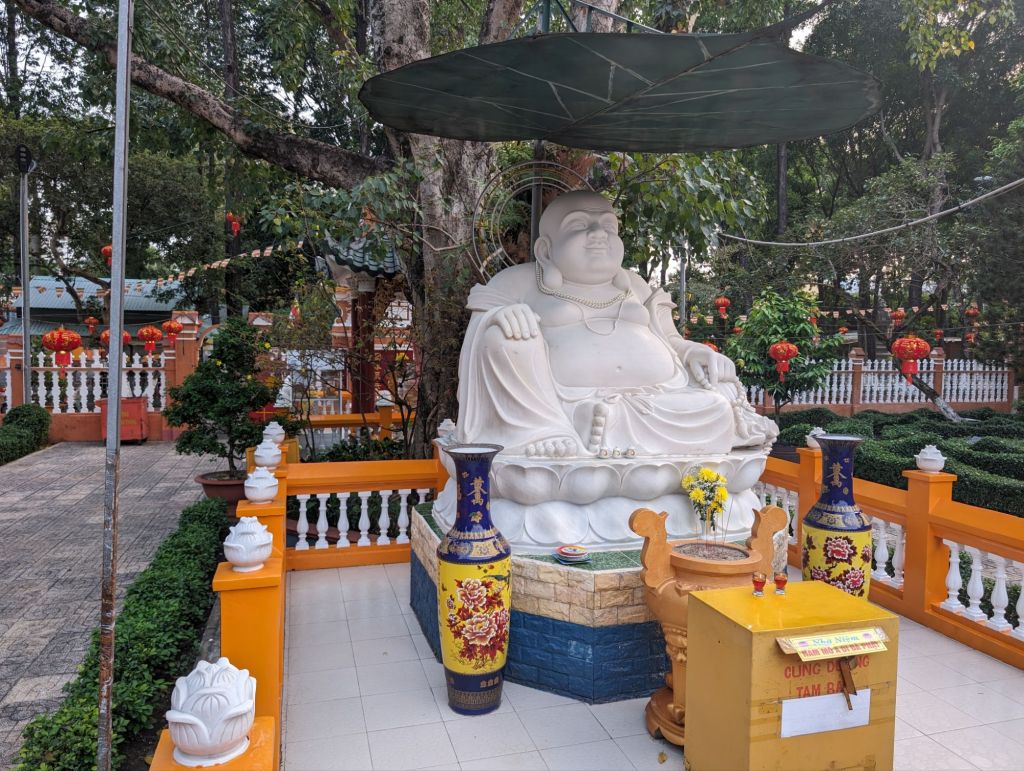
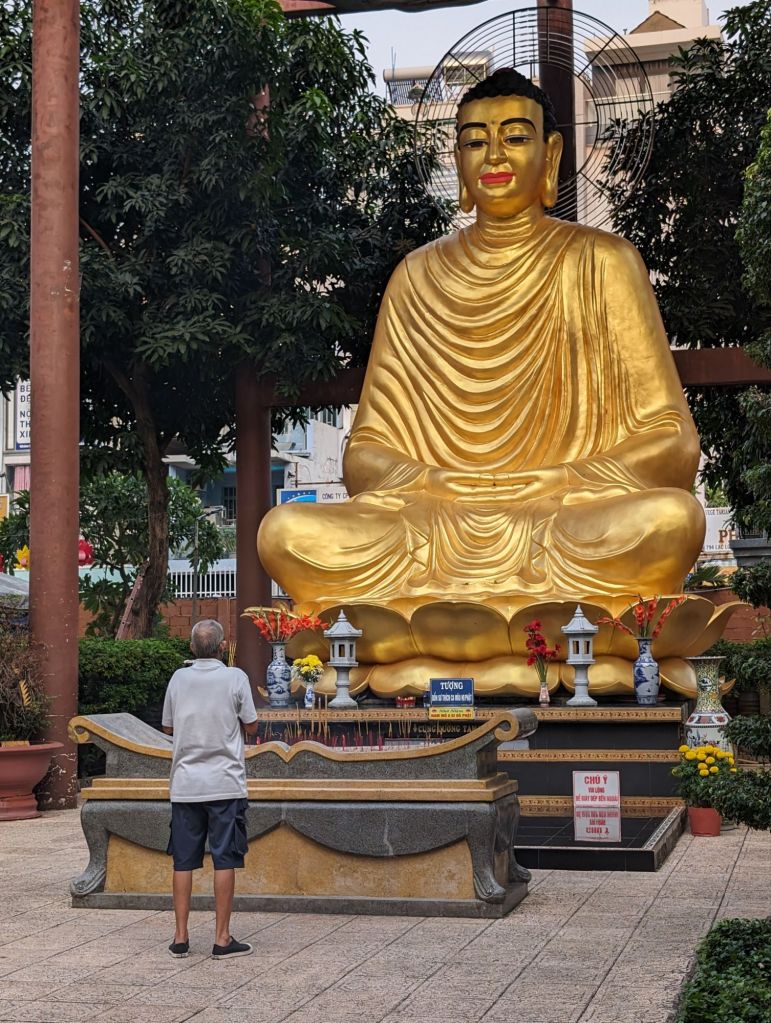
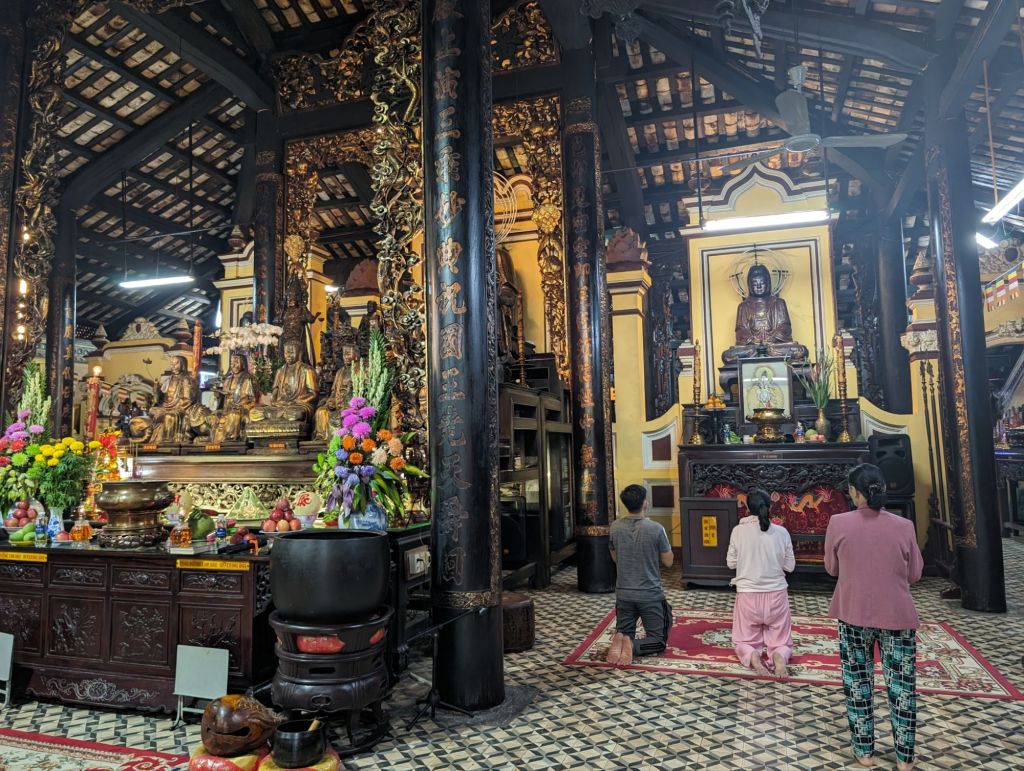
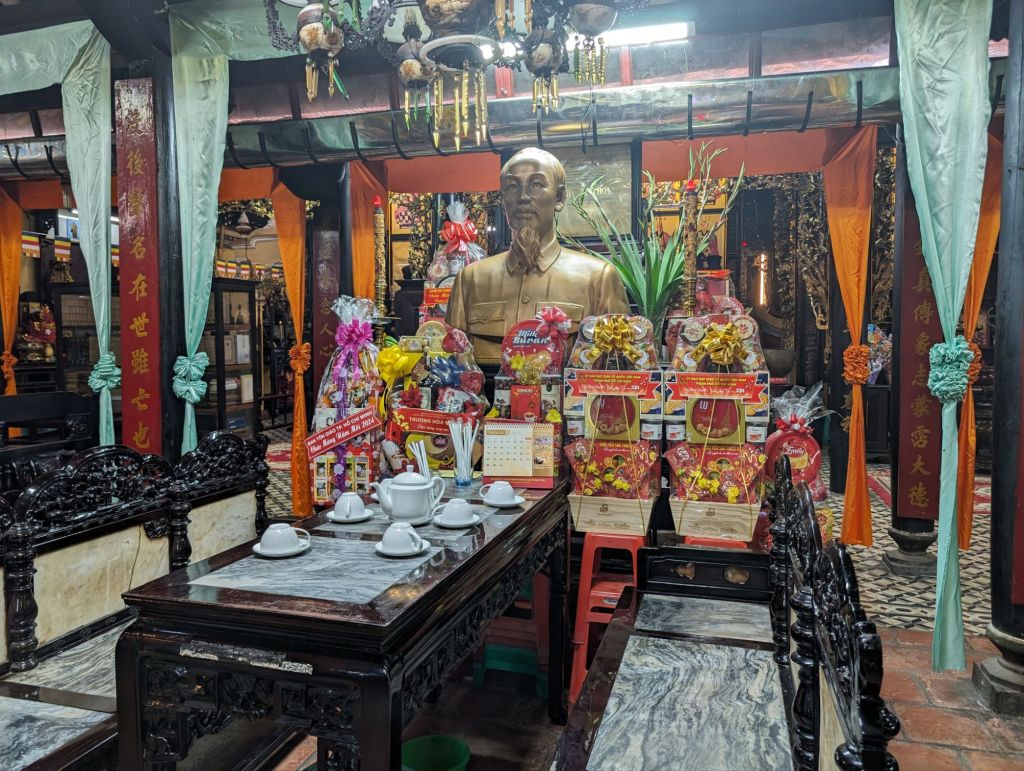
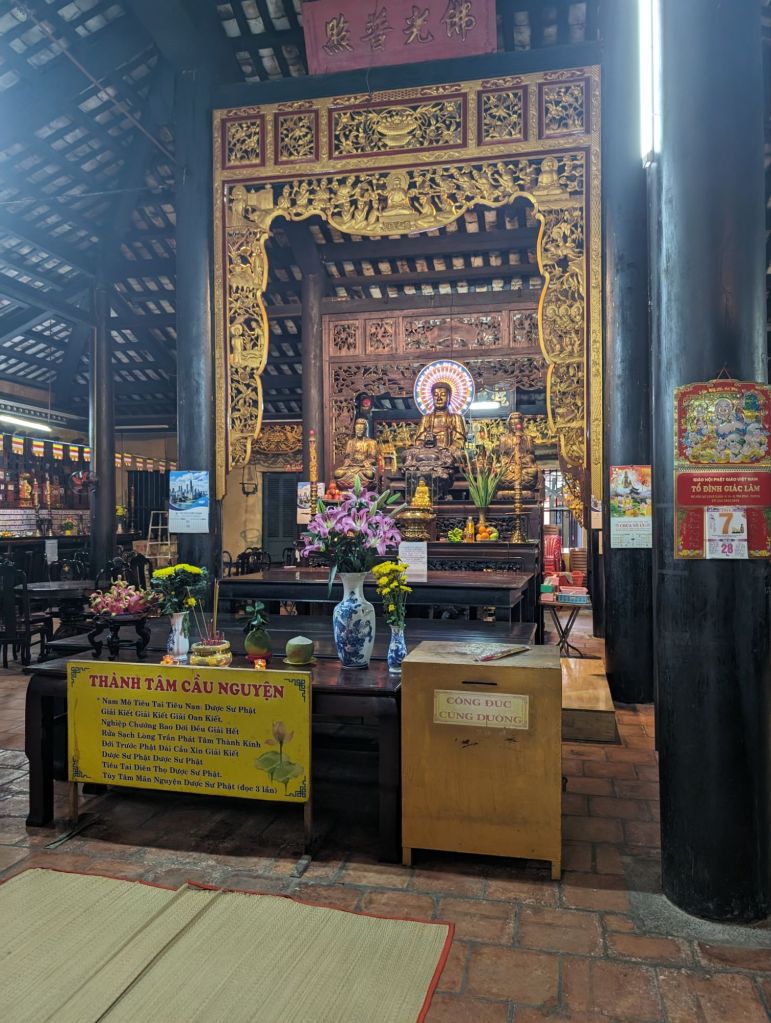
The Xa Loi Pagoda, the largest in Saigon, was built in 1956 to house a sample of the relics of the Buddha. Behind the pagoda on the site are other lovely shrines.
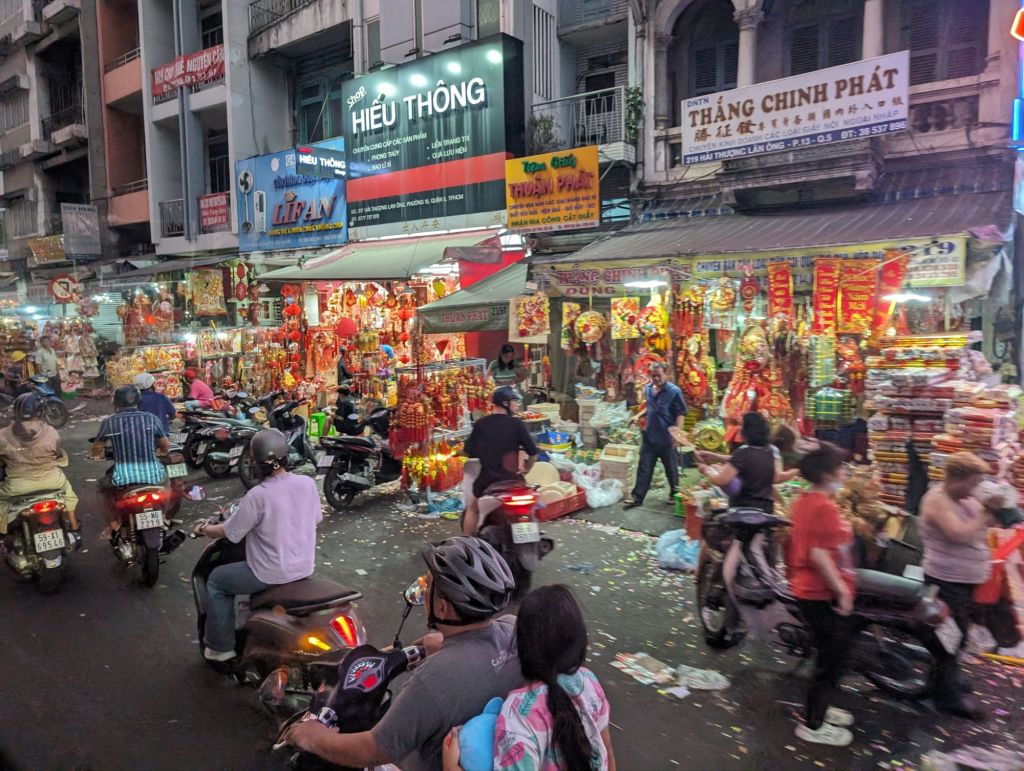
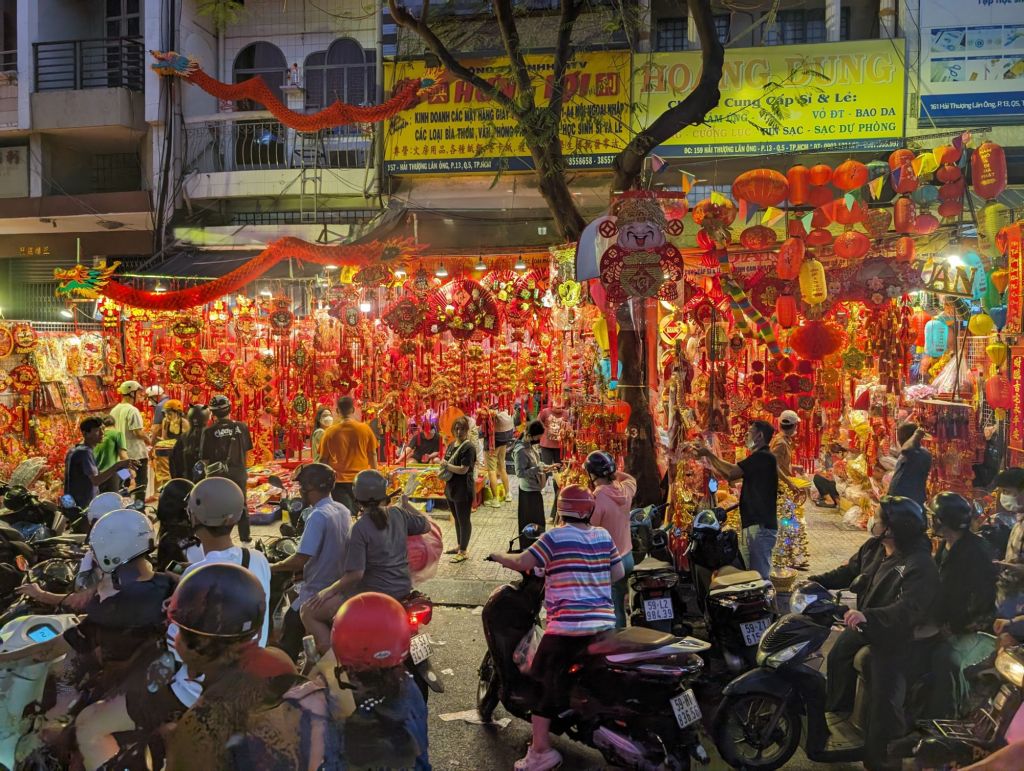
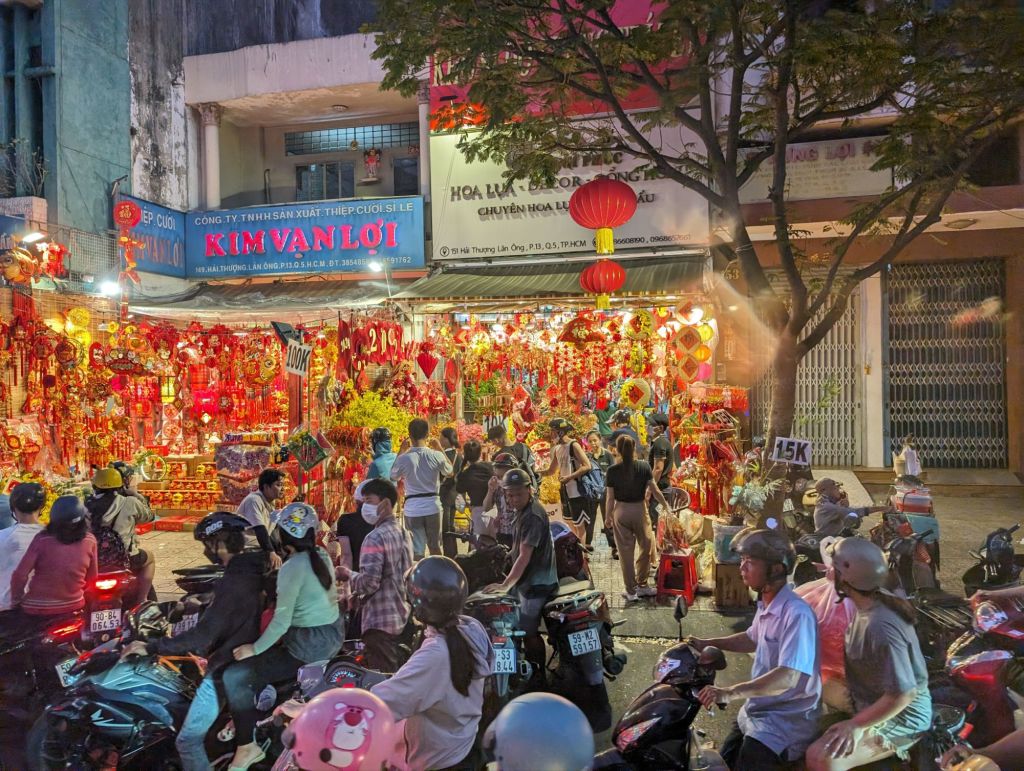
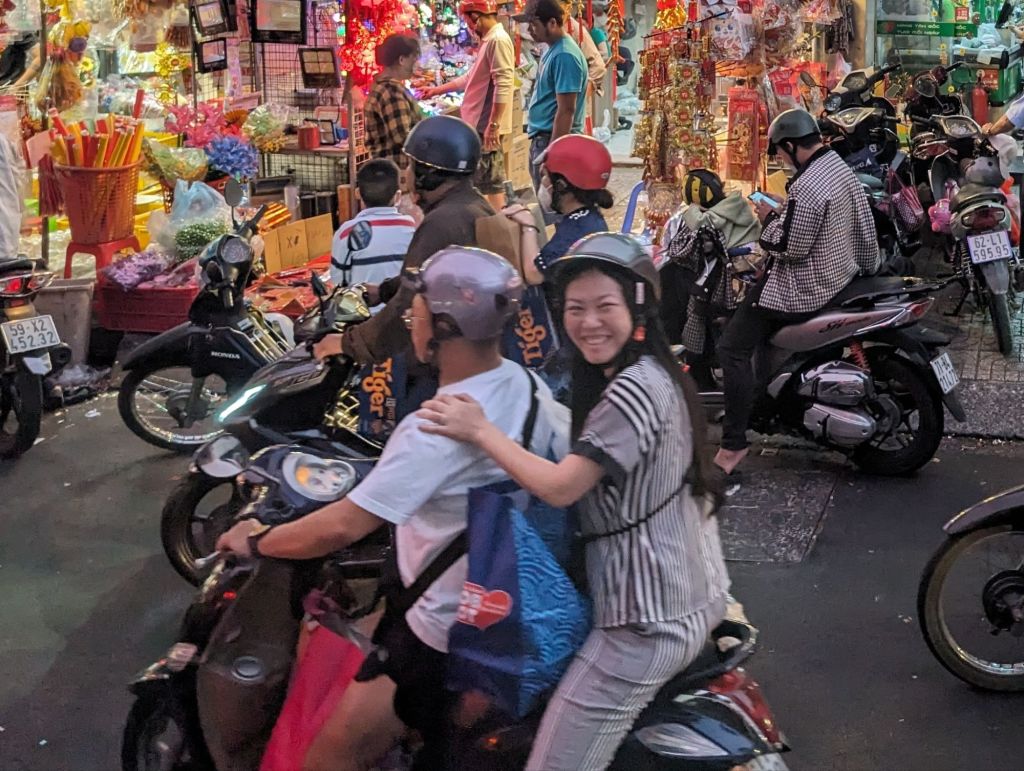
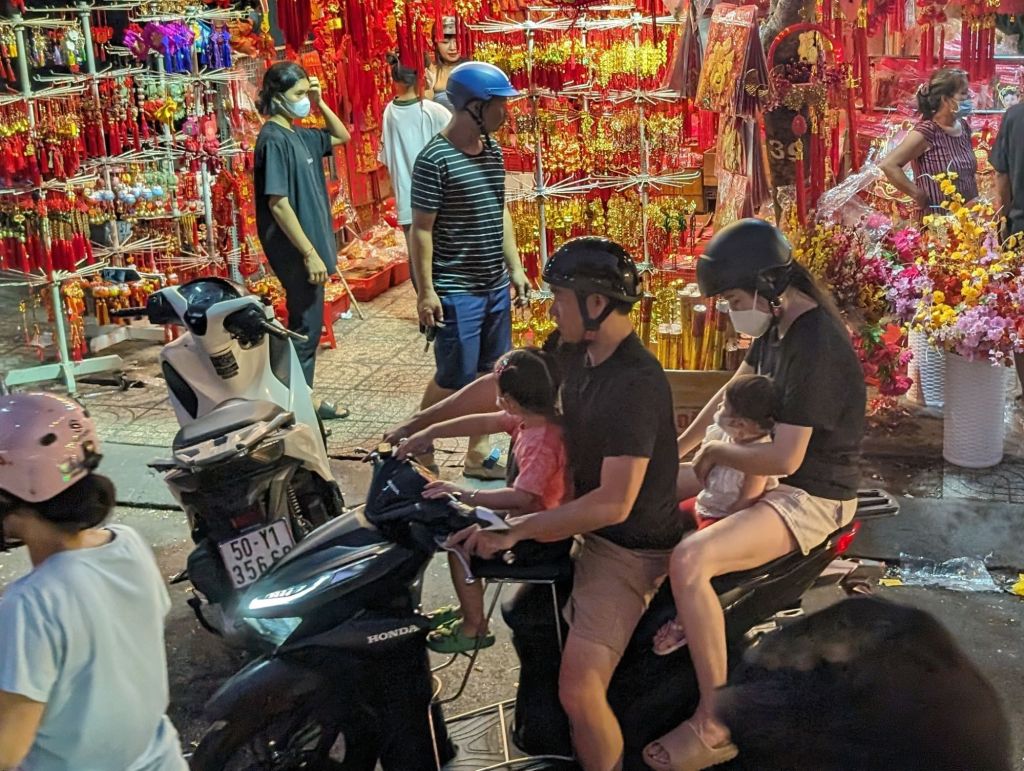
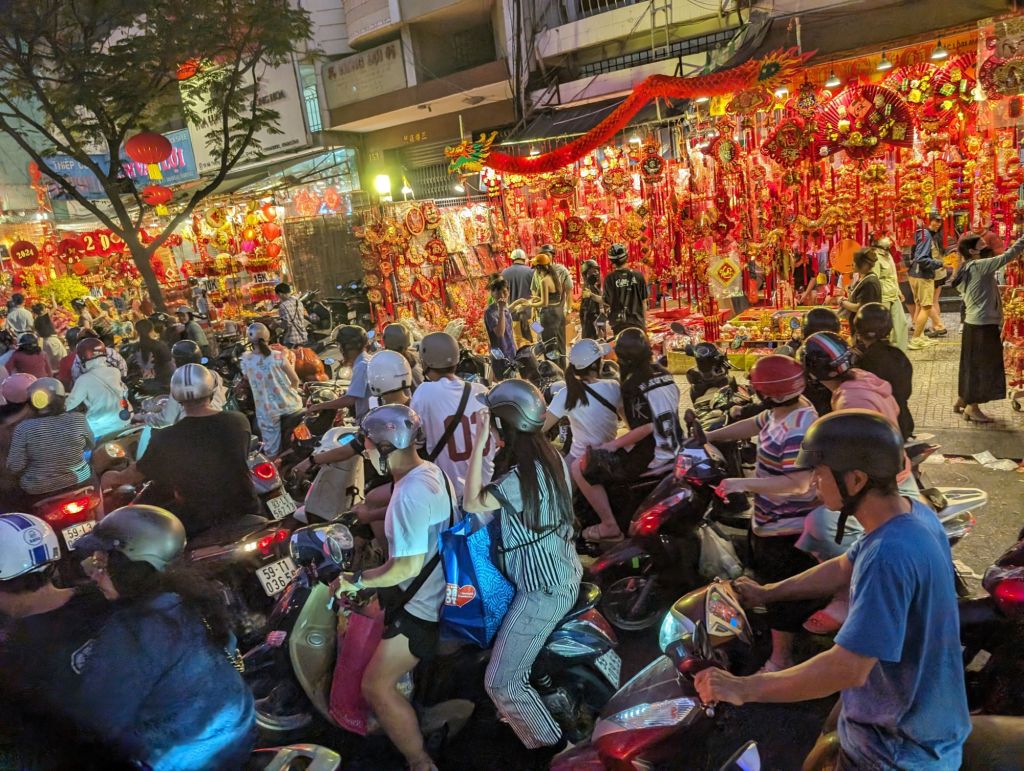
Night in the city…we ended our first day in Saigon as the city was coming alive with lights and New Year’s decorations and throngs of motorbikes were filling up the streets.
 J and J Travel