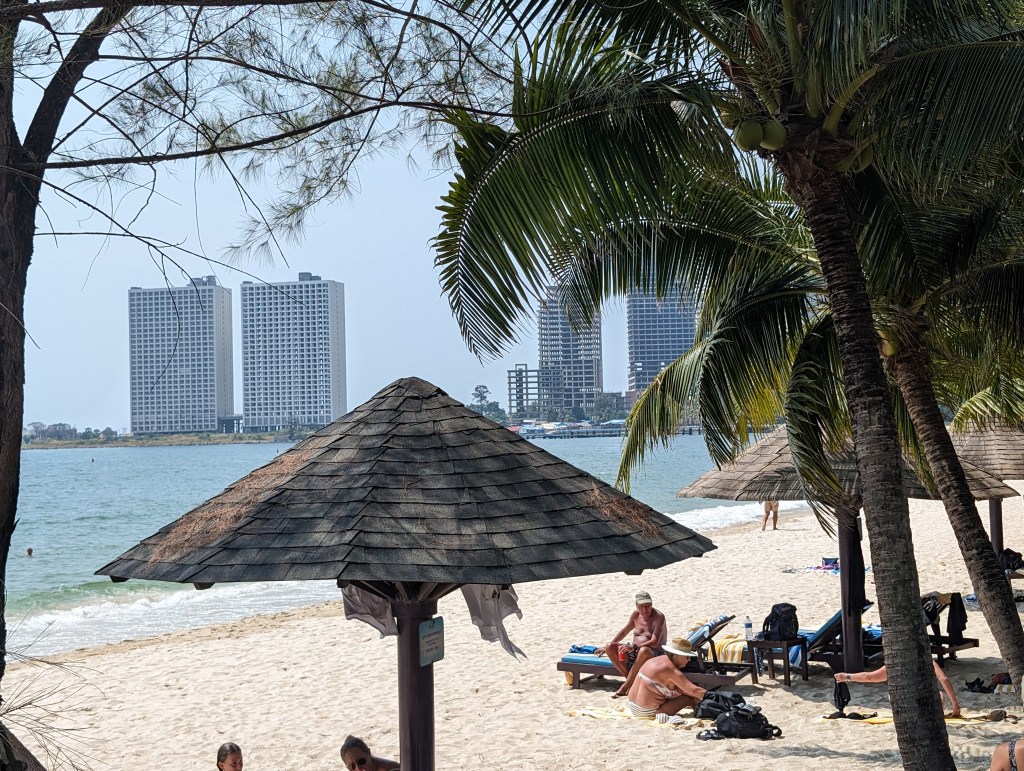
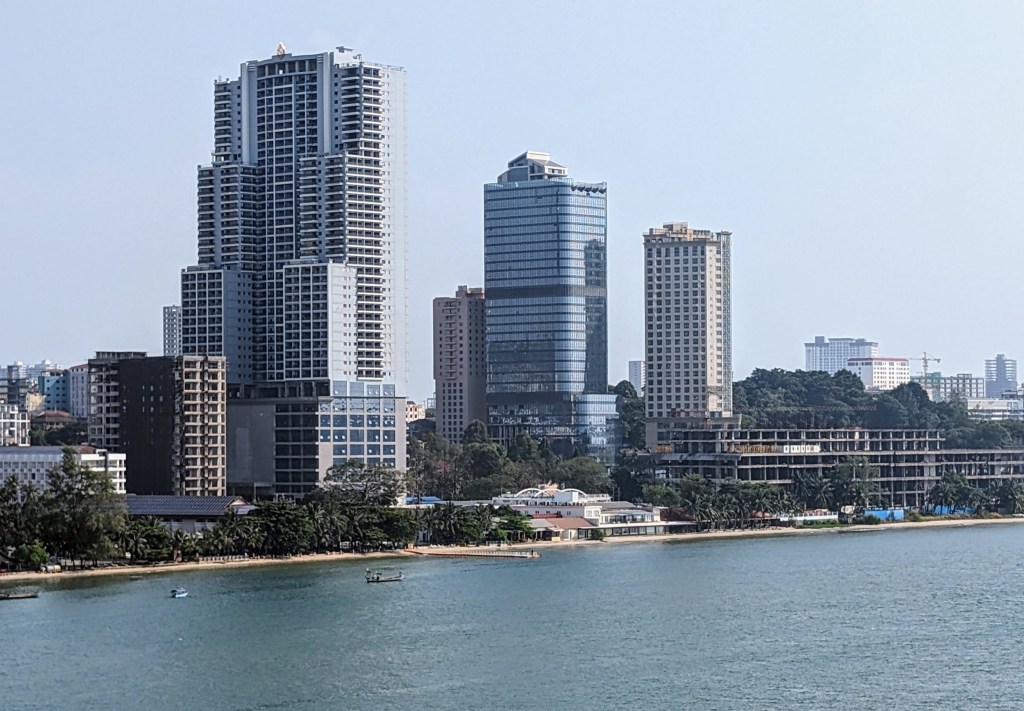
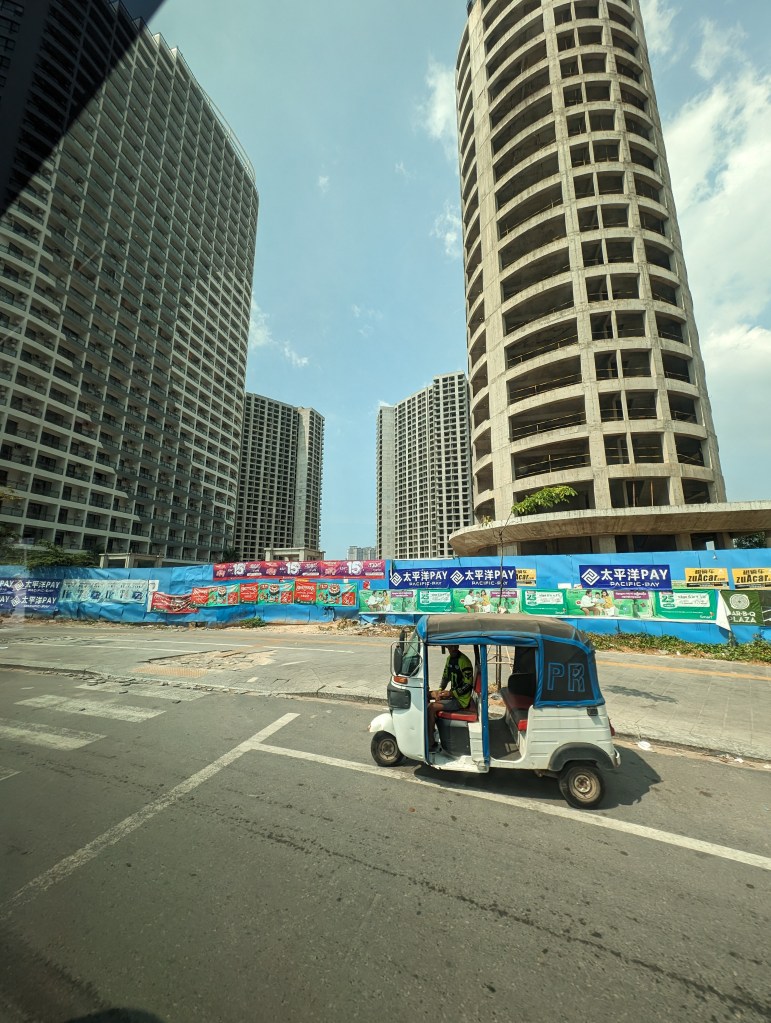
The coastal city of Sihanoukville in southwestern Cambodia is a portrait of a city trying to create a vibrant tourist resort while still rebuilding after a decimating civil war and the recent COVID epidemic. Its attractive beaches position it as a popular getaway vacation spot. Less than 10 years ago Chinese money started pouring in, building dozens of hotels and casinos, which transformed this once sleepy town. Then came COVID and China’s own economic problems and a lot of that building halted. Now the town is a stalled construction project. Look through the palm leaves of the beach scene below and you will see that all those buildings across the water are empty shells. The picture below that is another scene with skeleton high rises dominating the completed buildings next to them. Will the city become a Chinese owned and run resort or will it find a way to reclaim its spirit and control?
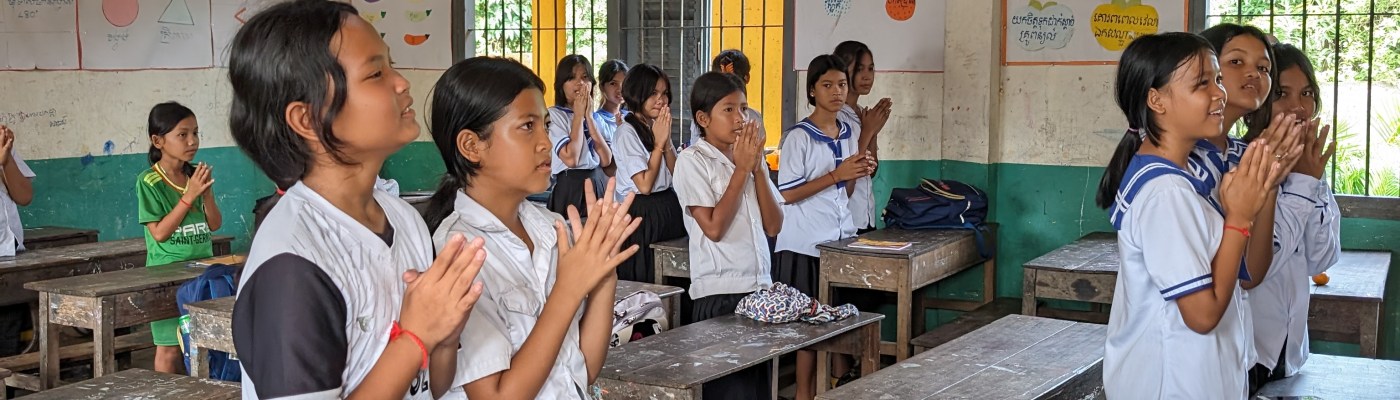
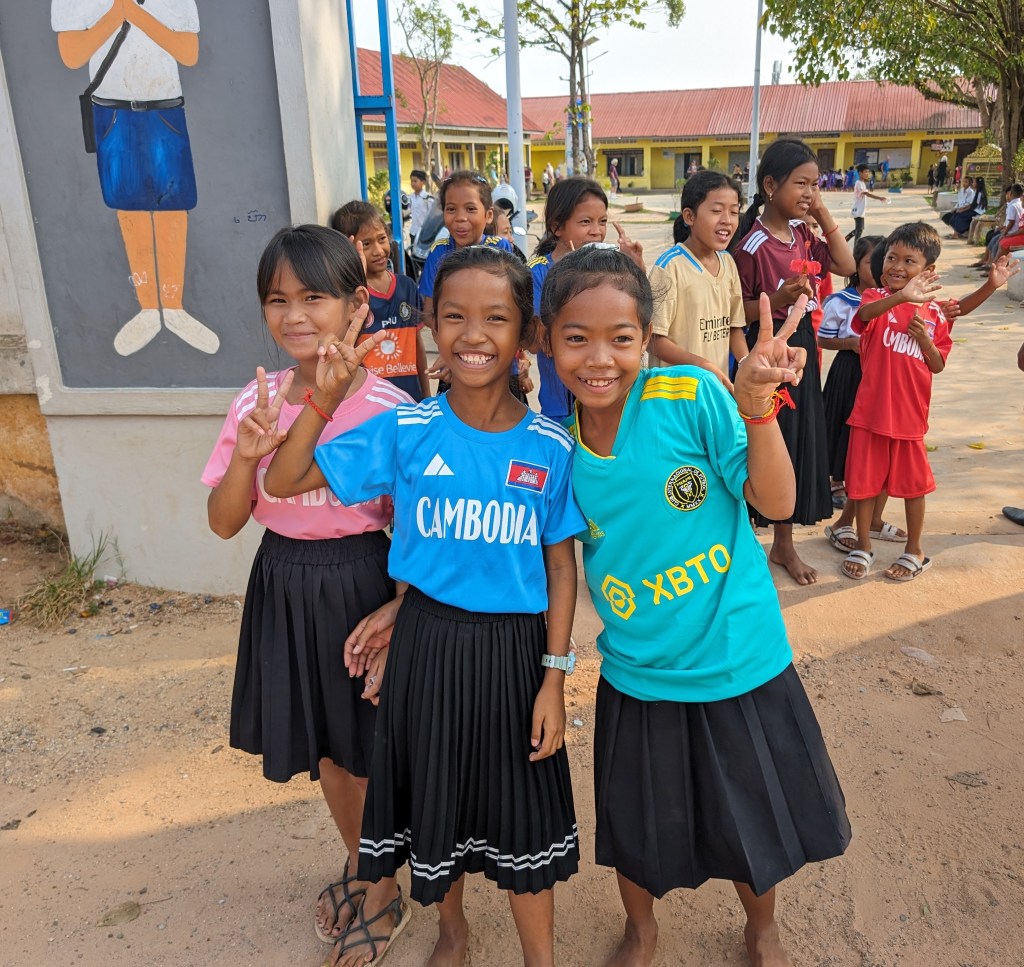
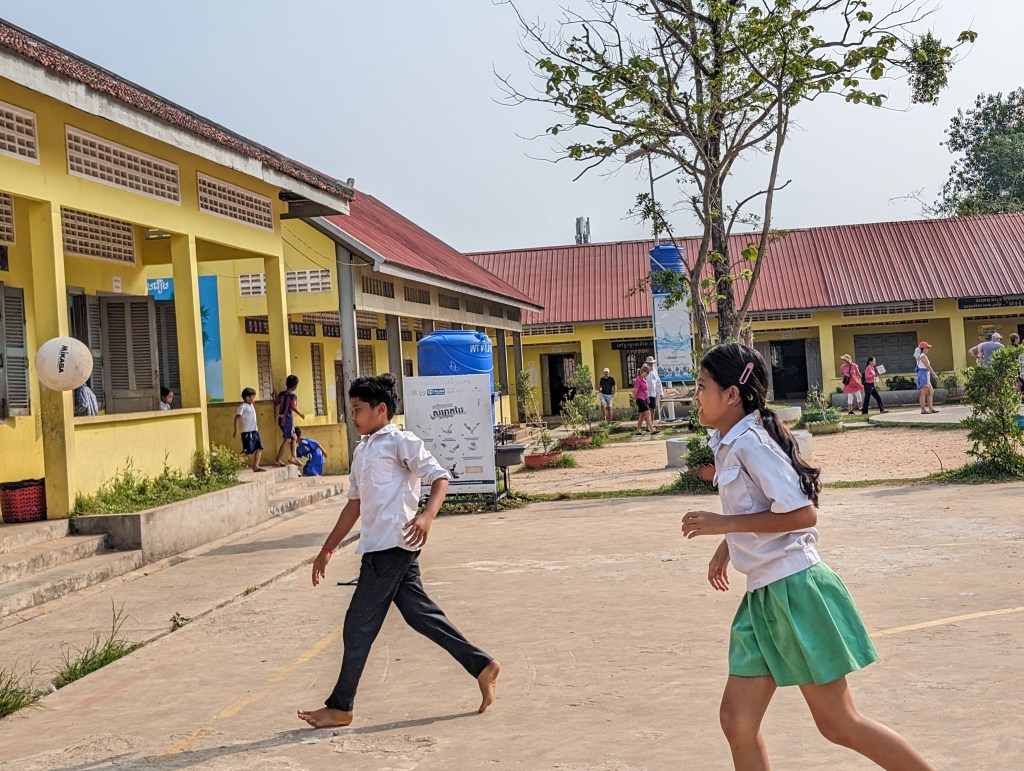
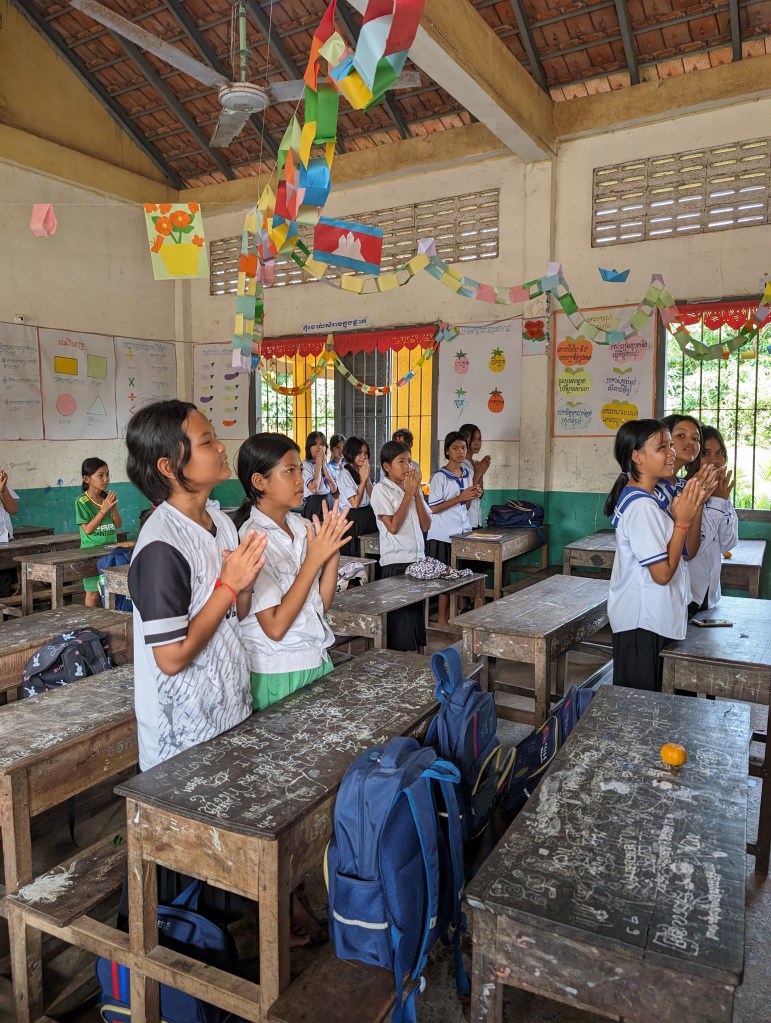
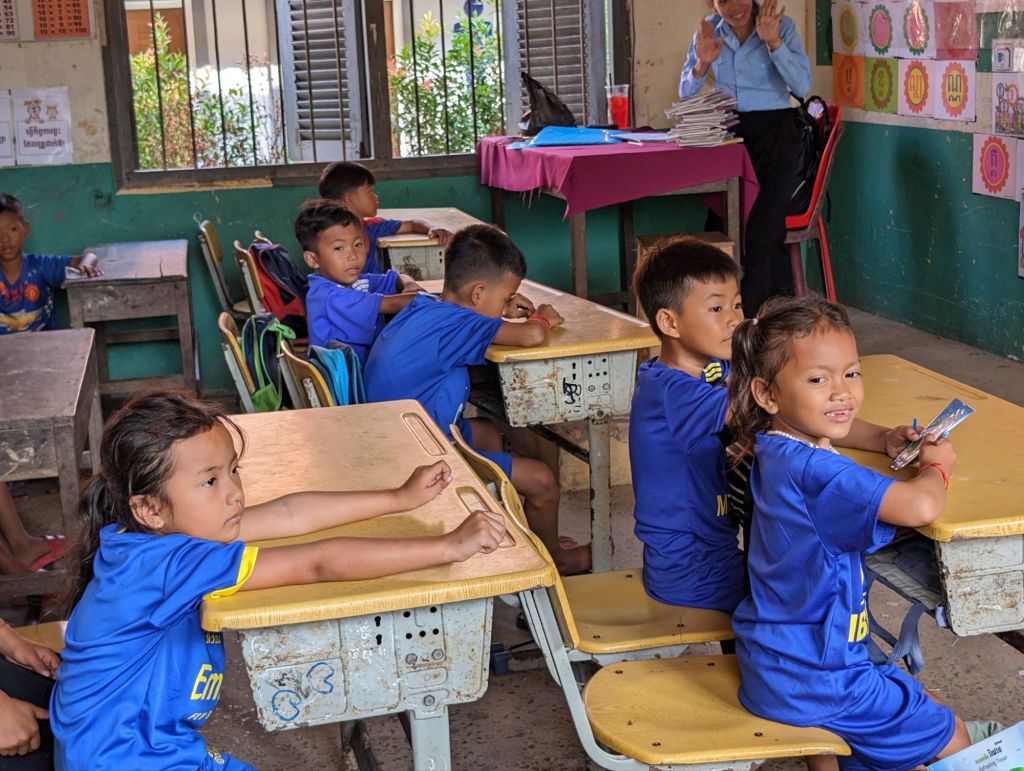
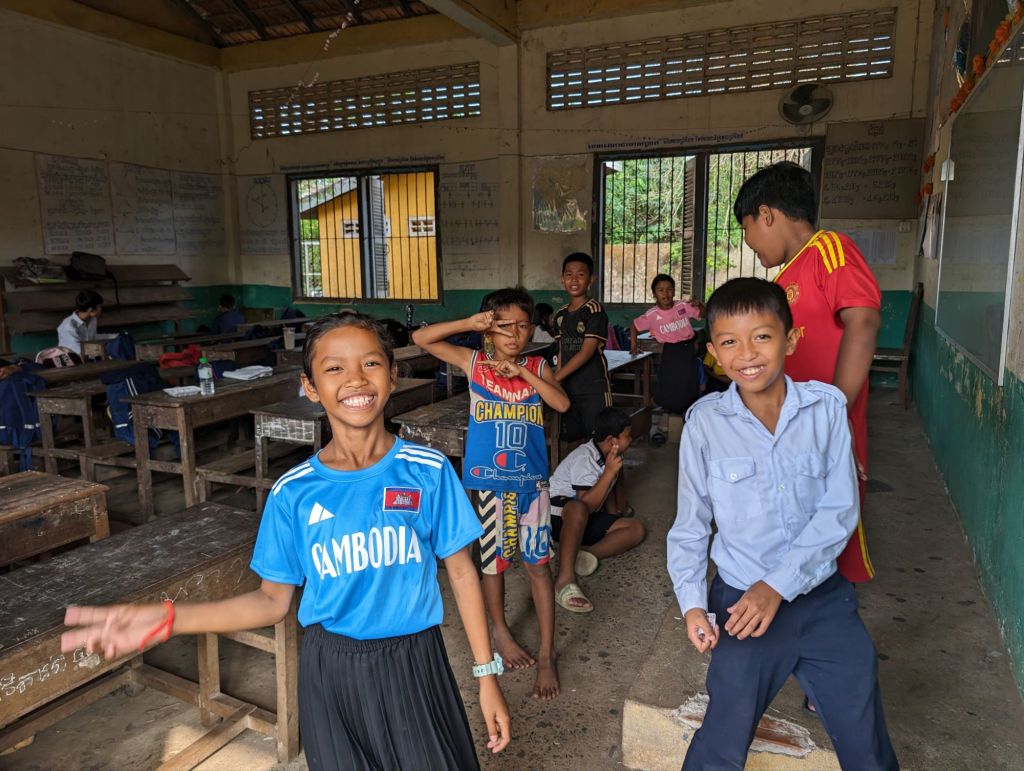
One thing that always gives hope for the future is the children. We visited a local school and were greeted by excited smiles, high fives and gifts of hibiscus flowers. The school is barebones, but the children were happy to practice their limited English.
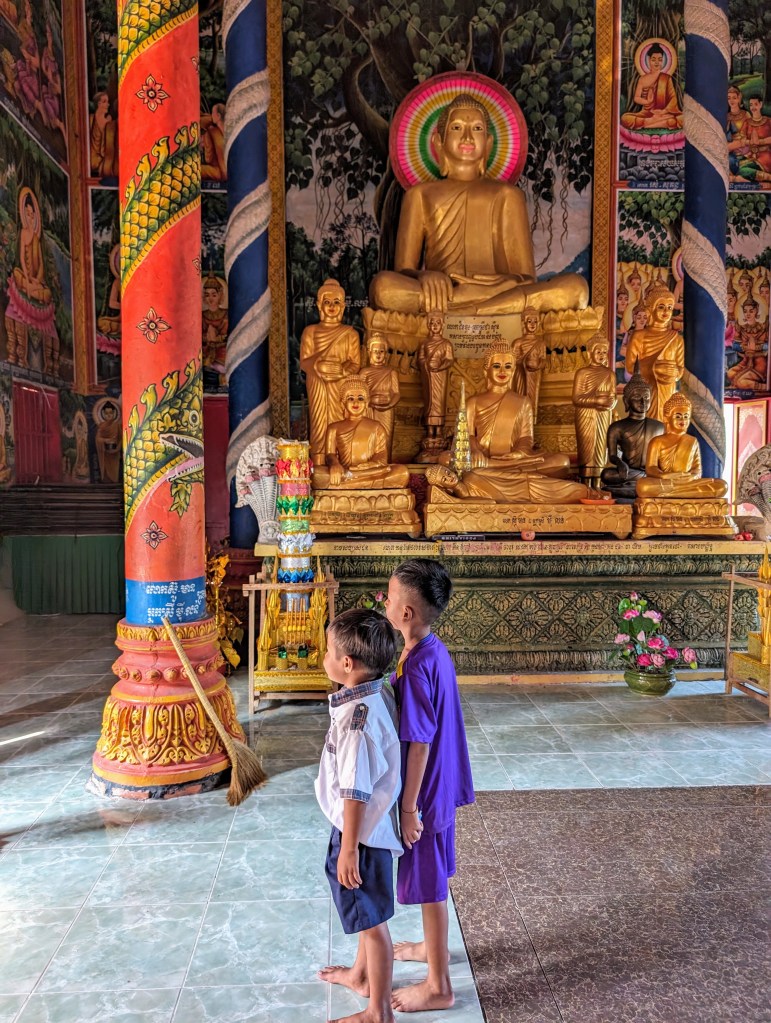
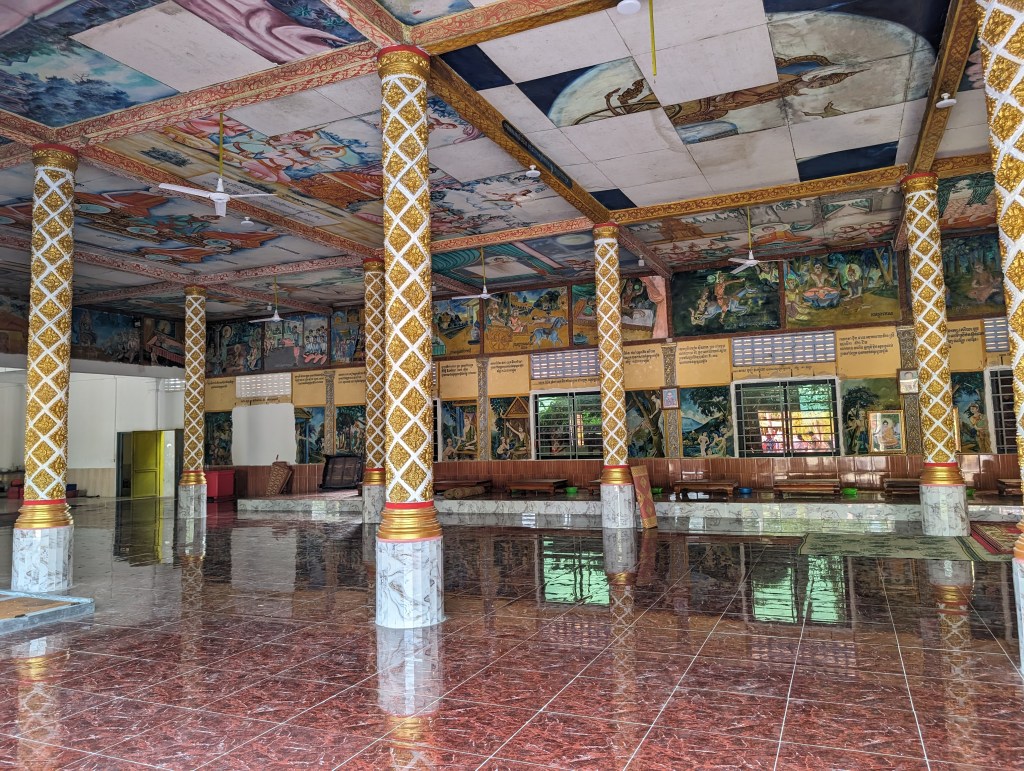
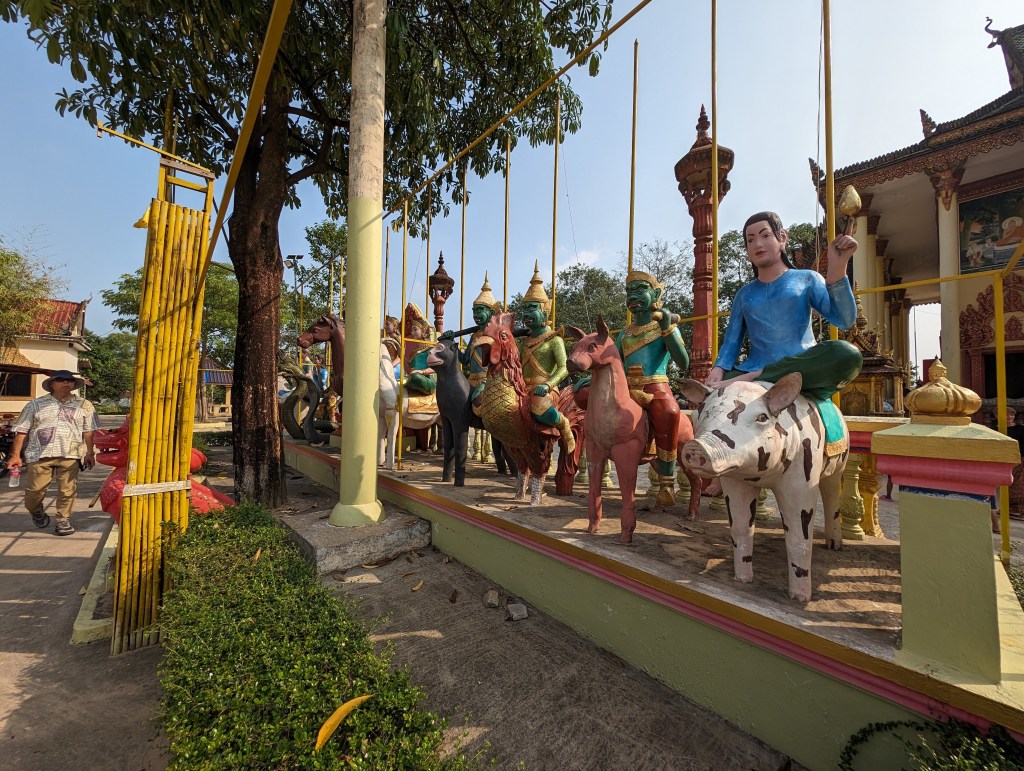
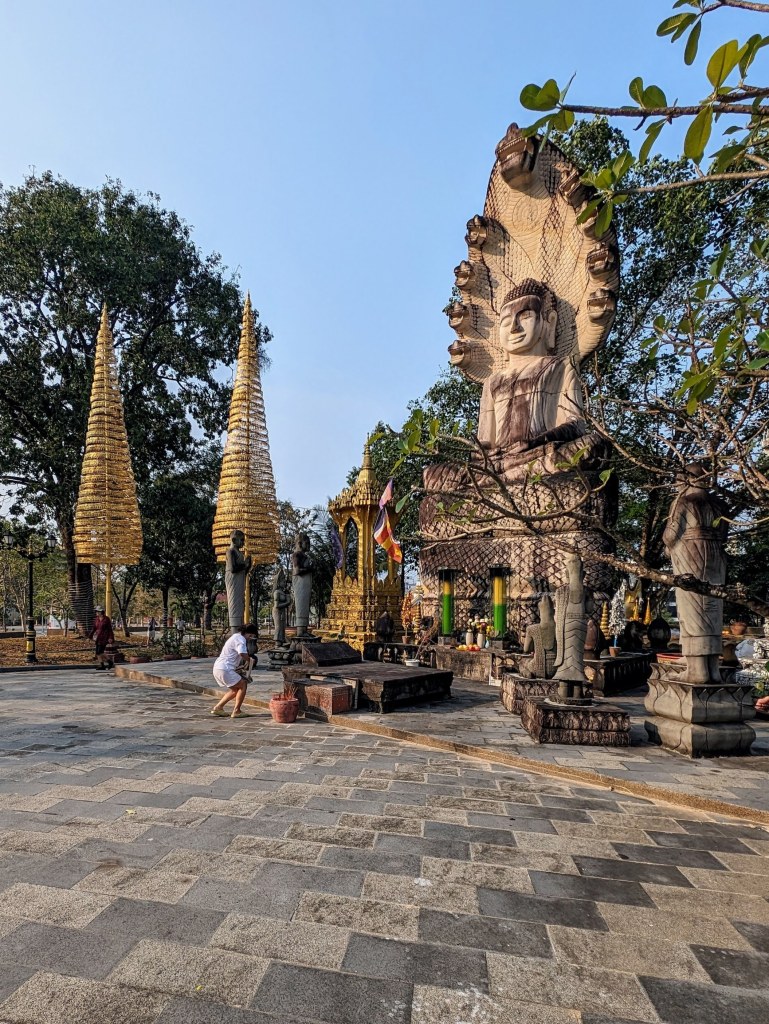
Next door to the school is the Betrang Buddhist Pagoda. The pagoda and the monk’s hall, below, are beautifully decorated with scenes from Buddha’s life. Like most of the religious temples and shrines in Cambodia, it is recent, since 95% of the Buddhist temples were destroyed during the civil war.

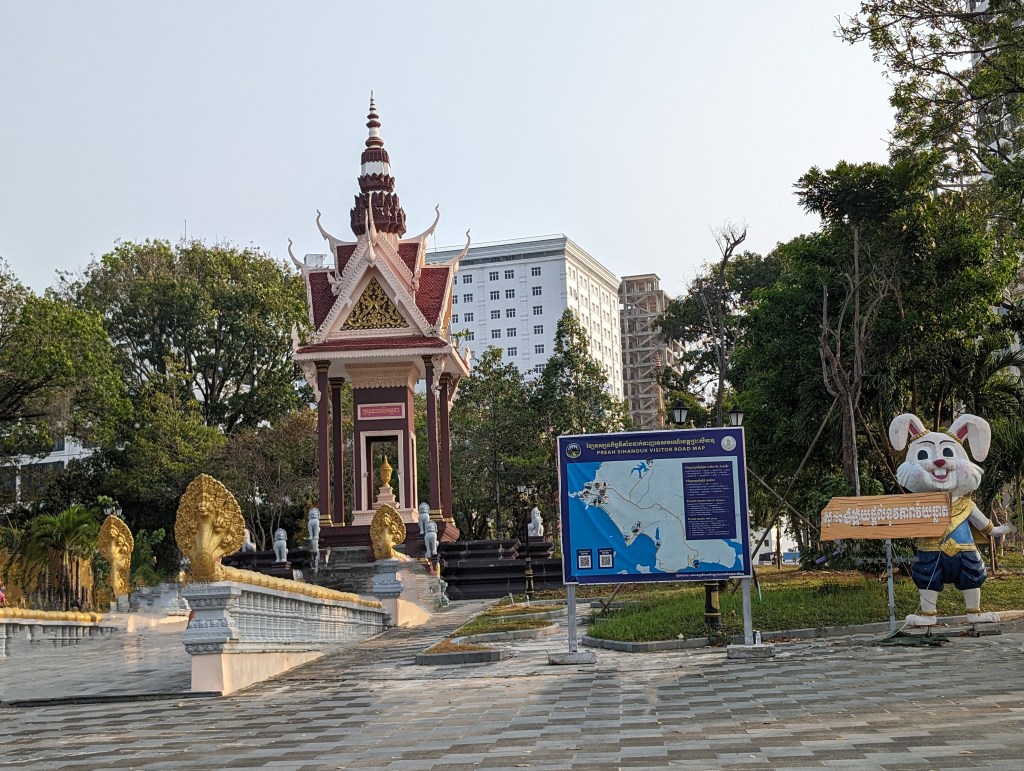
In the heart of town is Independence Square with the Independence Monument below. Note the urn-like structure in the center of monument. It is a memorial to the war dead and in honor of Cambodia’s independence. The rather incongruous rabbit on the right is a playful sign for children.
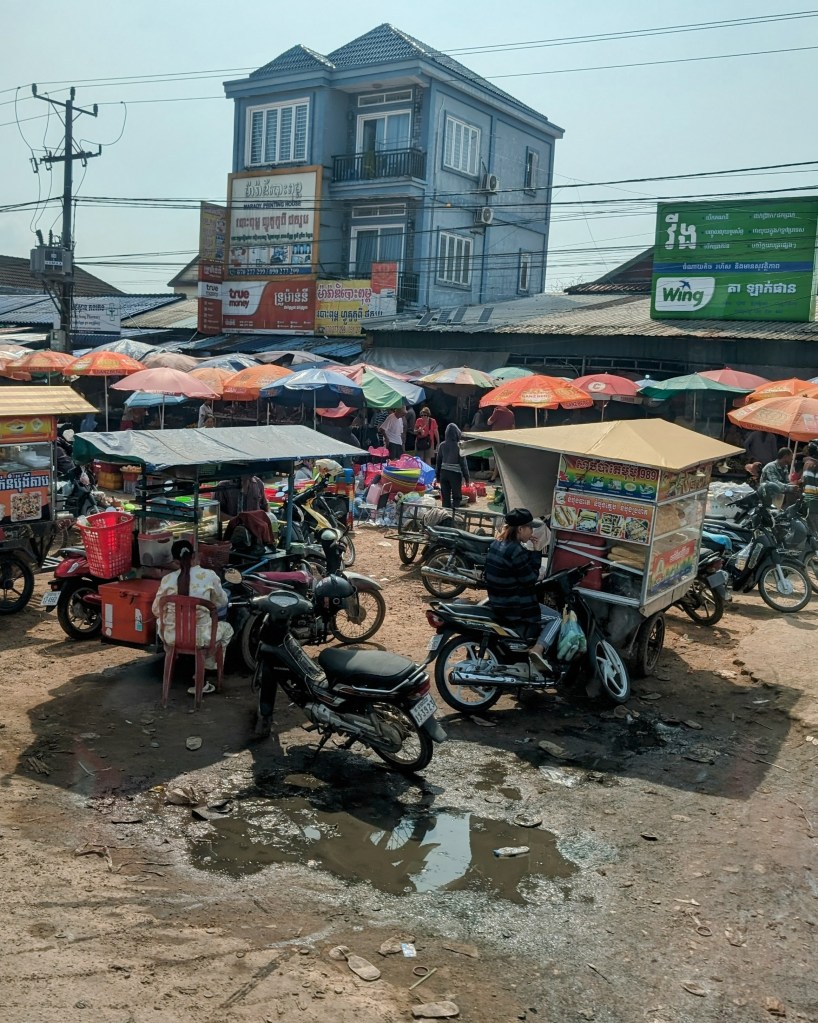
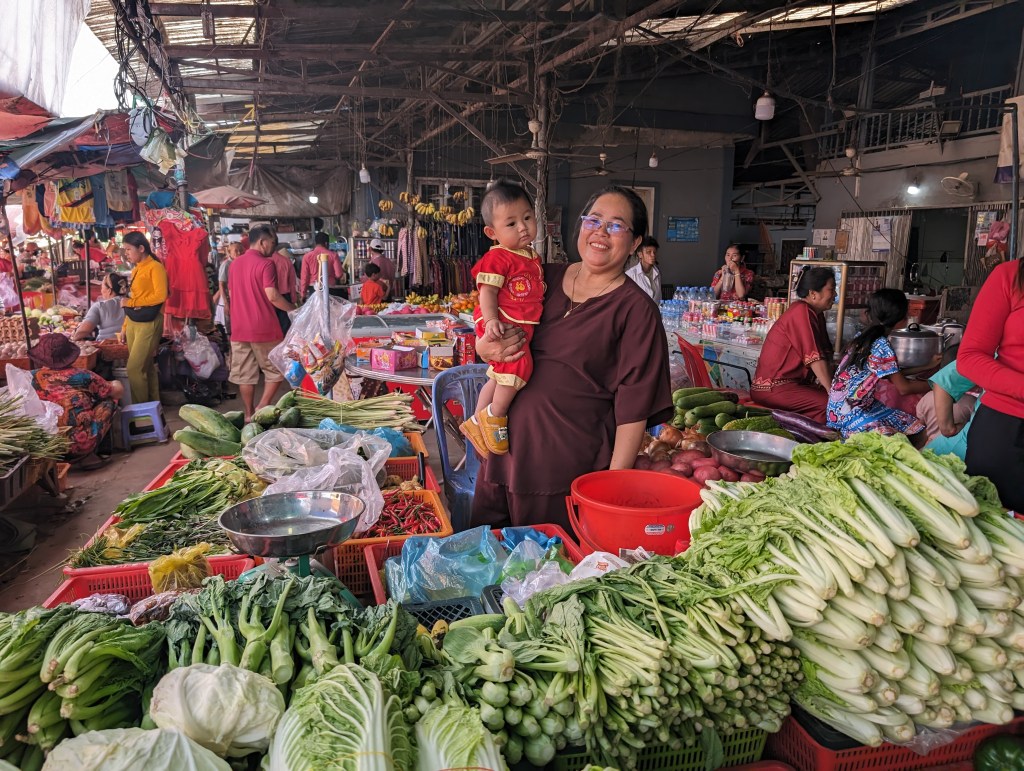
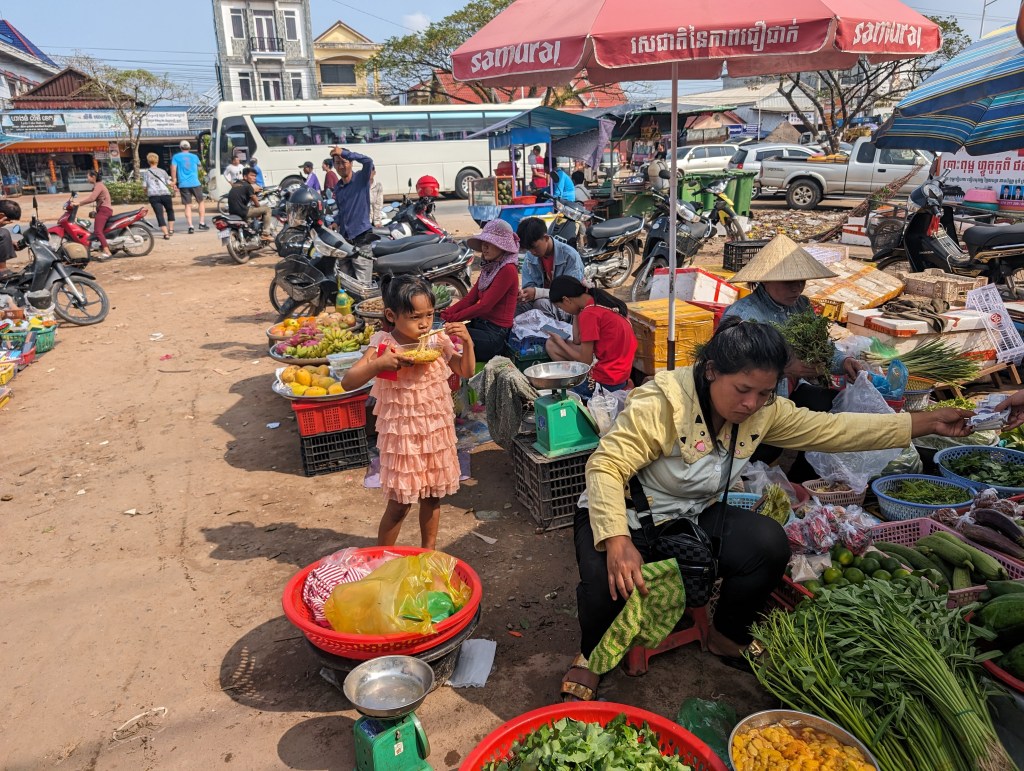
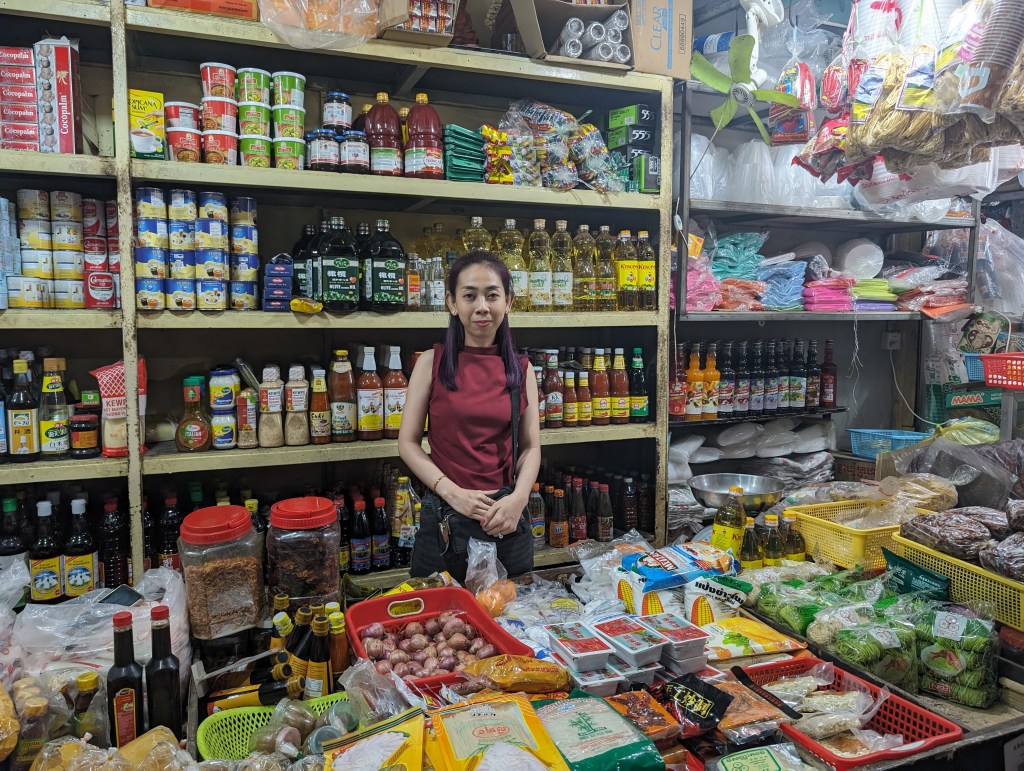
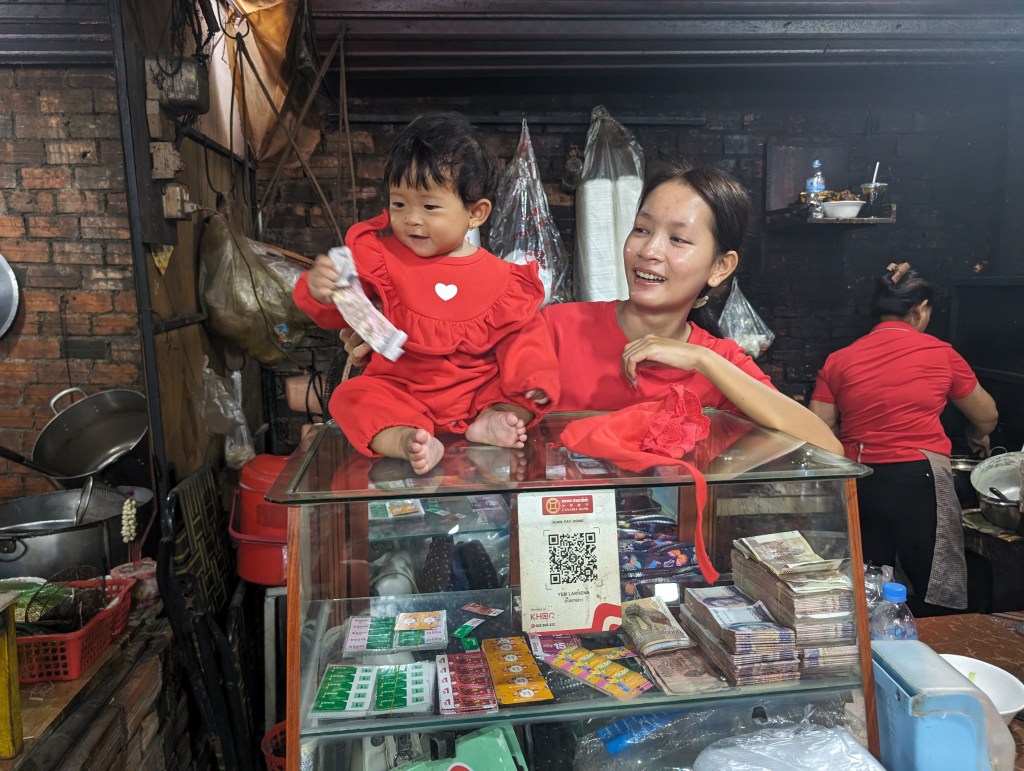
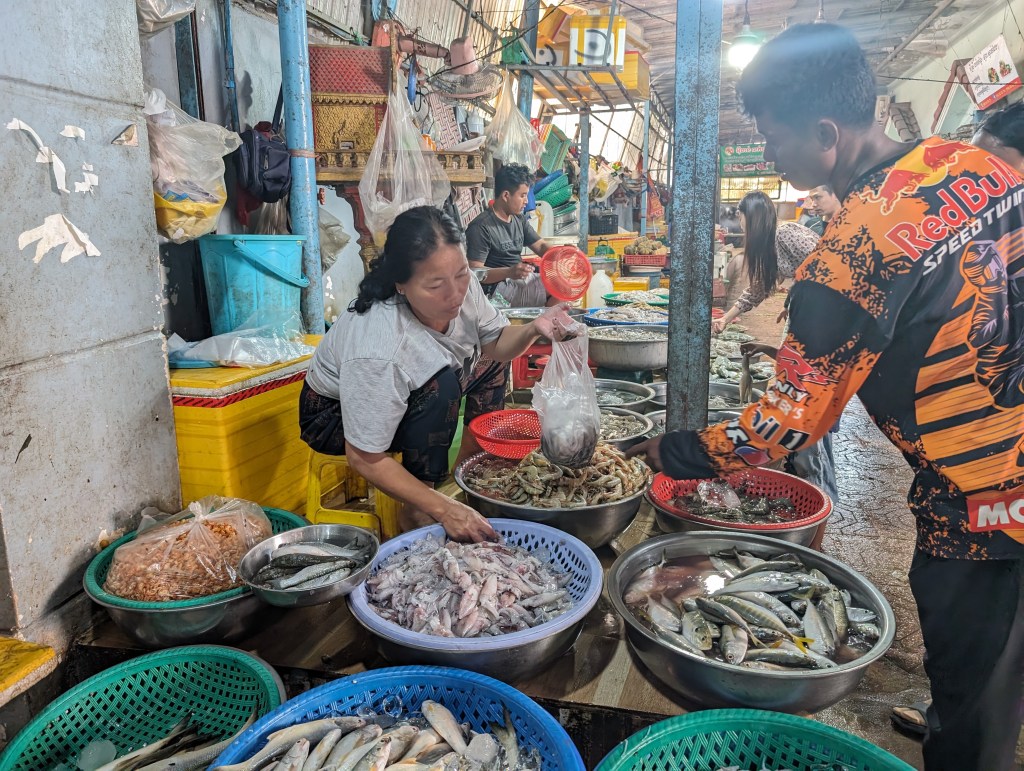
At this market on the edge of town, we were among the very few tourists present. This was where the people shopped. Again, we were greeted with smiles.
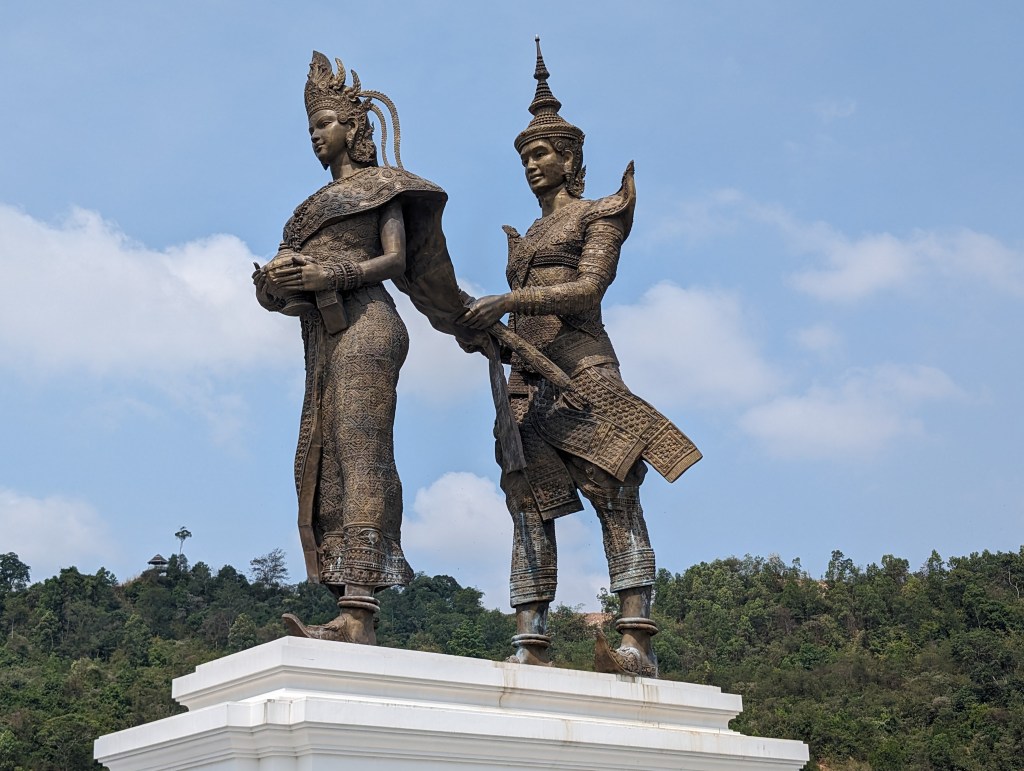
This huge copper statue looking down from a hilltop was just erected two years ago. Our guide called it “The Loving Statue” representing marriage. More specifically it is the statue of Preah Thong and Neang Neak, two symbolic personas from the ancient Khmer culture. They are an example of the country wanting to celebrate its civilization, history and traditions.
 J and J Travel