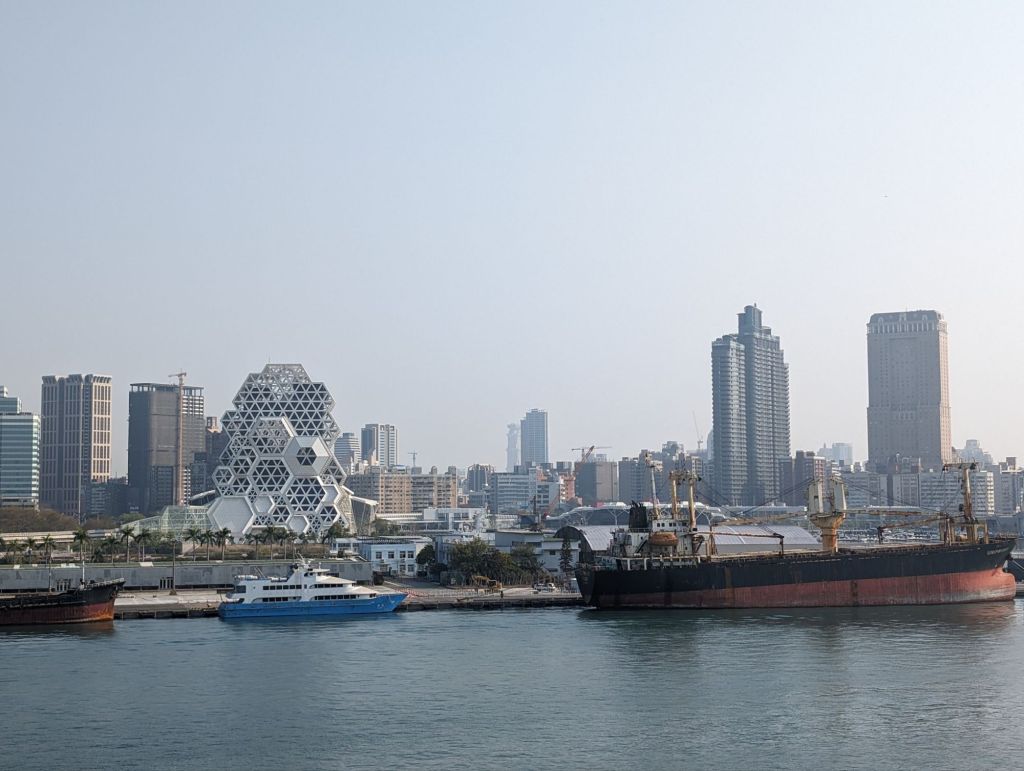
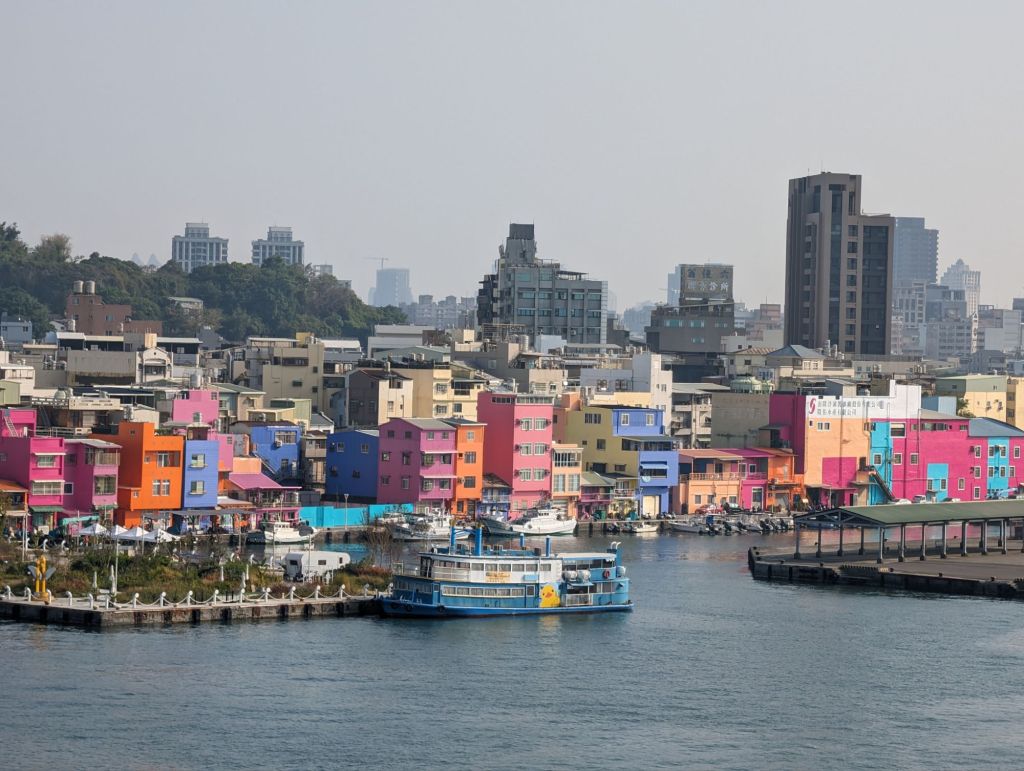
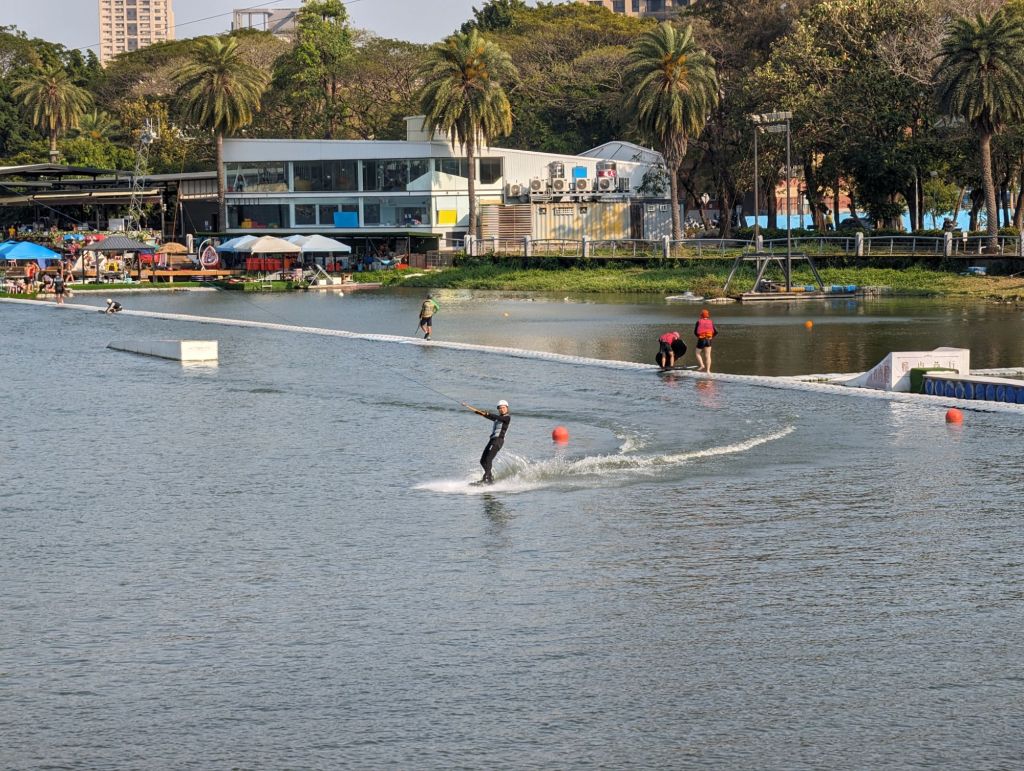
This major port city of 2.7 million was our first visit in Taiwan. Kaohsiung has changed massively in the last few years. Driving through, we could see the transition from a polluted industrial center to an attractive city with parks, waterfront sports and temples. Below is an example of the city’s two faces–a commercial vessel docked near the city’s new, unusual looking music center.
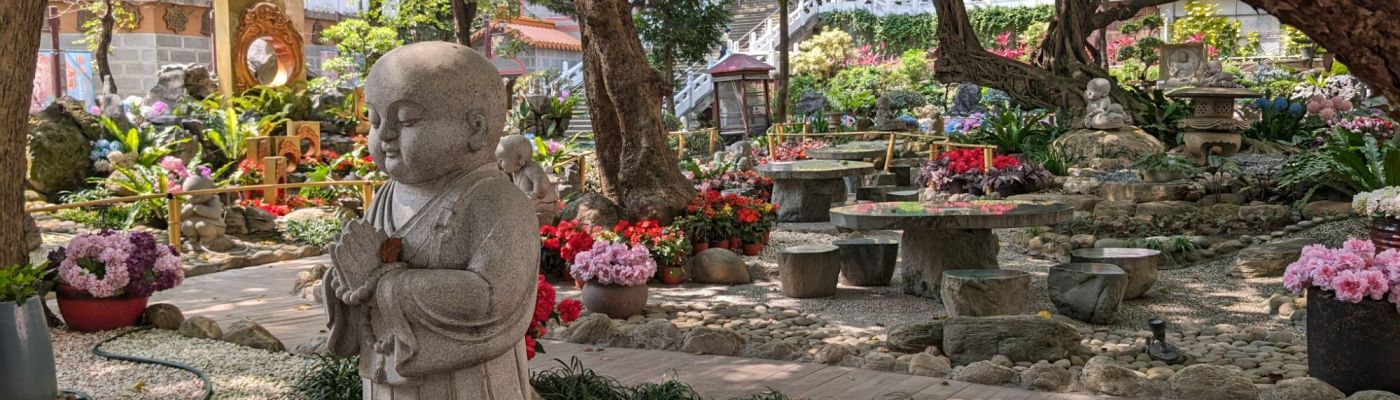
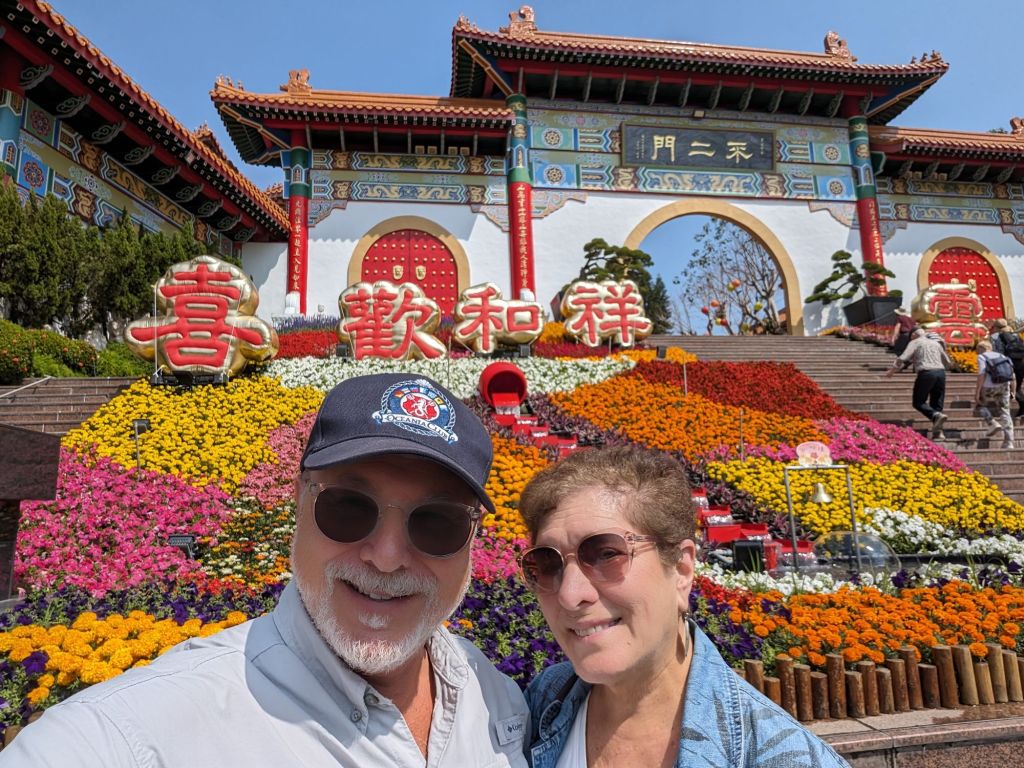
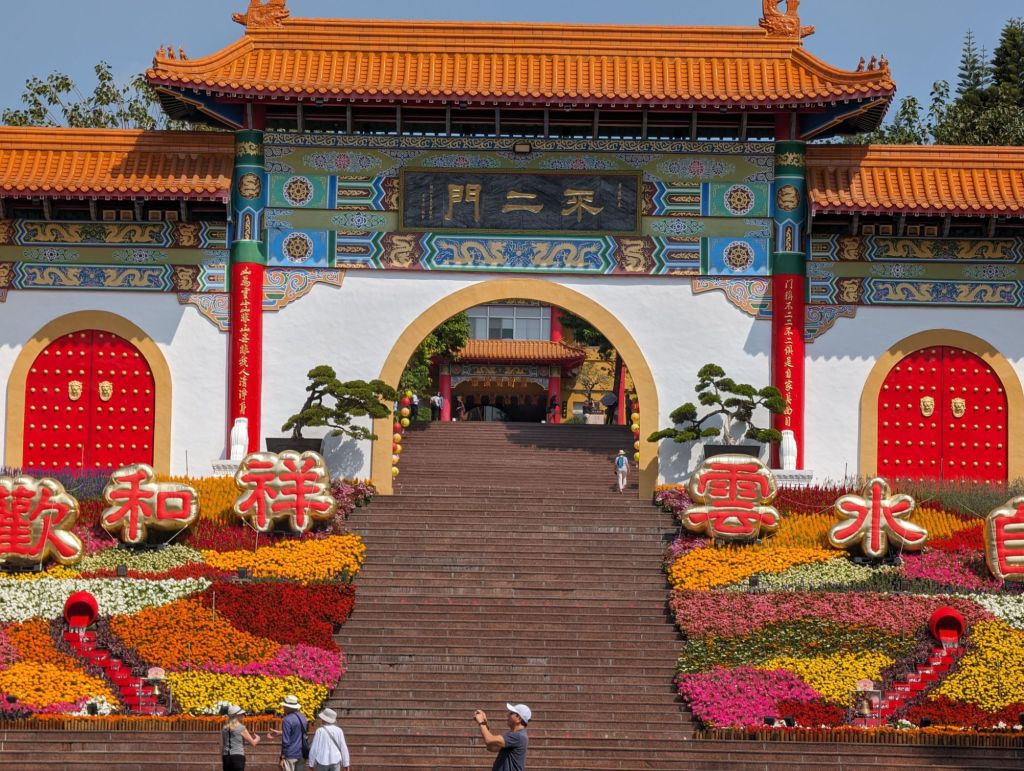
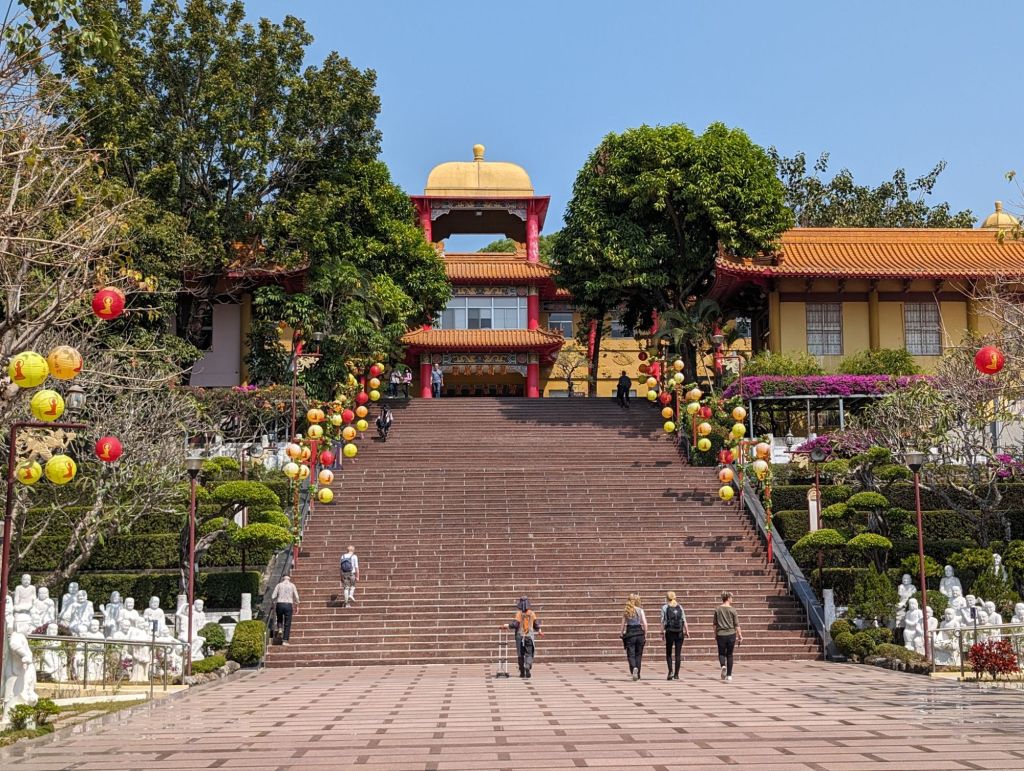
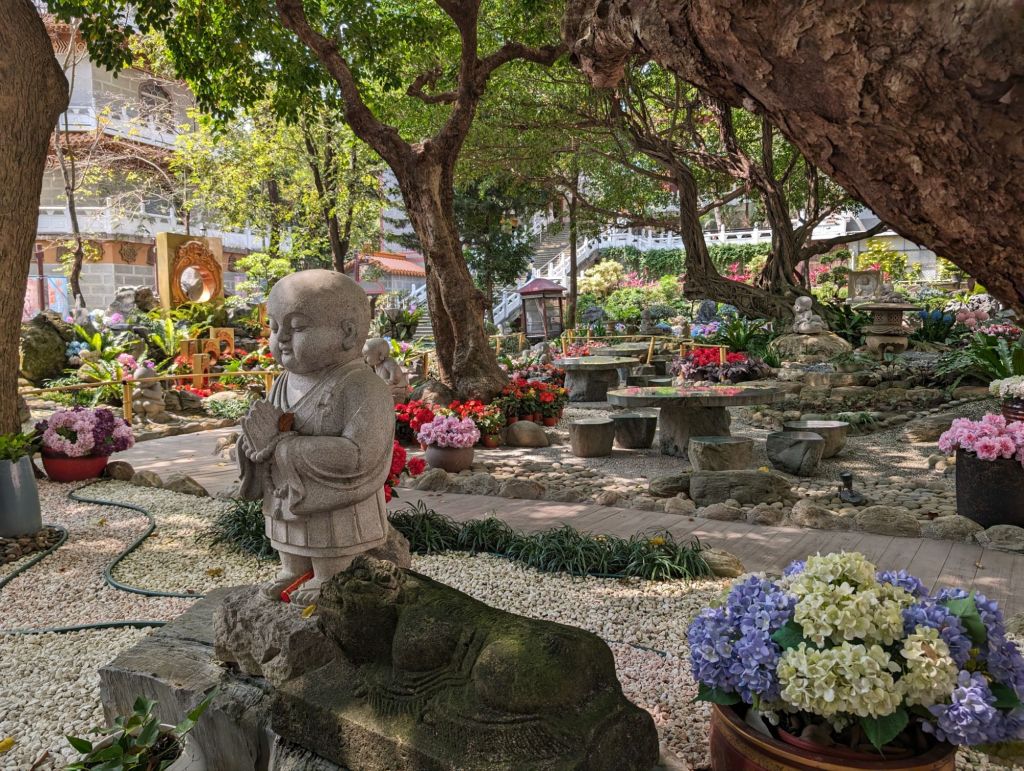
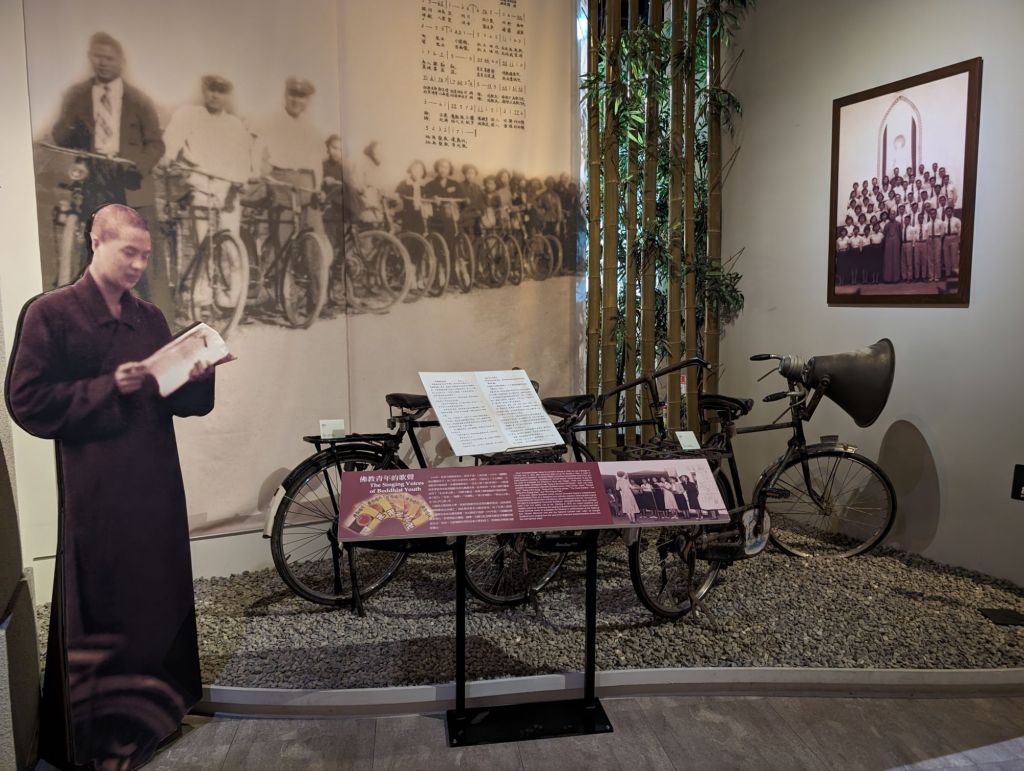
Our main activity of the day was exploring the Fo Guang Shan monastery and museum complex. The name of the organization means “Buddha’s Light Mountain,” and it is the largest Buddhist organization and one of the largest charities in Taiwan. We were impressed with what Master Hsing Yun, the founder of this Buddhist sect, accomplished. This humble monk, without much formal education, had a vision of Buddhism that was inclusive, charitable, and fosters talent through education and cultural activities. It uses the tools of a modern age, including technology and choir music, practices that offended many traditionalists. Called Humanistic Buddhism, this sect now has over a million followers in more than 50 countries. It started here in 1967 when Hsing Yun bought what was then inexpensive forest land and built this monastery for his followers.
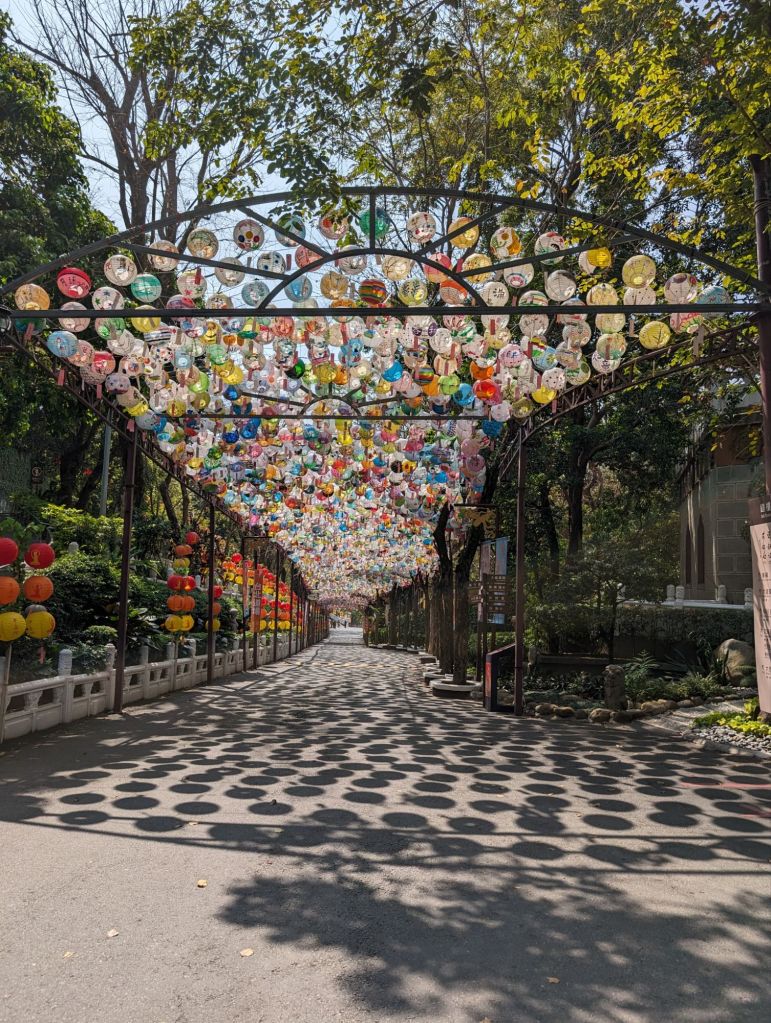
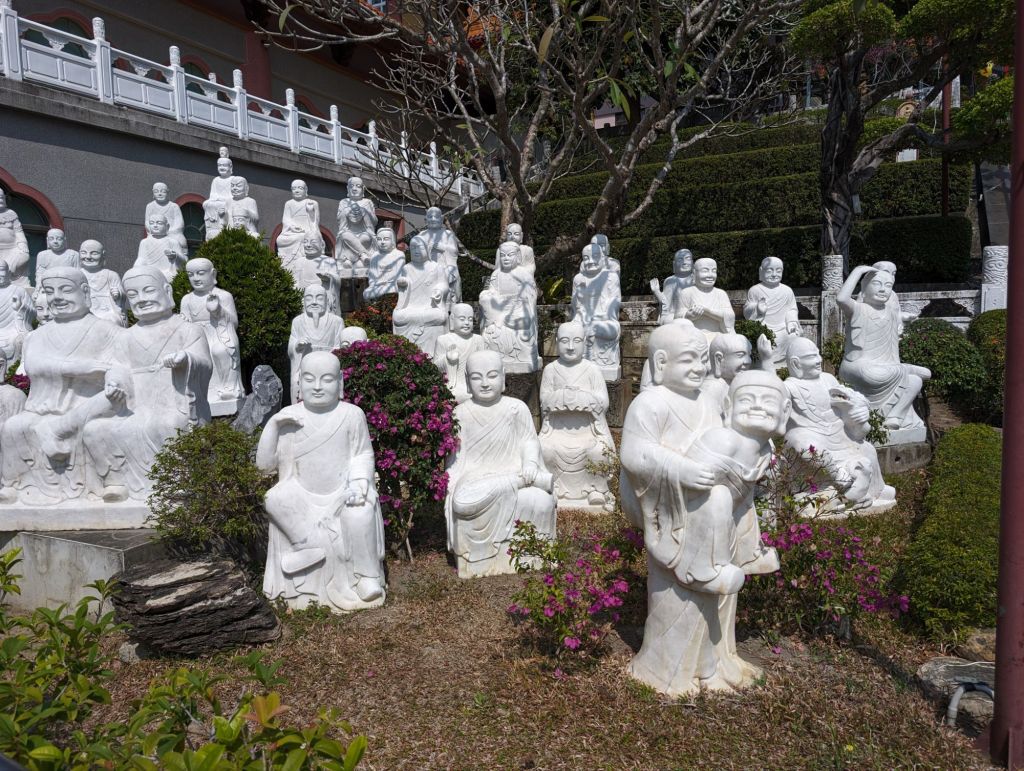
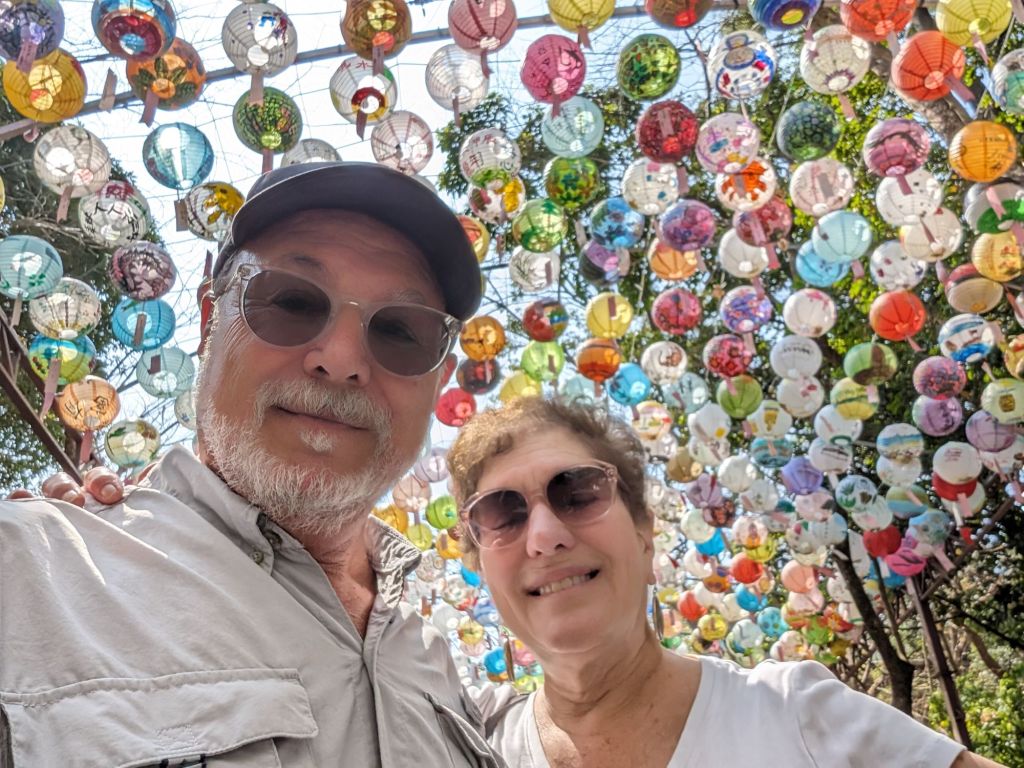
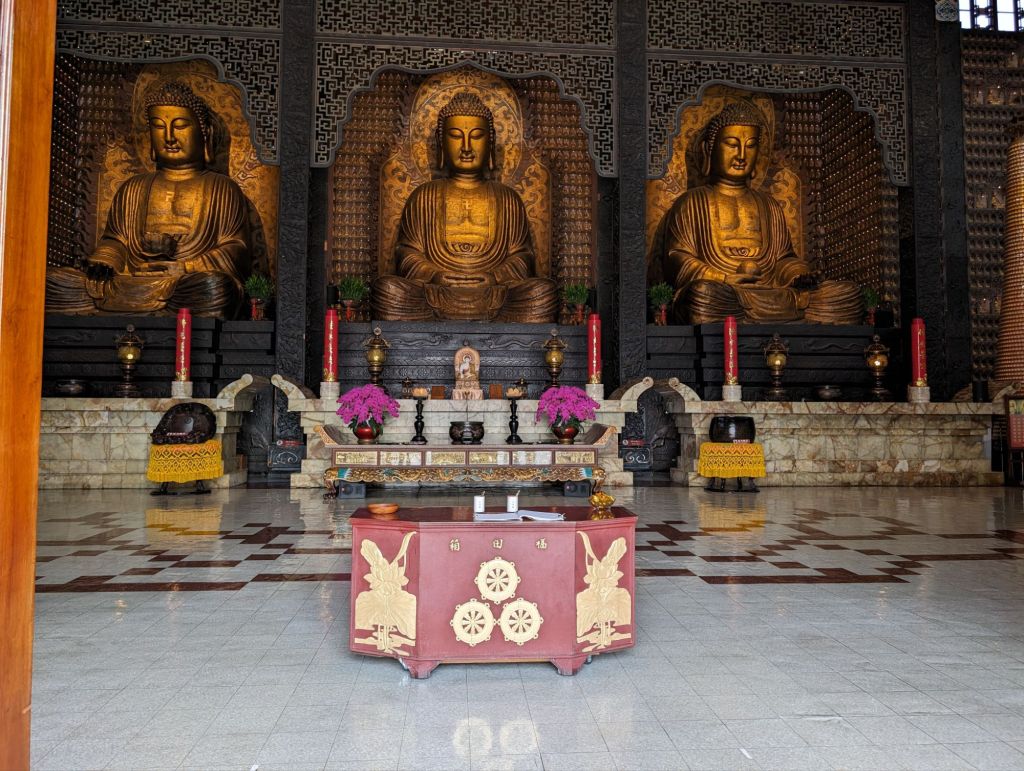
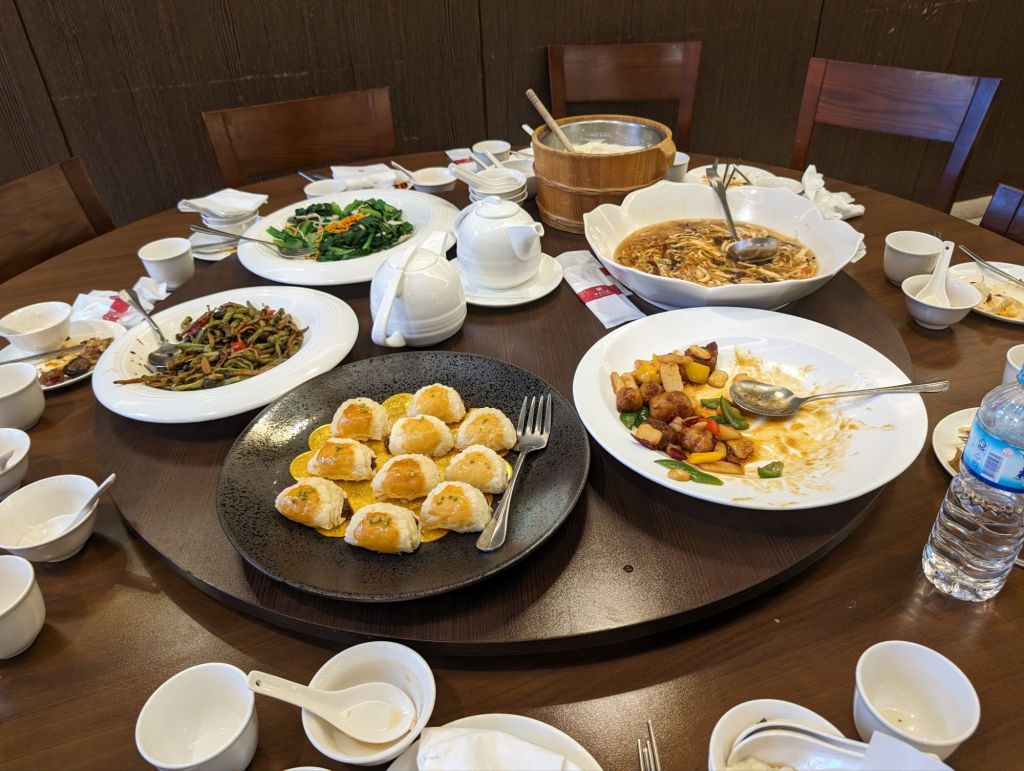
After leaving the monastery, we went down a hill to the museum complex. It included a restaurant where we had a wonderful vegetarian lunch. What started out looking like an austere meal became a feast as dish after dish arrived at our table. These are just a few of them.
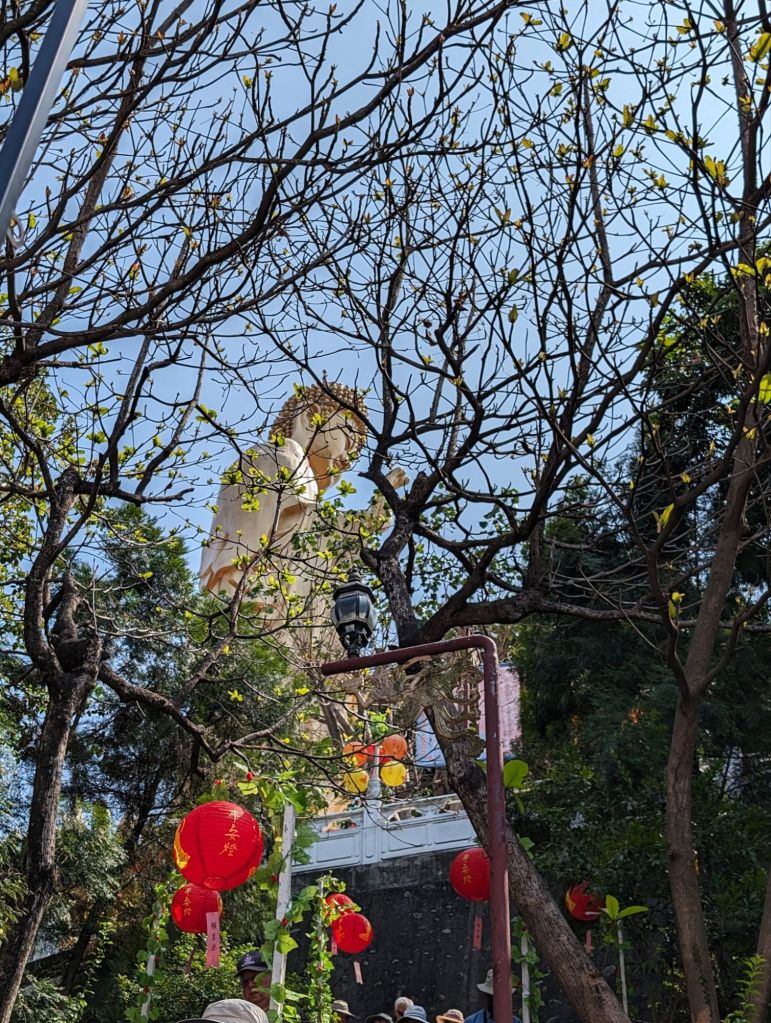
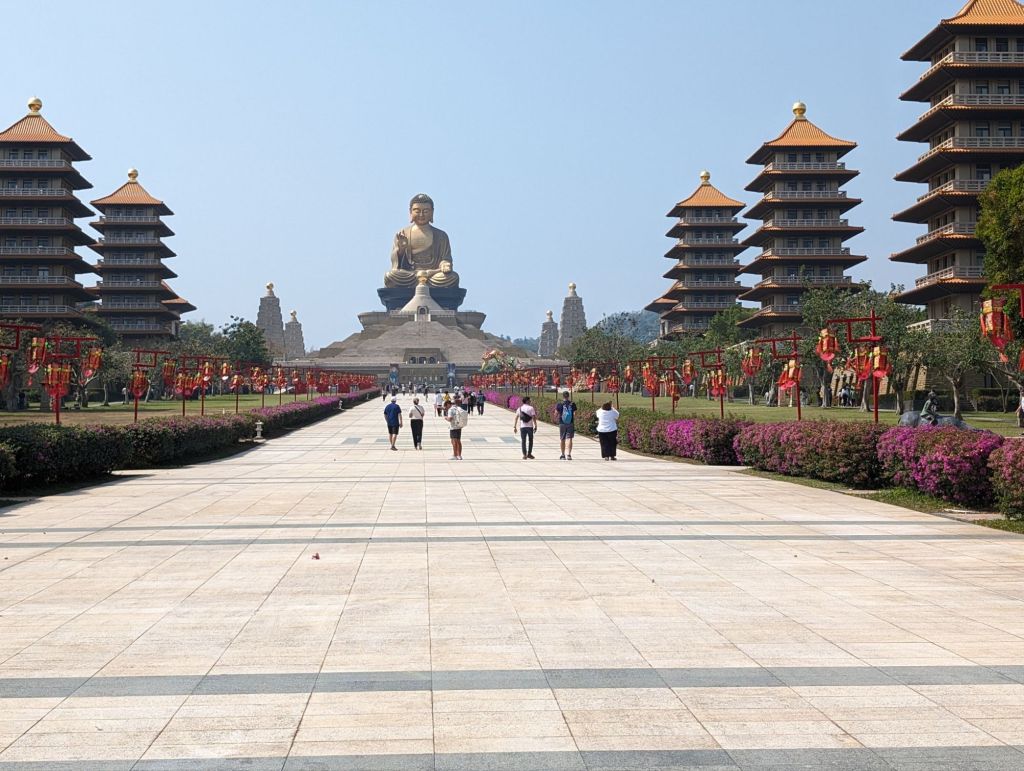
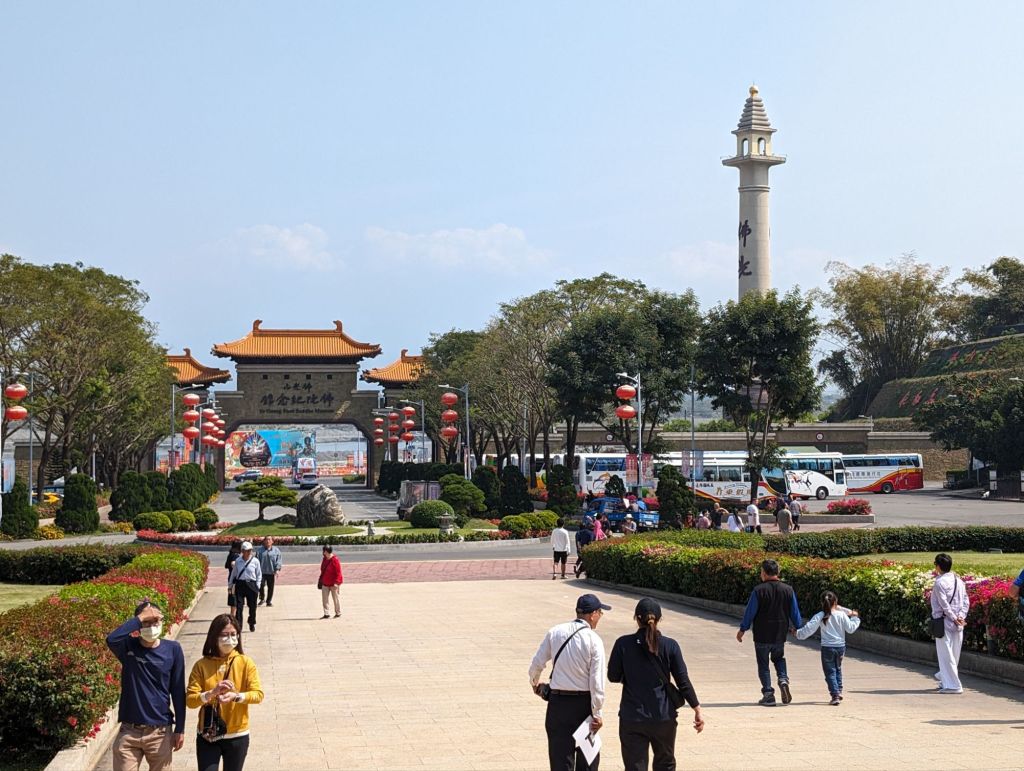
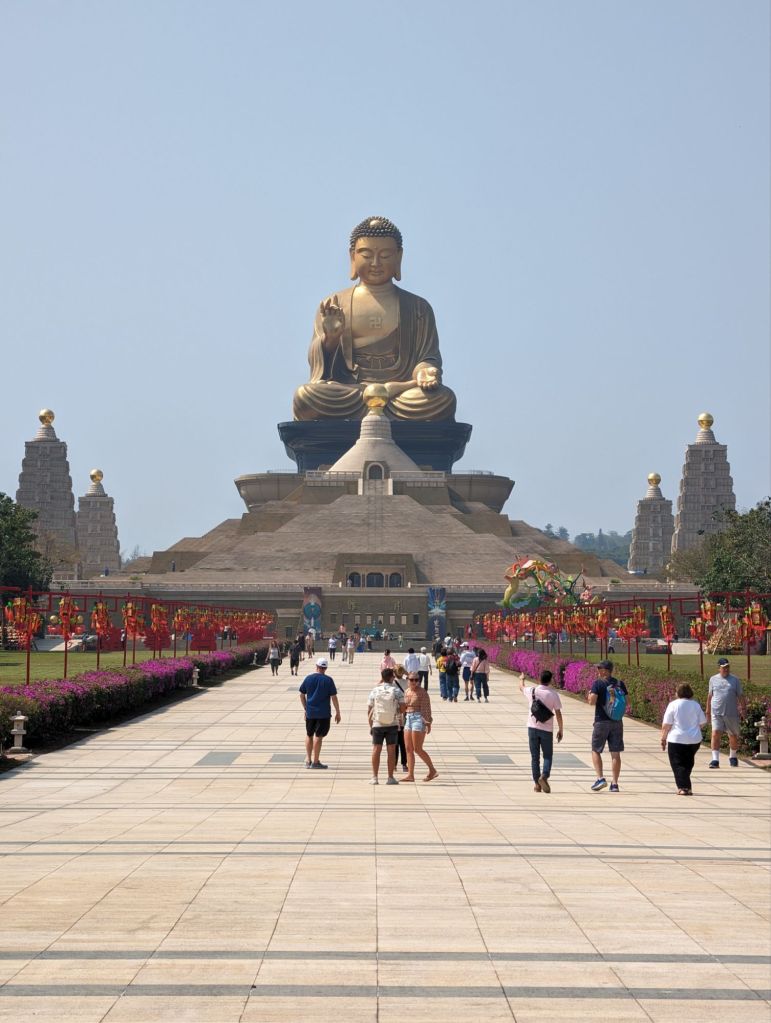
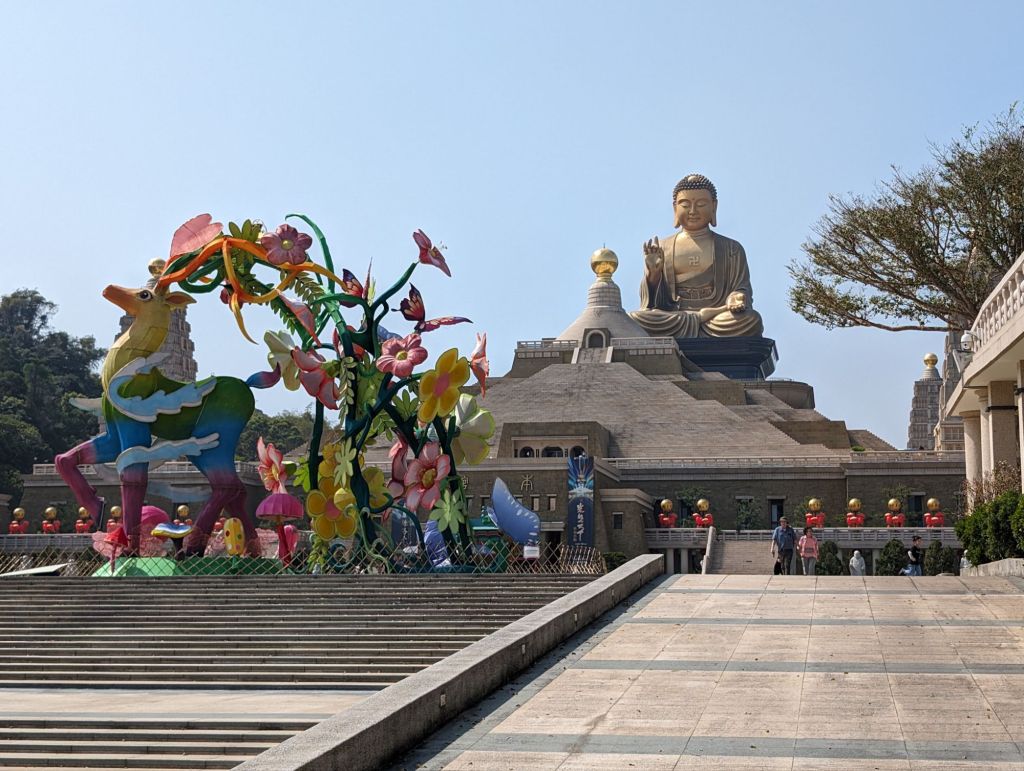
As we walked through the gate to the museum complex, we saw the giant Buddha flanked by four pagodas on each side. Each pagoda has a function for education and cultural use. One is even a wedding chapel and event space.
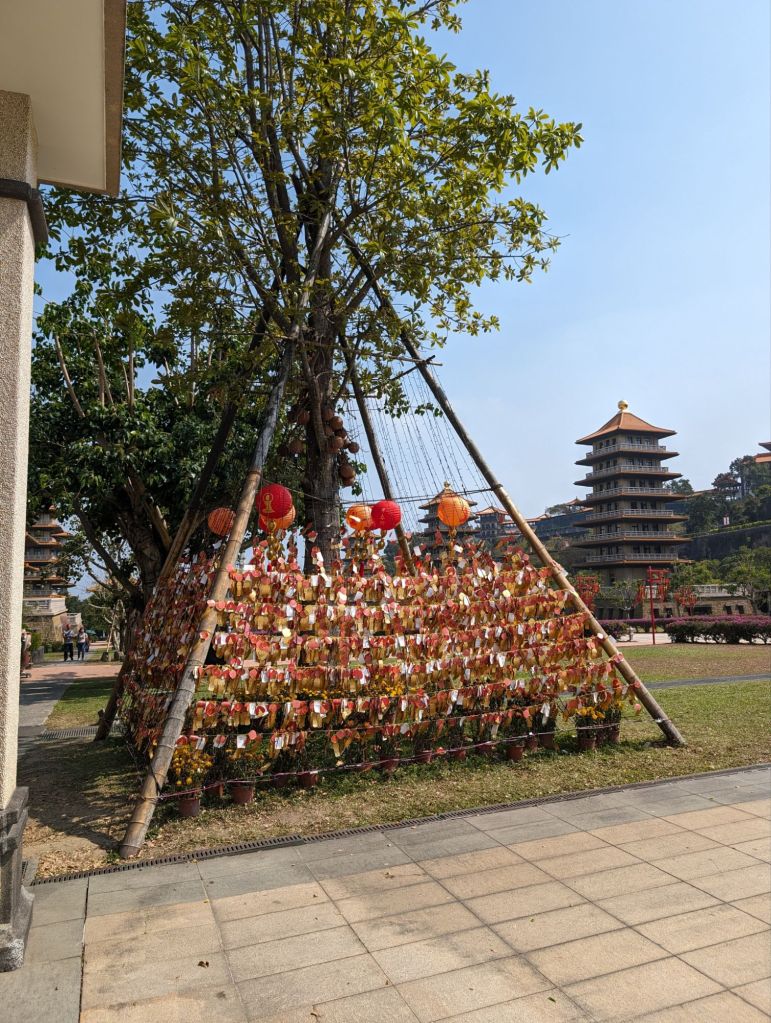

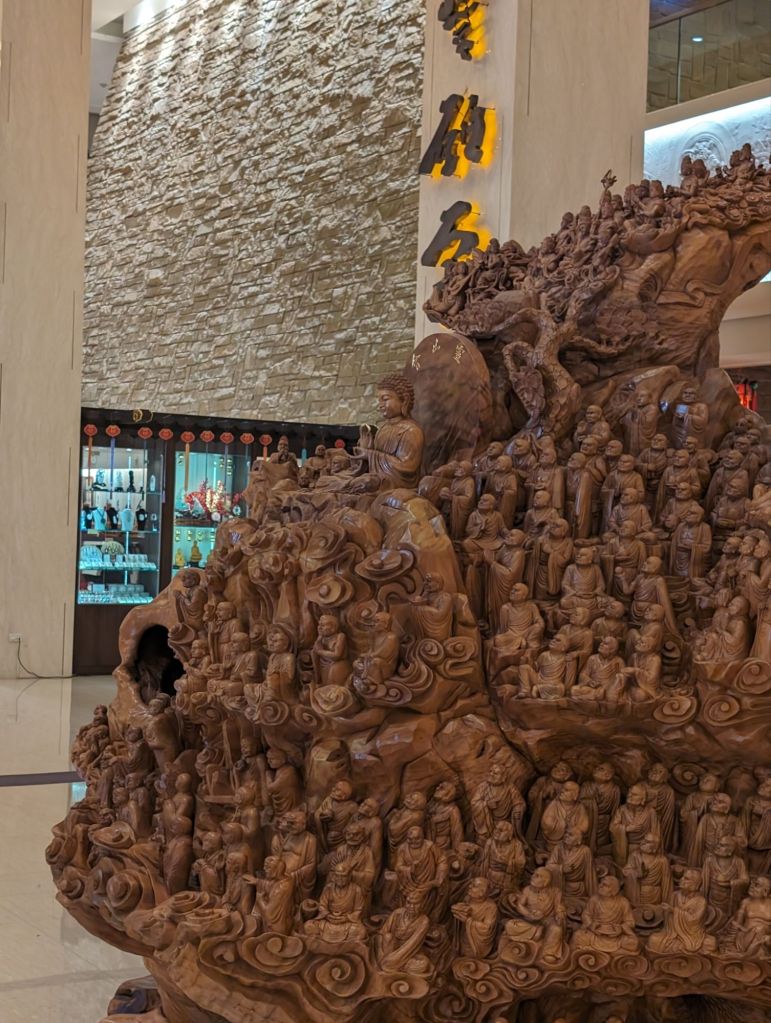
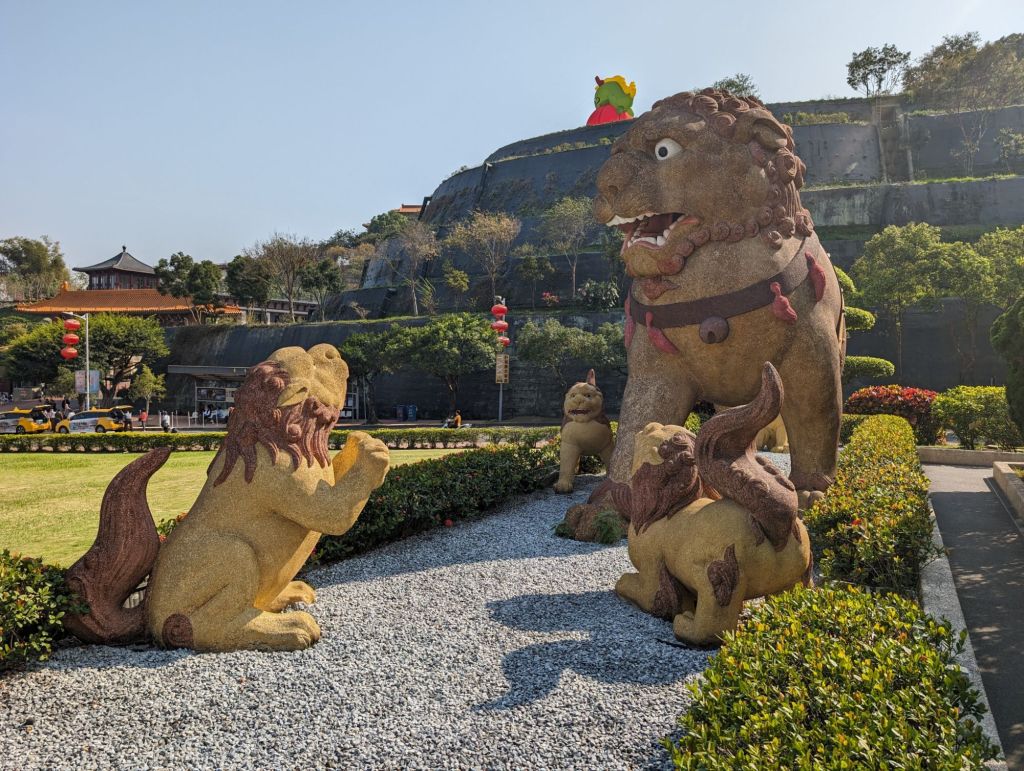
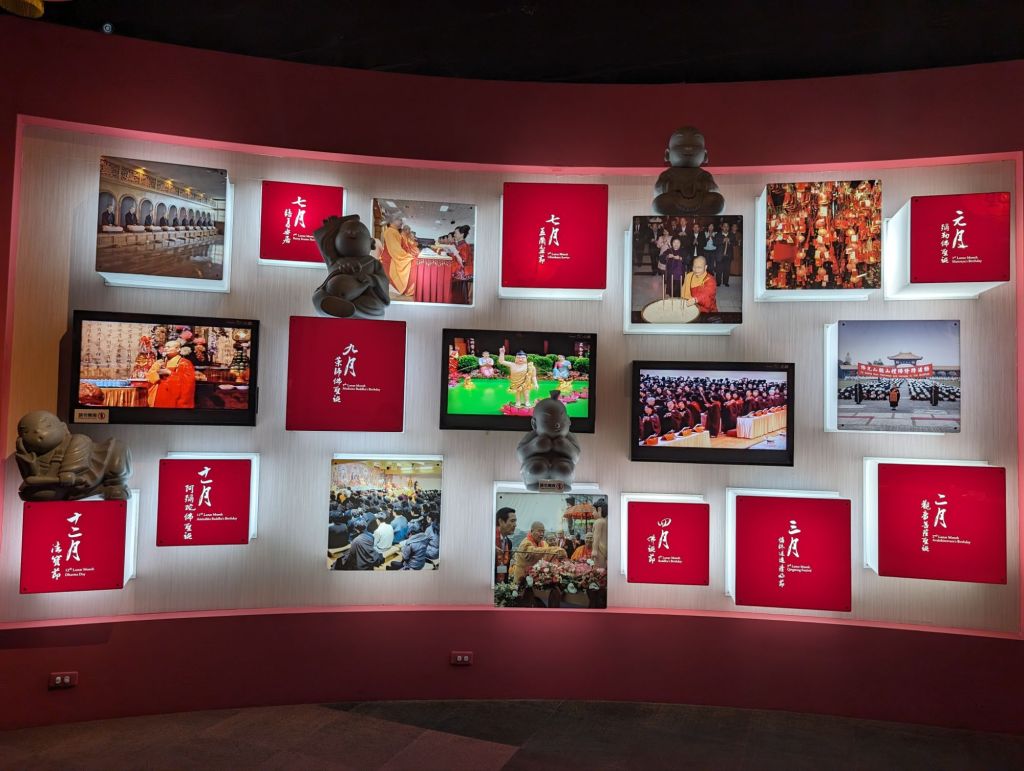
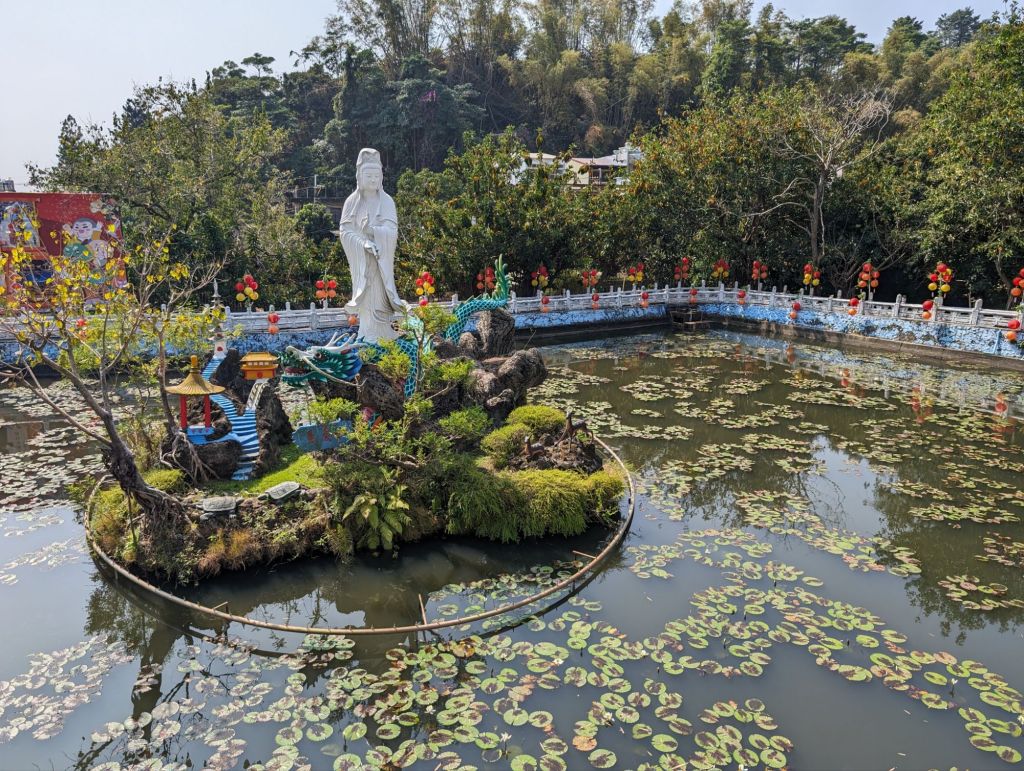
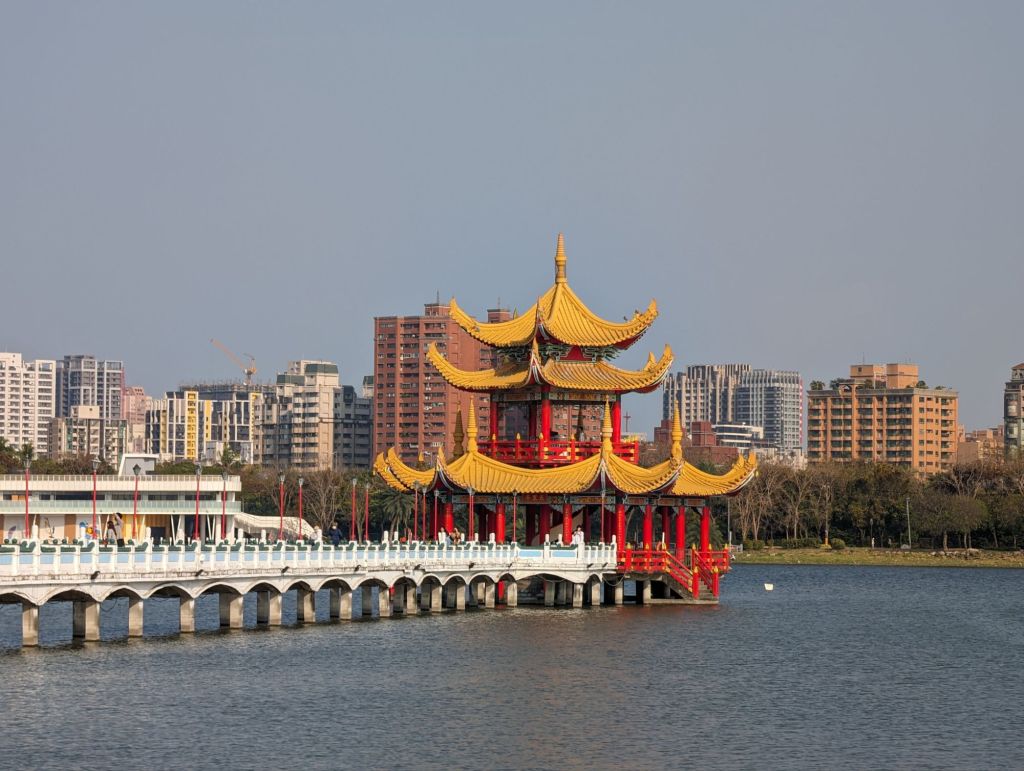
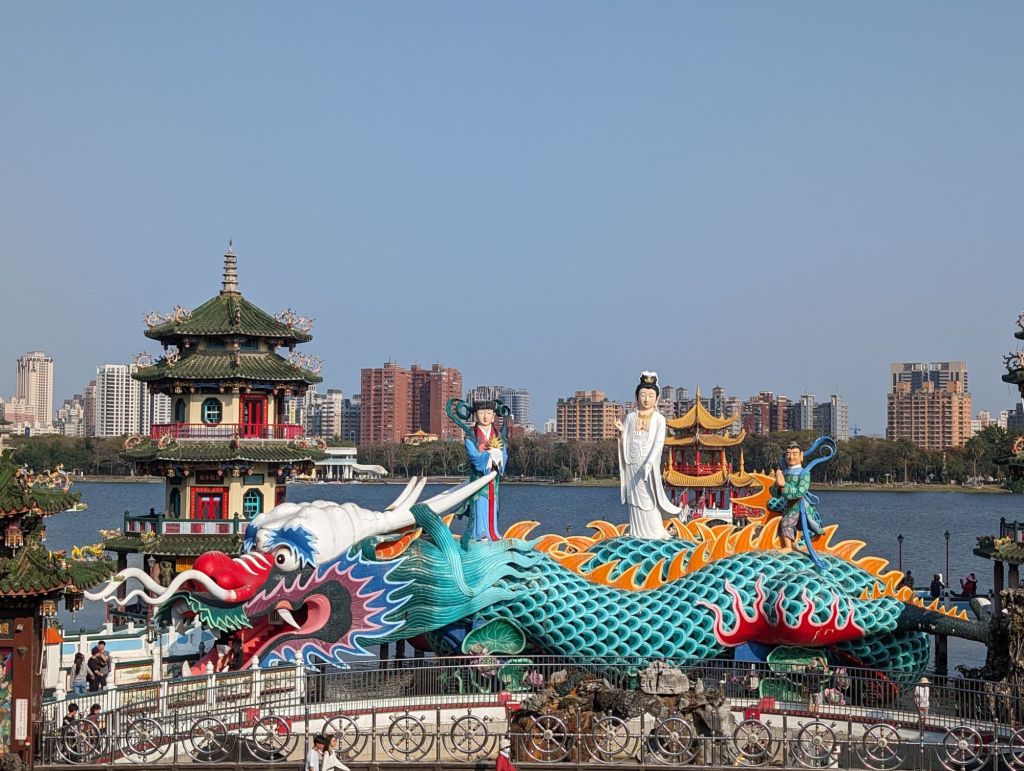
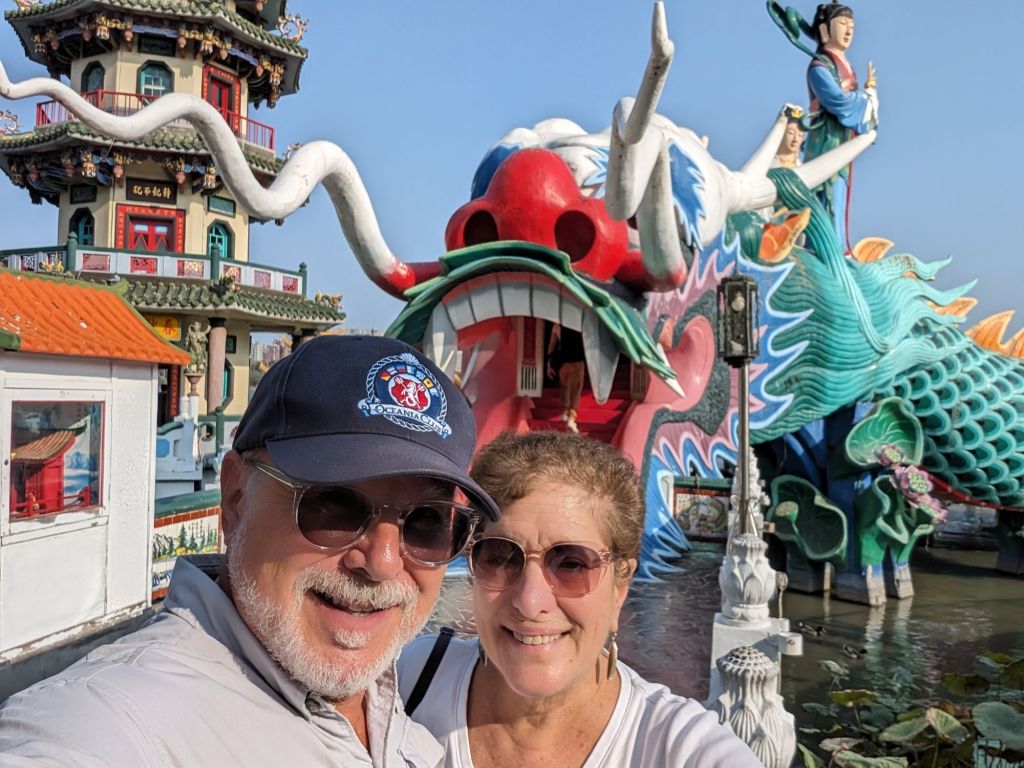
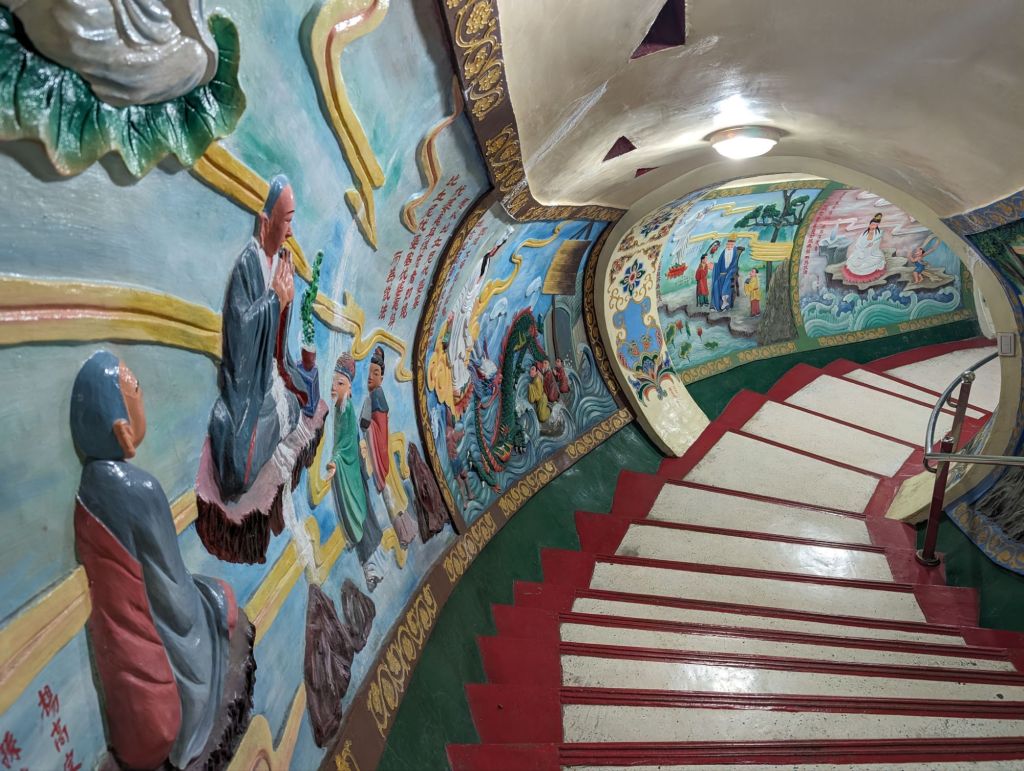
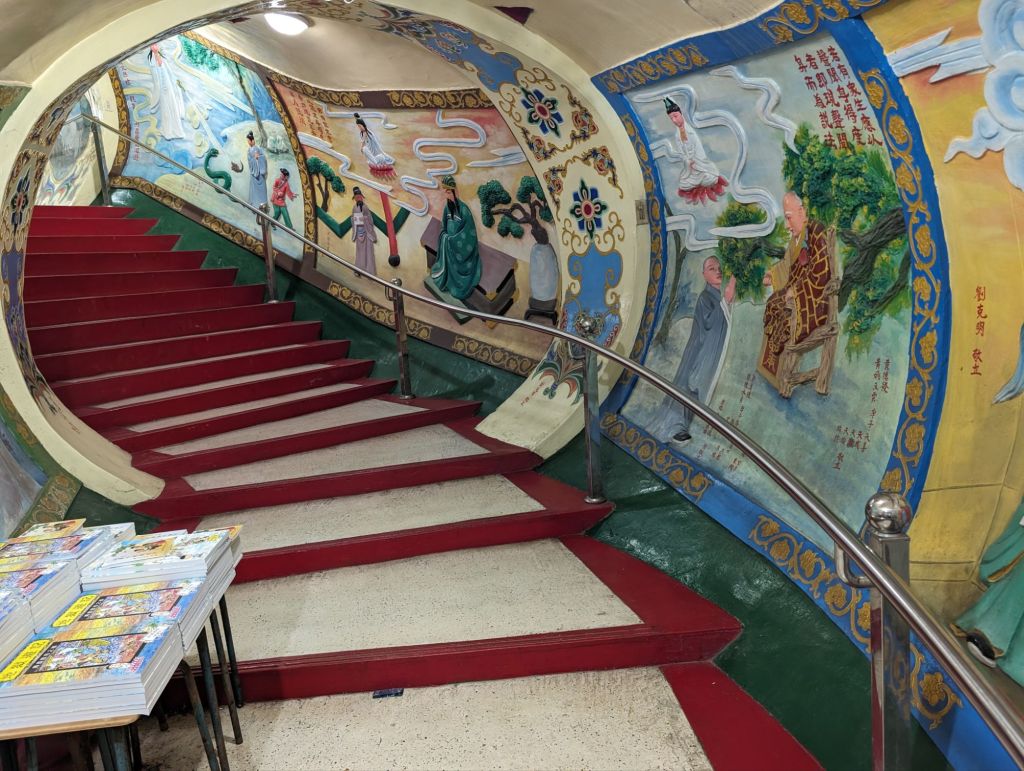
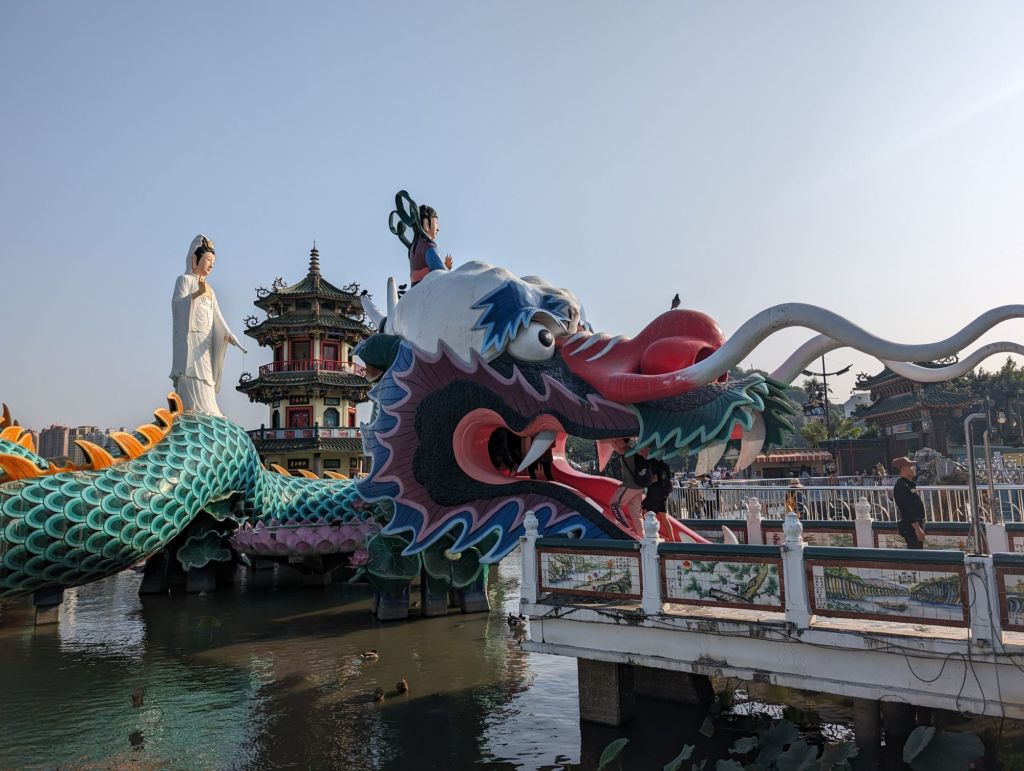
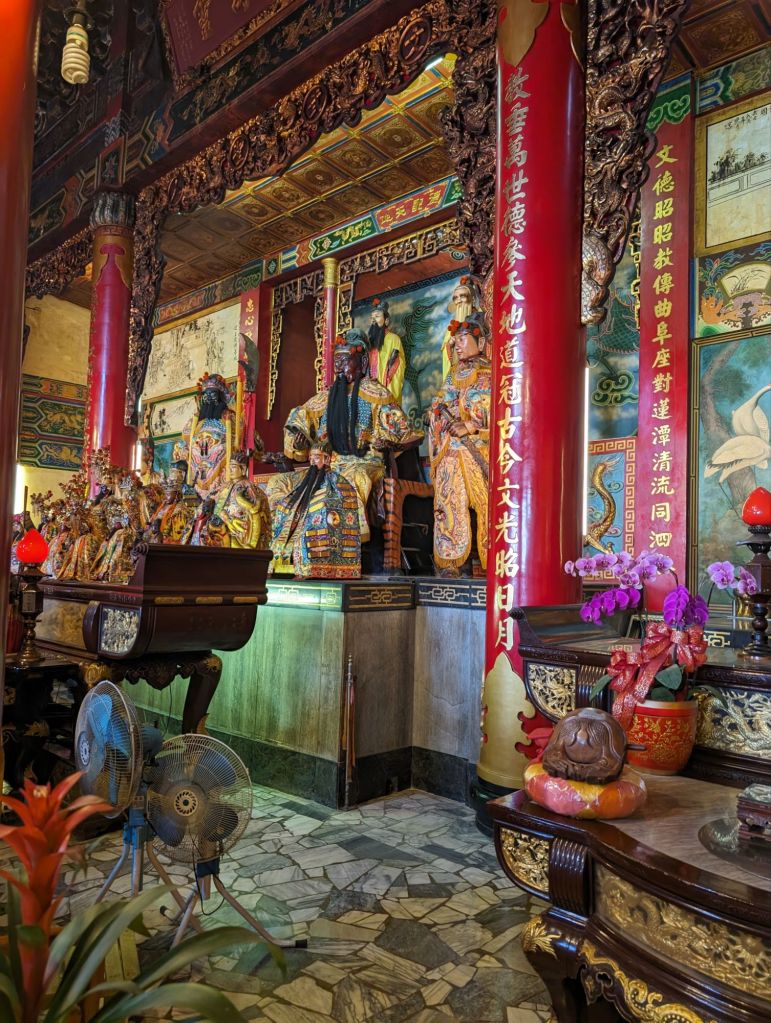
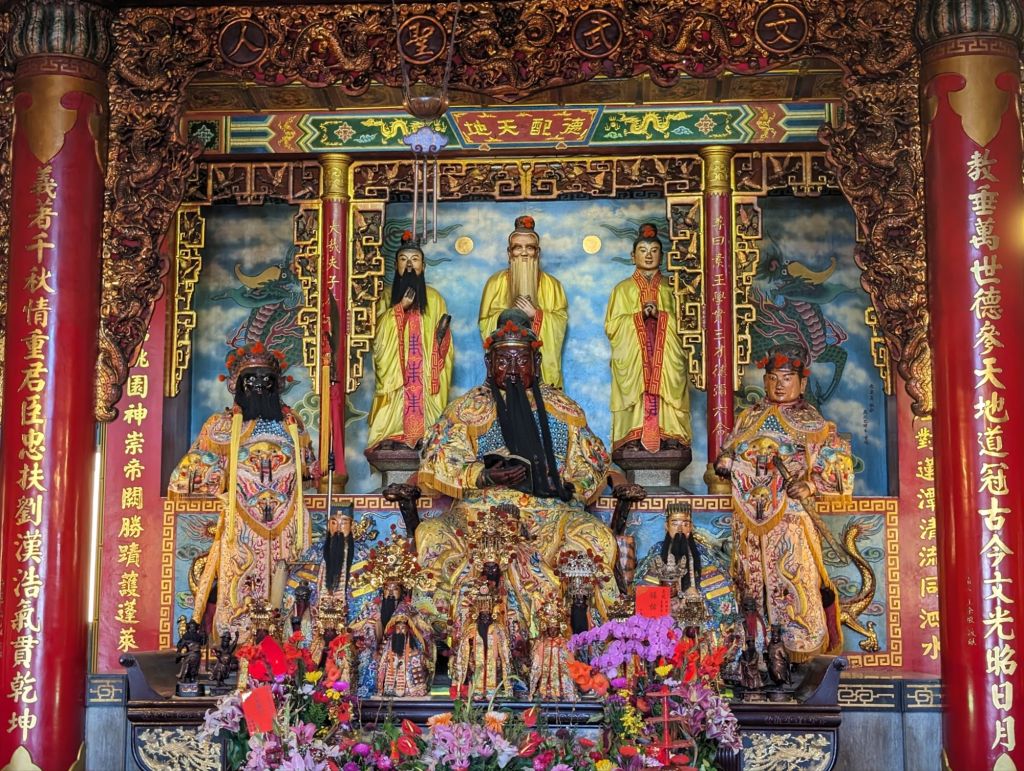
We visited the Spring and Autumn Pavilions on Lotus Lake in Kaohsiung. This Taoist temple complex, below, was built in 1953. The Taoist religion intersects strongly with Buddhism.
 J and J Travel