This city of 10 million is the political and economic center of South Korea. Its citizens live precariously next door to a bellicose and threatening neighbor. Yet they continue to build major industries and a beautiful city, while restoring historical landmarks and maintaining their traditional customs. “We don’t think about atomic bombs,” our guide said. “We just live our lives.”
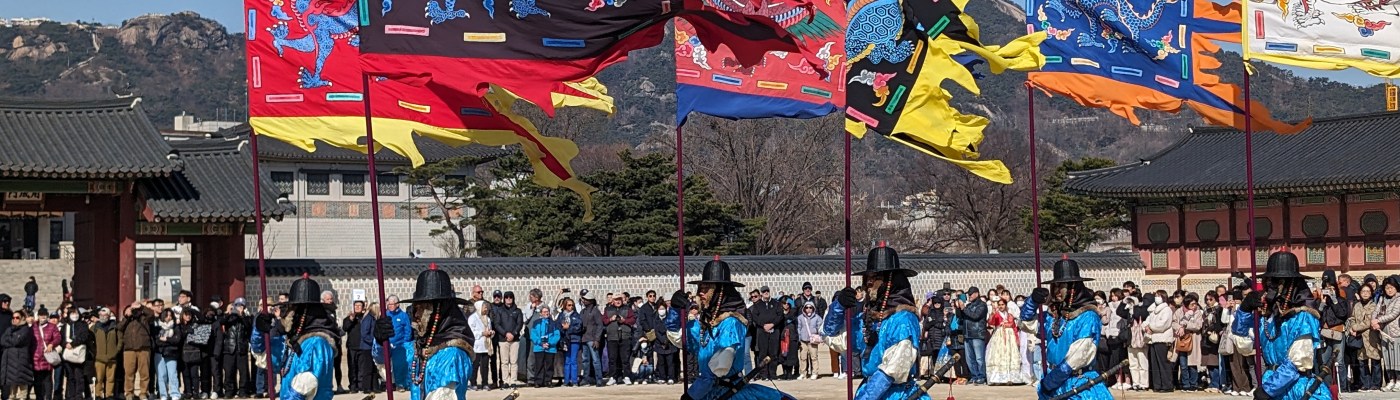
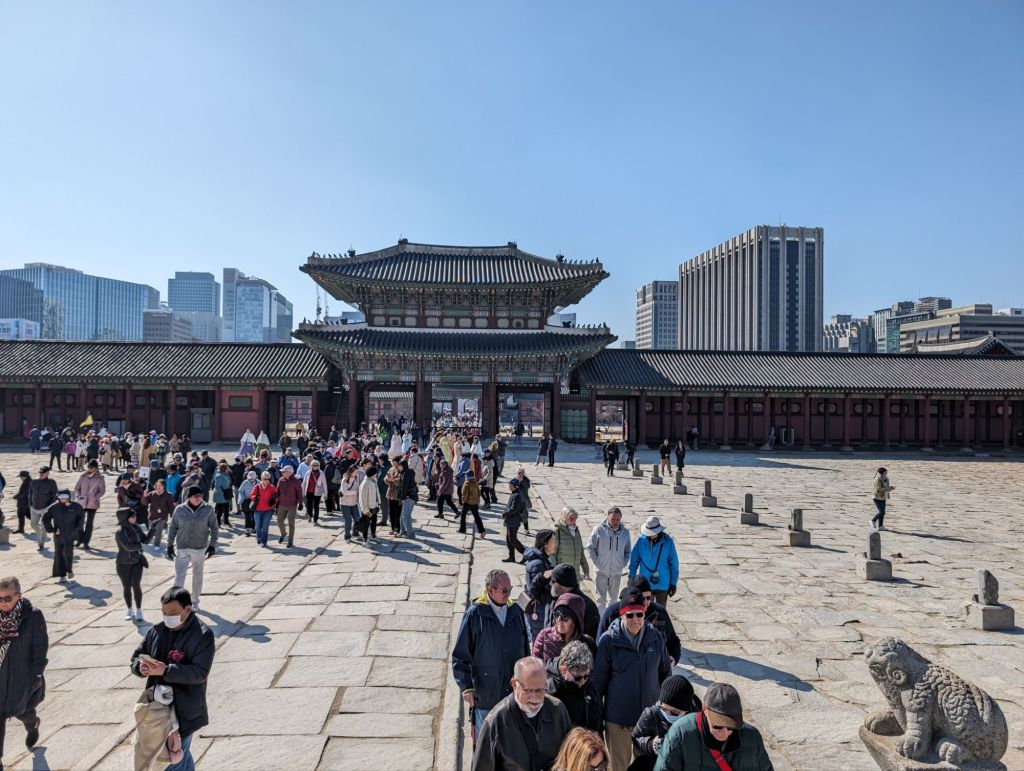
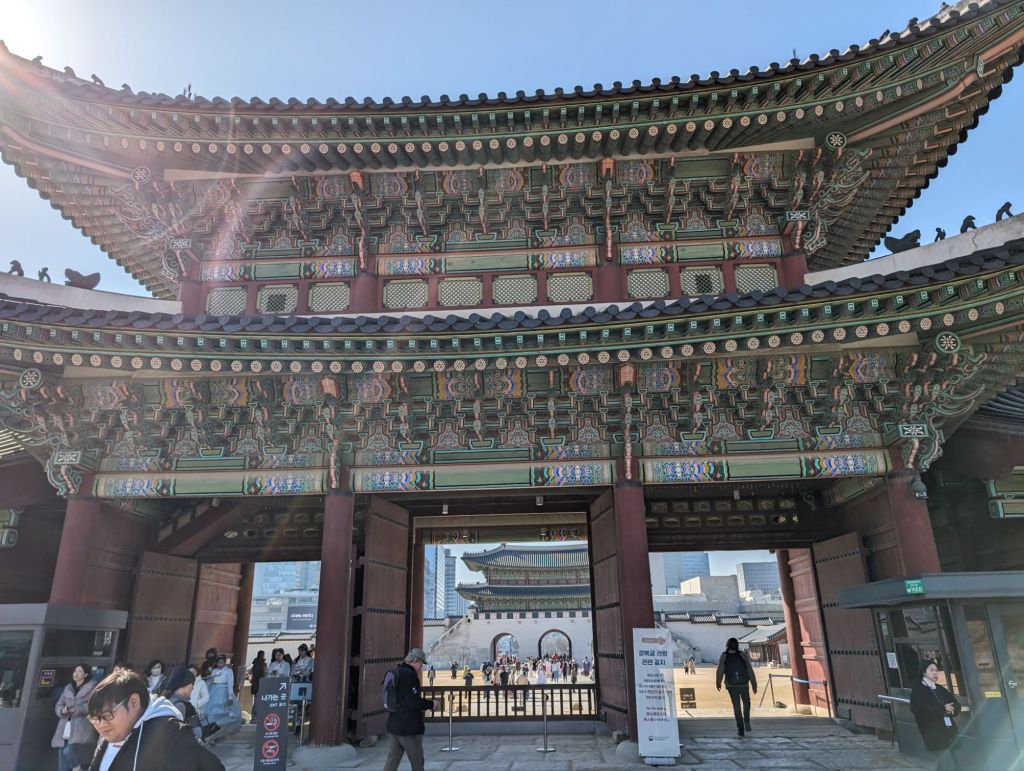
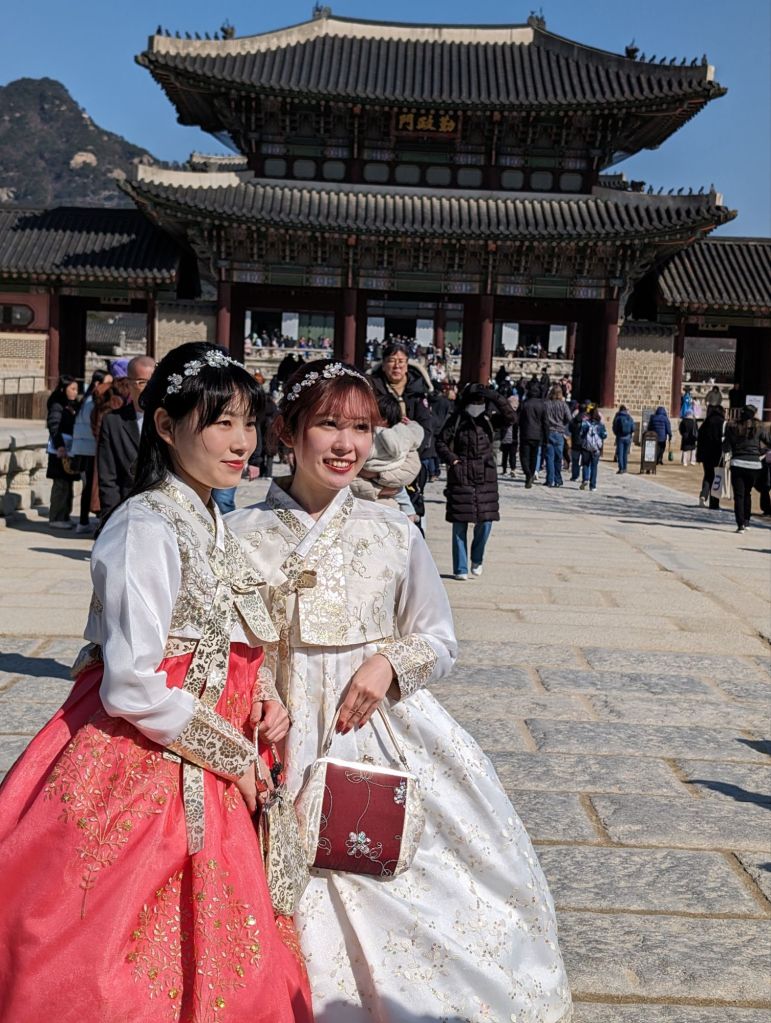
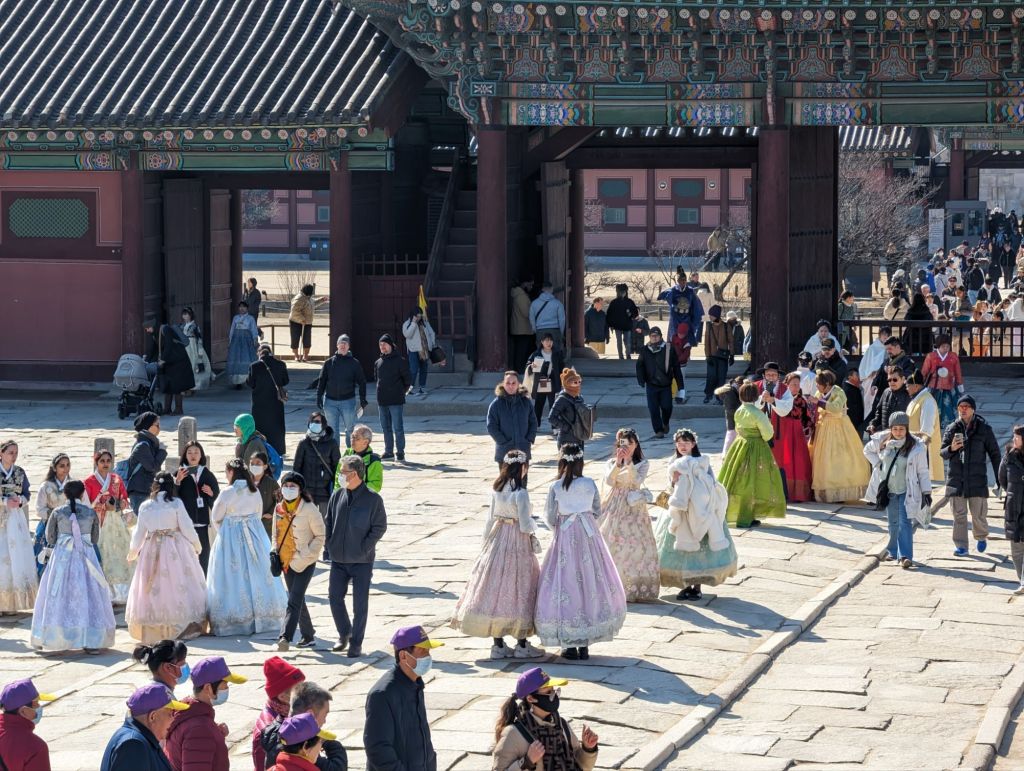
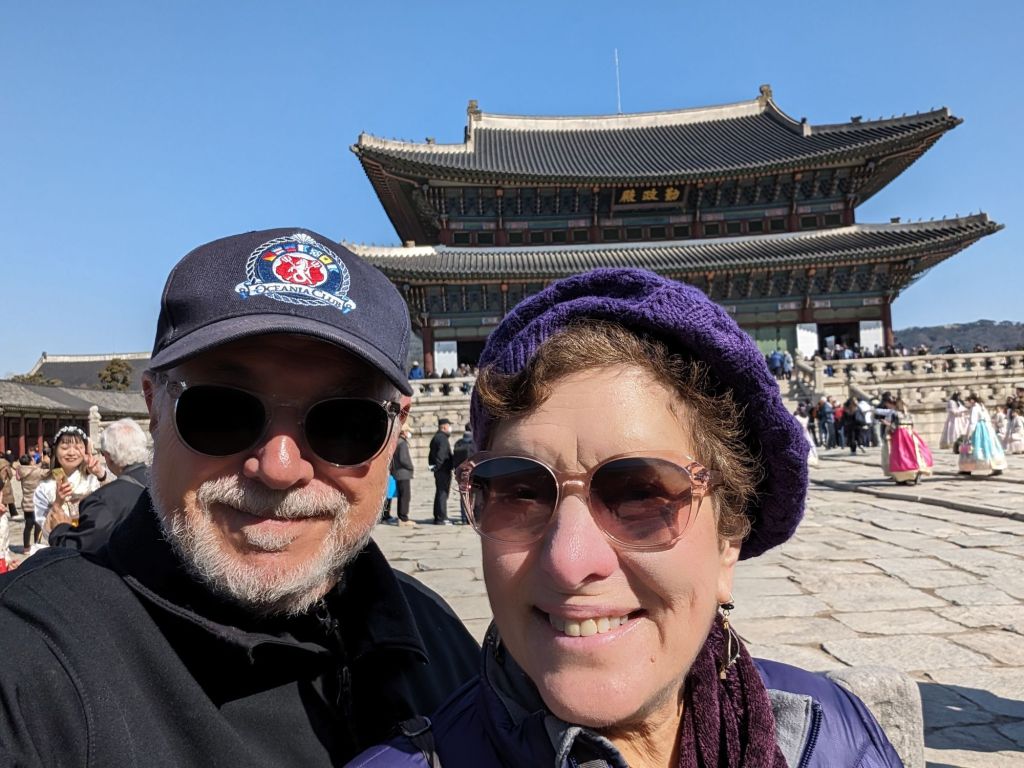
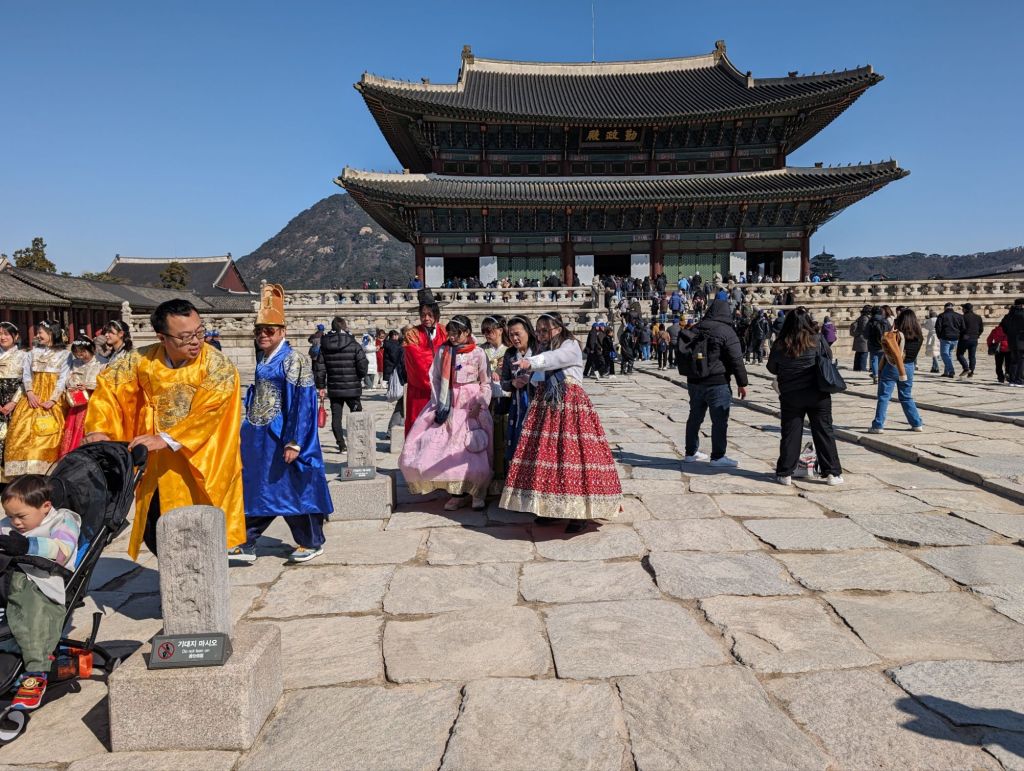
Our first visit in Seoul was to the Gyeongbokgung Palace where we watched the changing of the royal guards’ ceremony. Korea no longer has a monarchy, but the ceremony reenacts the custom of the royal court during the Joseon Dynasty, beginning in the 14th century, to ensure the security of the king and his court. Traditional costumes are worn, drums echo and music plays at this faithful reenactment. It begins at the Gwanghwamun Gate, below, the main entrance to the palace.
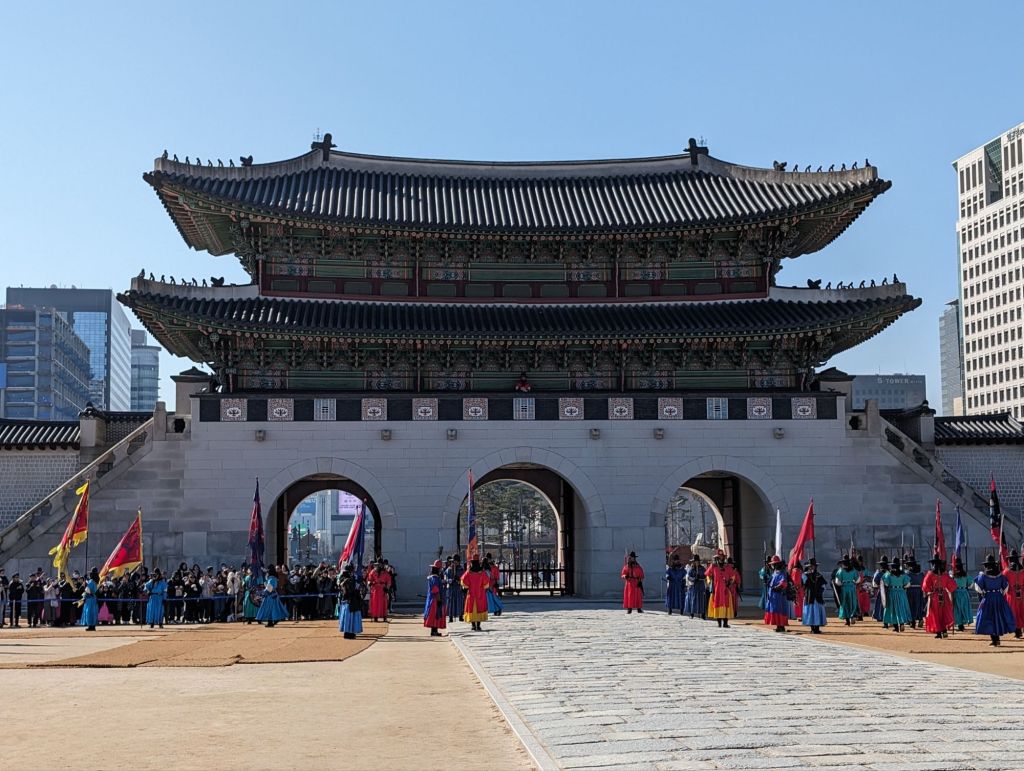
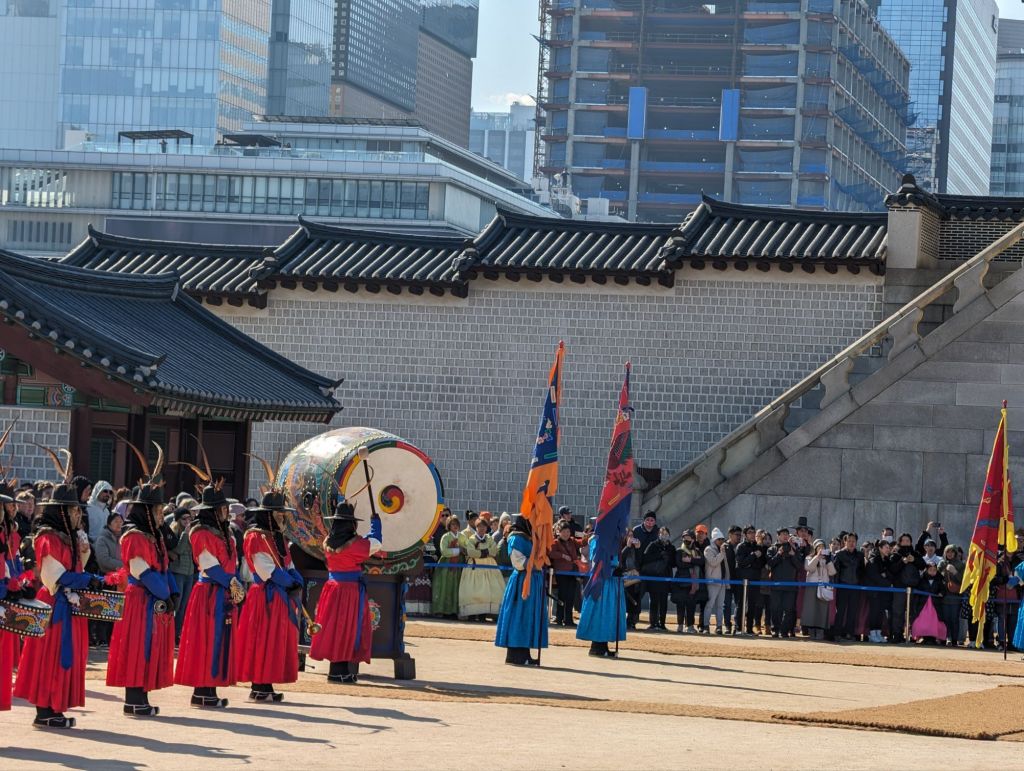
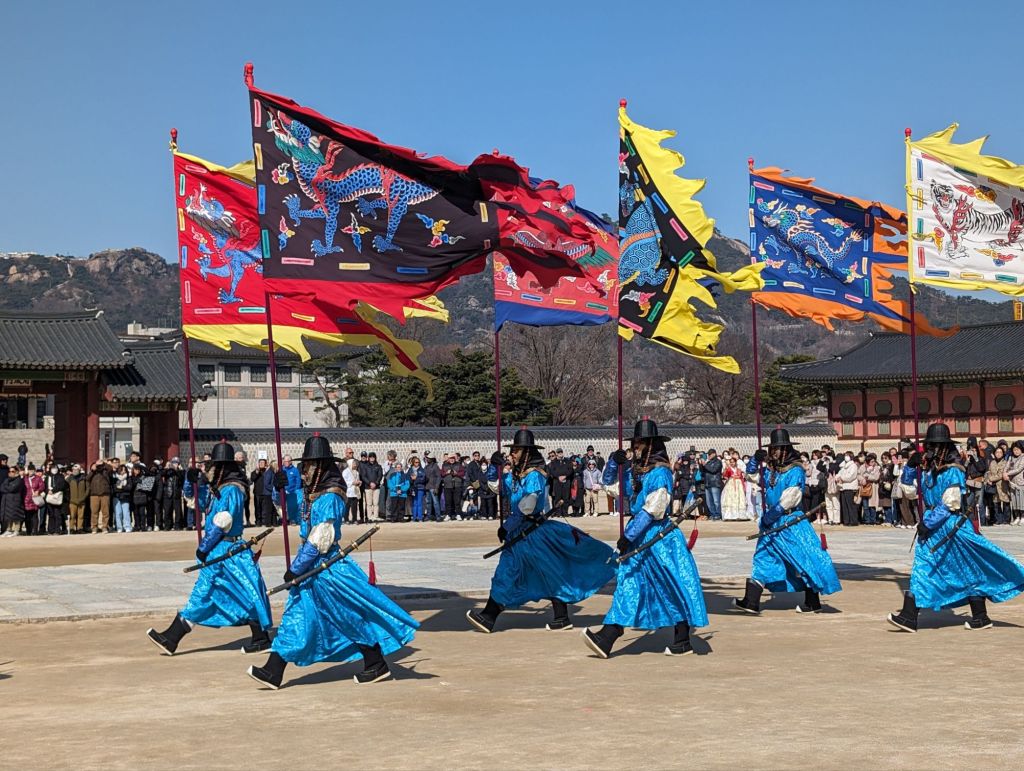
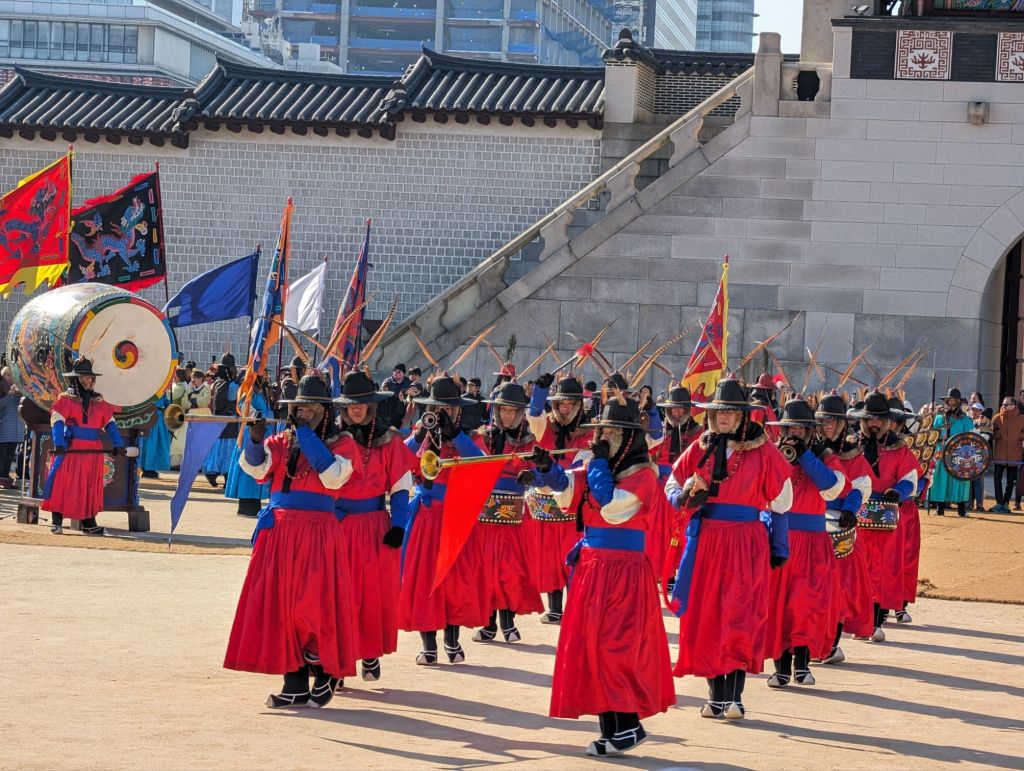
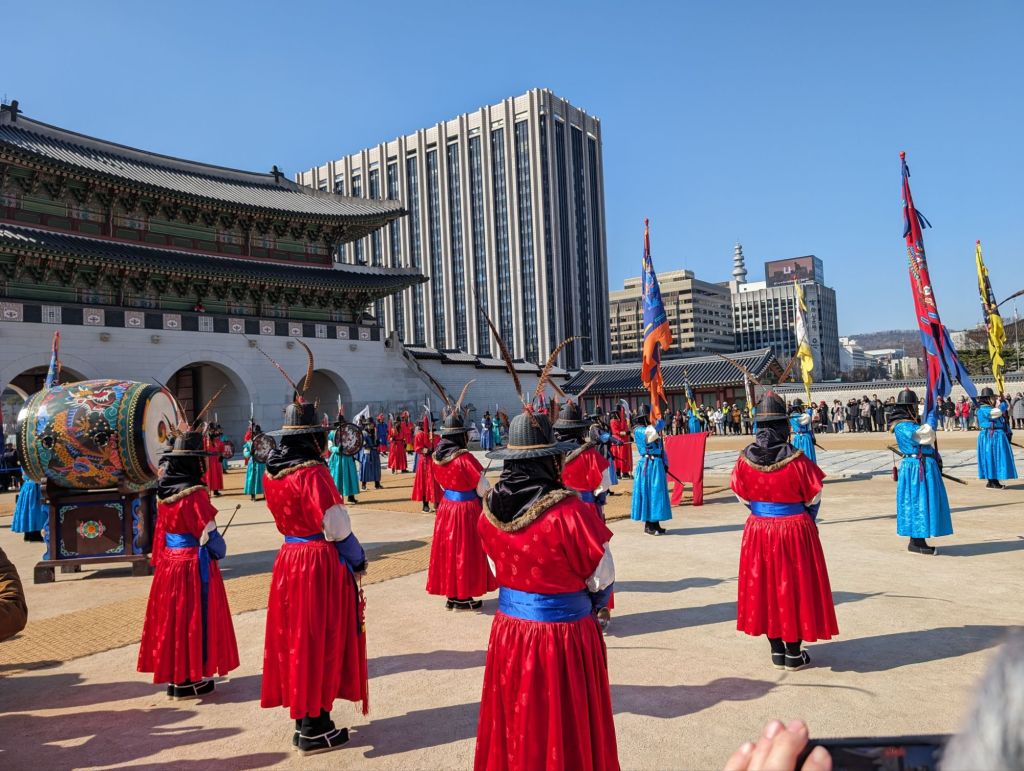
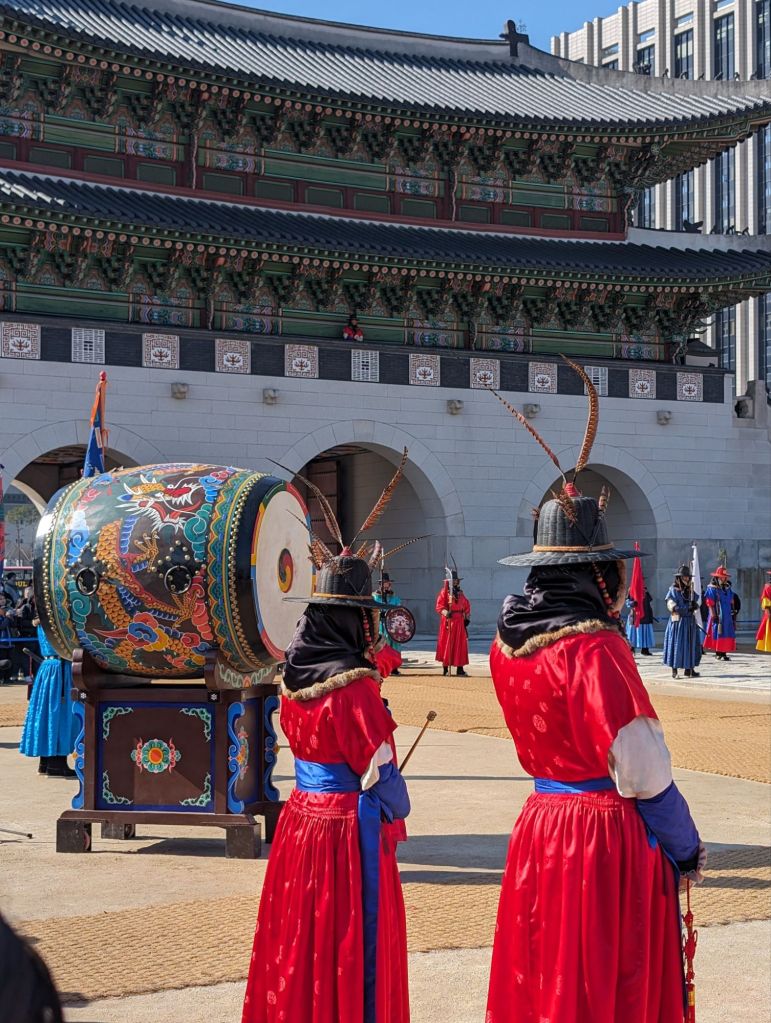
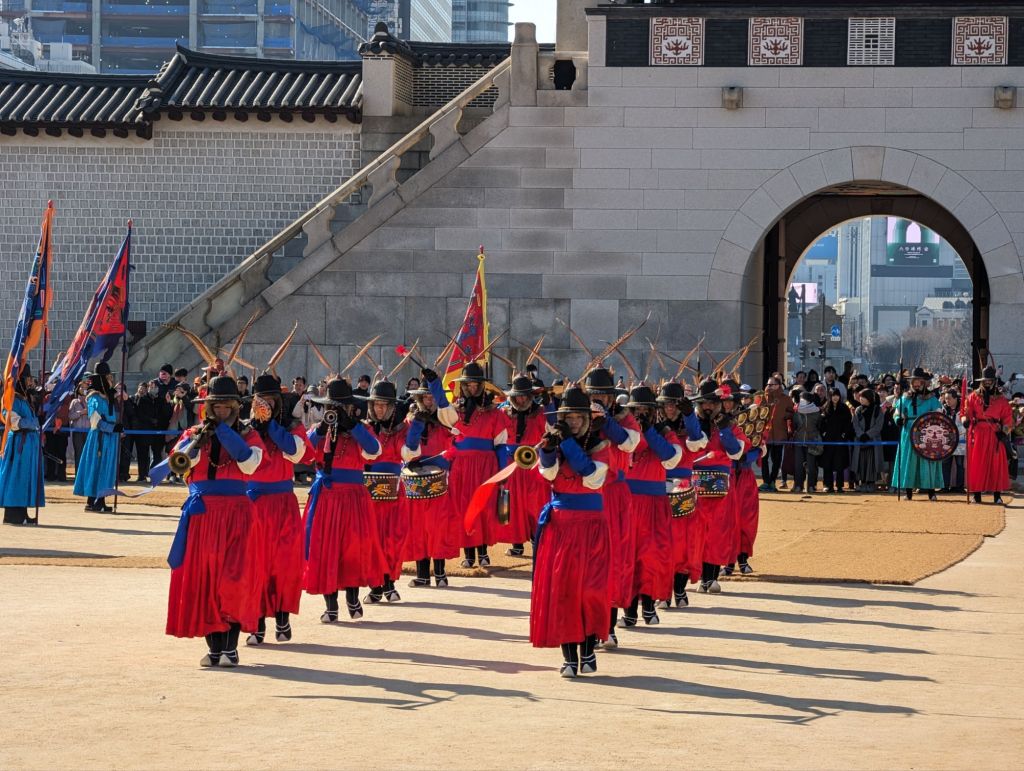
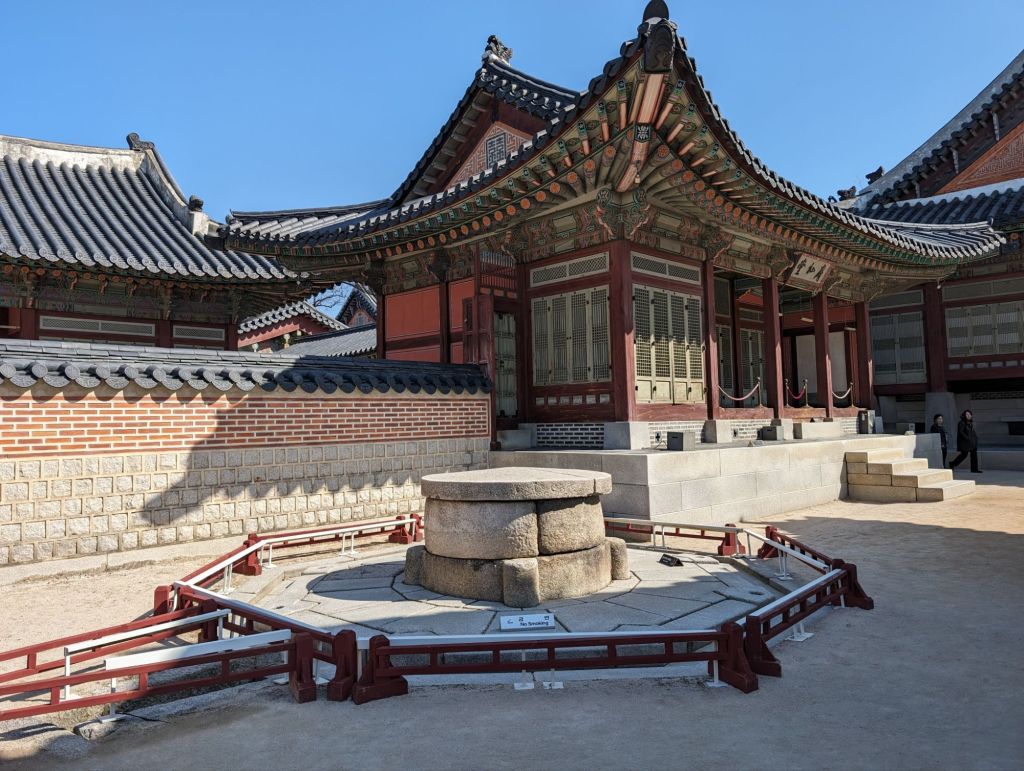
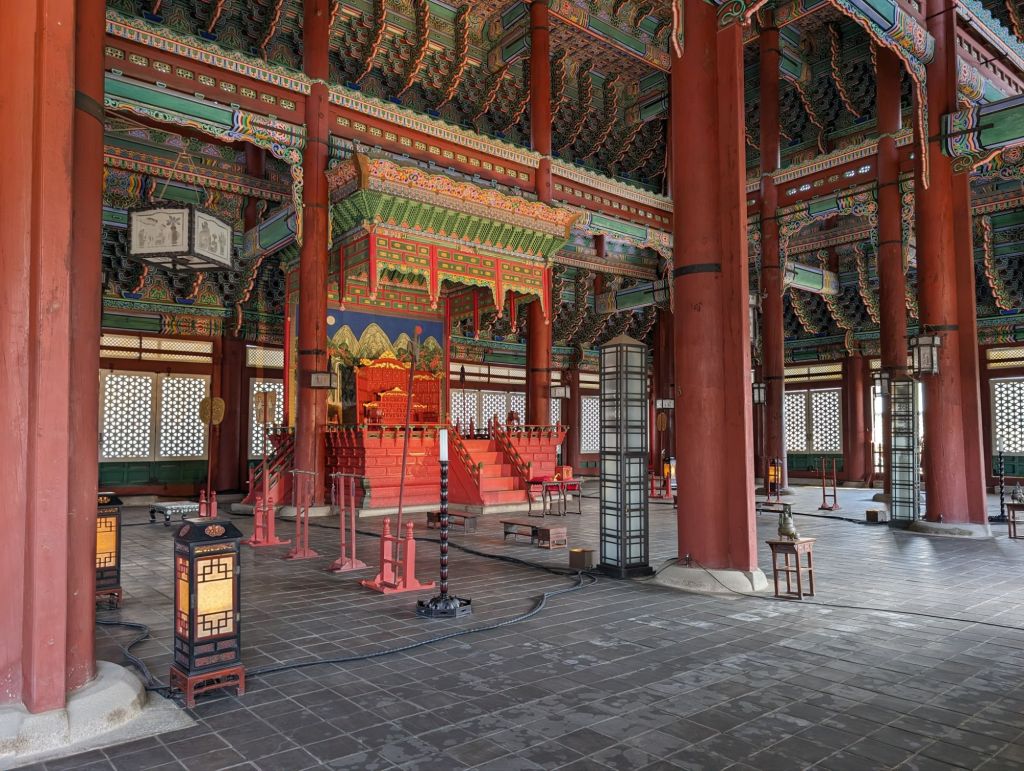
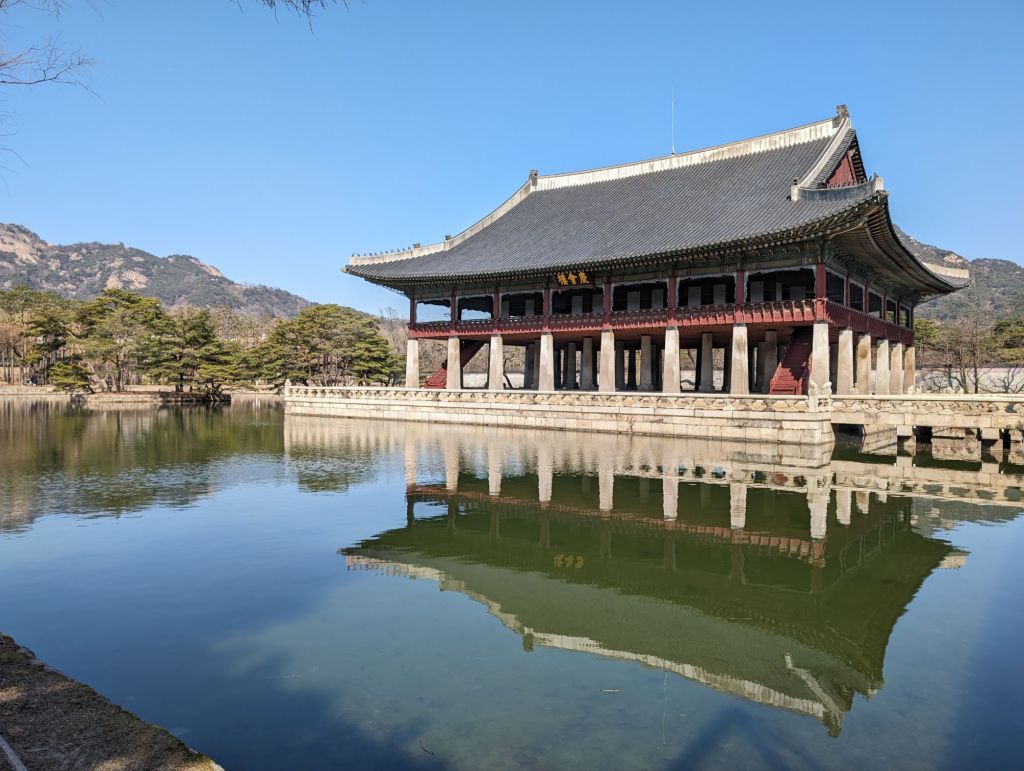
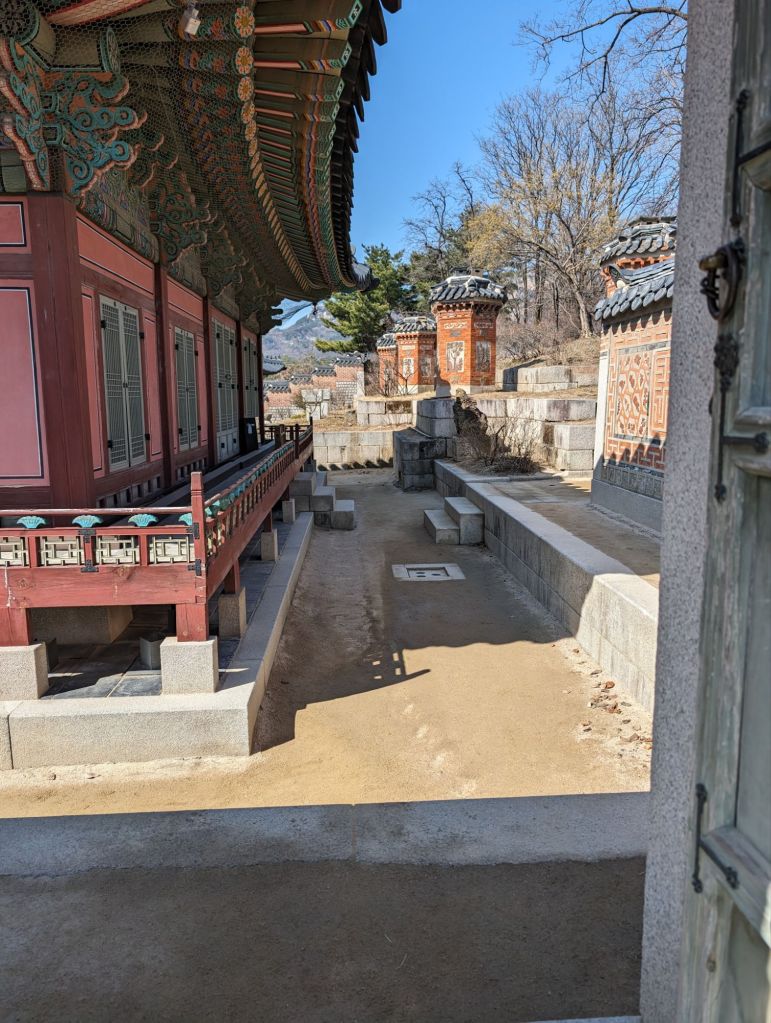
The grand 14th century Gyeongbokgung Palace has been built and rebuilt over the centuries as it endured fire, wars, and invasions. Since the 1990’s the walled palace complex is gradually being restored. Not all of the original palace’s 7,700 rooms will be rebuilt, but more than 500 buildings are now restored on almost 100 acres.
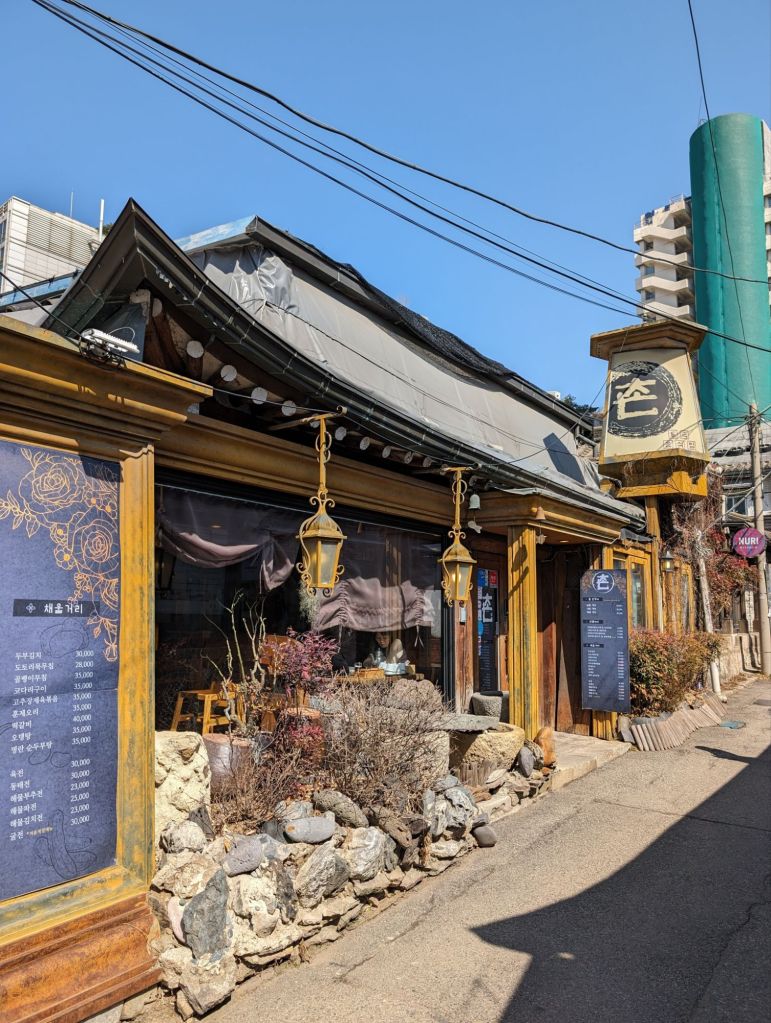
Seoul is definitely a foodie’s heaven. We had a delicious lunch of Korean barbeque at the restaurant below and, after walking through its pretty side street on to a pedestrian shopping road, we salivated over the street food stalls. Too bad we were no longer hungry!
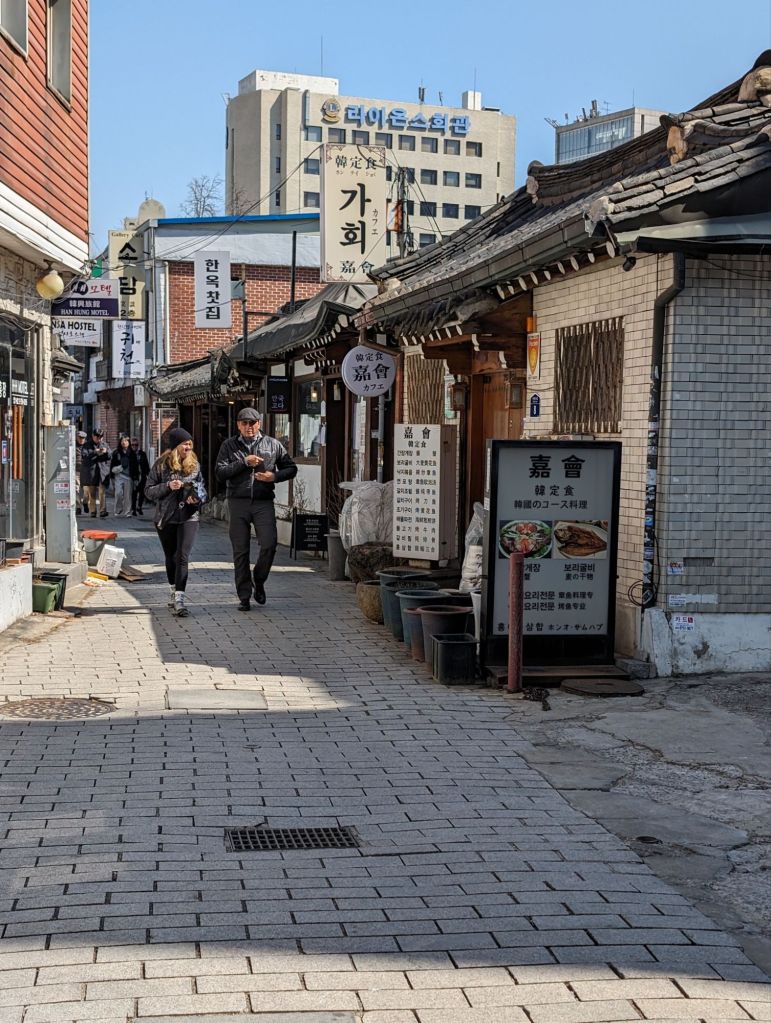
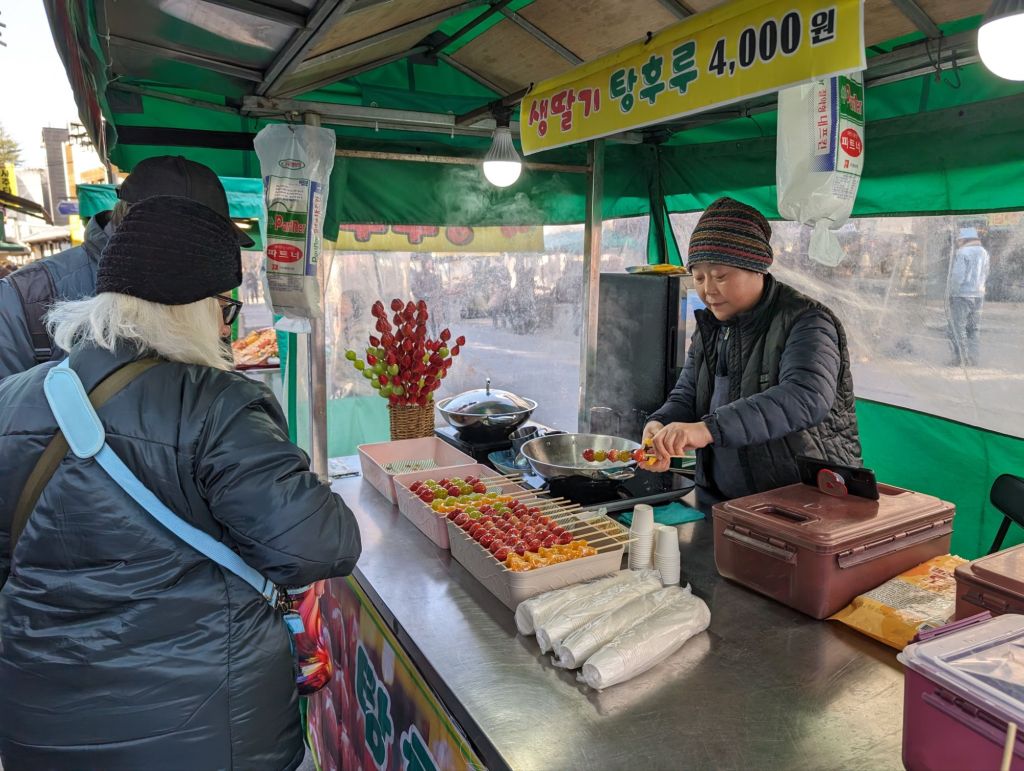
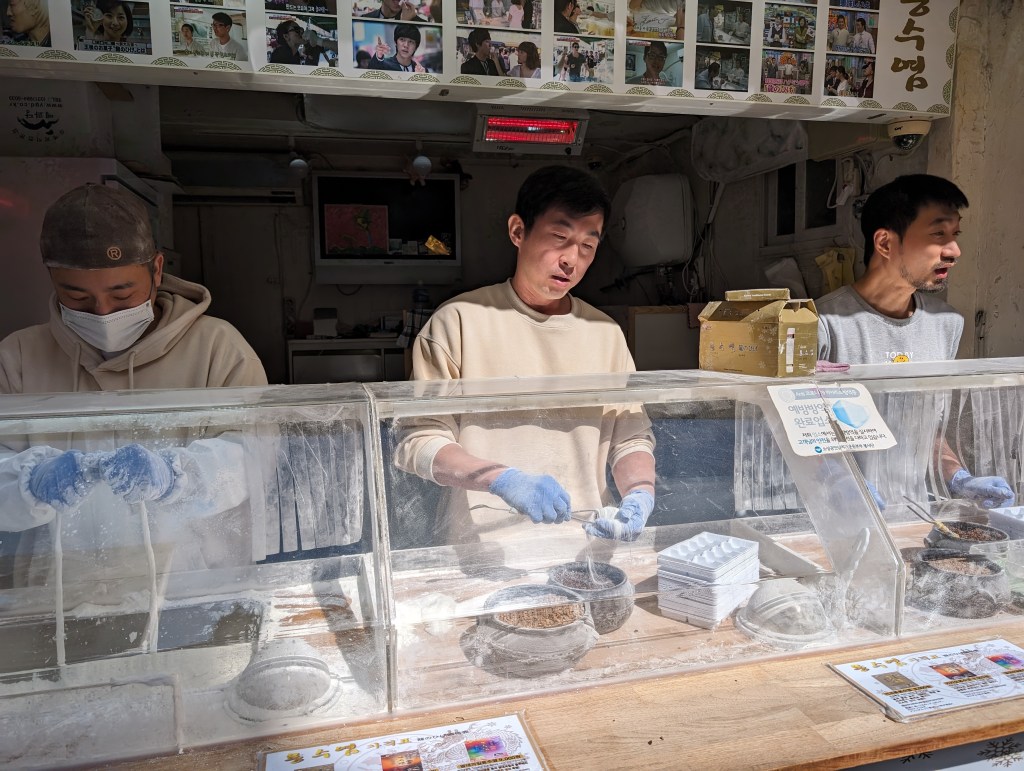

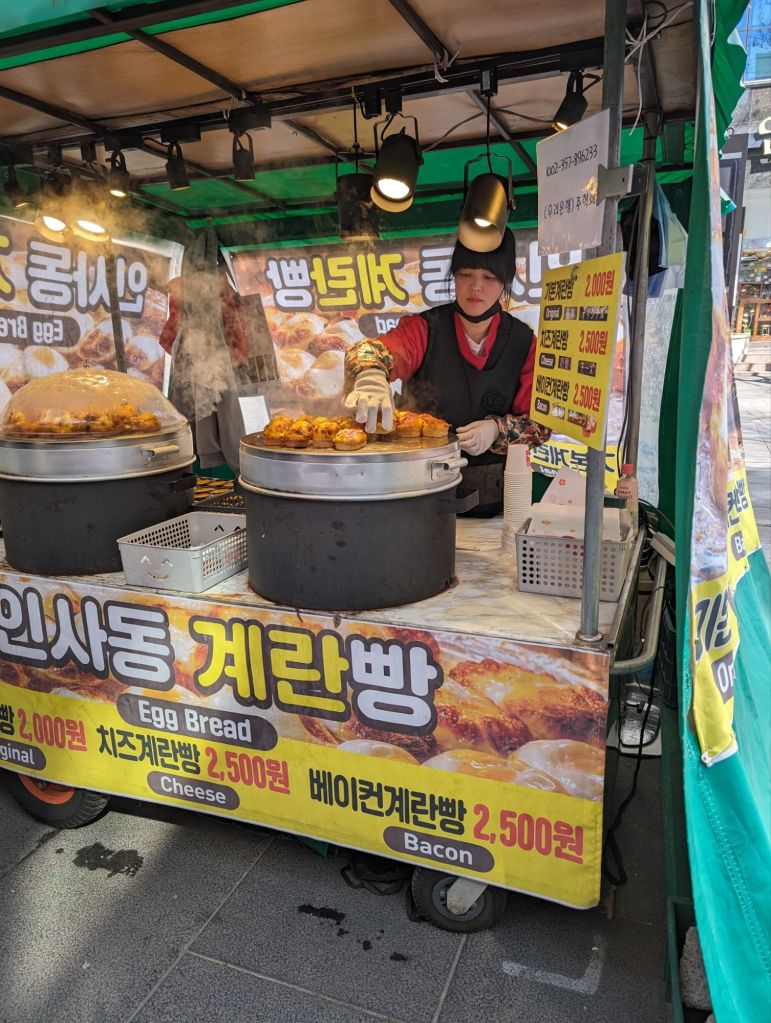
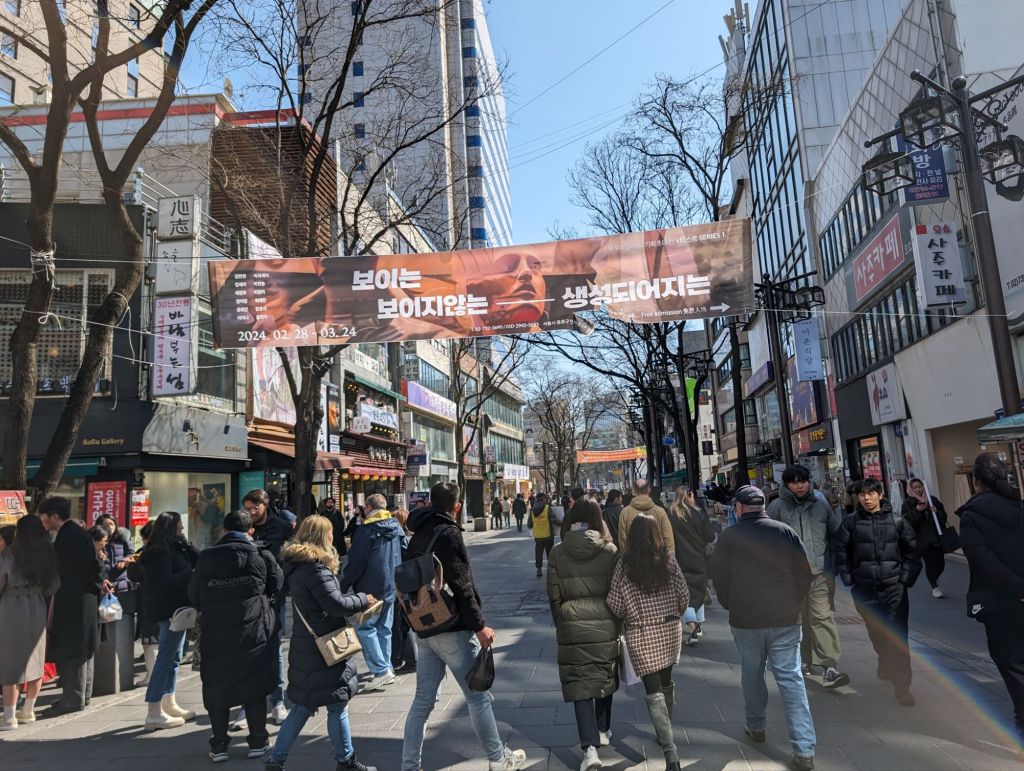
We explored the shopping area of Insadong, Seoul’s art and antiques center. We loved seeing the original aesthetic local artists brought to their crafts.
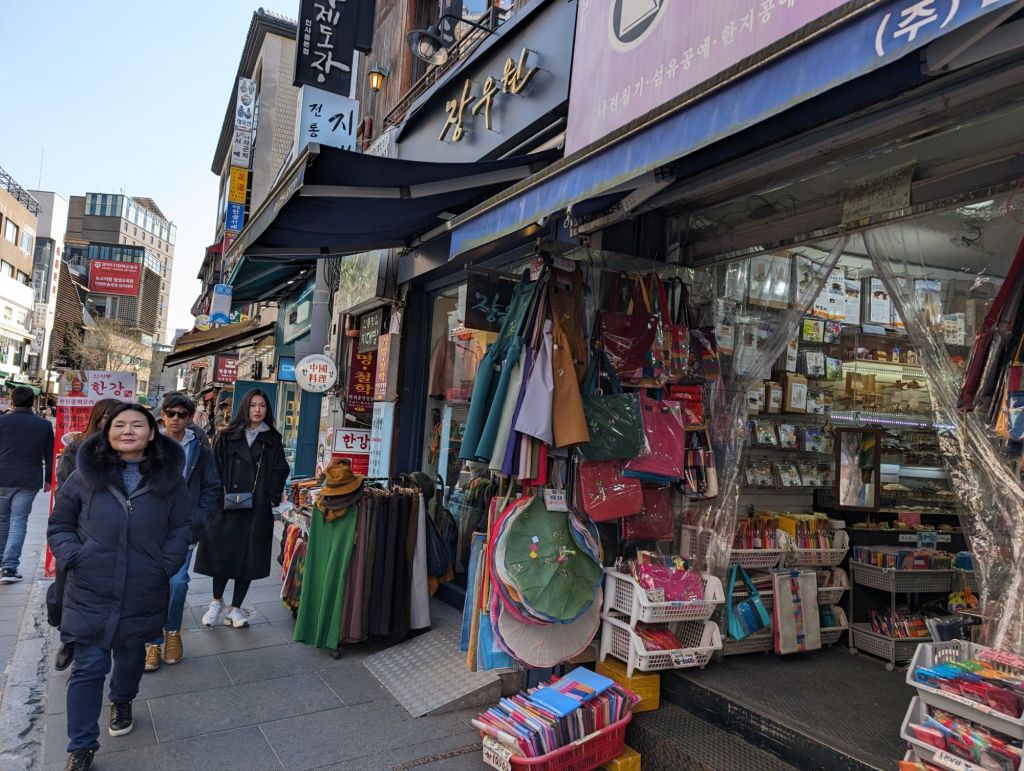
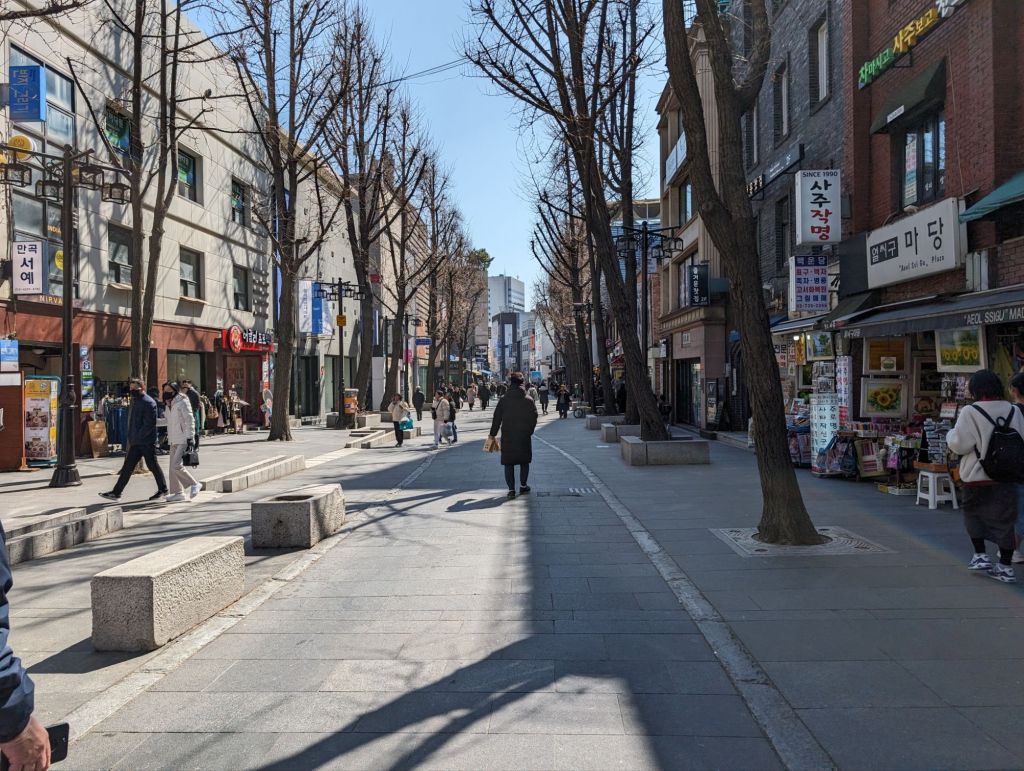
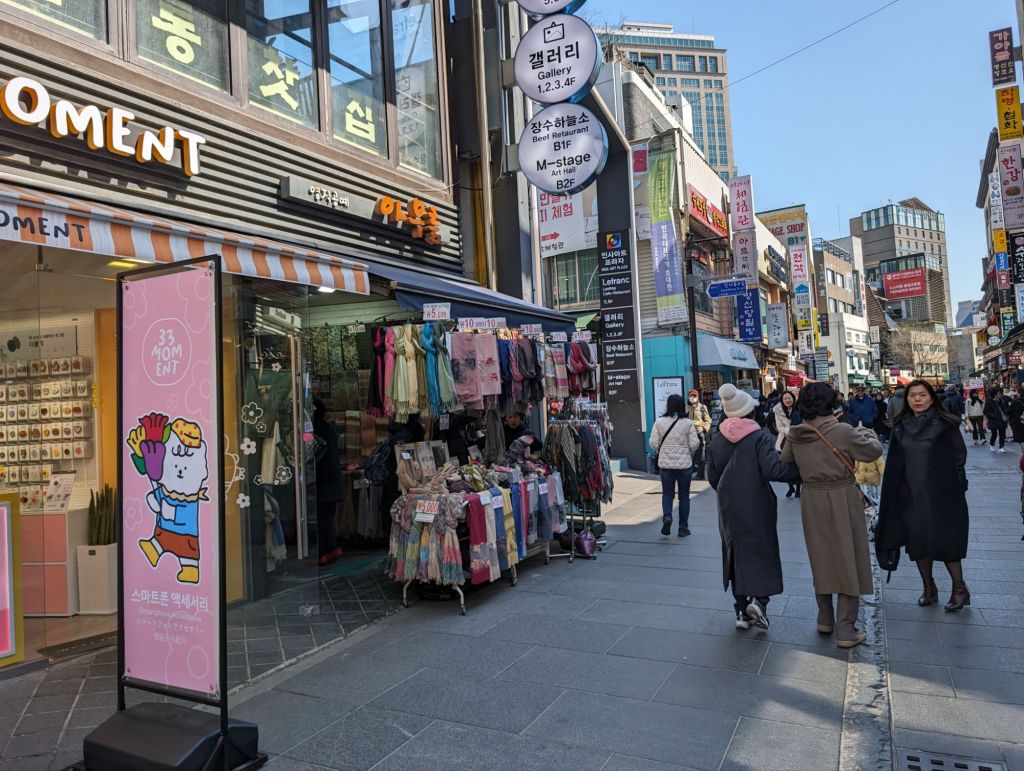
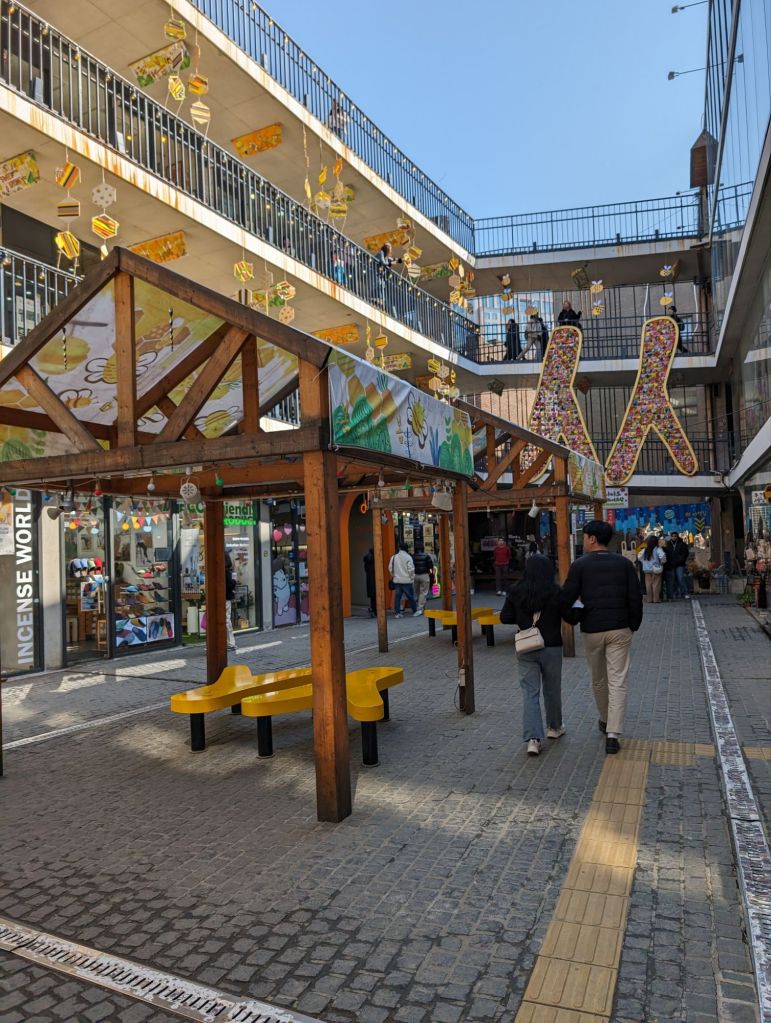
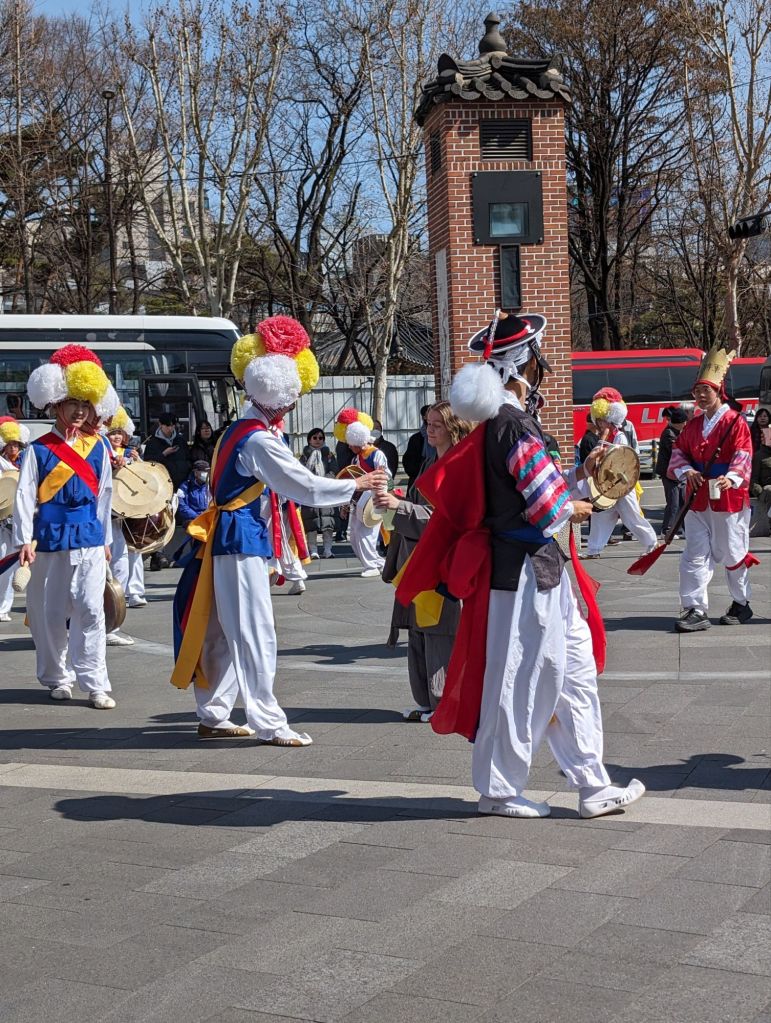
We watched the Farmer’s Dance on this plaza, an early celebration of Spring and new life.
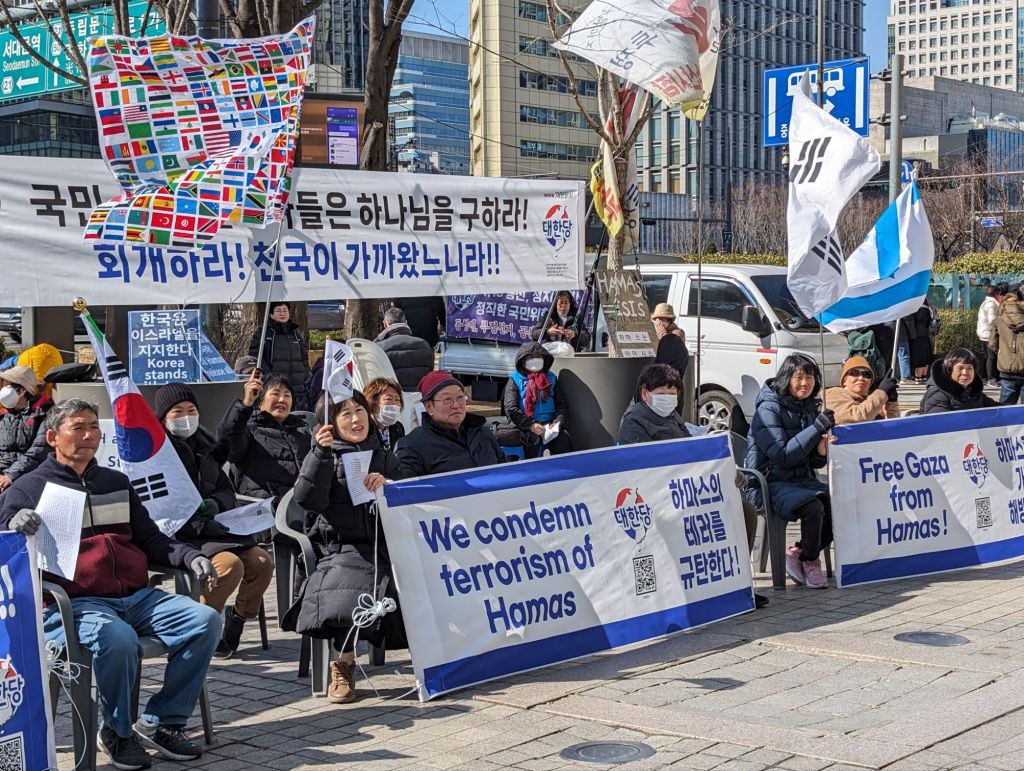
In a very different vein, on this busy downtown street, there were people listening to an anti communist speech. Below that are posters and flags depicting the dangers of communism and supporting the Korean and American alliance.
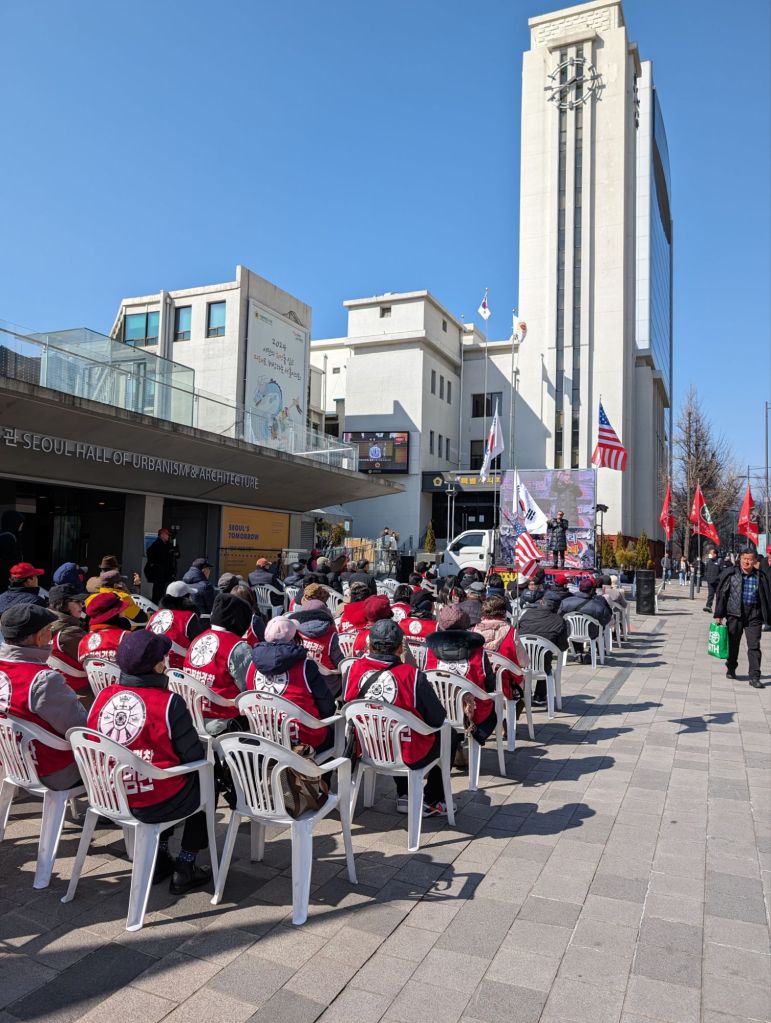
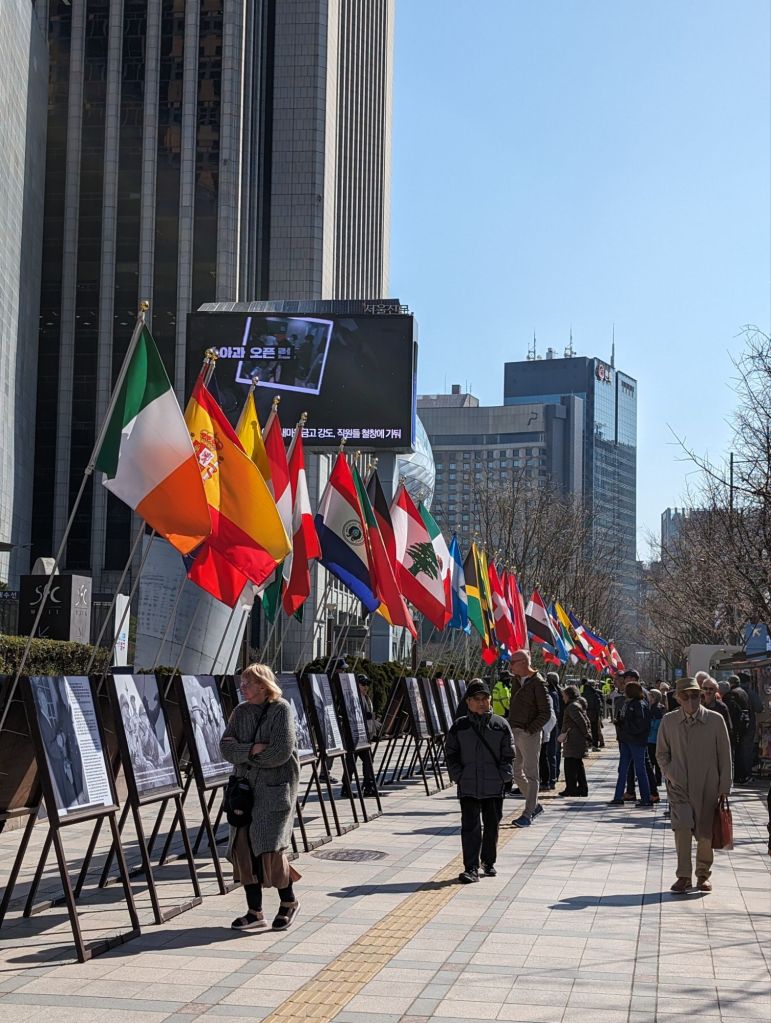
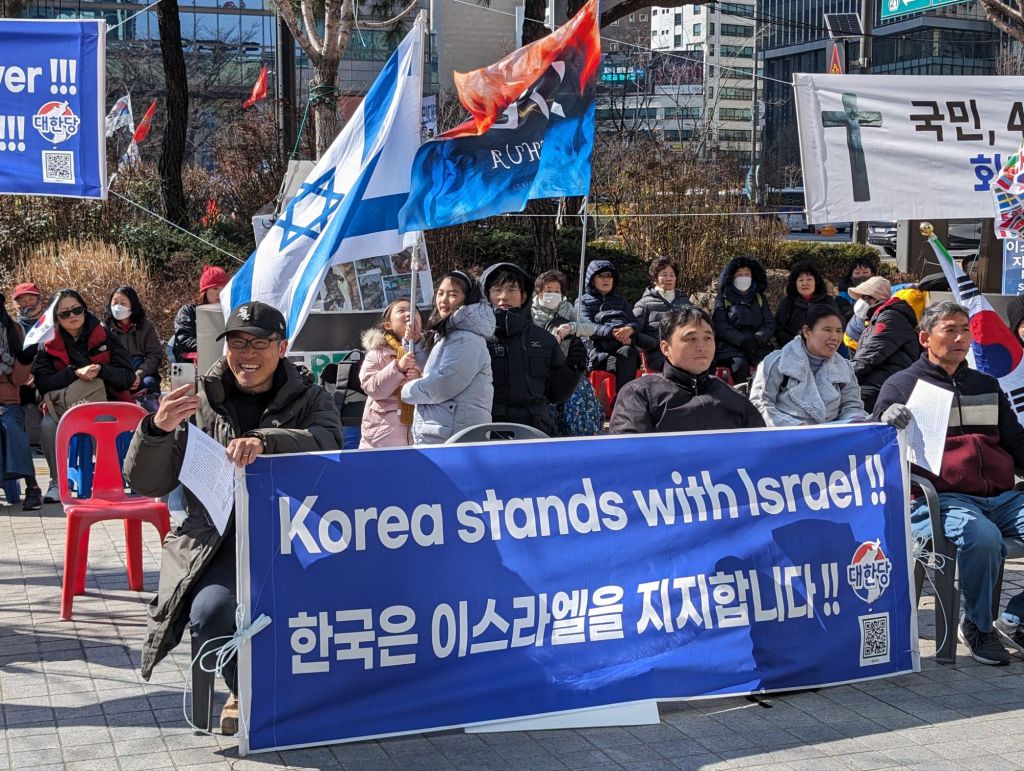
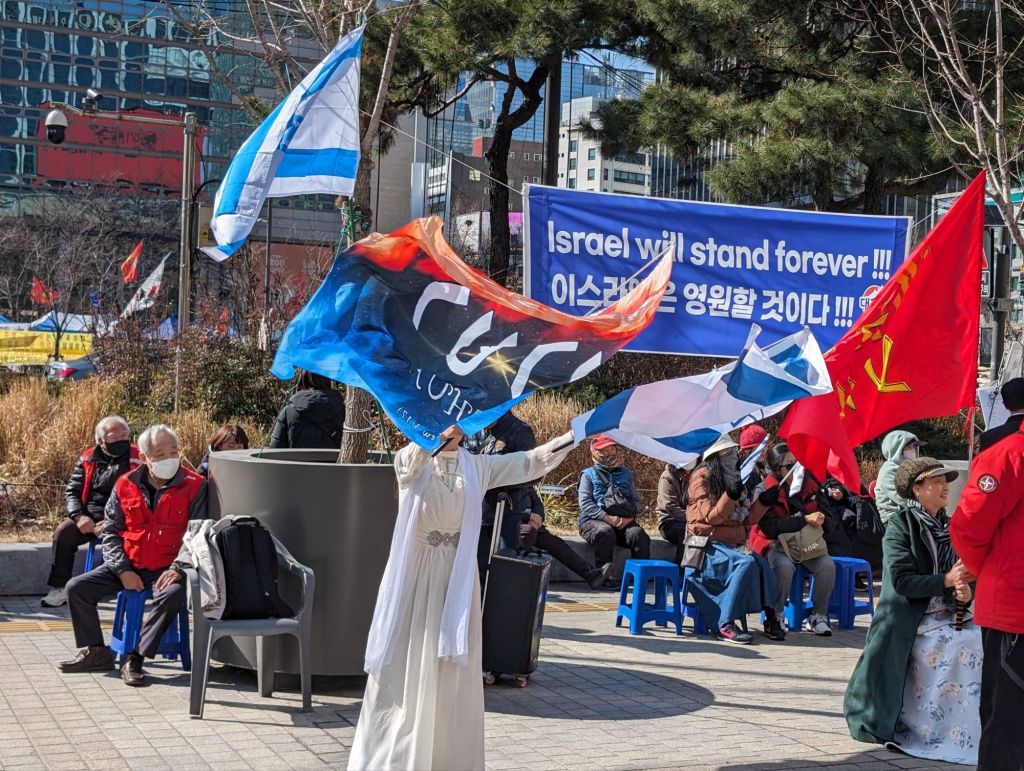
It is not unusual for this downtown area to have multiple protests on different political topics going on at the same time. We gave a high sign to this pro Israel demonstration.
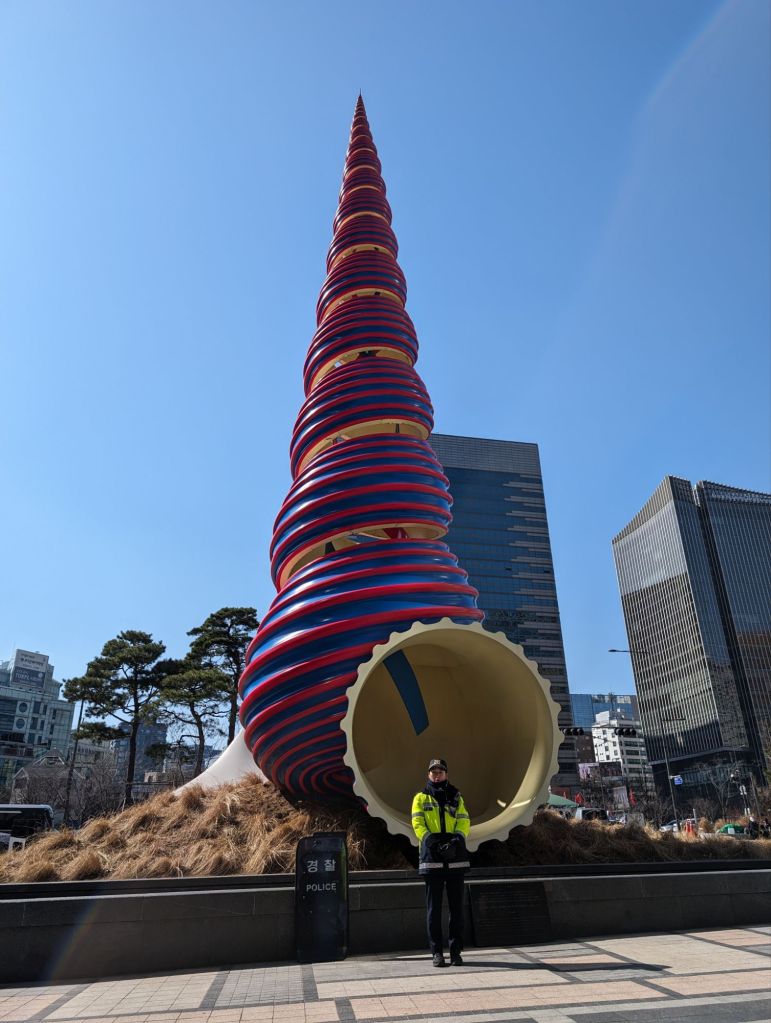
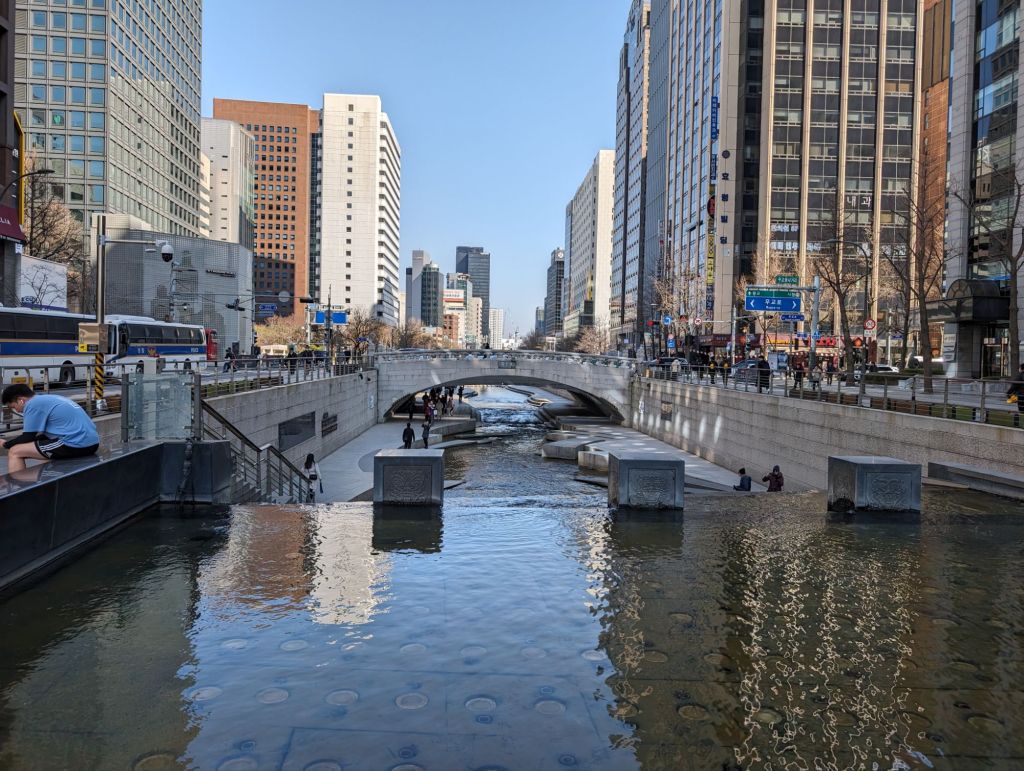
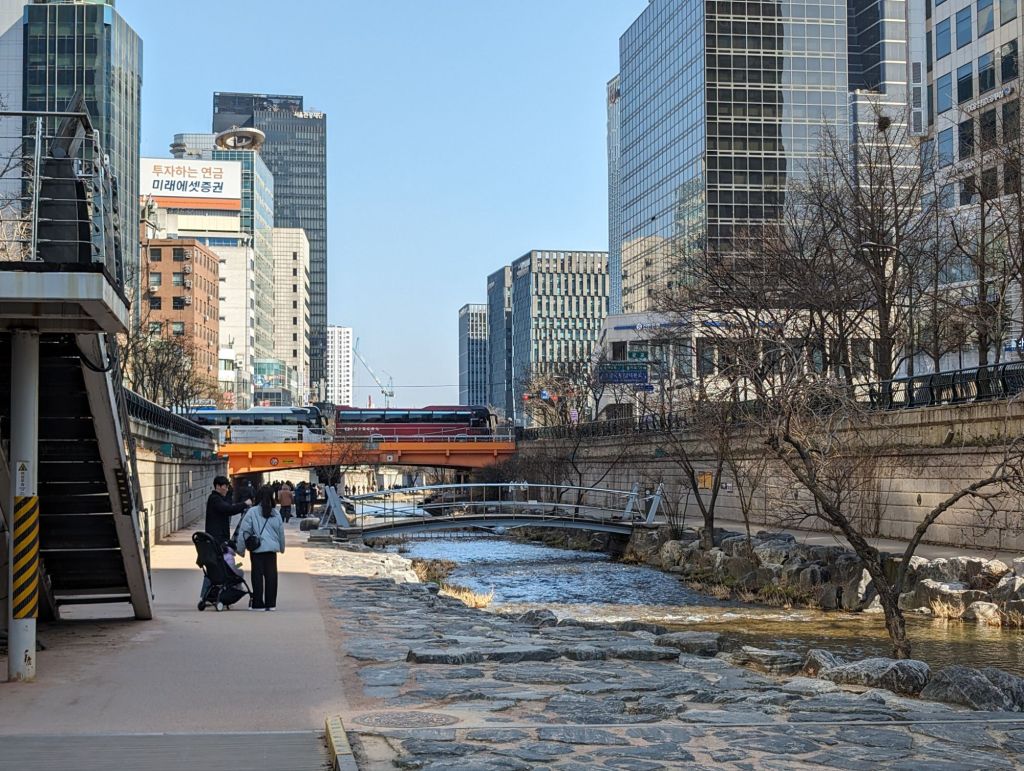
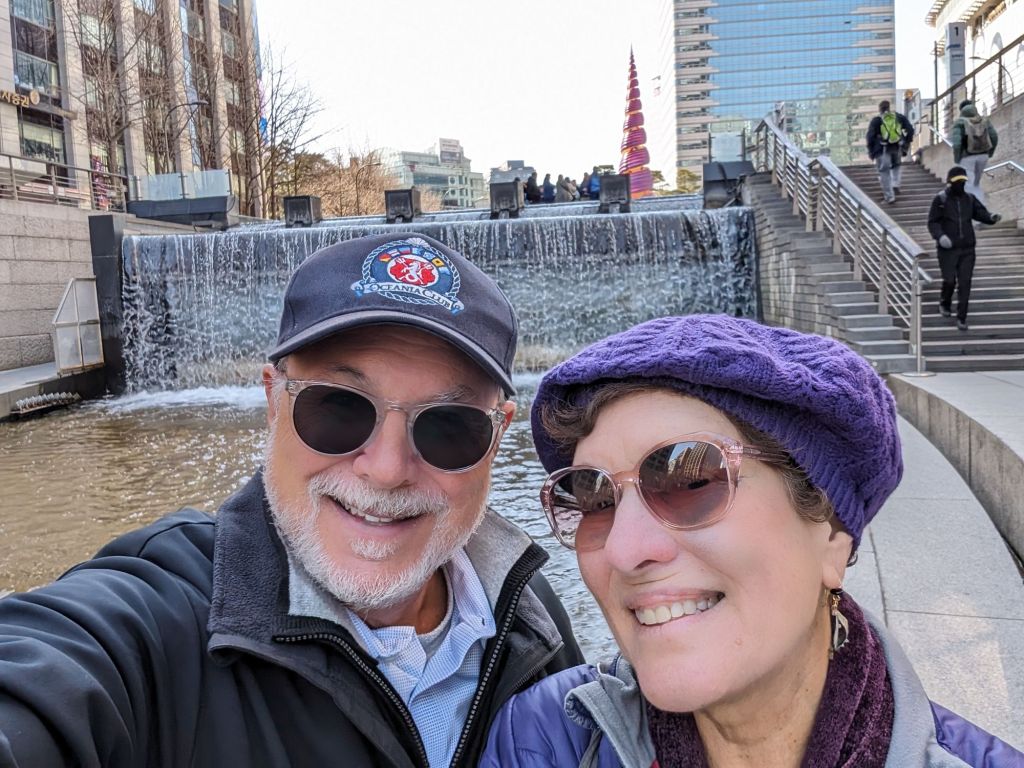
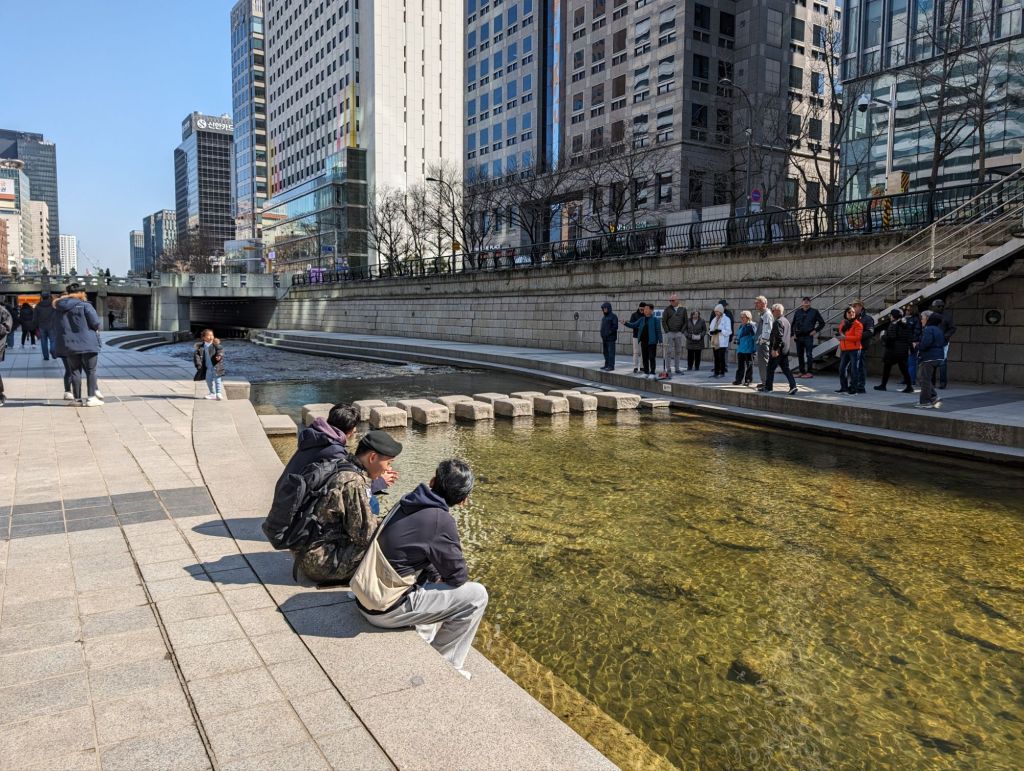
Cheonggyecheon is an innovative urban renewal project that first attracted a lot of criticism, but now is quite popular. Originally, it was a natural stream handling sewerage. After the Korean war, deteriorating conditions led to it being cemented over. A freeway overpass was built over the stream. In 2003, the government disassembled the expressway and restored the stream, creating a 6.8 mile riverwalk and public space through the heart of downtown Seoul.
 J and J Travel