Amami is part of a small archipelago that has been isolated for much of its history. With only 40,000 people, beautiful beaches, mountains, abundant plant and wildlife, some of which is unique to the island, Amami has created a laid-back and friendly culture all its own.
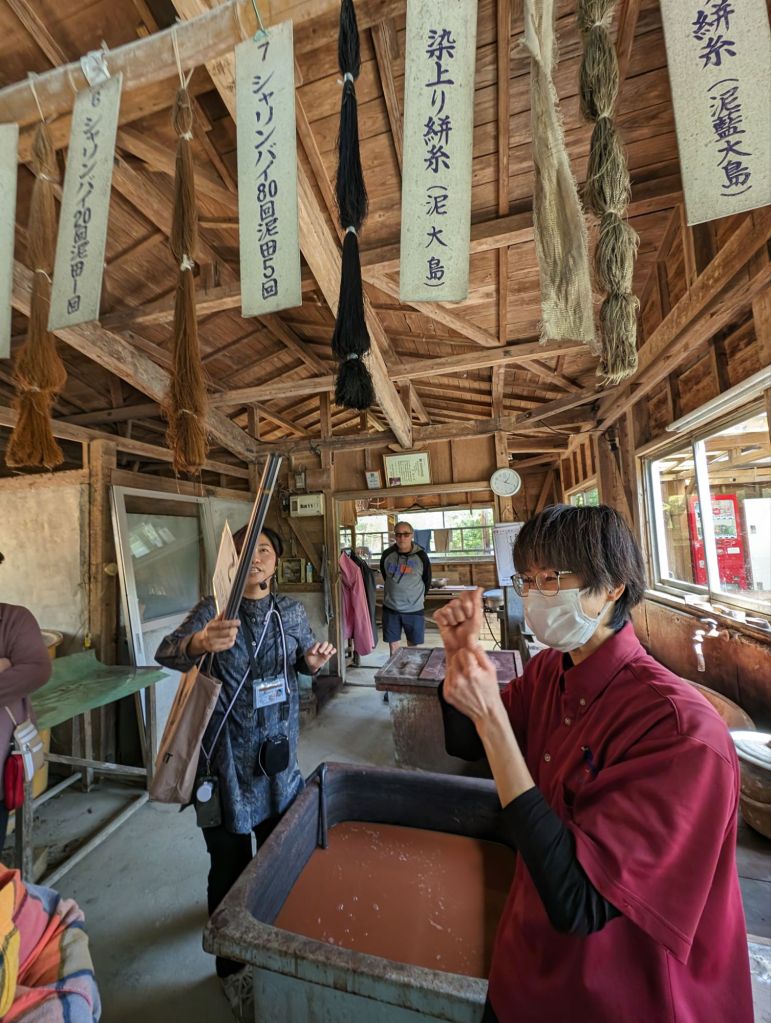
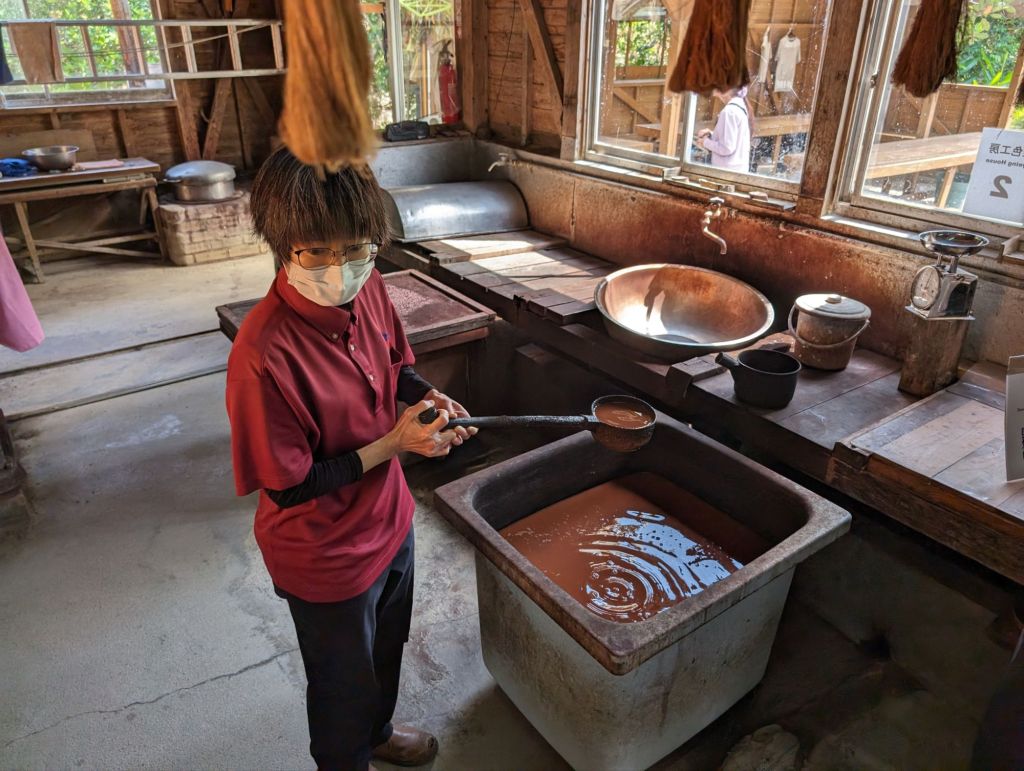
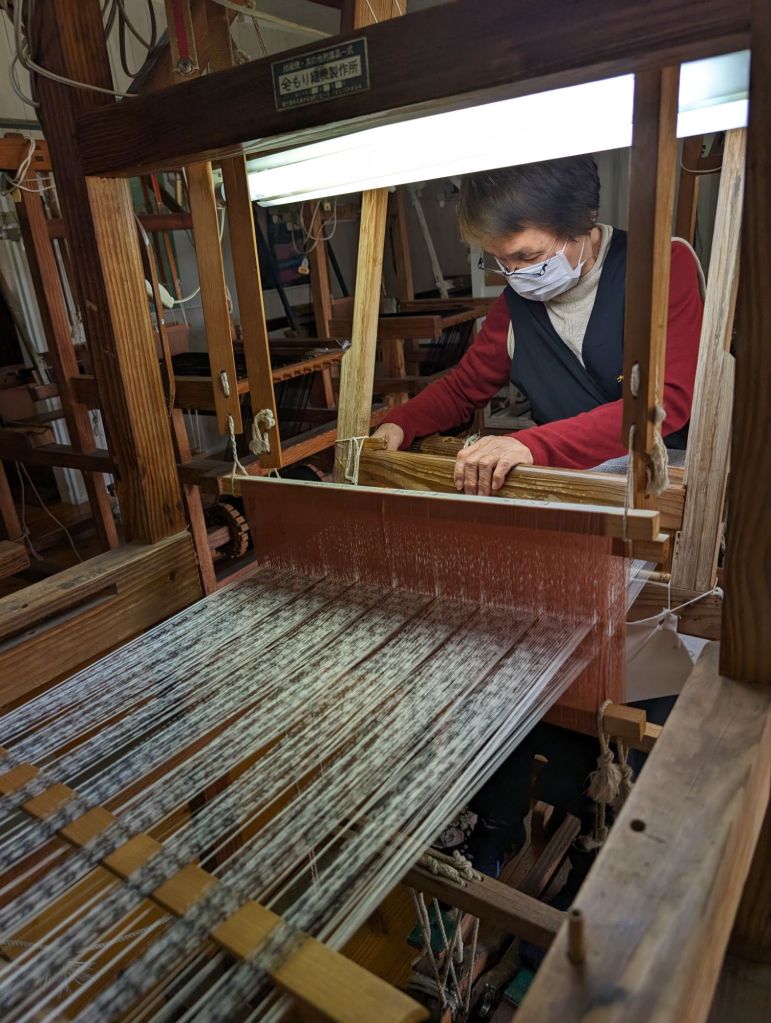
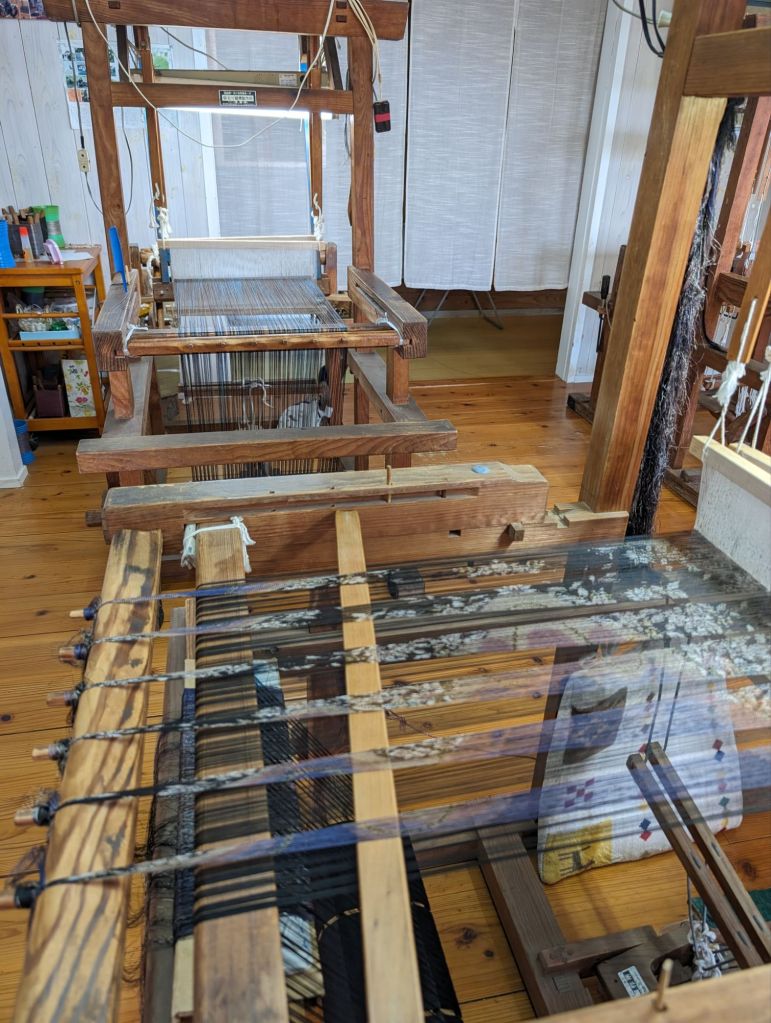
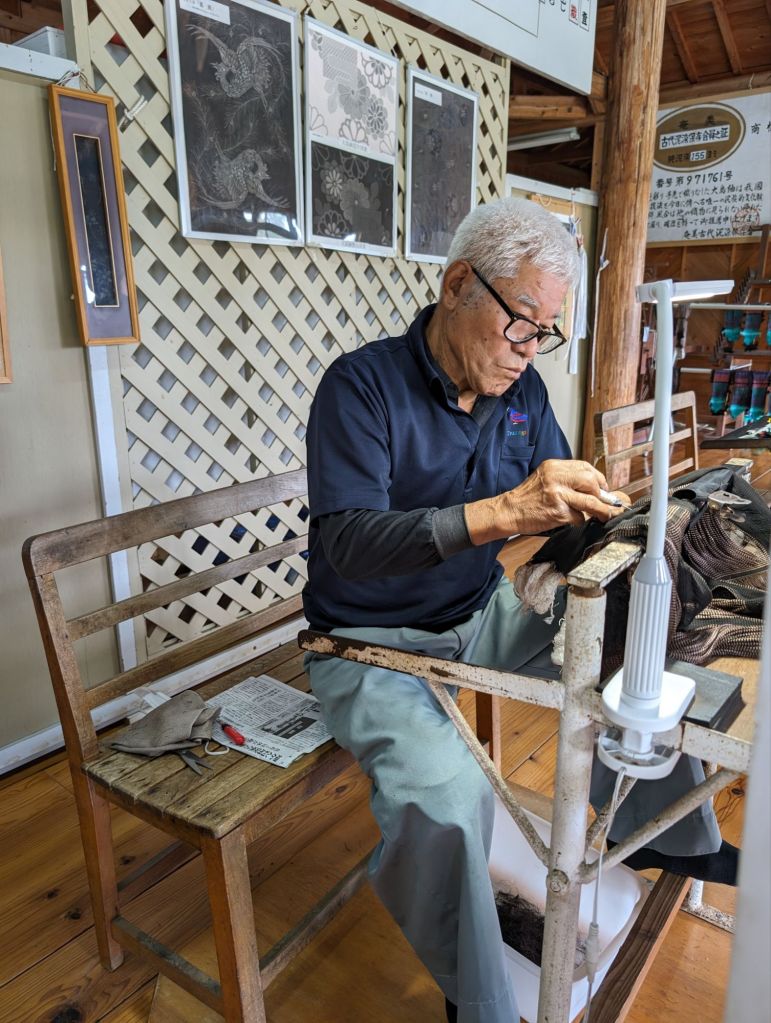
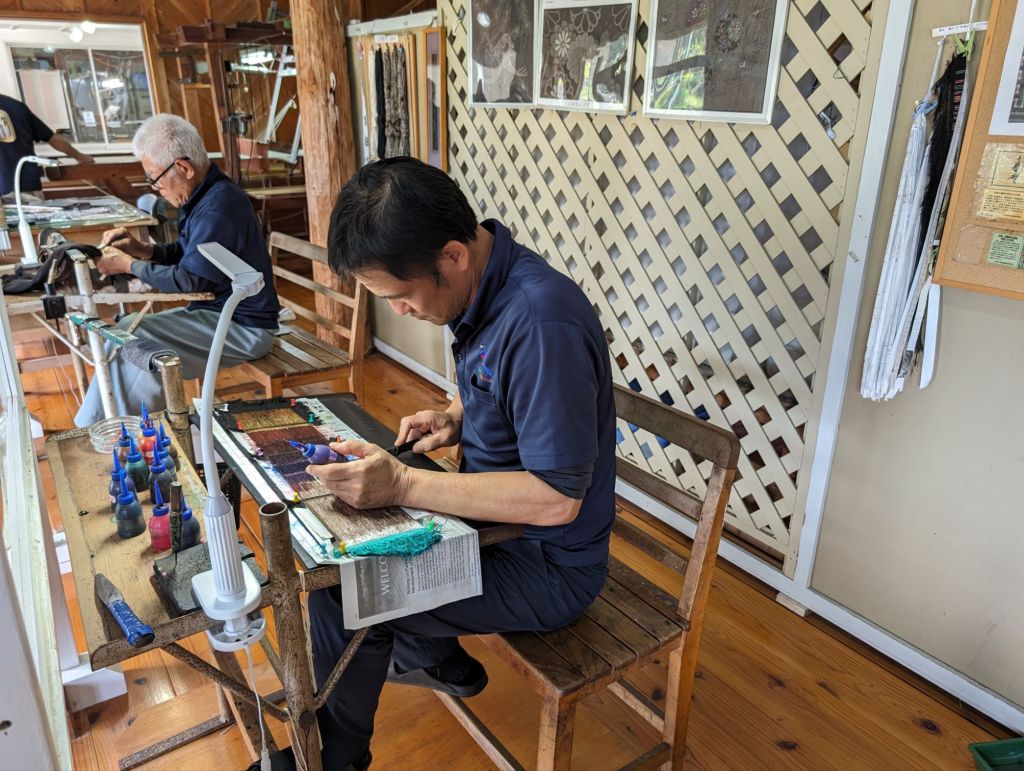
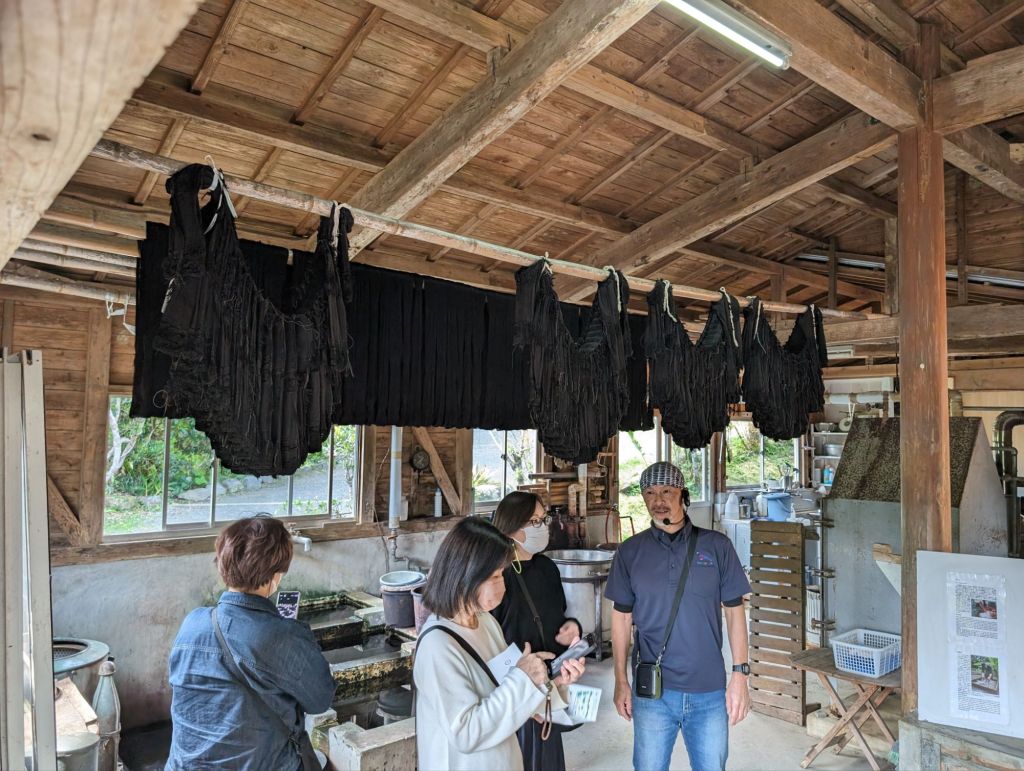
The Oshima Tsumugimura Factory creates beautiful fabrics with a dyeing process using local trees and mud. It is the only one of its kind. We toured the factory, which had a rustic feel, and saw the time intensive and highly skilled labor involved. Below one of the workers takes us through the process in the dyeing house.
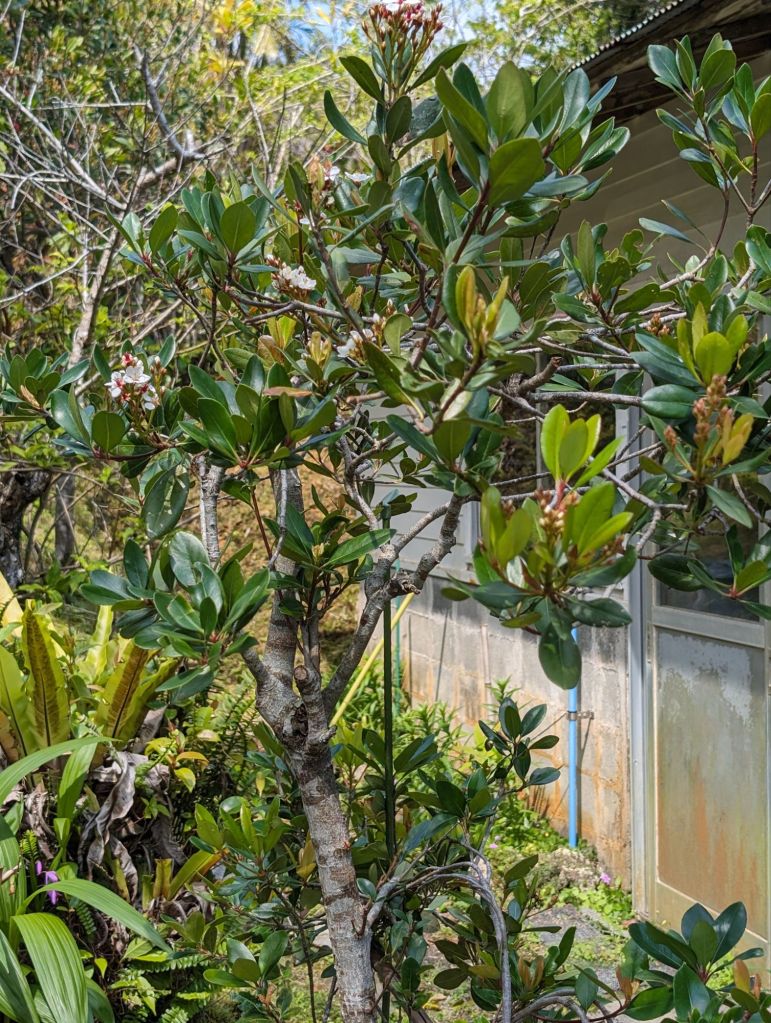
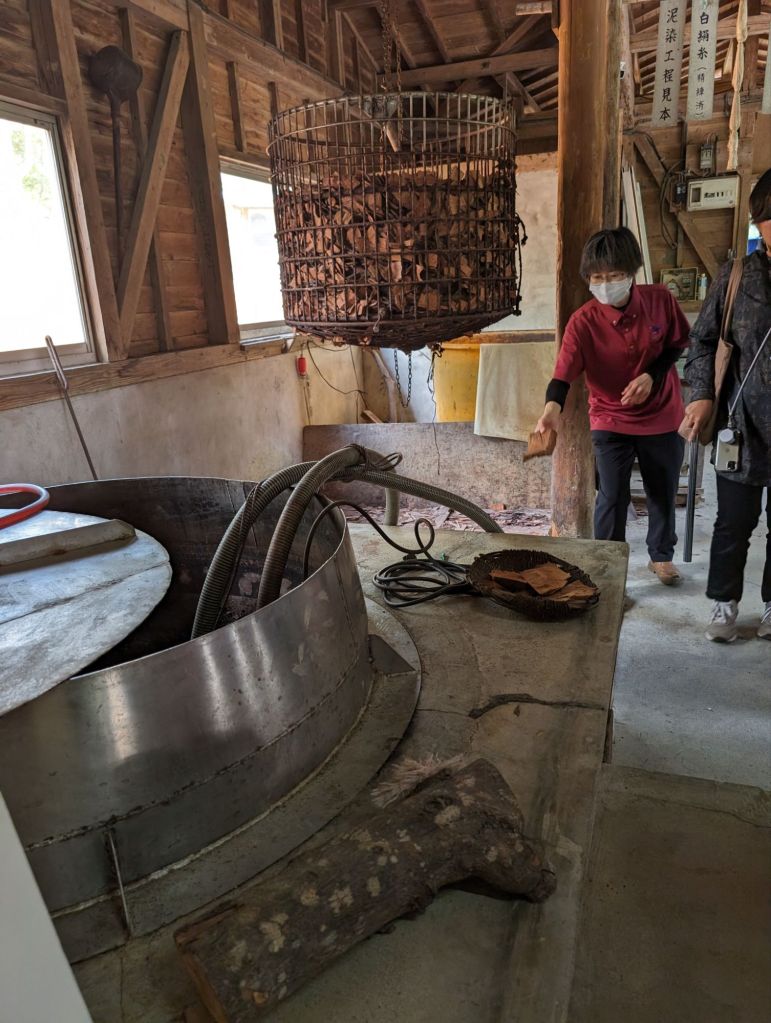
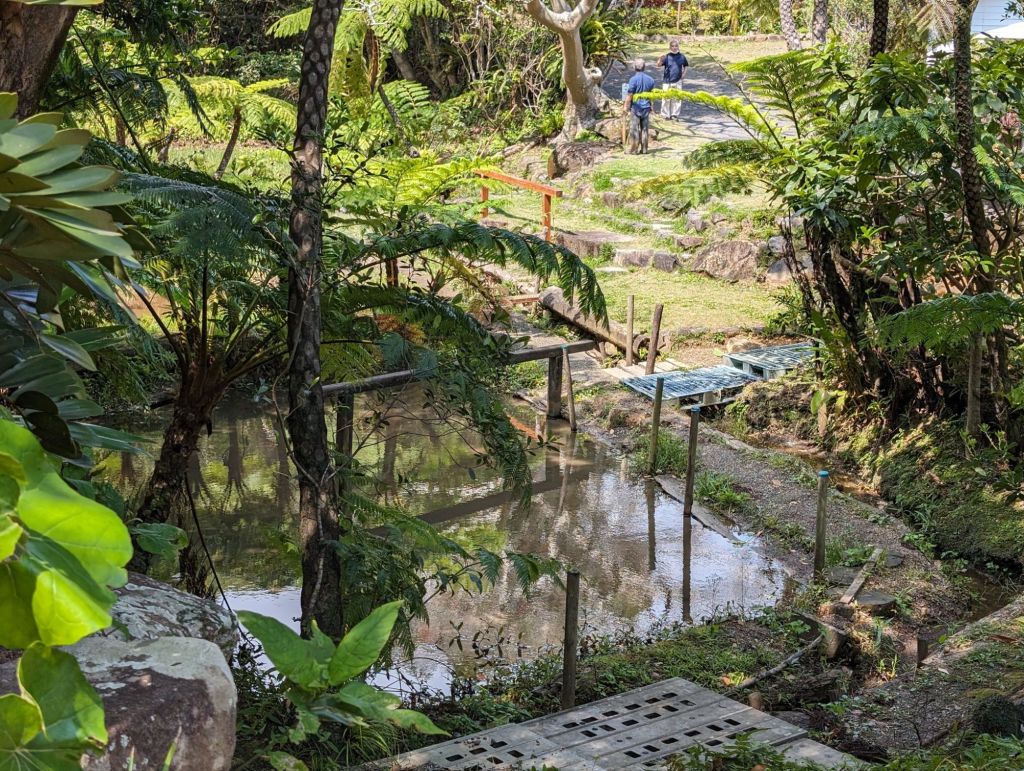
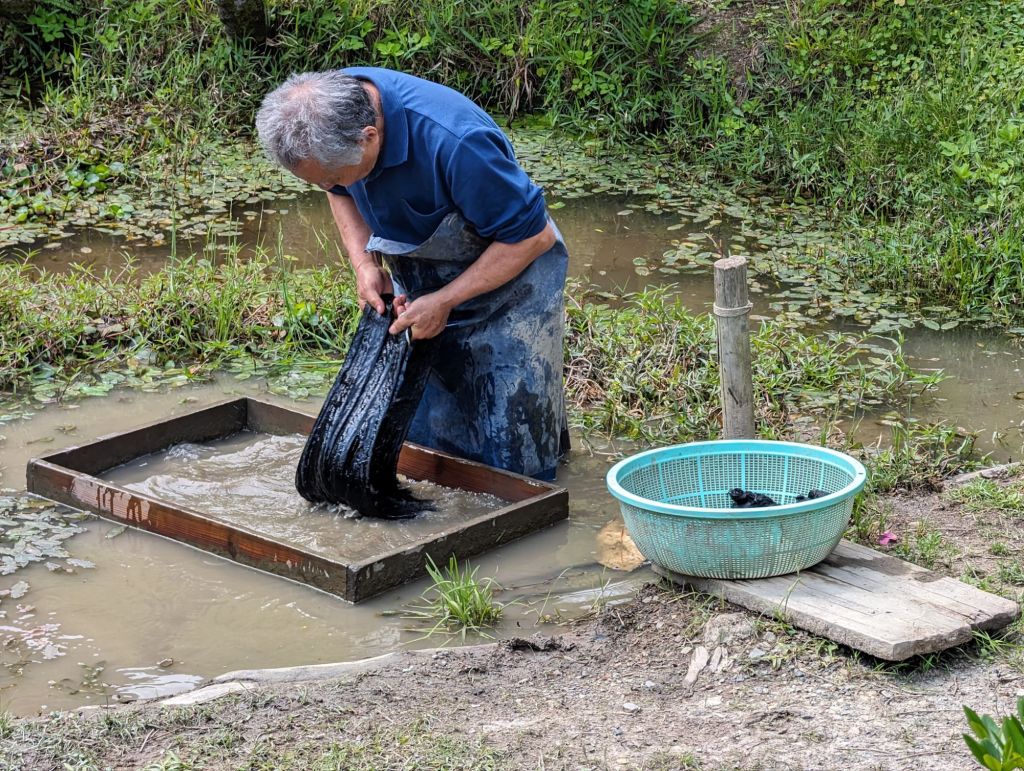
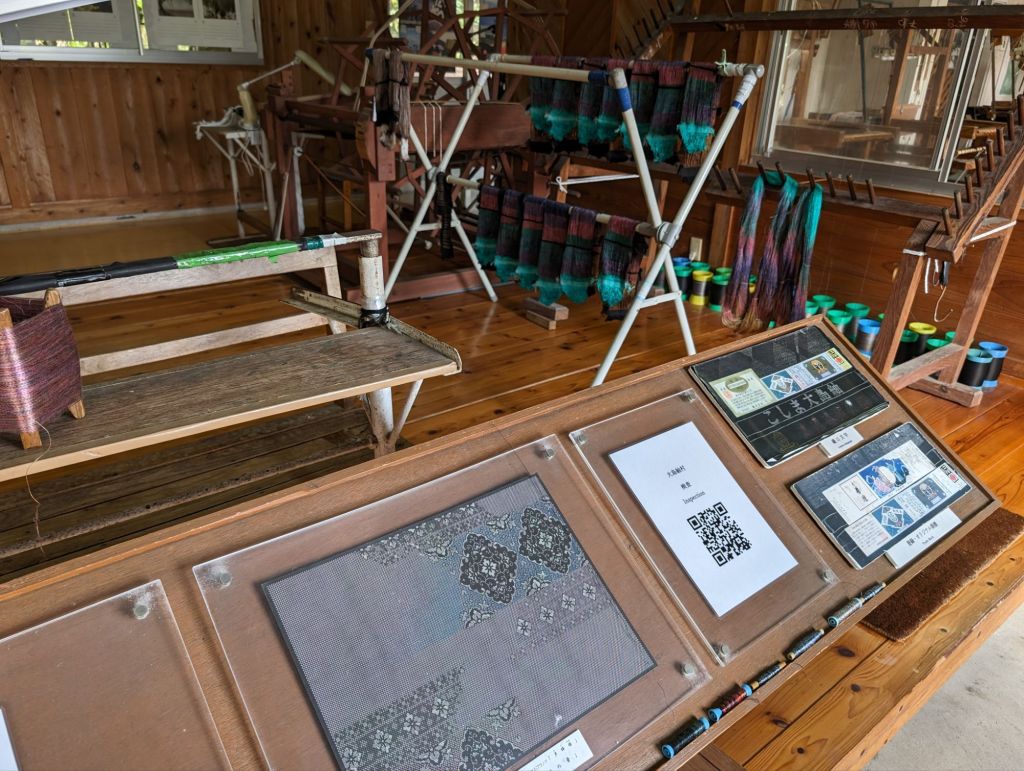
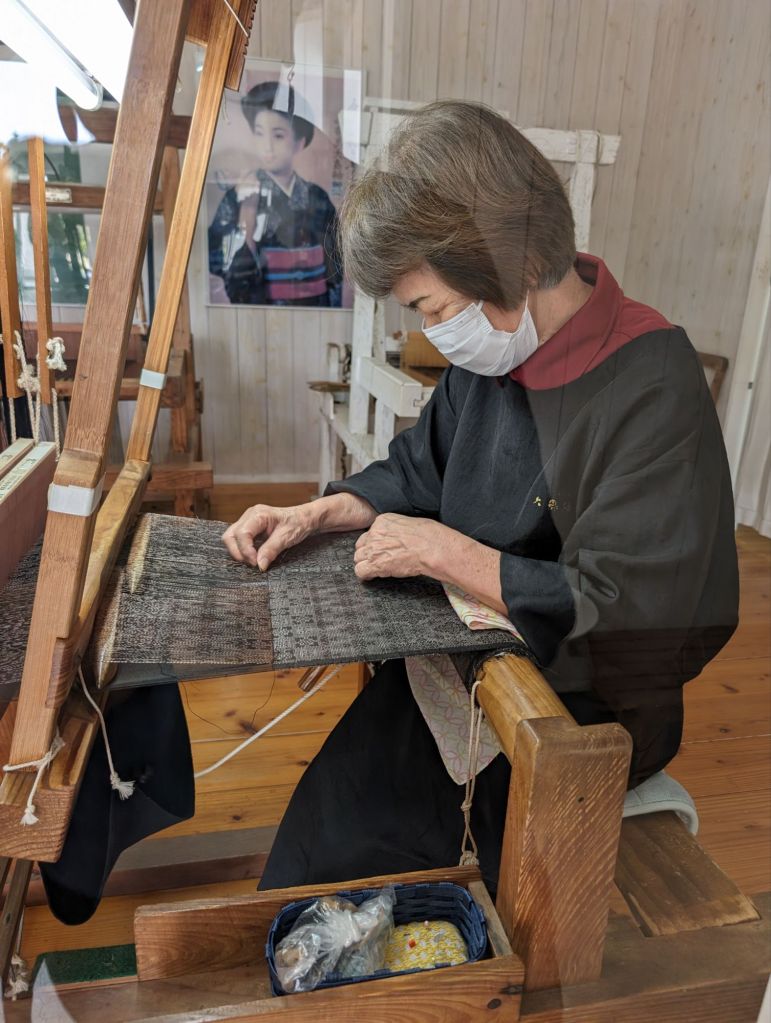
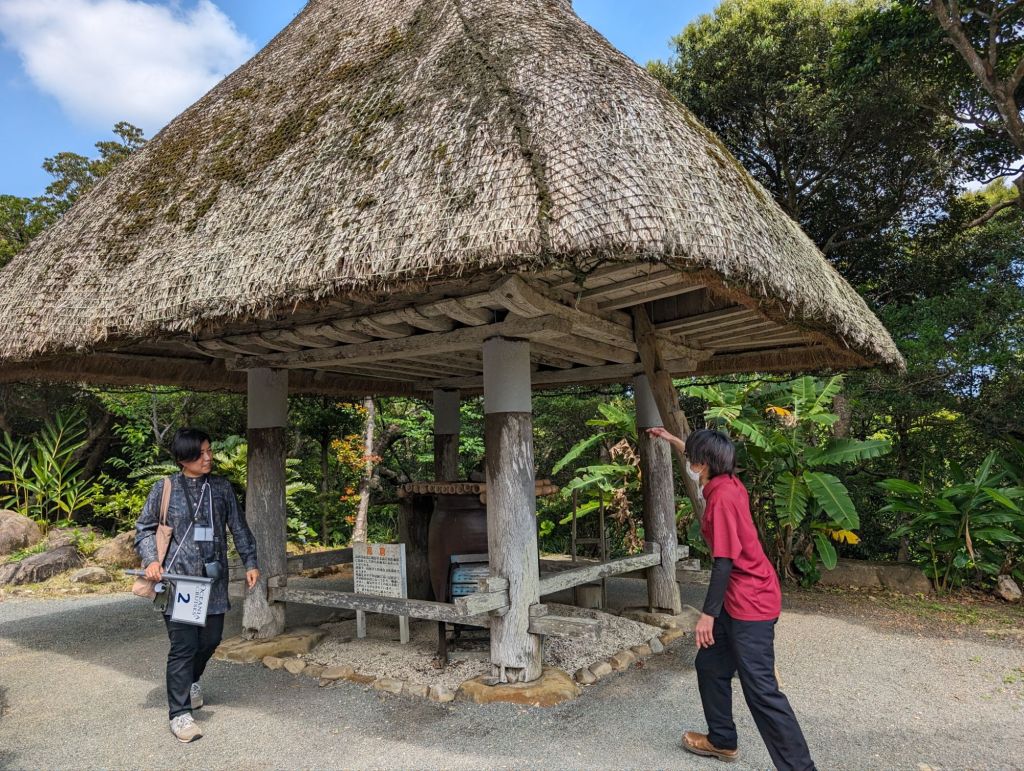
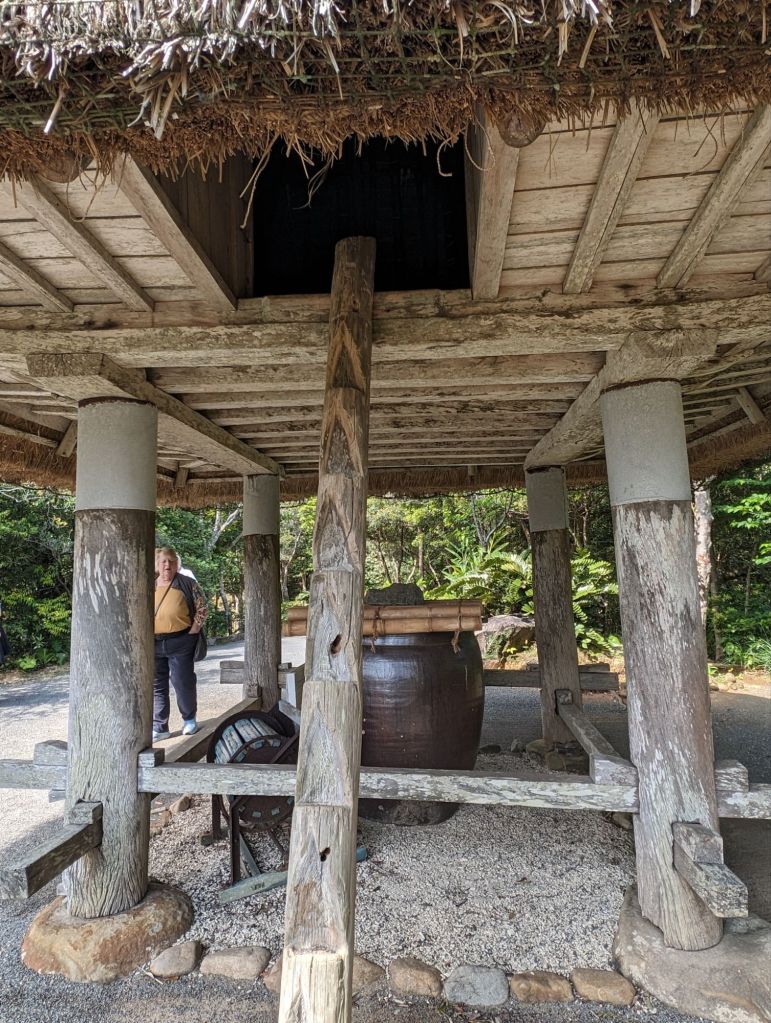
Our guide points to the shanks of threads drying as they hang from the rafters. Each one is in a different stage of the dyeing process.A Sharinbai tree like this one is chopped into pieces and then steamed with water for 20 hours. Silk thread is dyed with the tree material up to 20 times to get the color desired.Our guide is showing us the tree bark that’s being processed for the dyeing.After the threads are set to dry, they are then washed in these mud fields above and below. The process is repeated four times as the iron oxide in the mud continues to pigment the threads.This worker is carefully washing the silk threads in the mud bath.Here is a finished vat of the dye.Patterns are created with a graph to be hand loomed.Some of the cotton threads that have mixed with the silk are carefully removed so that the silk can be dyed with specific colors.The man in the foreground is applying dyes by hand to match the colors in the pattern.These fabrics, now a rich black, are being air dryed.You can see the elegant pattern coming to life as this woman weaves the threads.Within the factory’s gardens are Takakura, traditional elevated storehouses designed to keep grain and other food stuffs away from mice and moisture and other elements. Below you can see where a ladder leads up to the storage area under the roof.The gardens here gave a timeless and serene quality to this busy factory.
When Amami moved its airport to be further away from housing, they took the old facility and created a beautiful park, exhibition Hall, and Art Museum, the Amami Park and Tanaka Isson Memorial Museum ofArt.
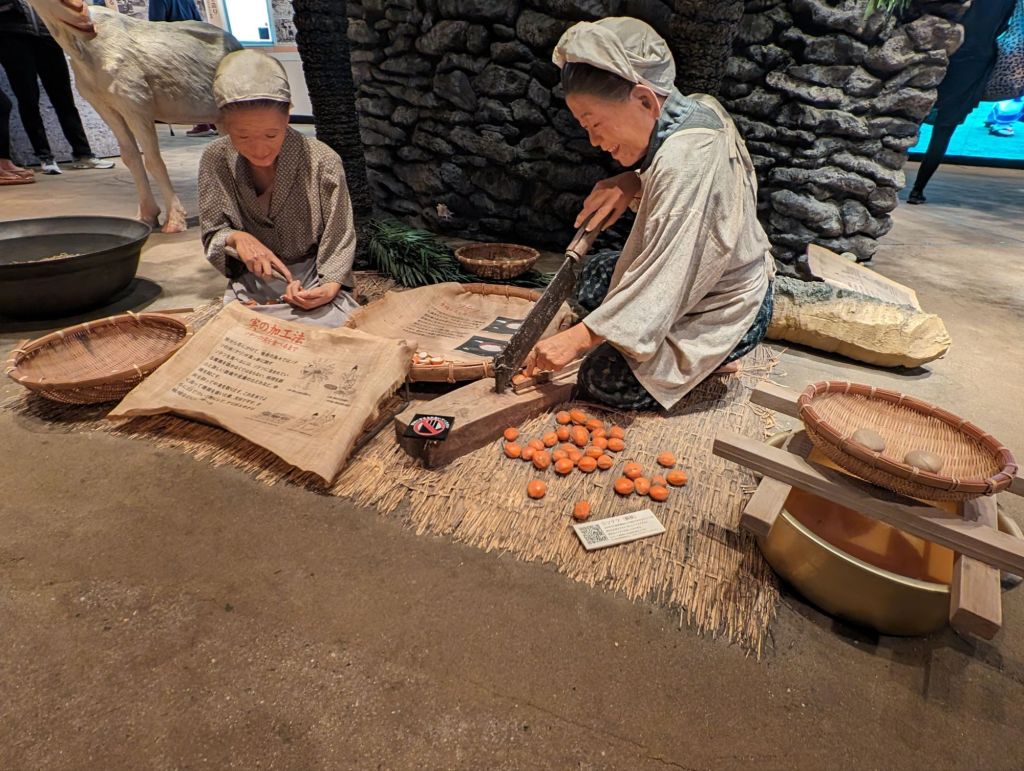
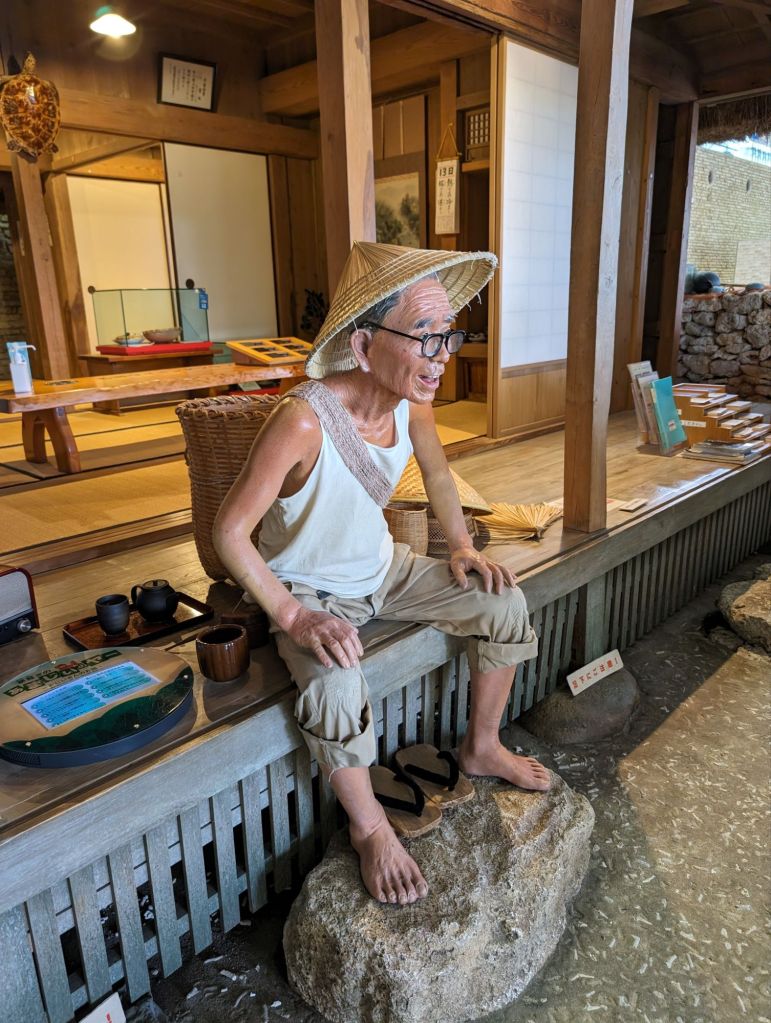
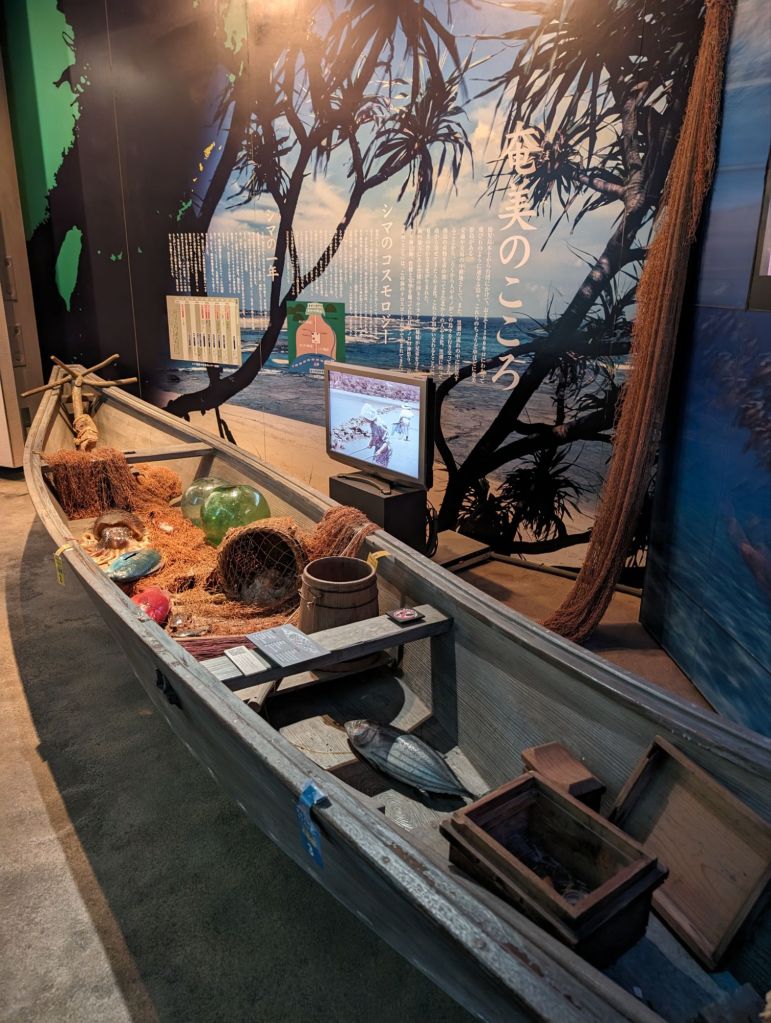
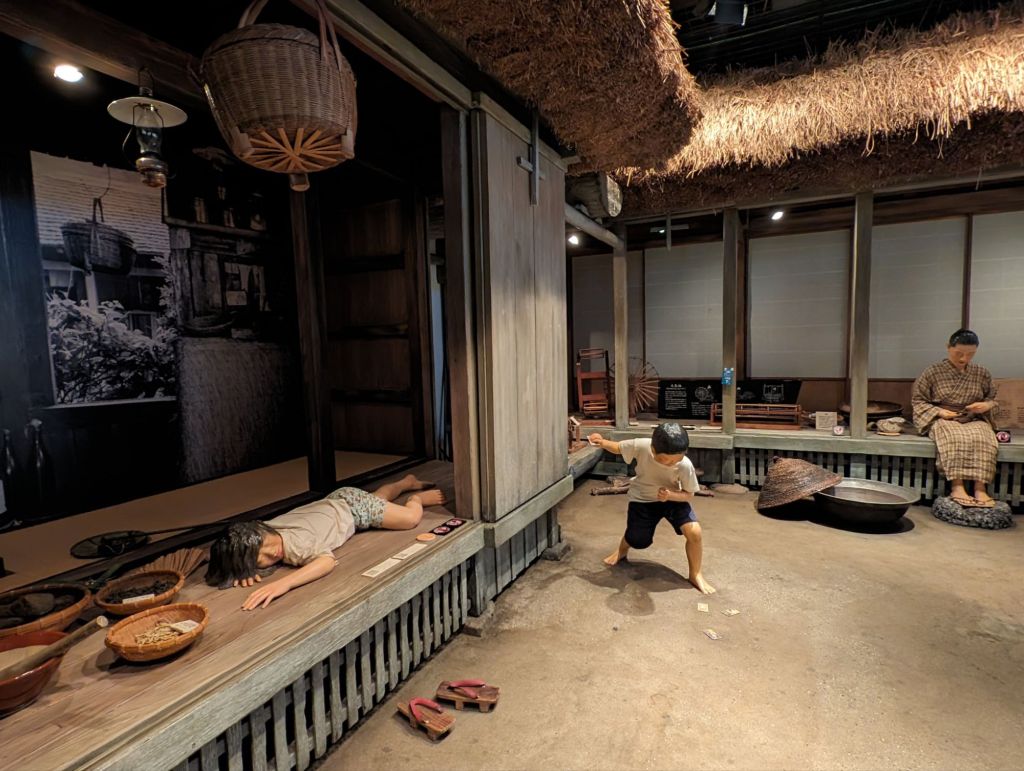
The hall includes a theater with films showcasing the nature and lifestyle of the Amami Islands. There is a wonderful variety of exhibits about the culture, history and natural environment of all eight islands in the Amami archipelago.
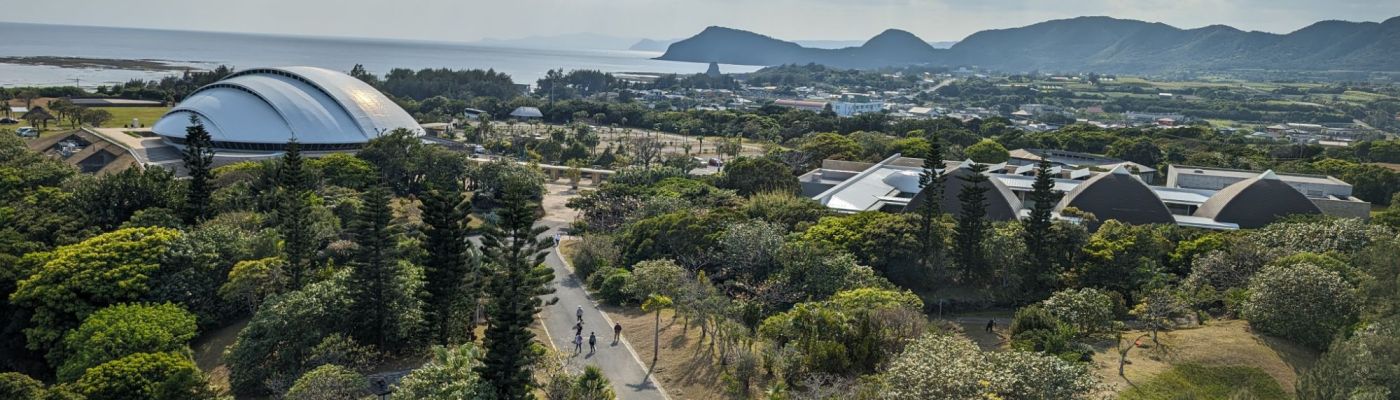
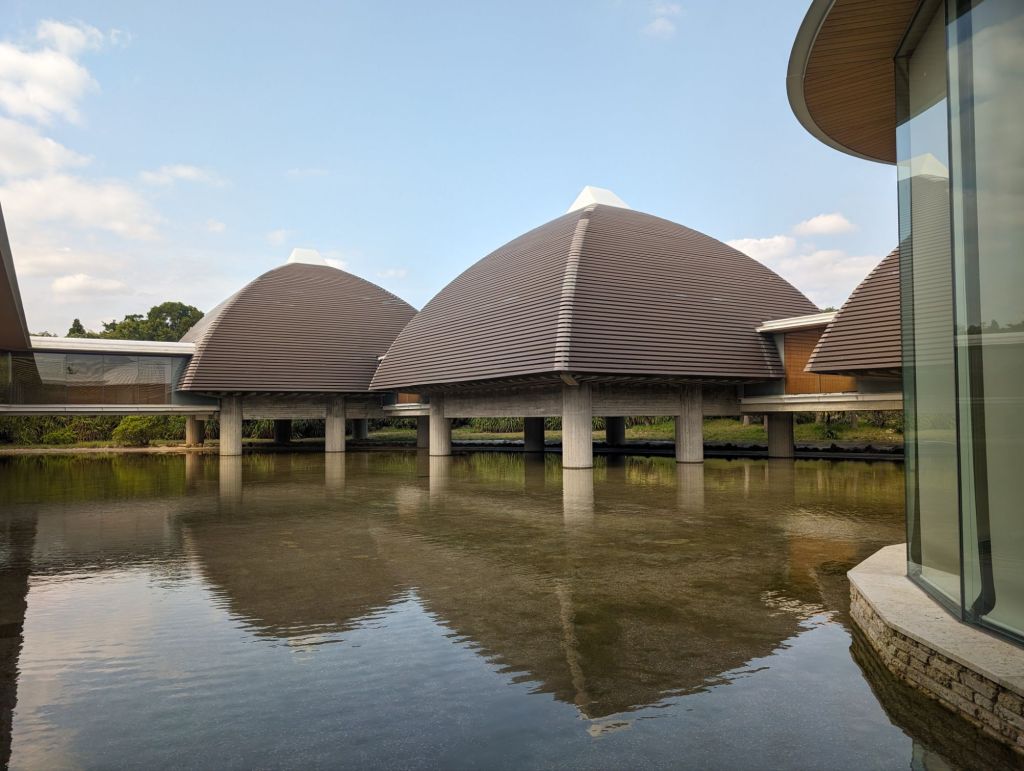
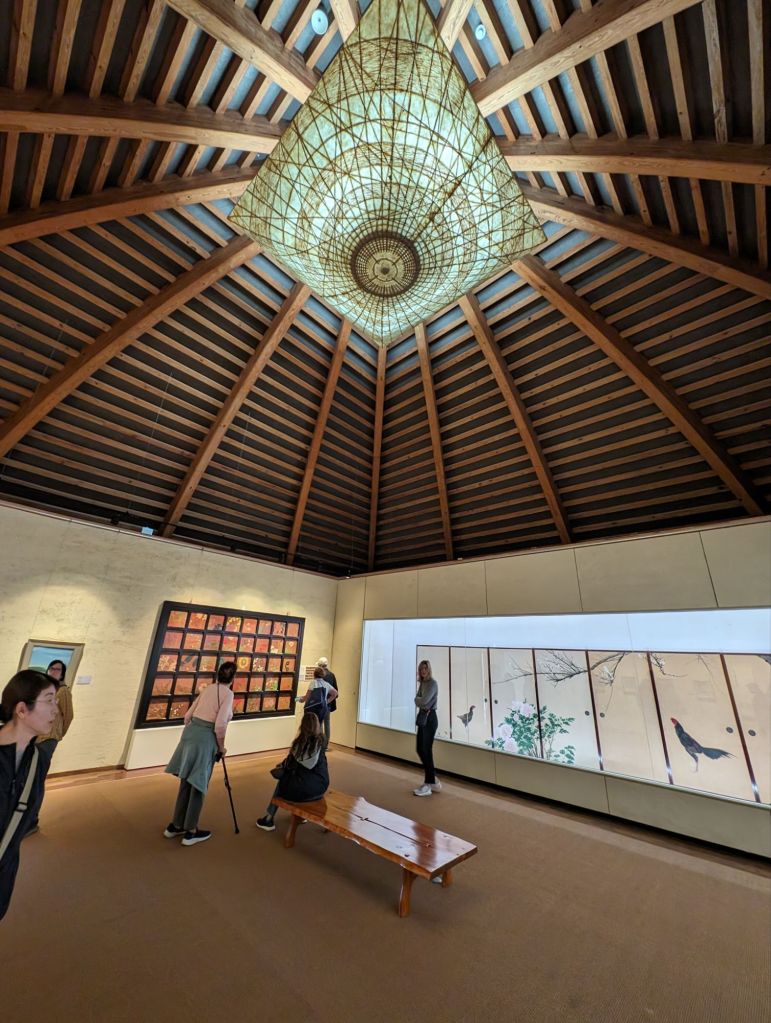
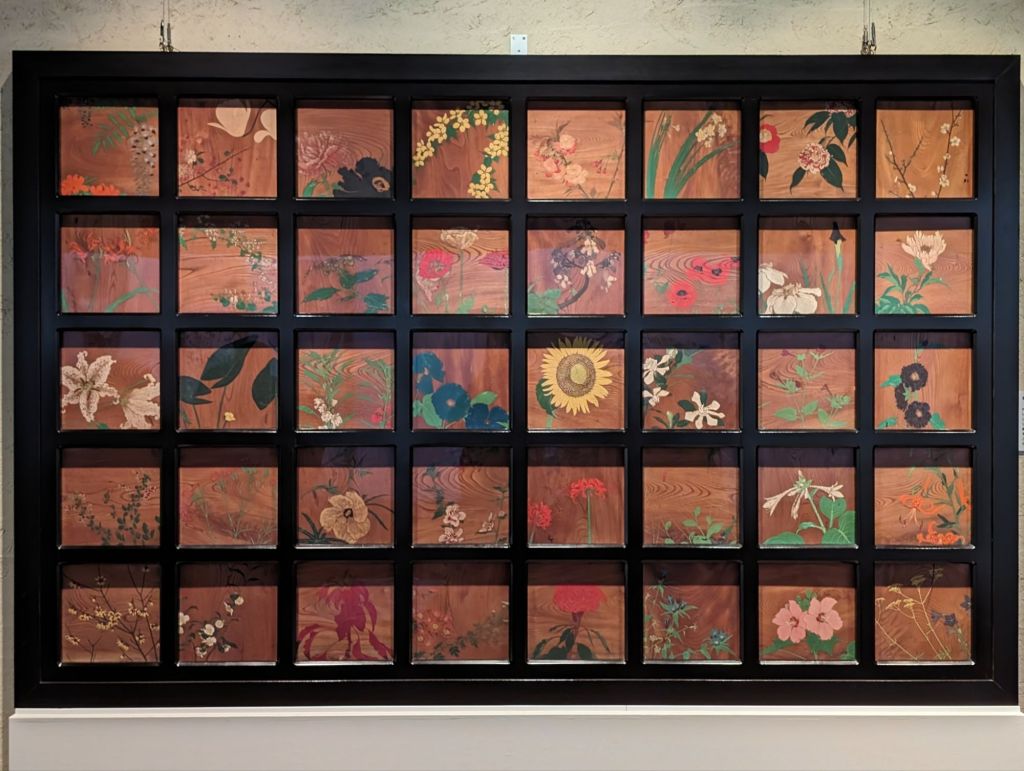
The Tanaka Isson Memorial Museum is dedicated to the works of Isson, a Japanese artist who lived the last 20 years of his life on Amami, working in a silk factory for sustenance, solitary and often ill. After his death in 1977, his paintings were discovered and got great recognition. More than 80 of them are on display in the interesting looking domed structures below.
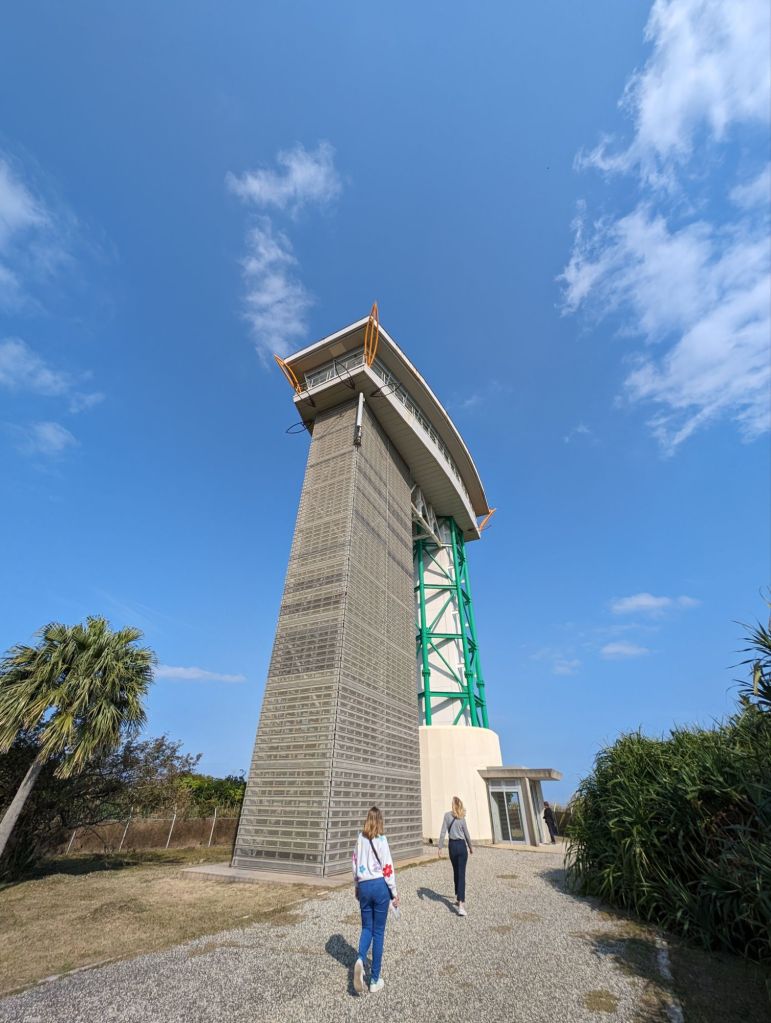
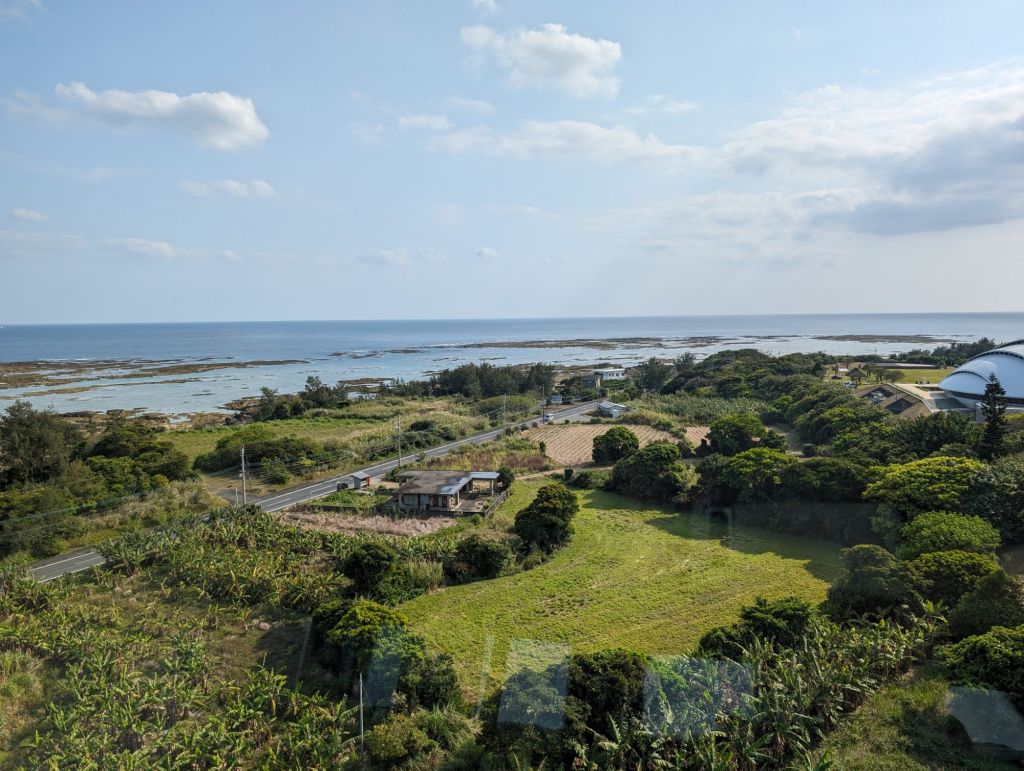
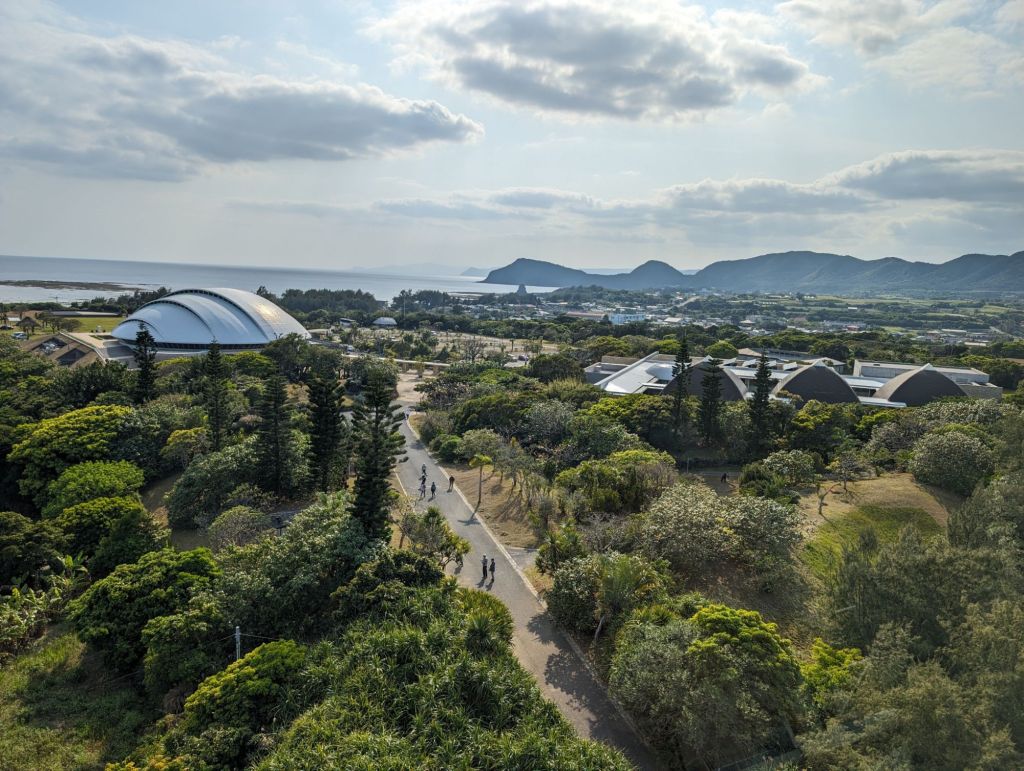
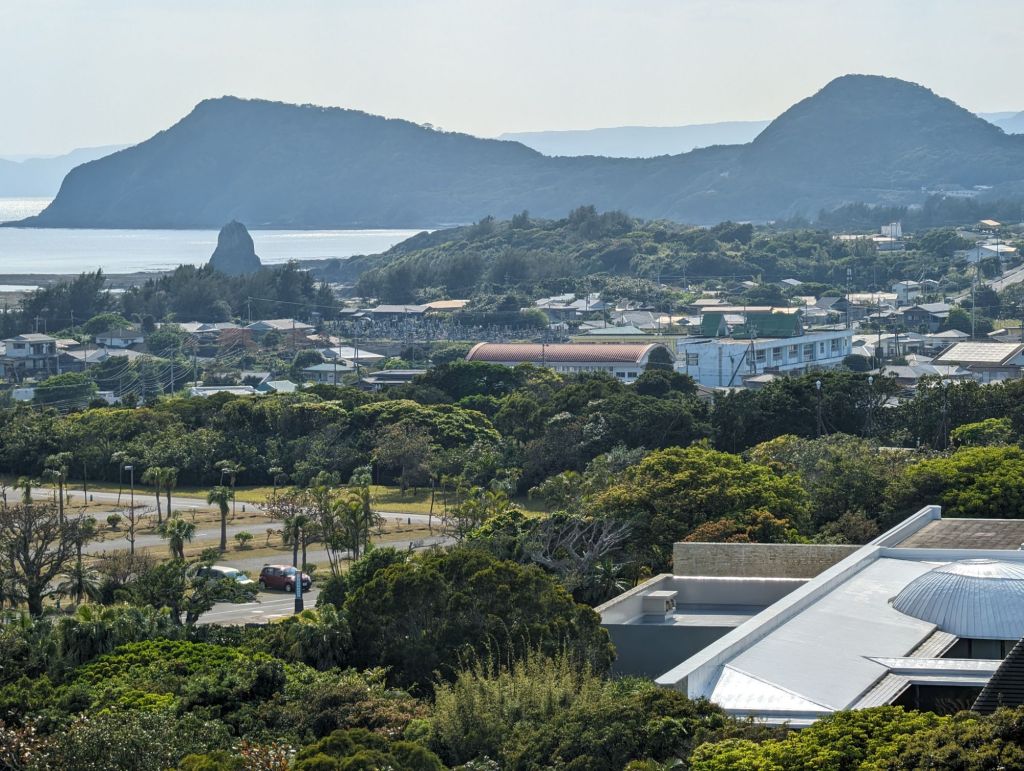
We walked to the old airport’s control tower, which is now an observation tower, where we were able to see some sweeping views of the island below.On the left side of the road bisecting this photo is the domed Amami Park building. On the right side is the art museum.
 J and J Travel