Osaka is Japan’s third largest city and, our guide told us, has a much more relaxed and less conservative vibe than nearby Kyoto. We visited a 400-year-old Castle and one of Japan’s oldest temples. As with most major historical sites in Japan, they have been built and rebuilt a number of times over the centuries due to wars, fires, earthquakes, and other calamities.
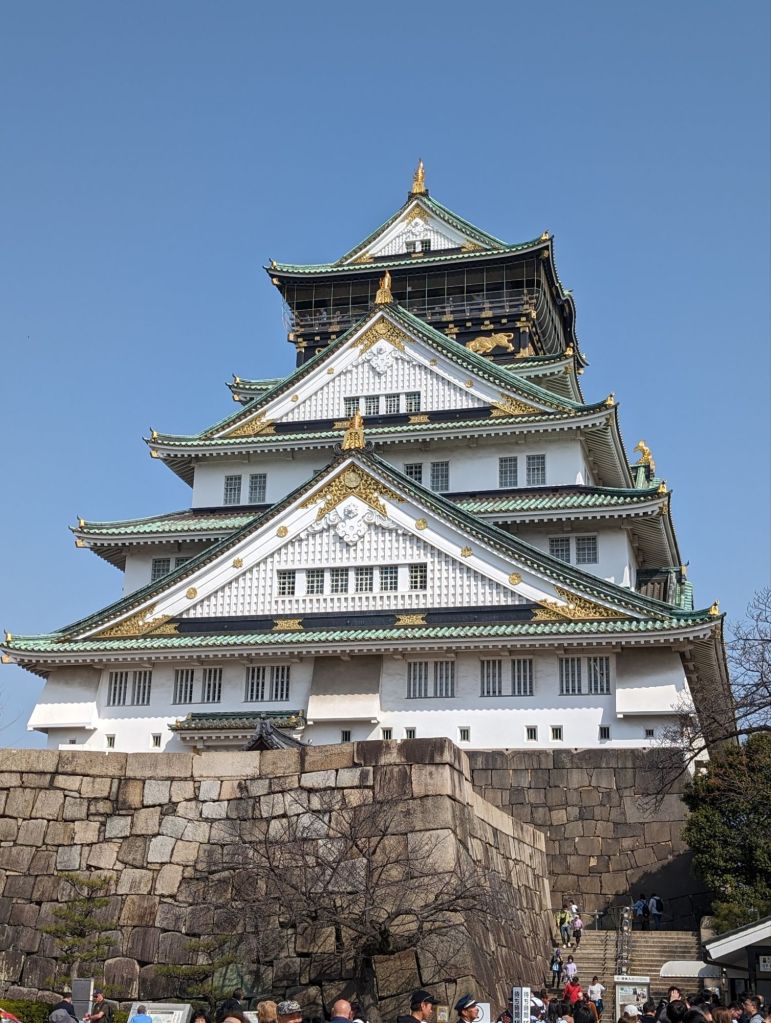
Osaka Castle was built by Toyotomi Hideyoshi in the 16th century. This feudal lord is revered as the great unifier of Japan. He was the only person to achieve the title of Kampaku, or Imperial Regent, who was not born a noble. He wanted his castle to be grand, and it was, although we only saw the remnants of that.
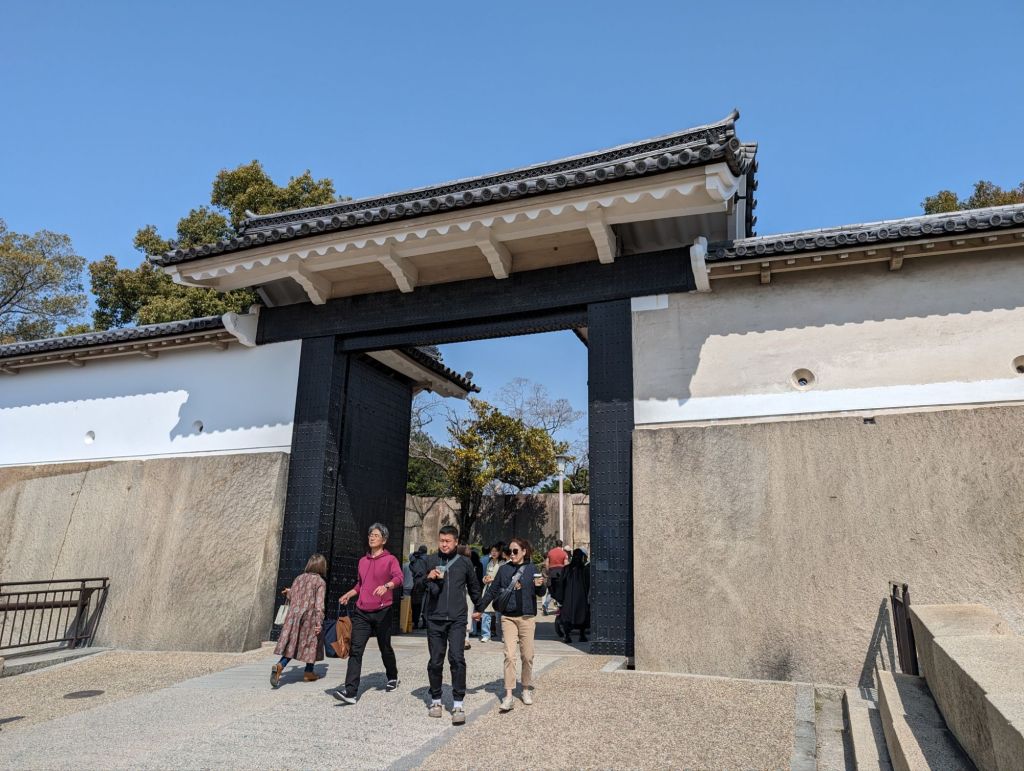
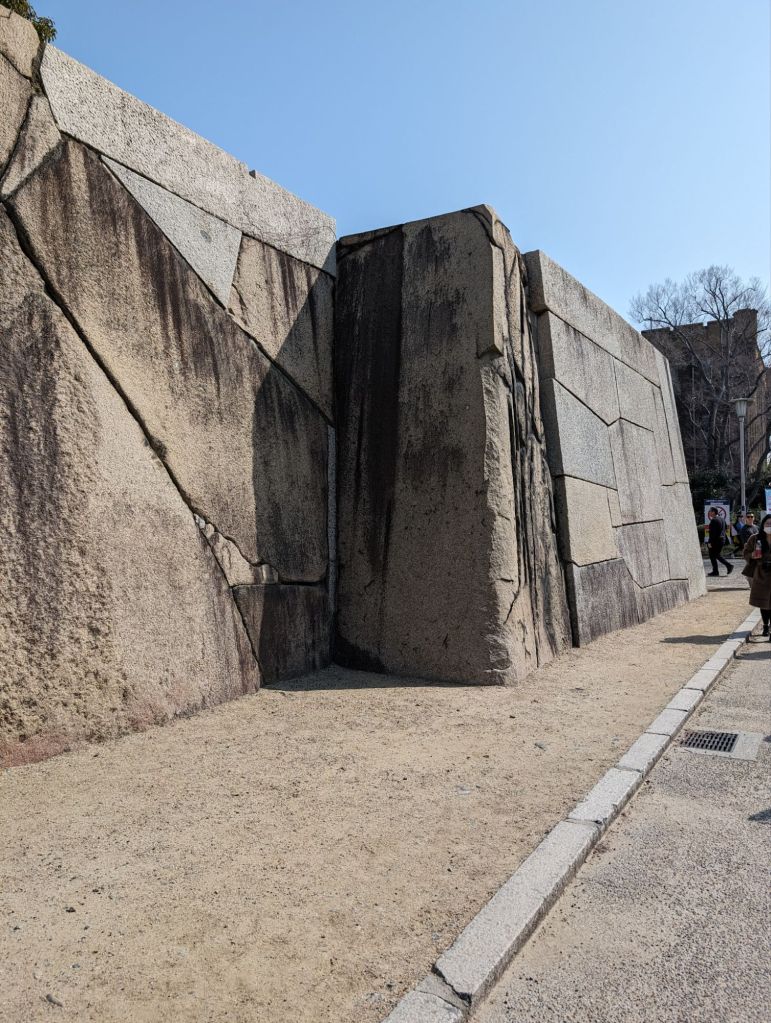
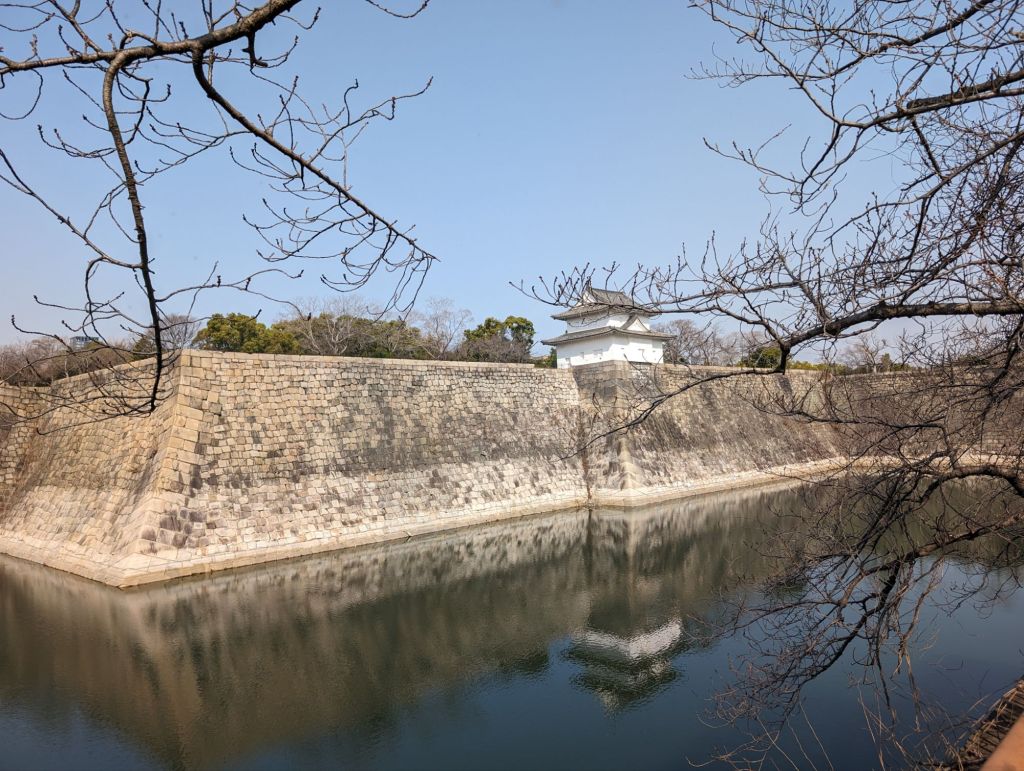
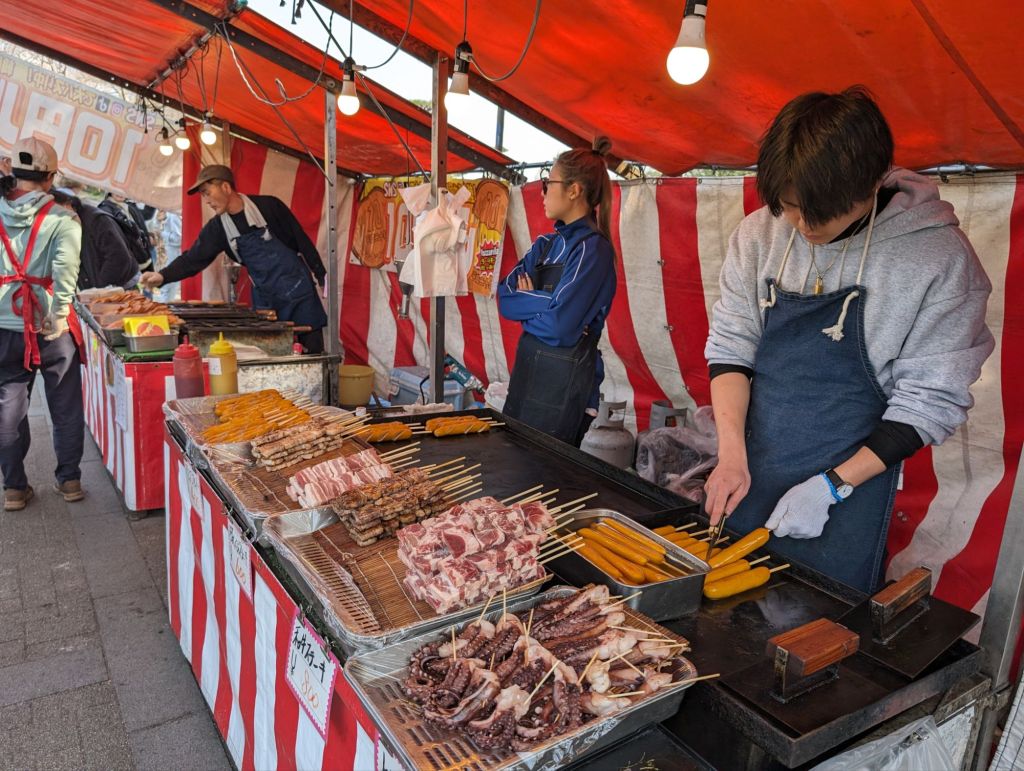
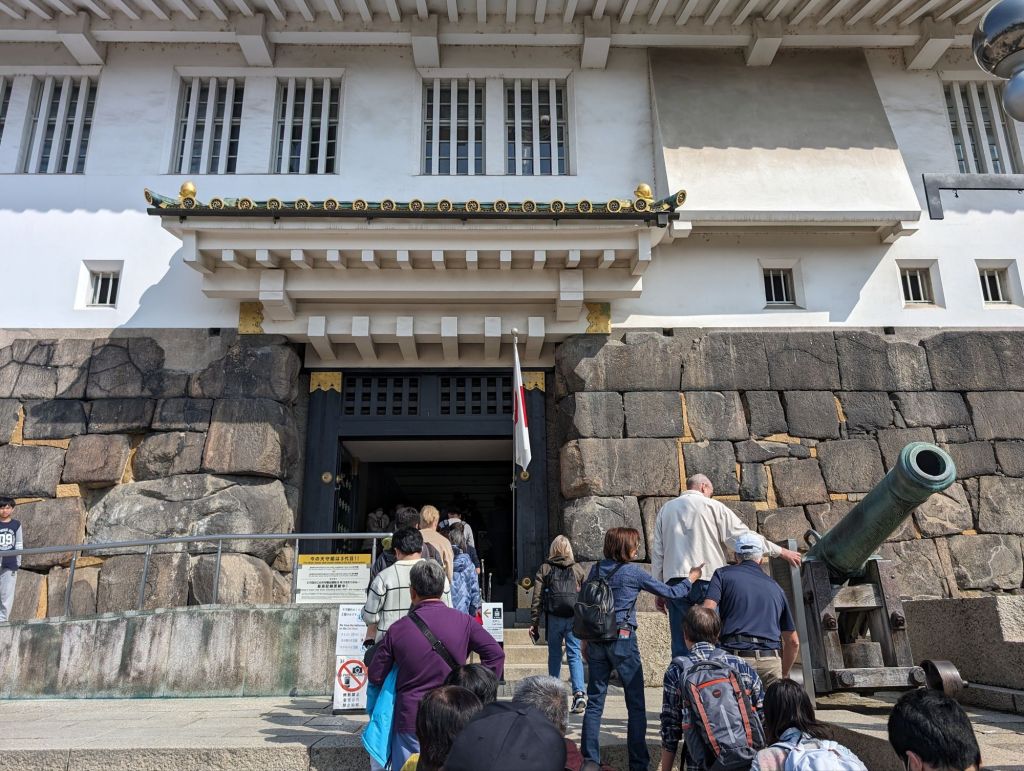
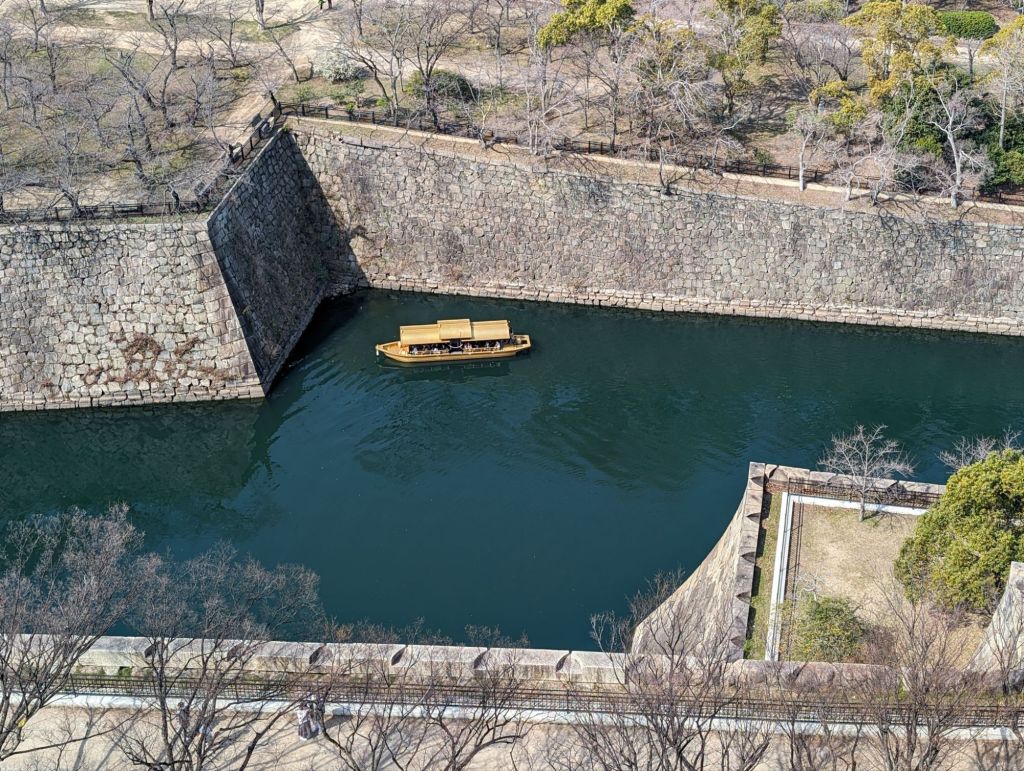
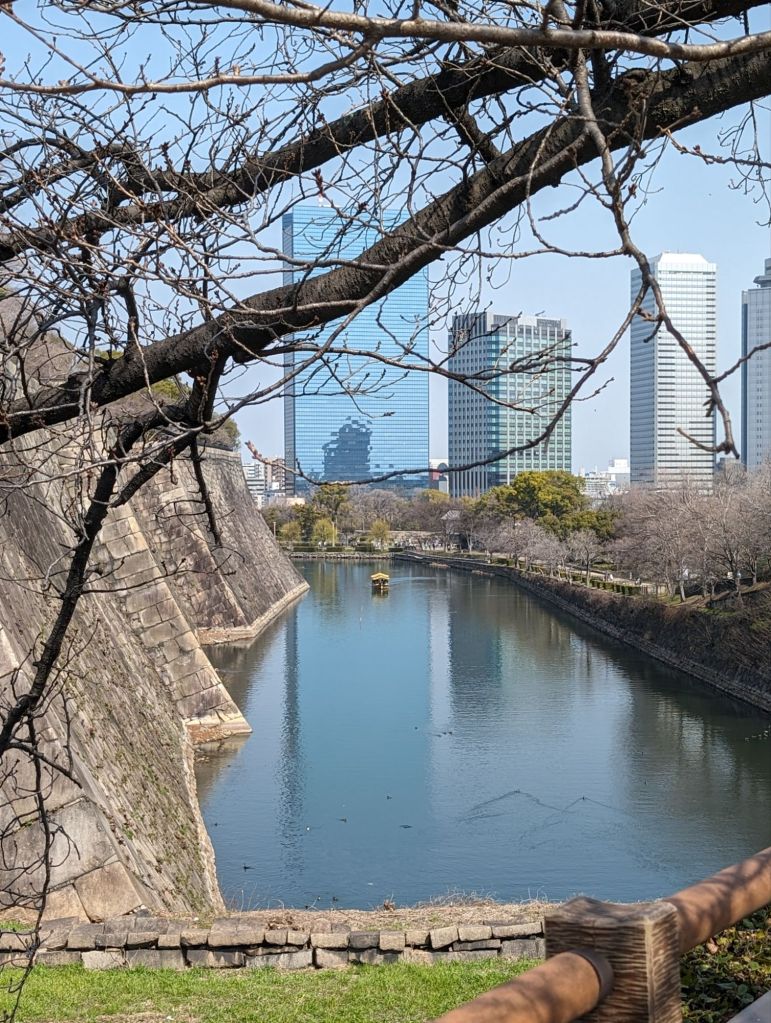
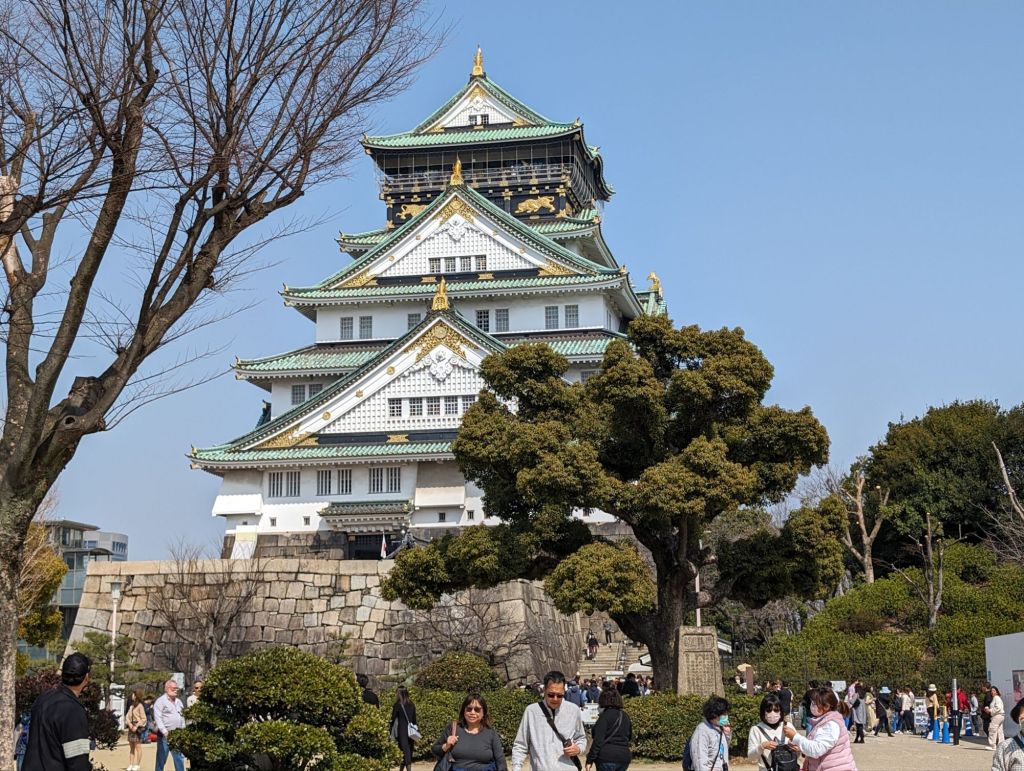
The eight-story main tower was last destroyed in World War II, but it was rebuilt to look exactly like the original 16th century Tower.The stone on the main gate, above and below, never burned with the rest of the rest of the castle. The huge stones go back to the 16th century and were put together without mortar.The castle has an inner and outer moat.The food sellers on the way in were tempting.This cannon was manufactured in the 19th century when the castle area was a munitions making factory. That was why the Osaka Castle was a target for bombing in World War II.
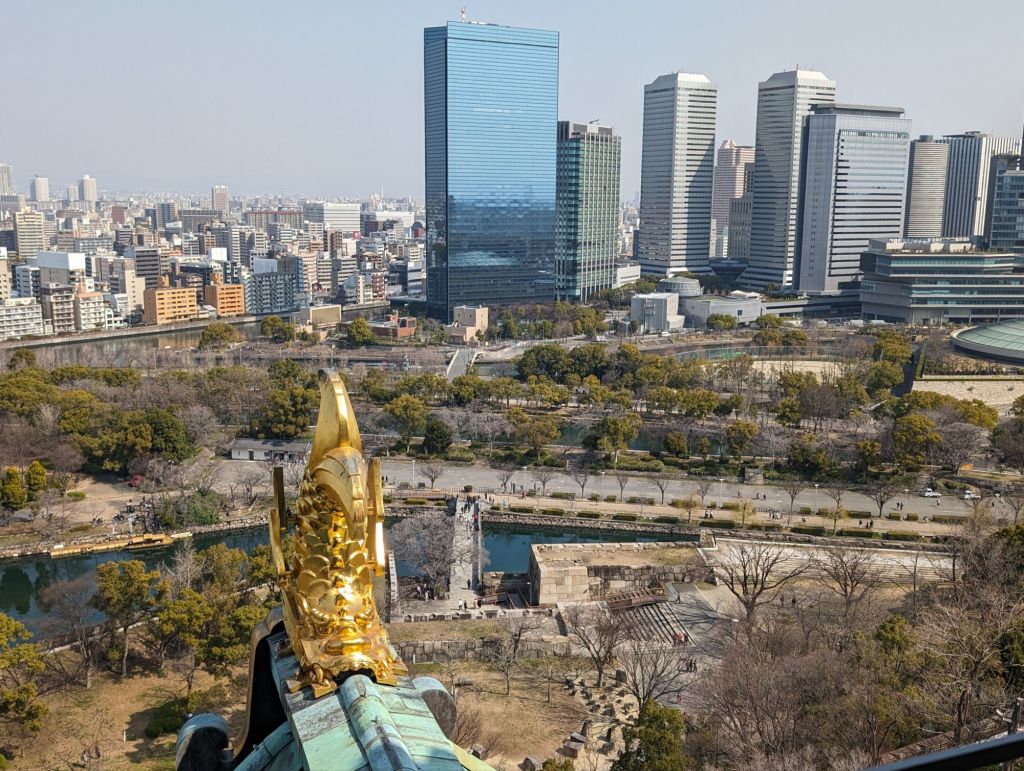
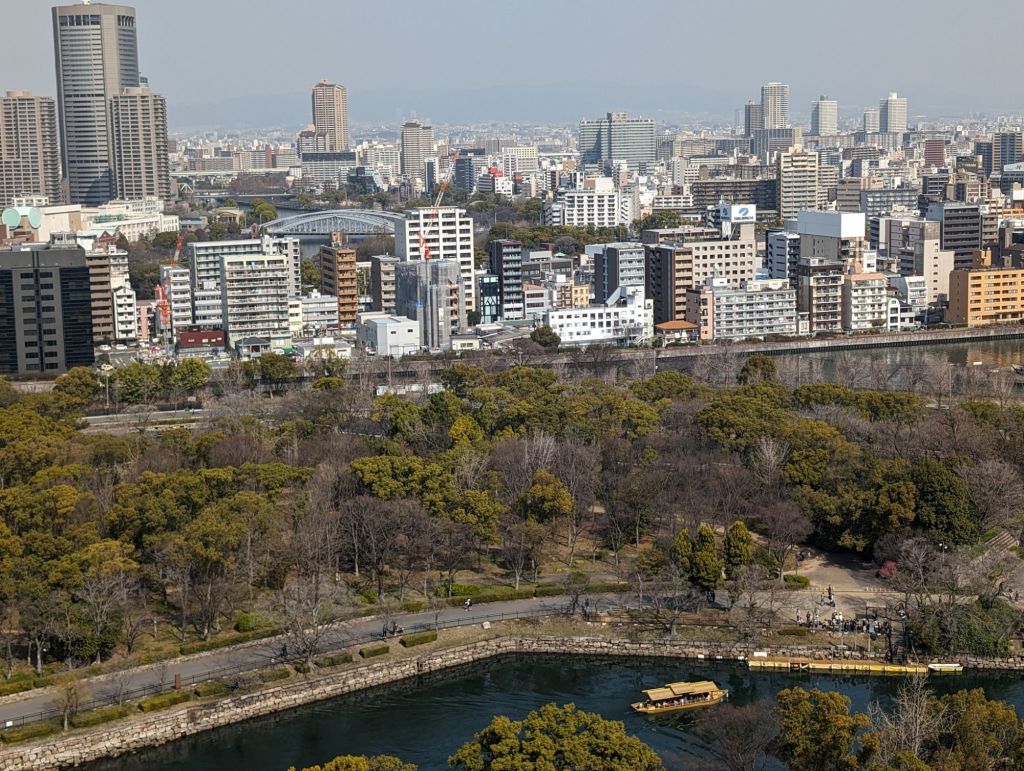
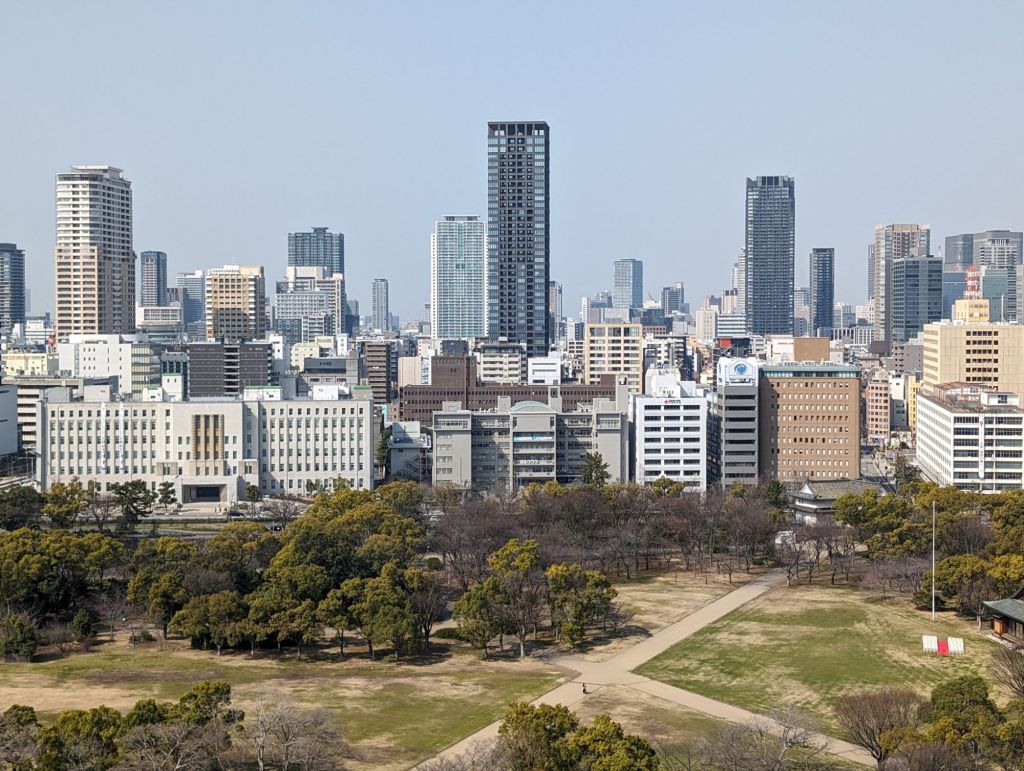
We had a wonderful view of Osaka from the 8th floor of the main tower. Below you can see the bridge across the moat leading to the city.
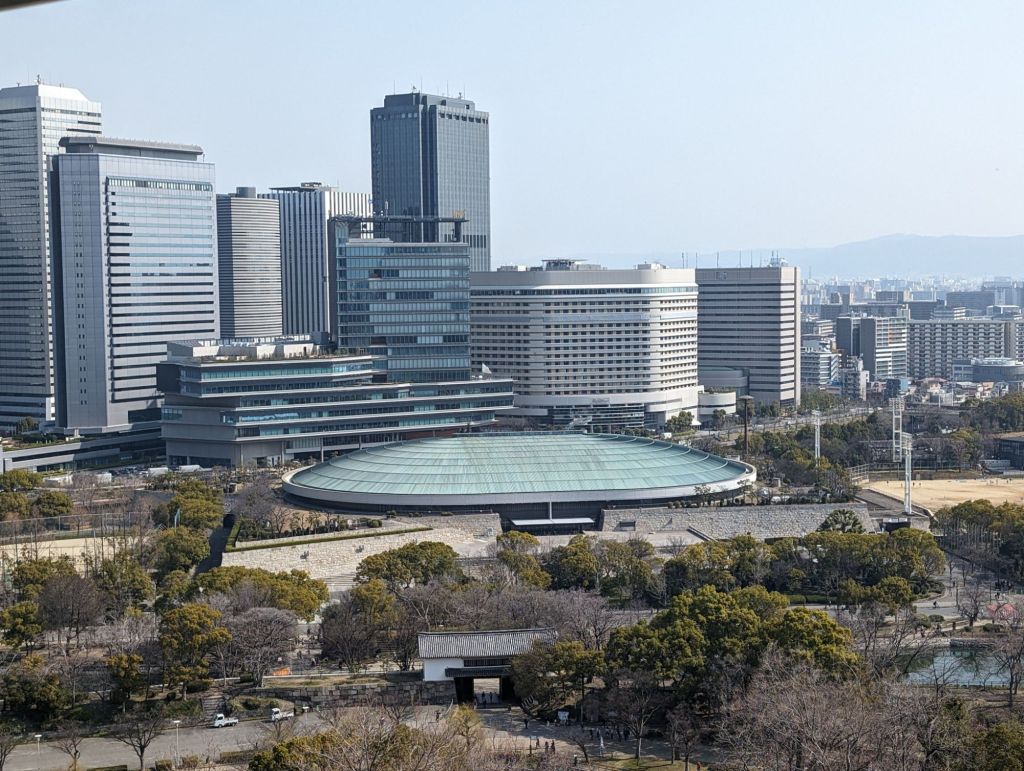
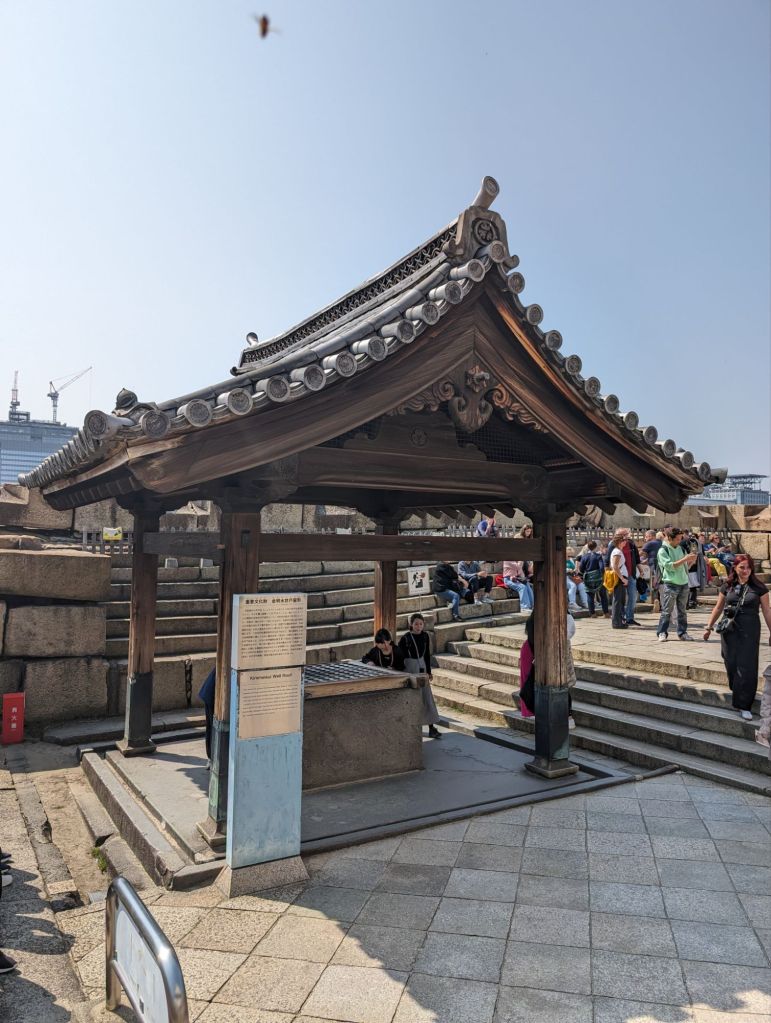
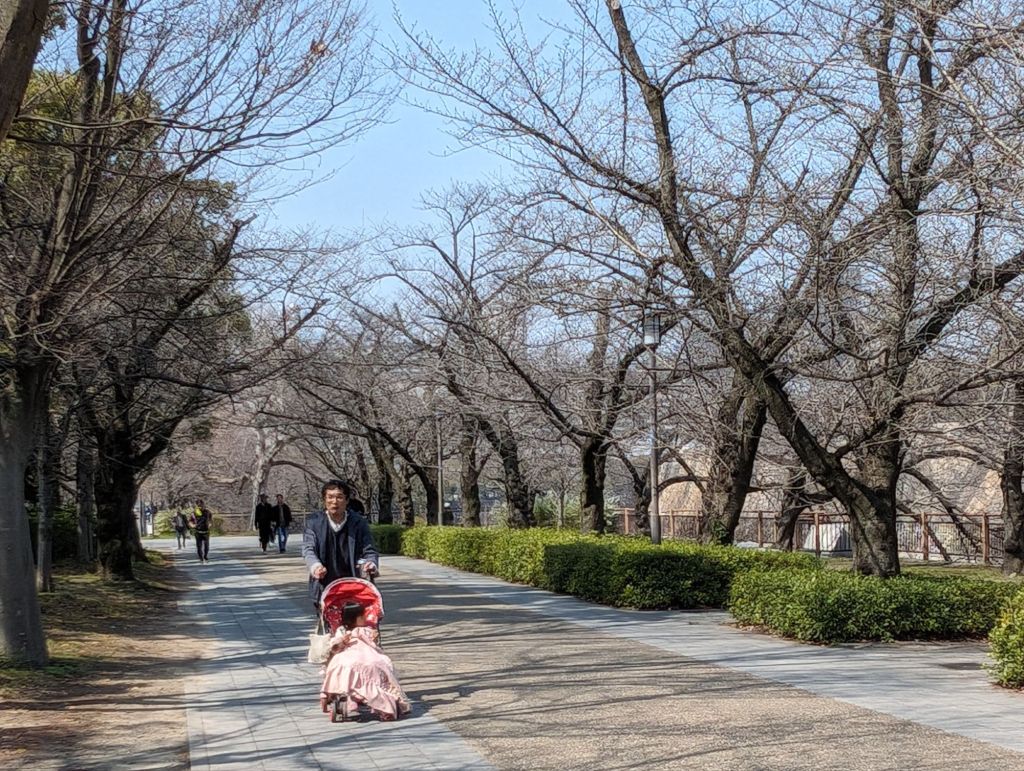
Excursion boats float on the moat.The dome-shaped building above is an arena. Concerts and sports events are held there.This is the castle’s original well. The roof is one of the few structures that actually came from that period.This lovely walk lined with cherry trees will bloom in about a week after we leave. Then it will be filled with people having hanami, or flower viewing parties. They will bring food and drinks and socialize under the trees.
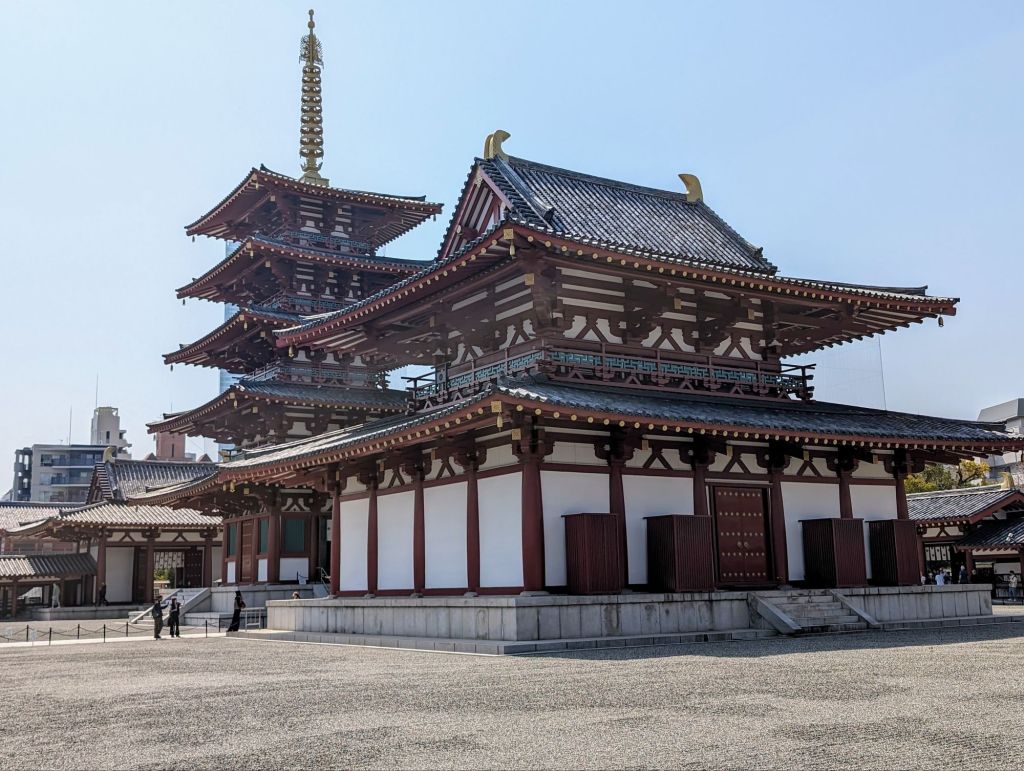
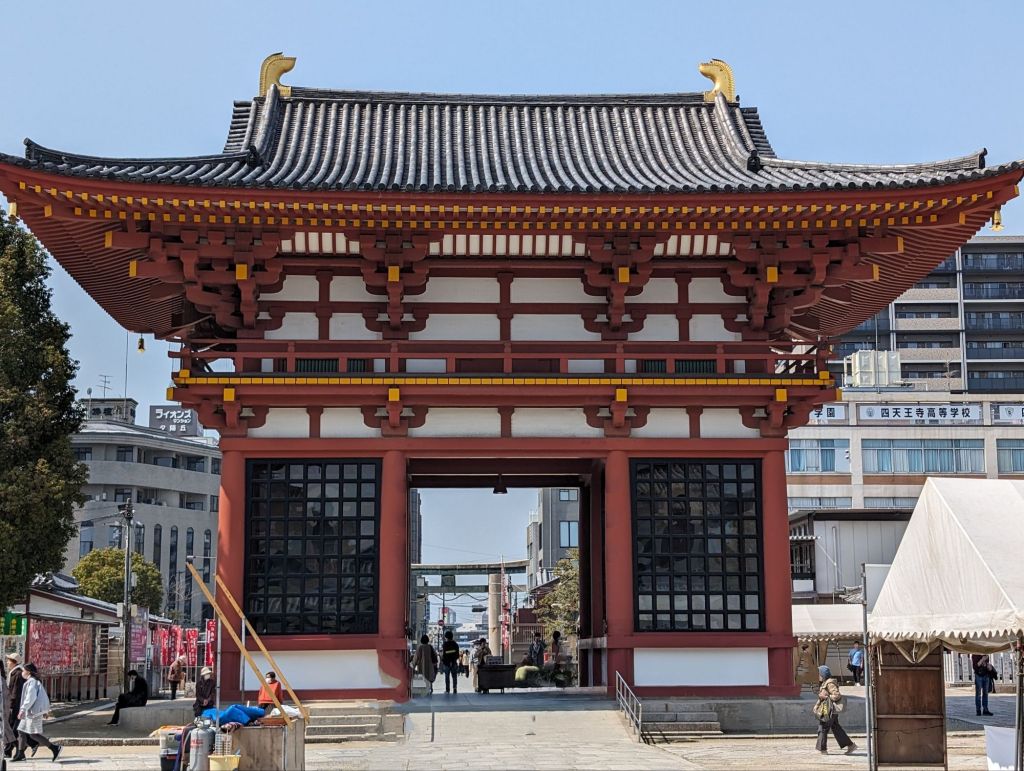
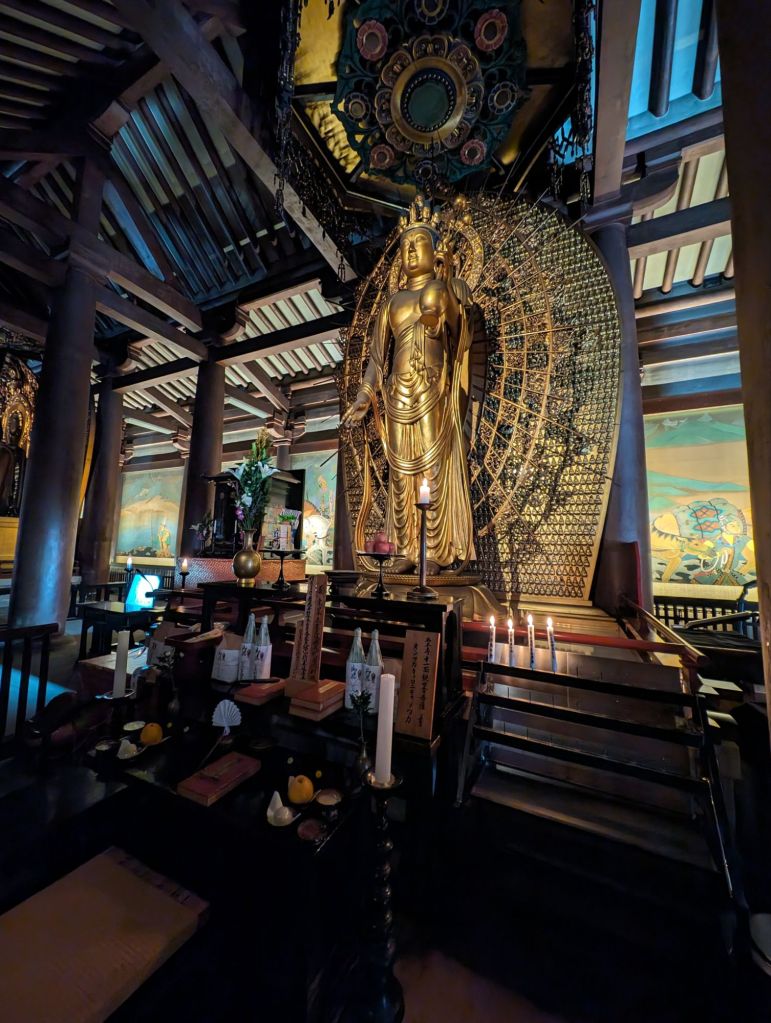
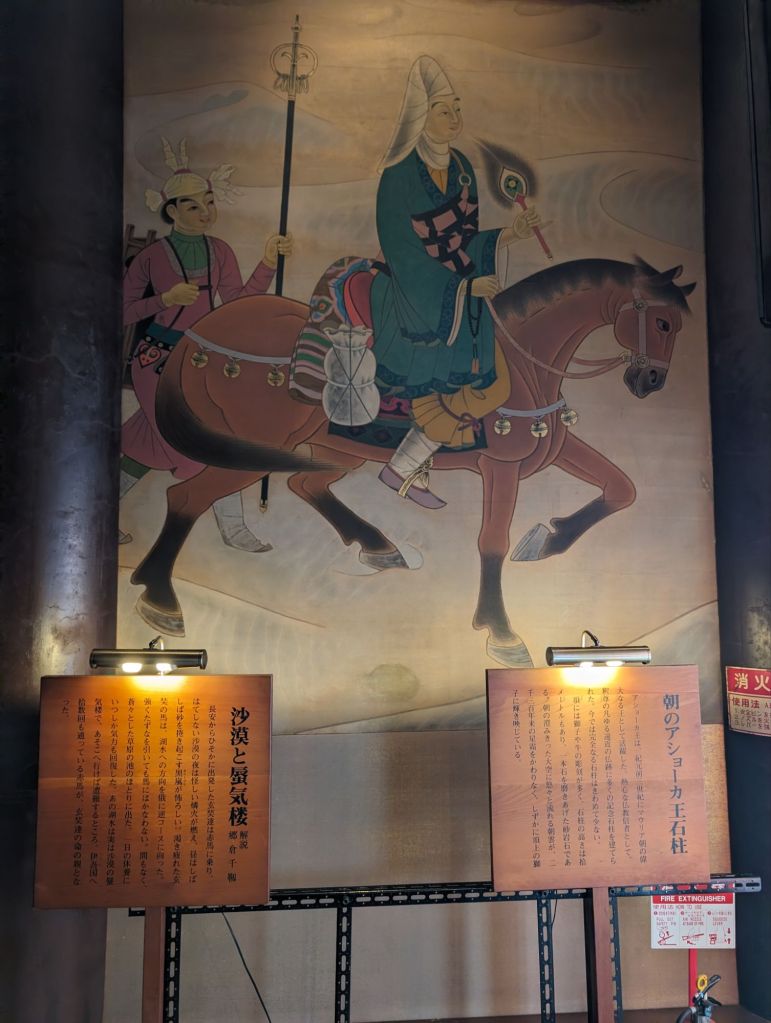
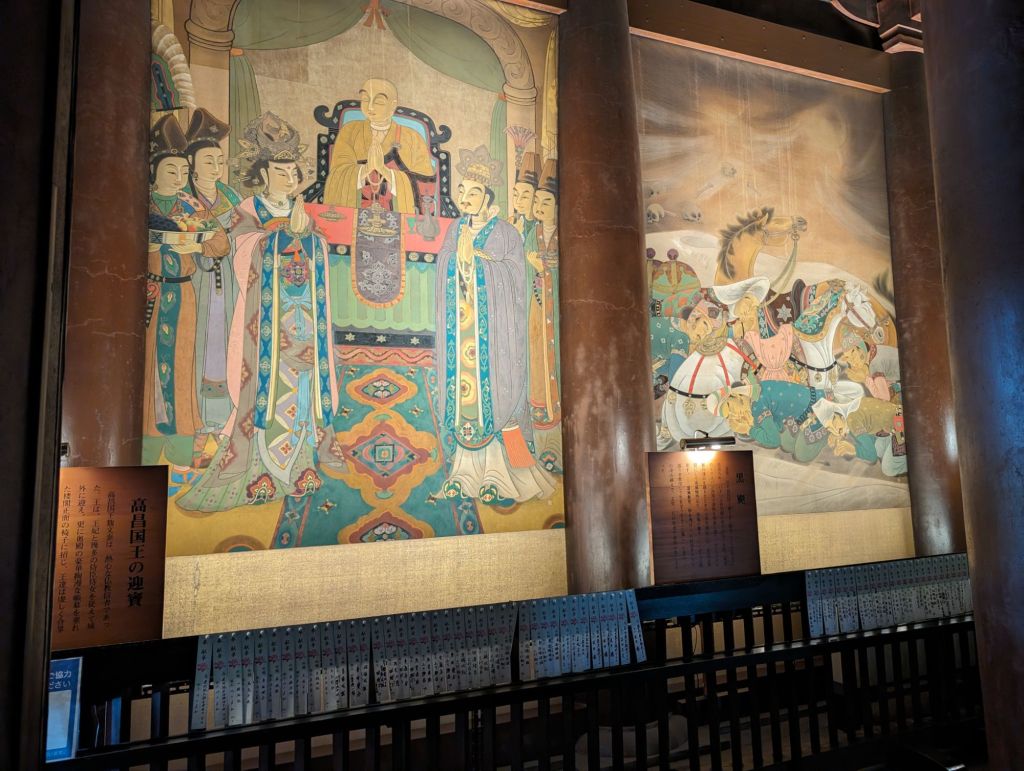
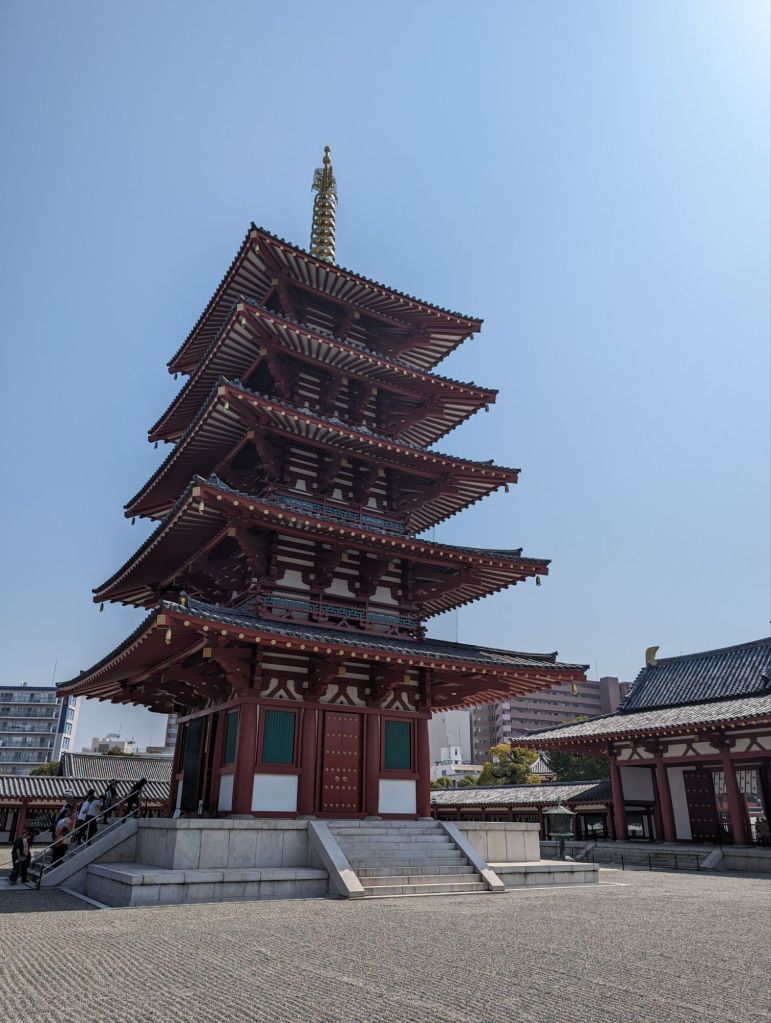
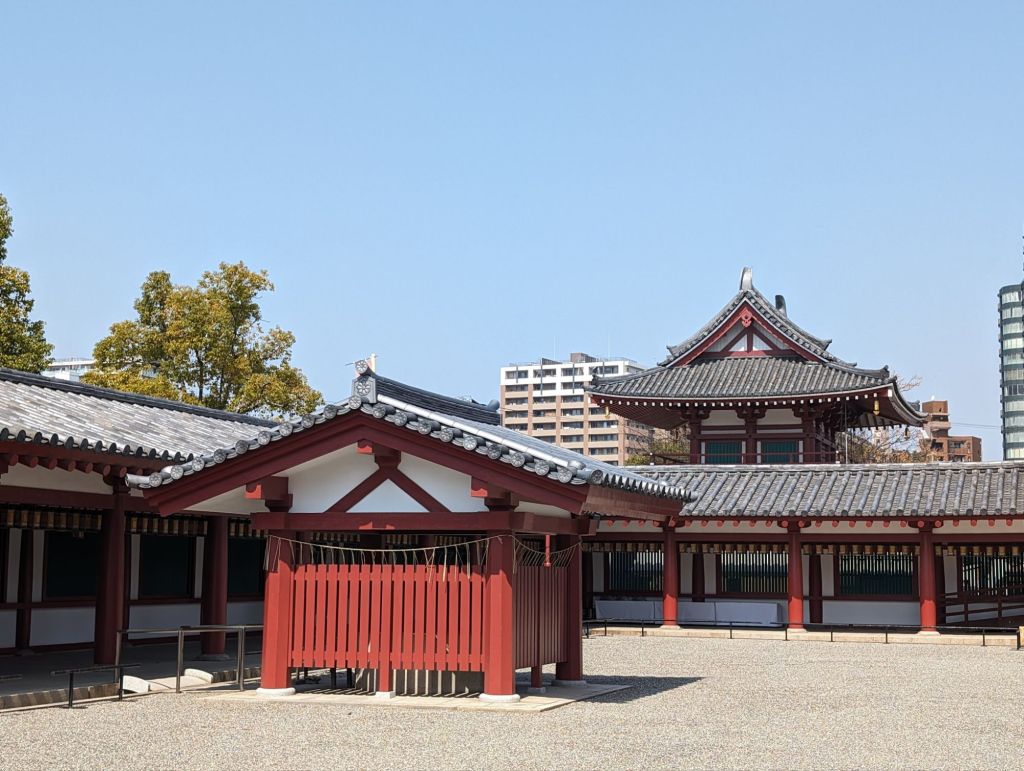
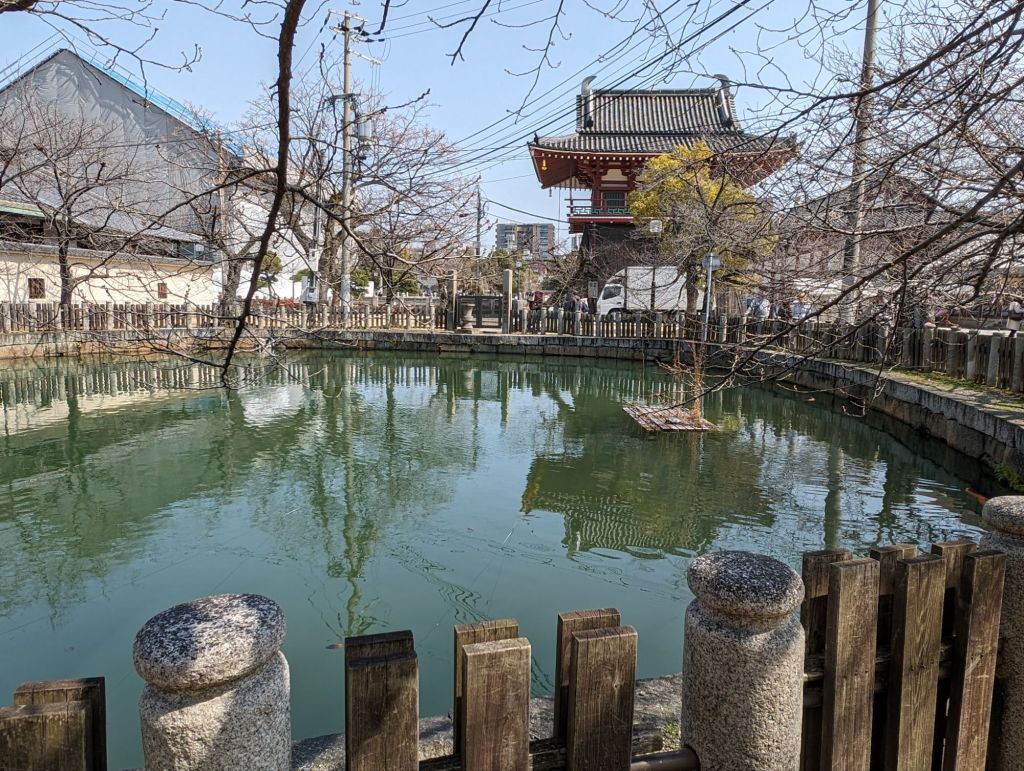
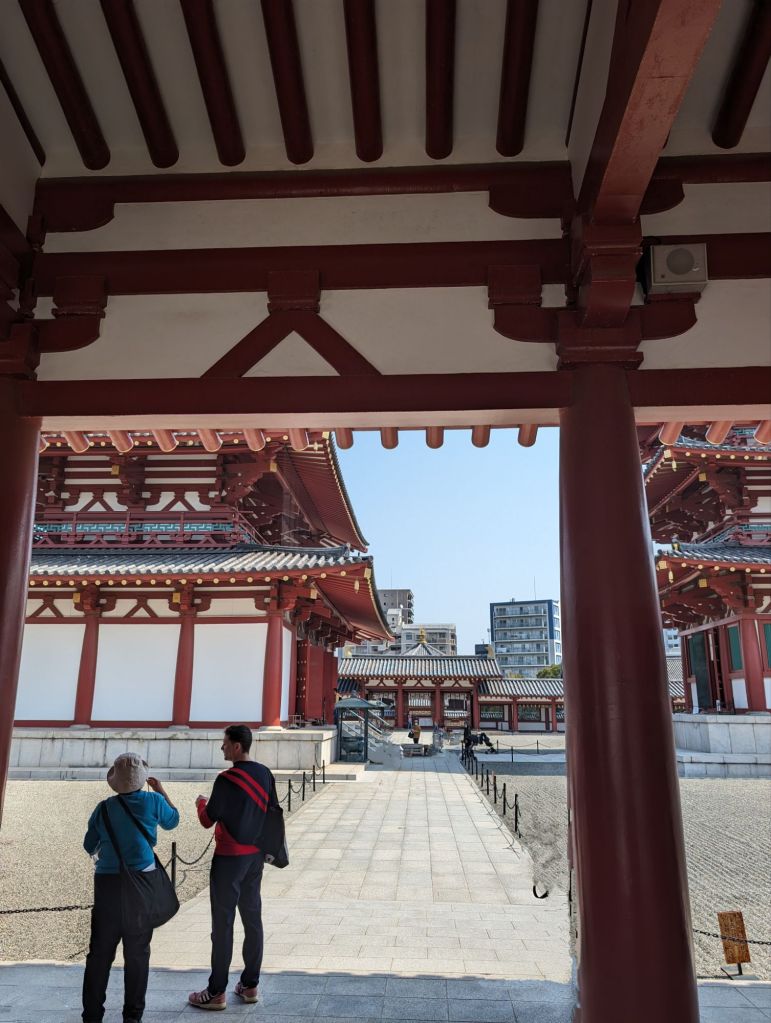
Shitennoji Temple is one of Japan’s oldest temples and the first to be built by the state. It was founded by Prince Shotoku, who supported the introduction of Buddhism into Japan. The 6th century Temple has burned down a number of times over the years, but it has always been rebuilt true to its original design.
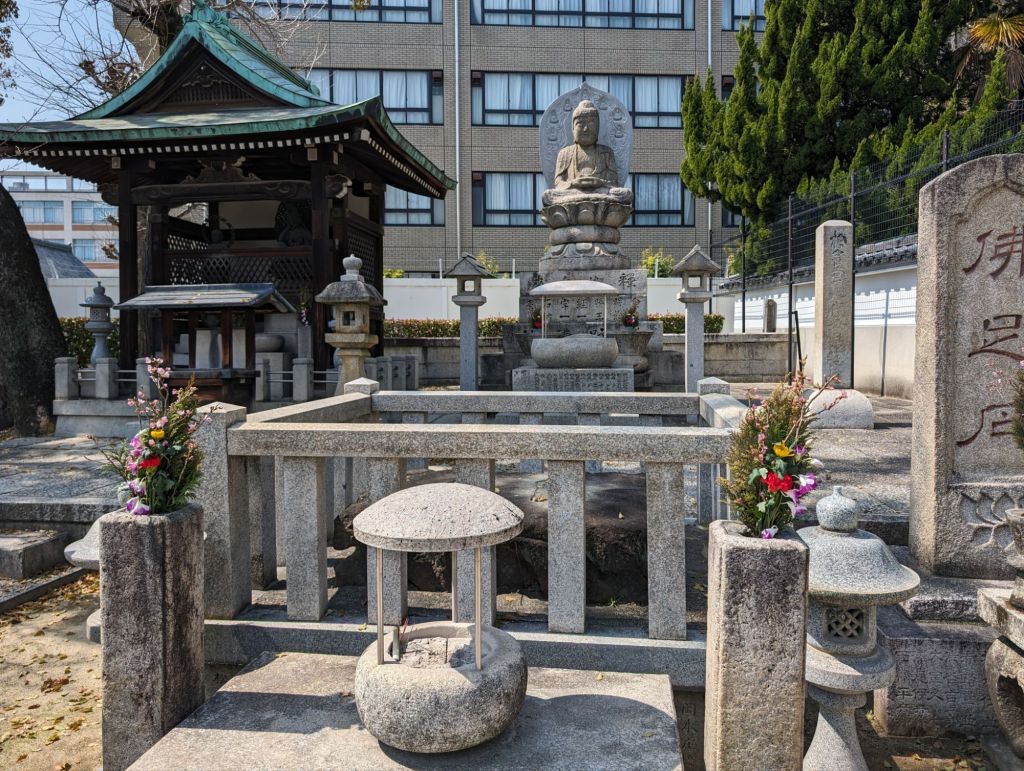
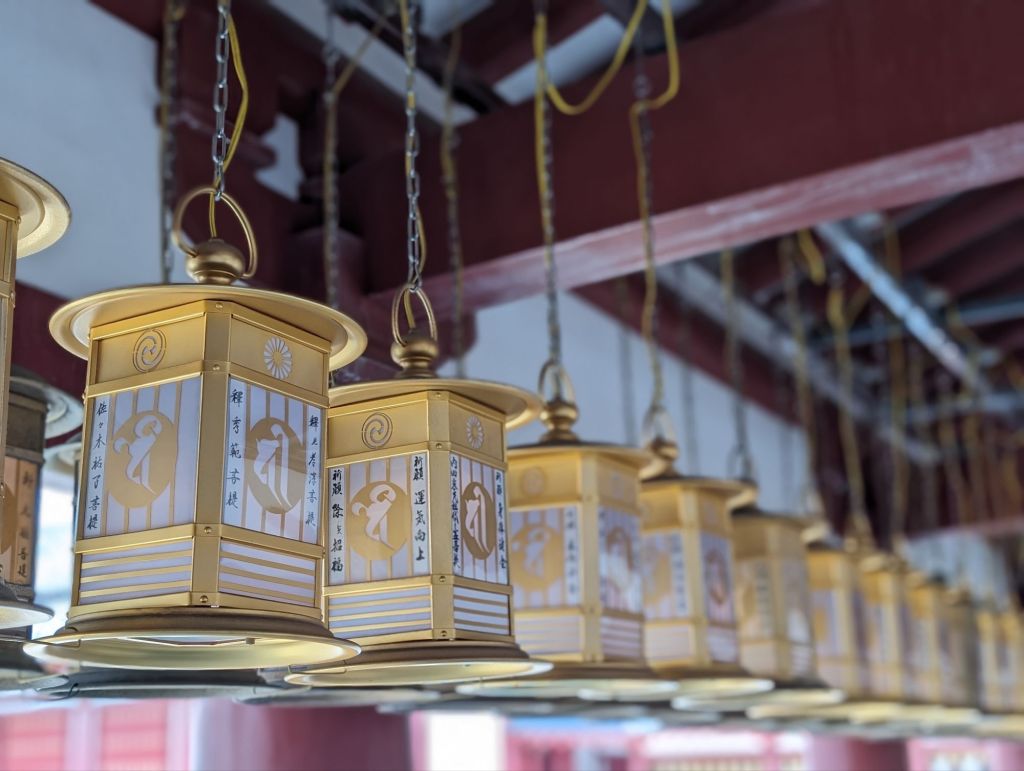
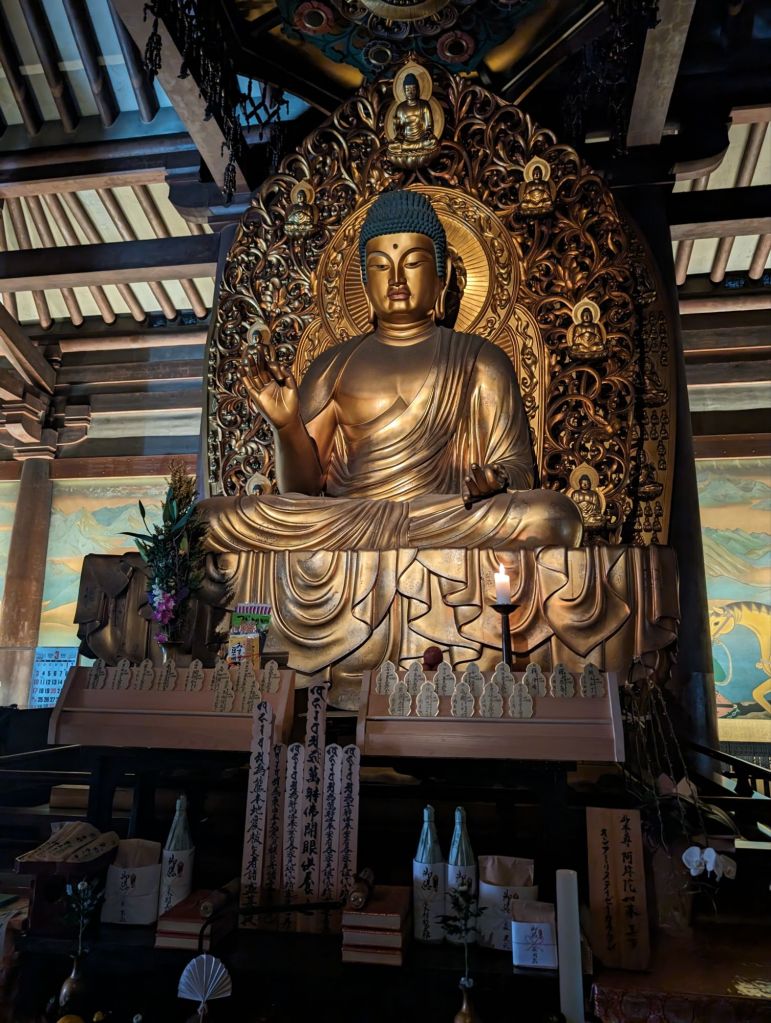
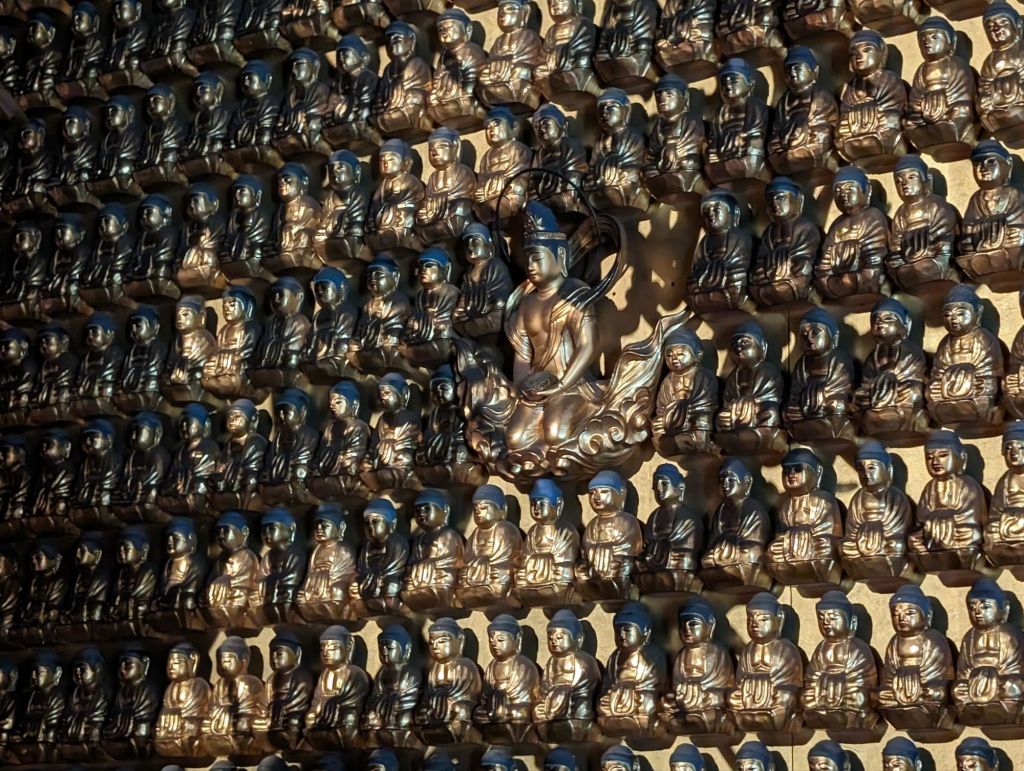
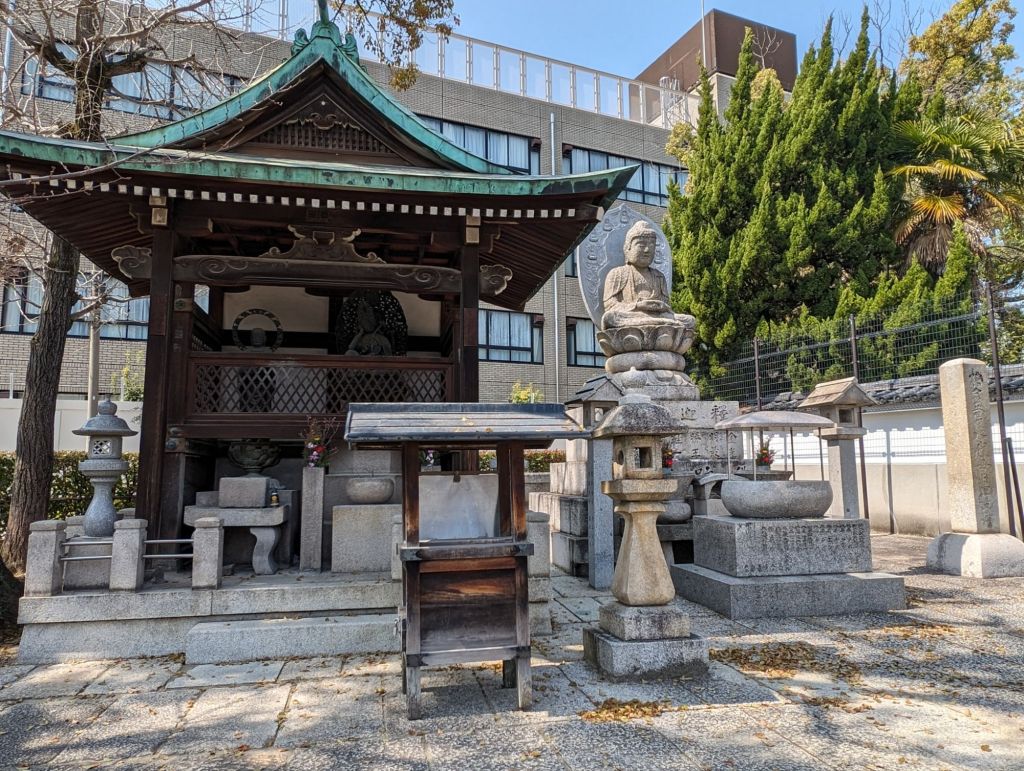
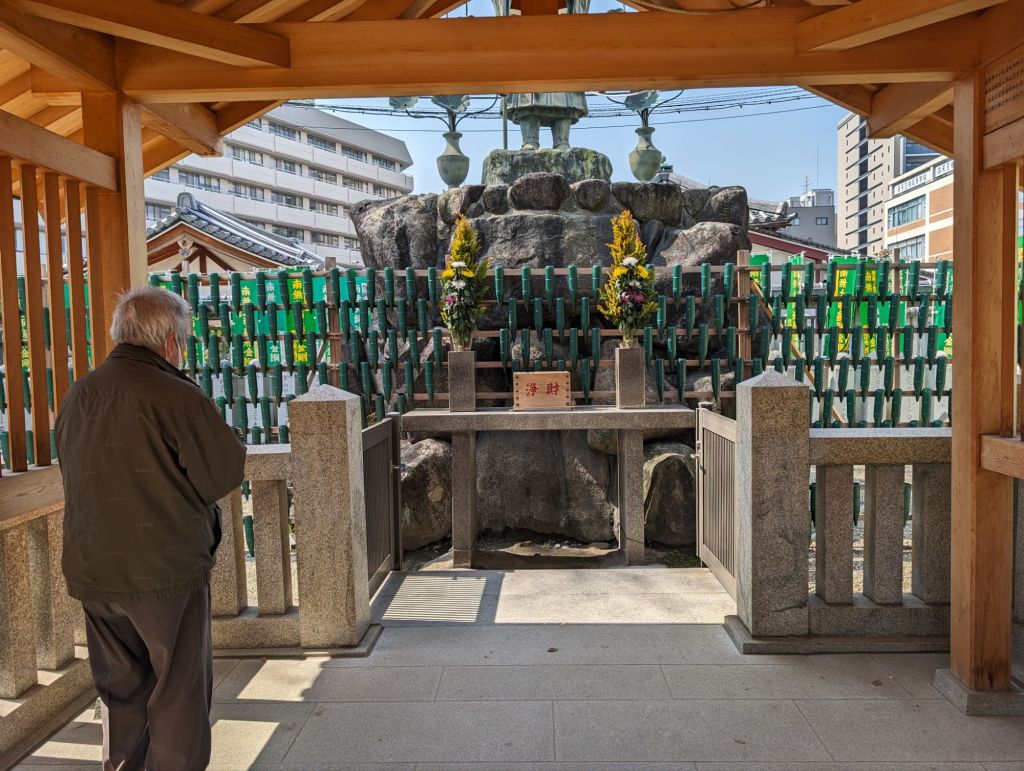
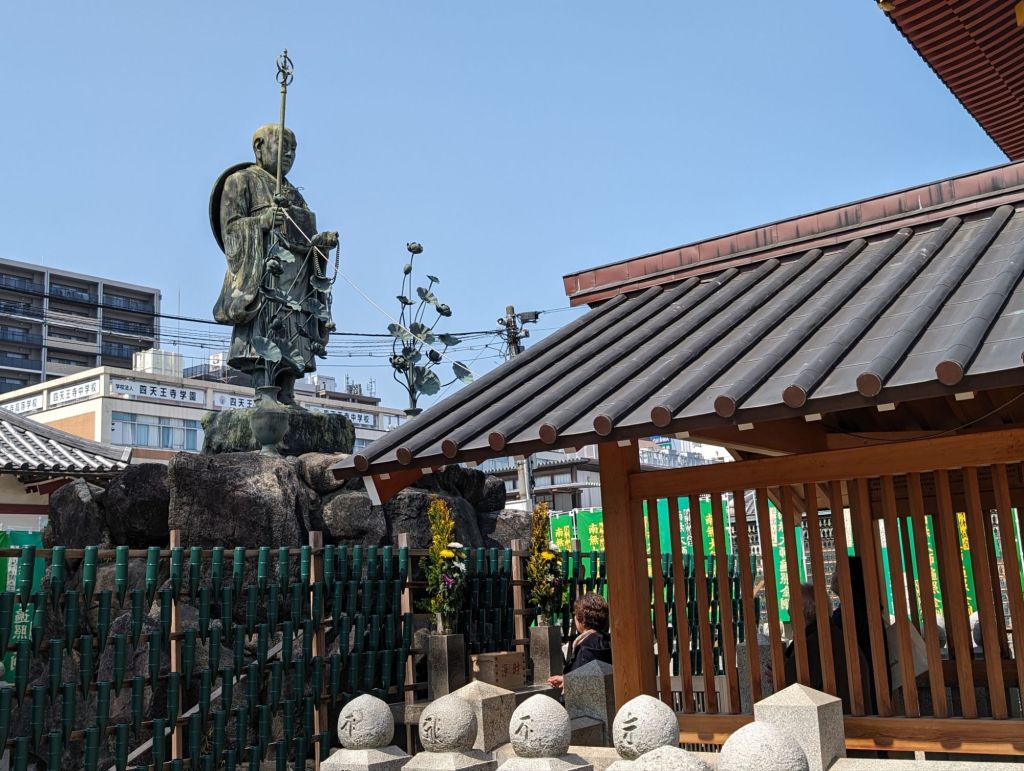
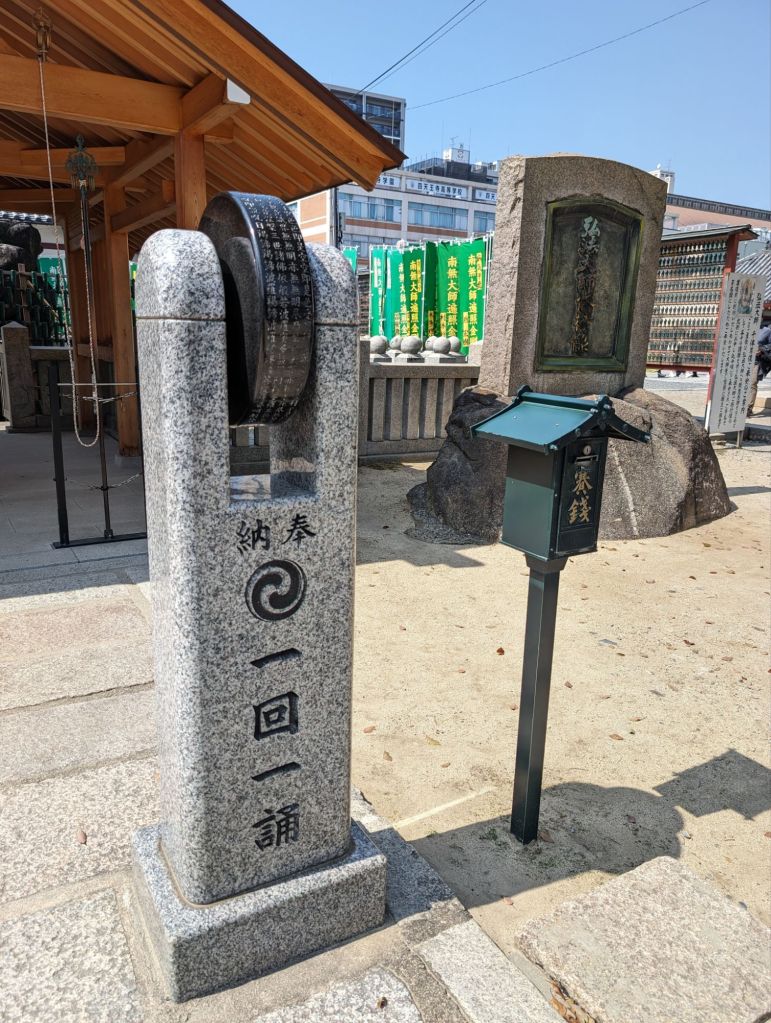
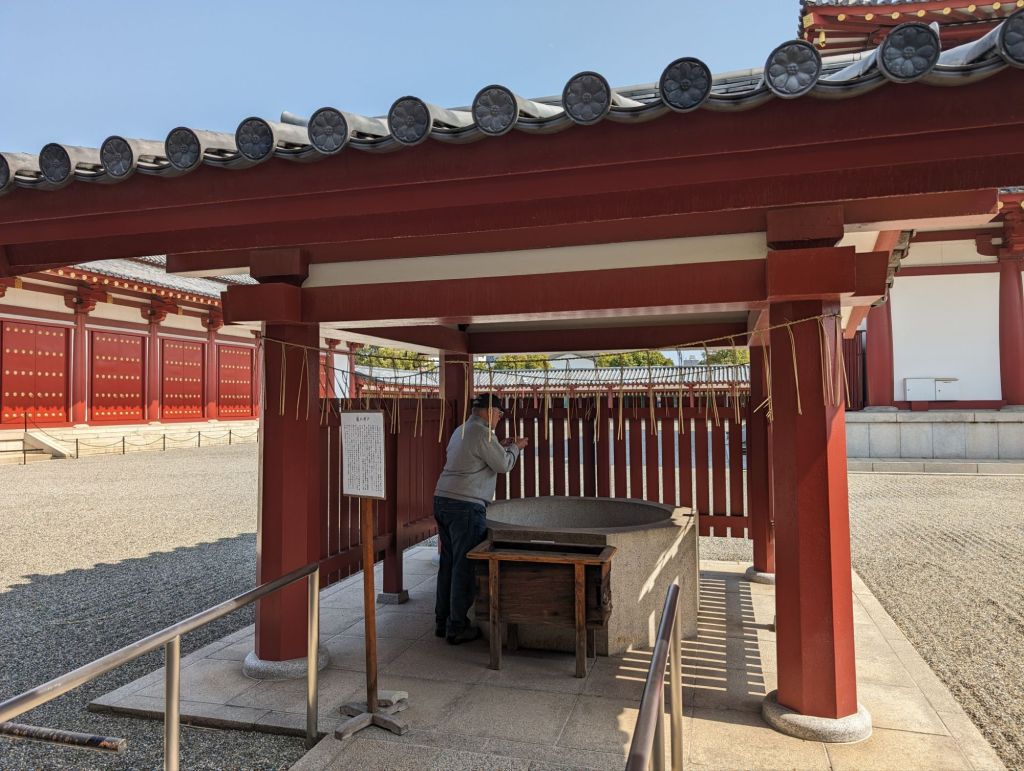
These lanterns hanging from the rafters of this corridor are inscribed with the names of temple contributors. Prince Shotoku, who founded the temple in 593, is enshrined in the main hall, of the temple.In the main hall is also this beautiful gold Buddha statue.The back wall of the main hall has these hundreds of little Buddha statues.The paintings, above and below, tell the story of the Buddha’s life.On the outside of the main courtyard are several shrines.A worshiper prays at this shrine, which promises help with illness, success and other life endeavors.This is the prayer wheel of the temple, which is used as a way to meditate and pray and gain wisdom and compassion.
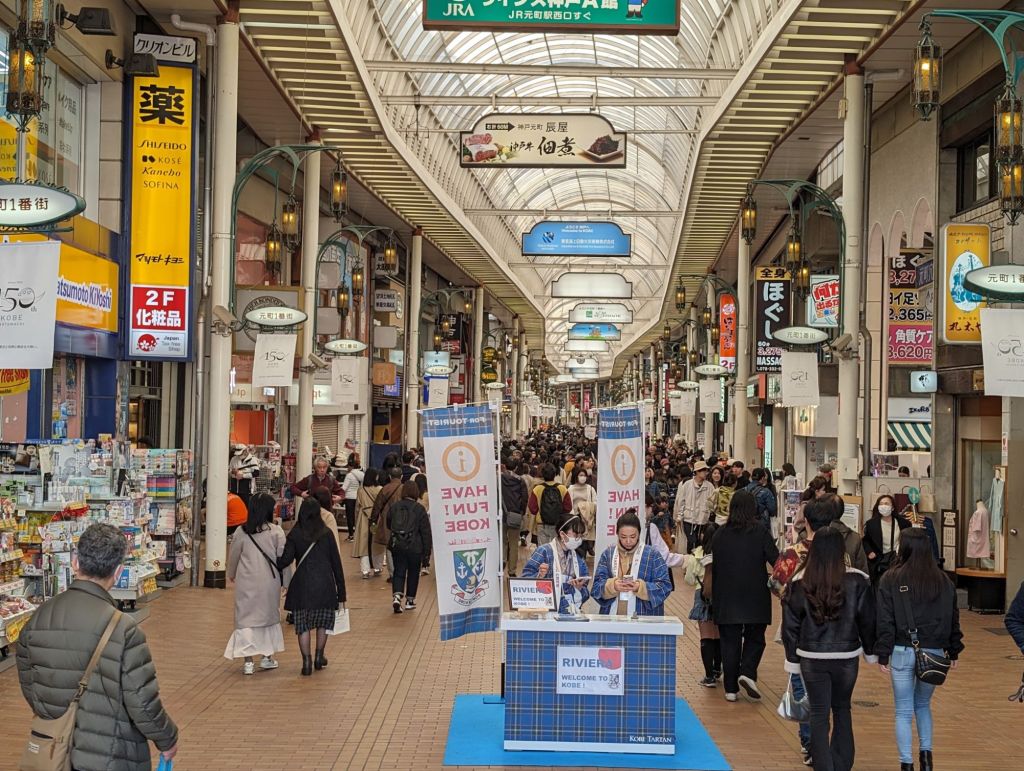
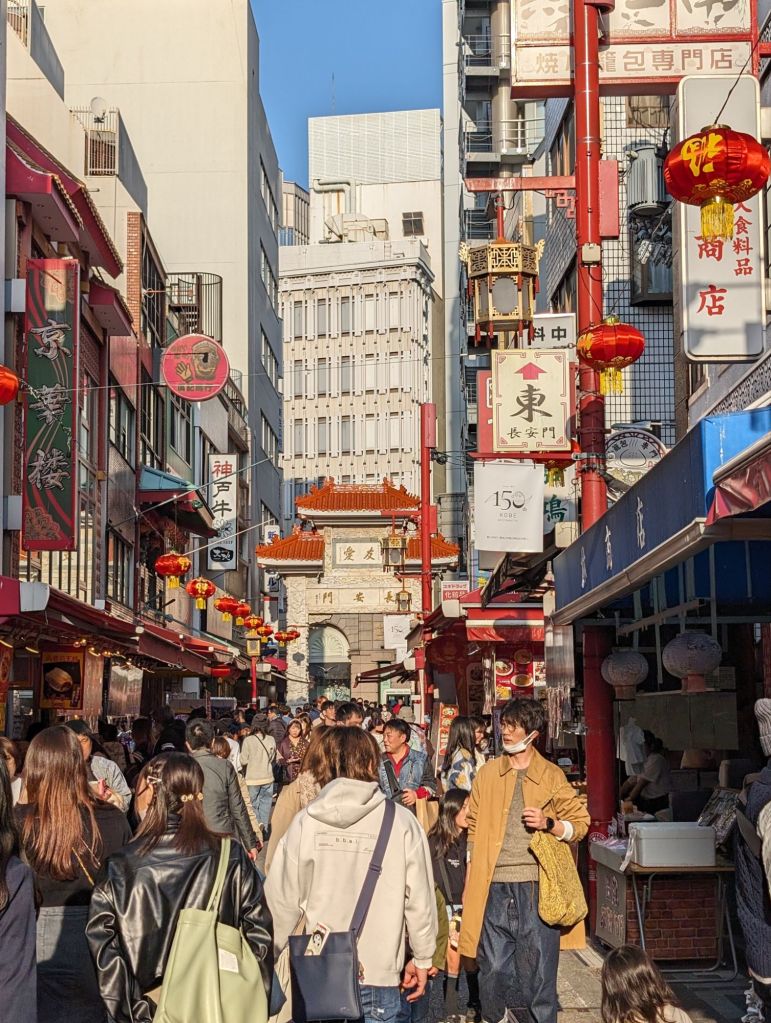
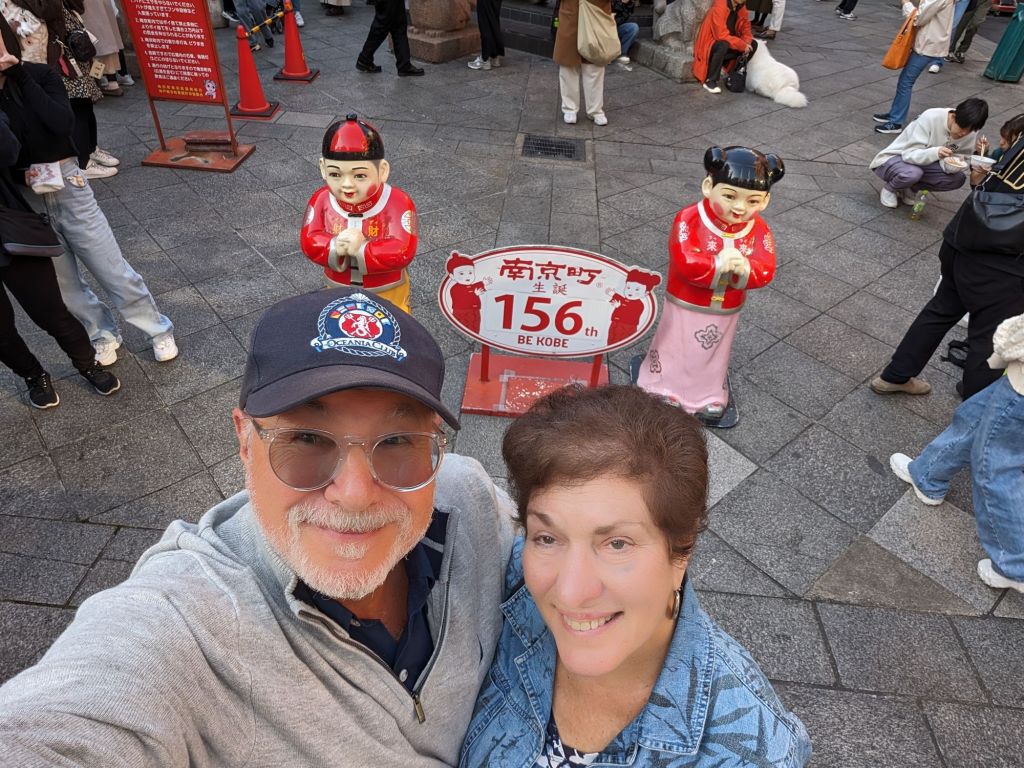
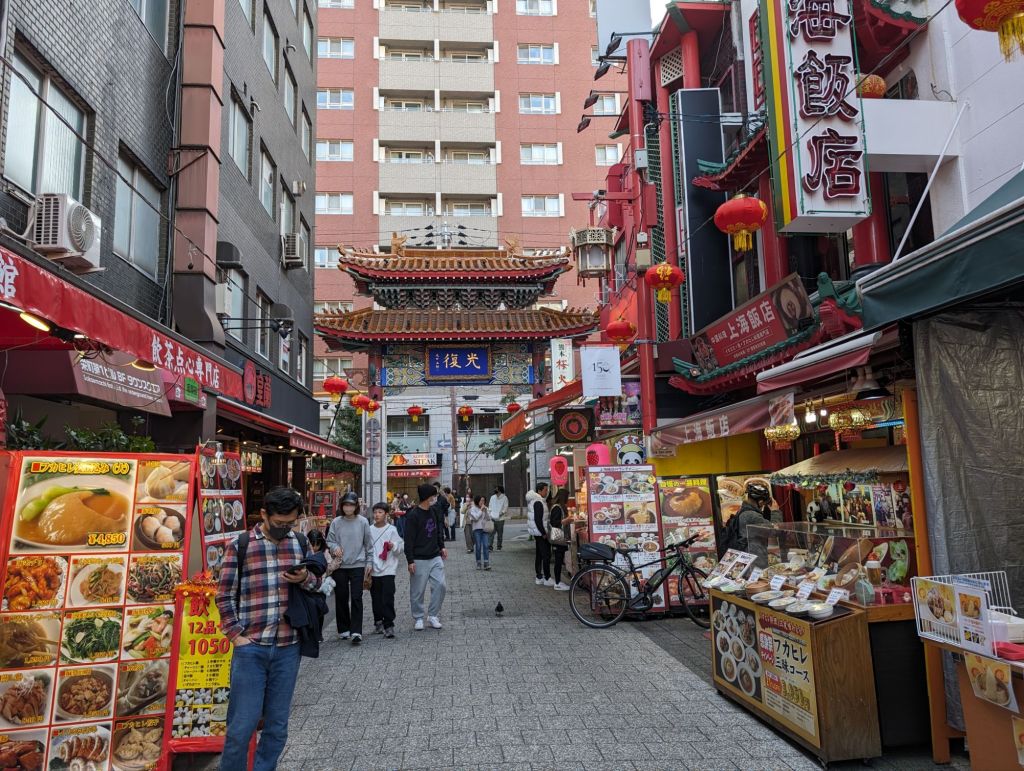
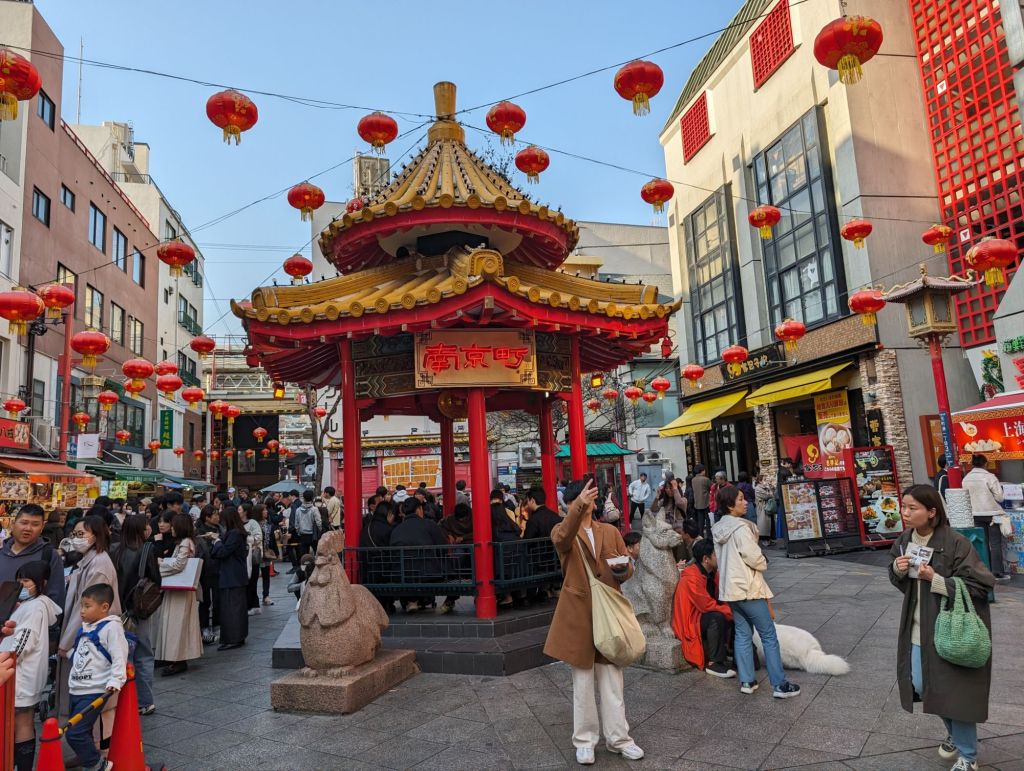
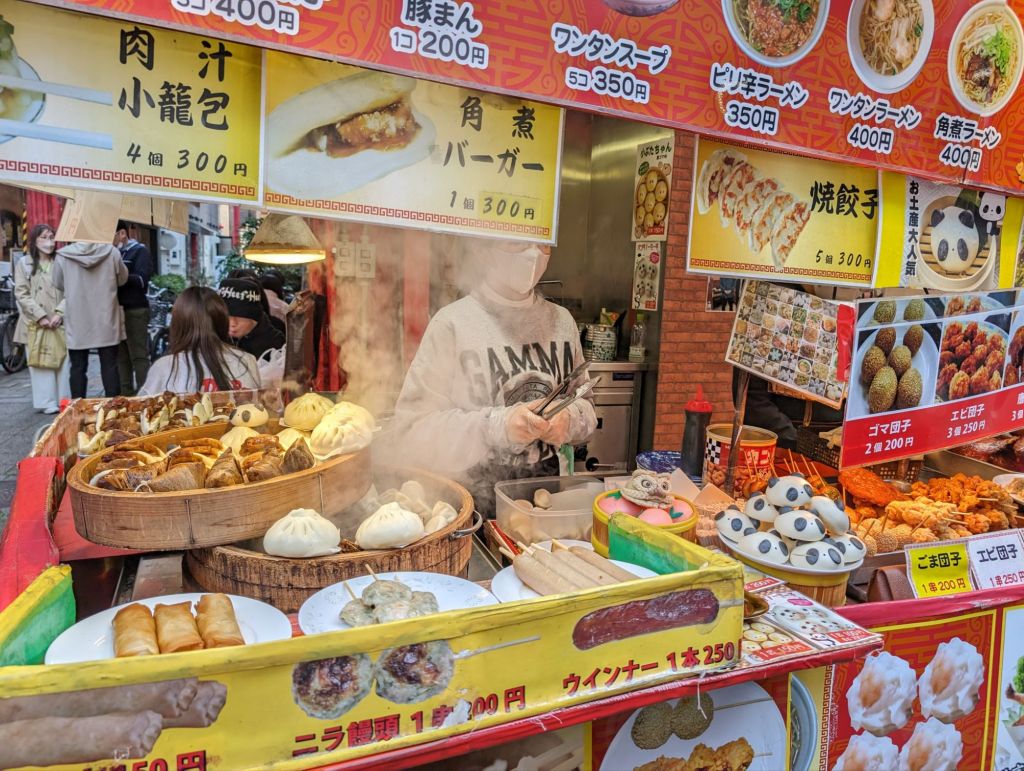
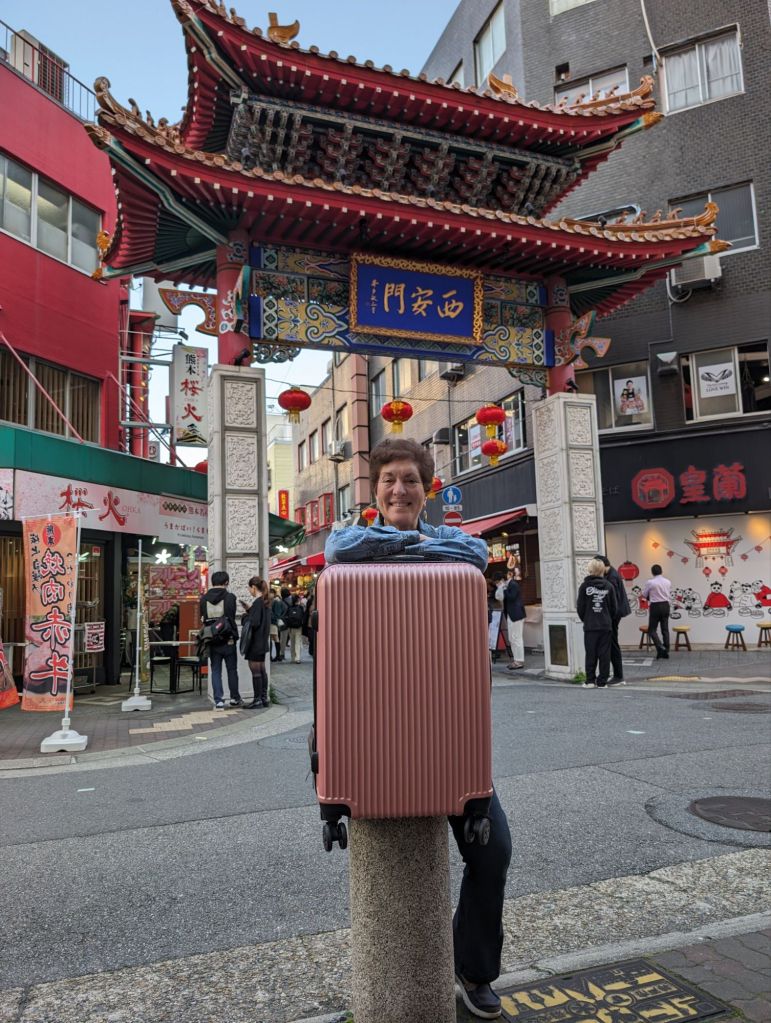
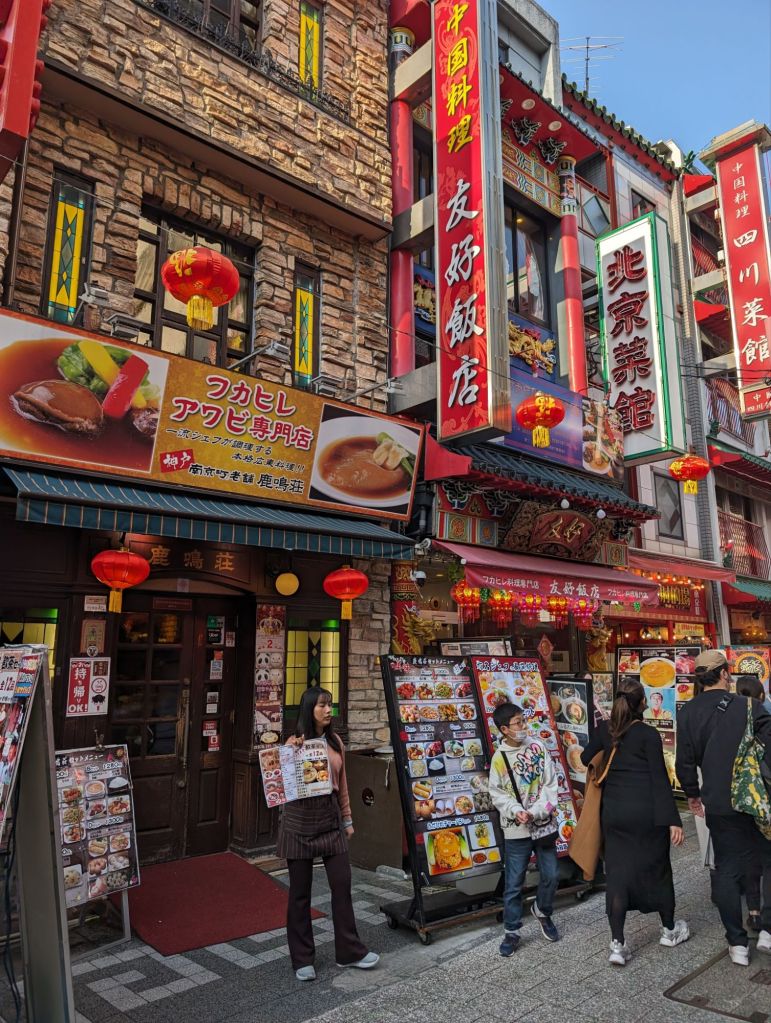
Kobe’s Motomachi shopping street and Chinatown. Our afternoon was spent exploring downtown Kobe. It was delightful to walk through the fashionable shopping area and its vibrant, colorful Chinatown.
What do you buy when you are in the sophisticated shopping district of Kobe? Something to carry home the things you’ve already bought, of course.
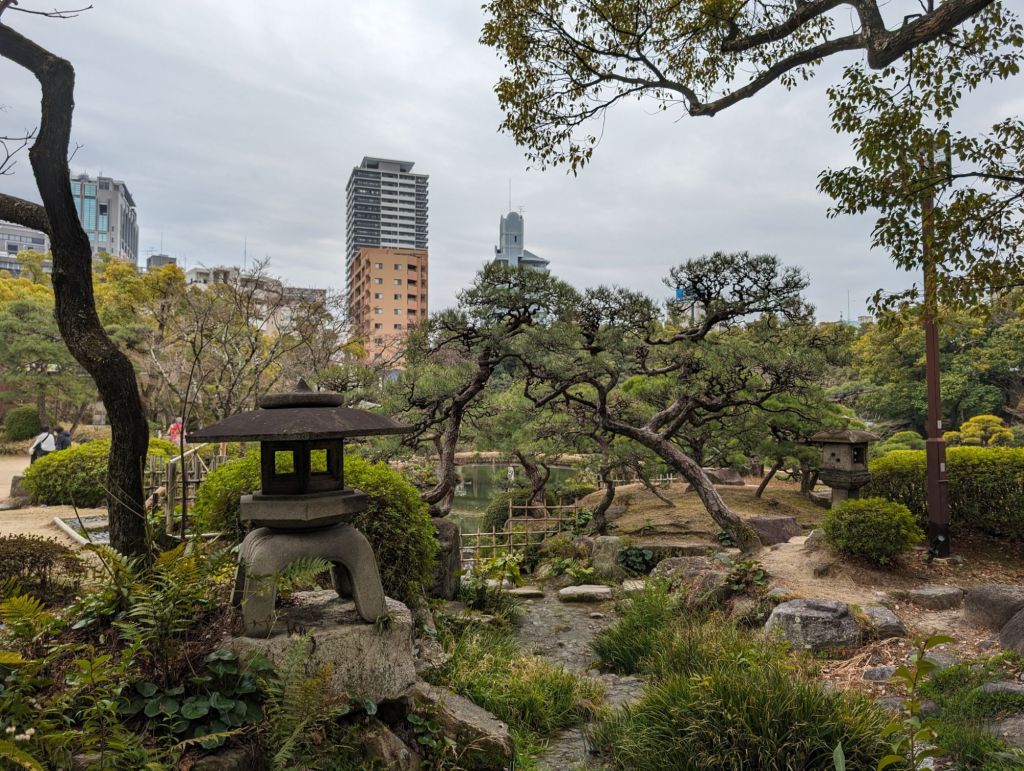
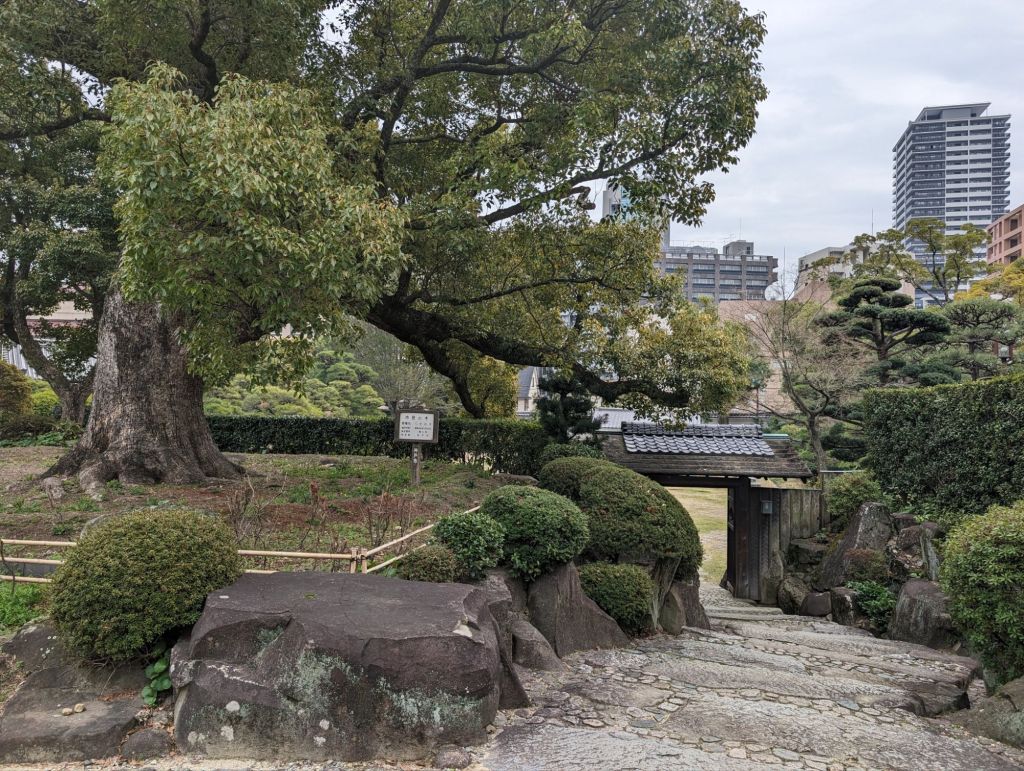
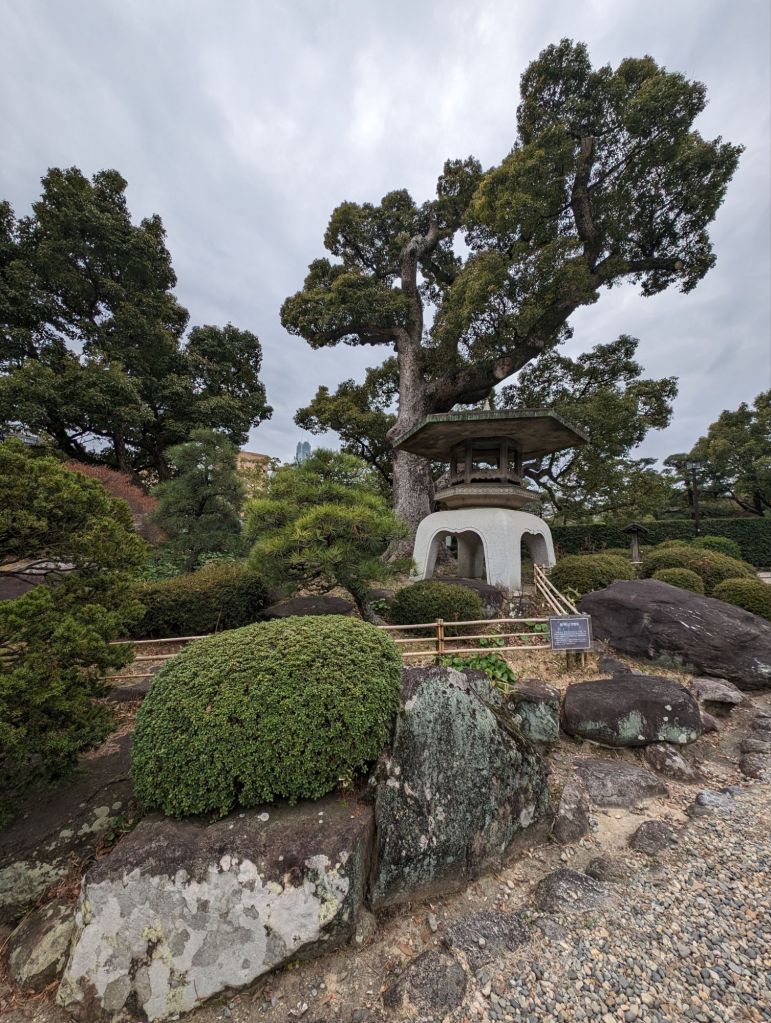
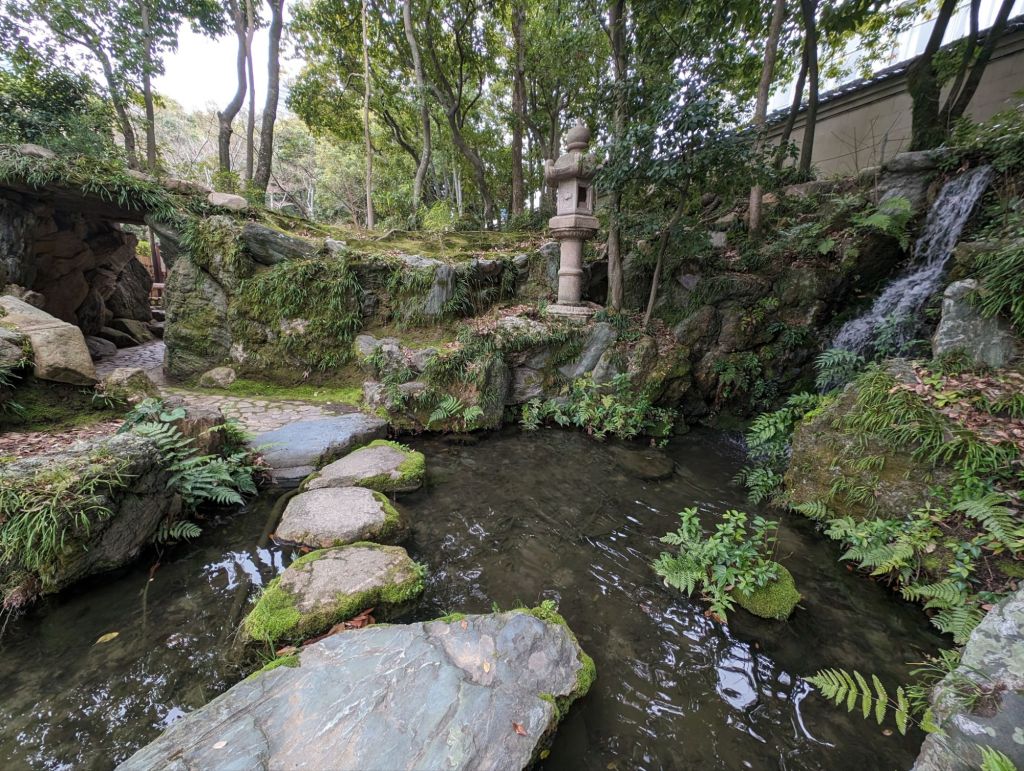
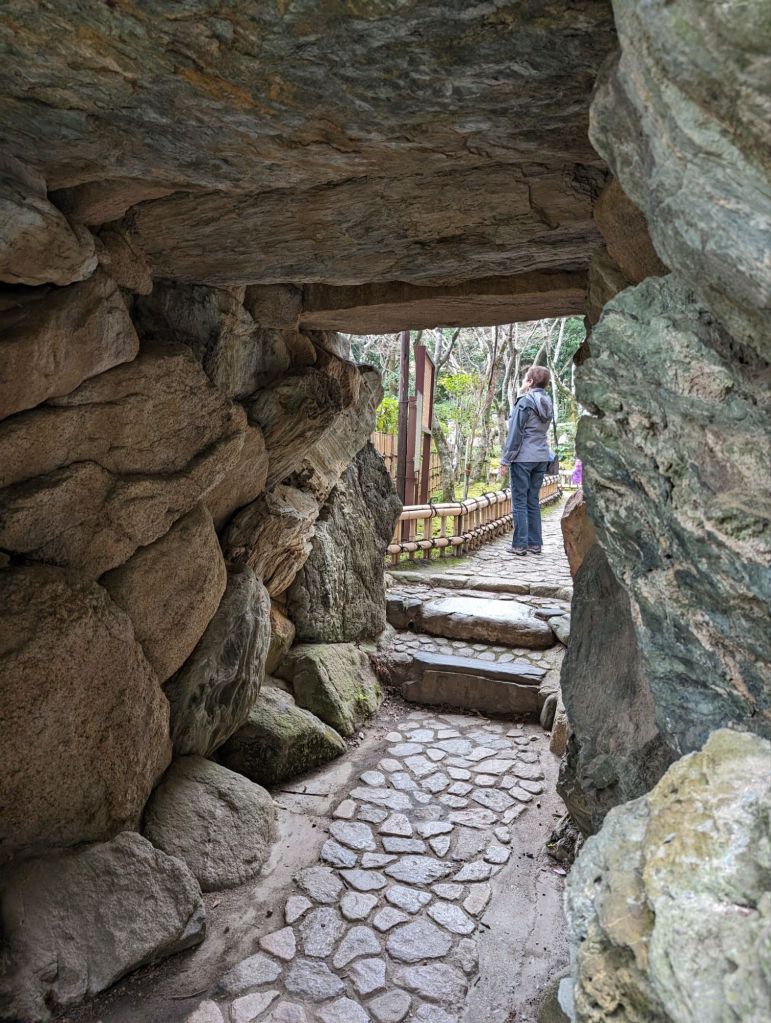
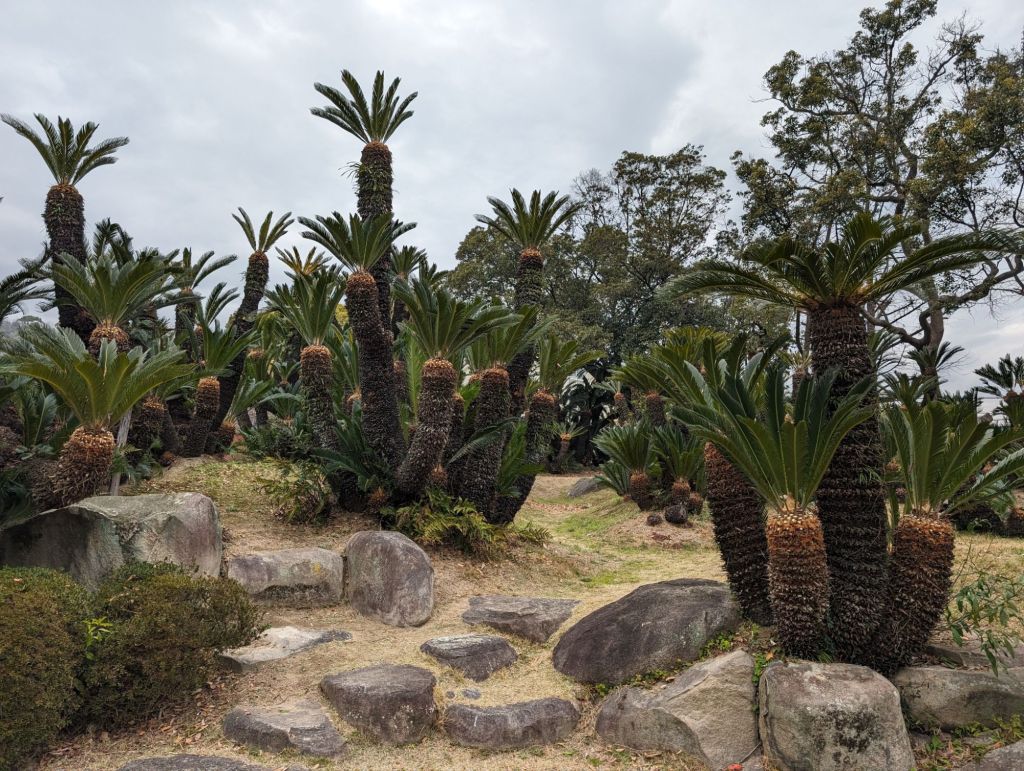
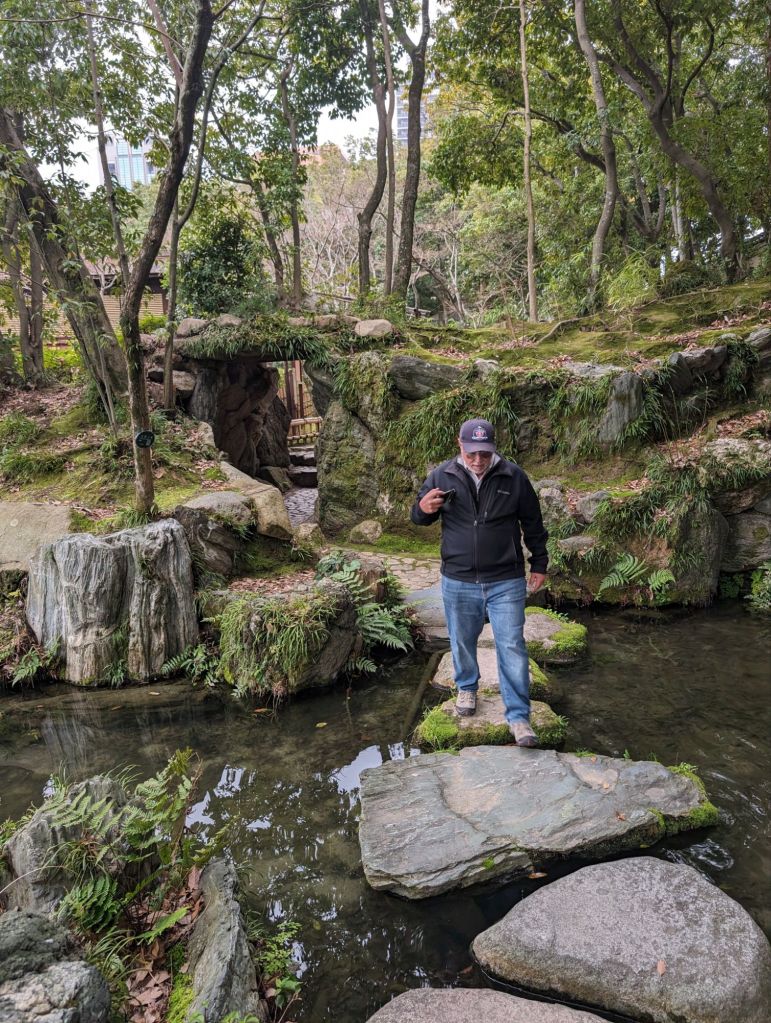
The Sorakuen Garden is Kobe’s own oasis into a quieter world of beauty and serenity. The garden was originally part of the Koderashi family estate in the 19th century and was separated from the family property and made available to the public in 1941. In an area of about 6.7 acres, it has many unique features.
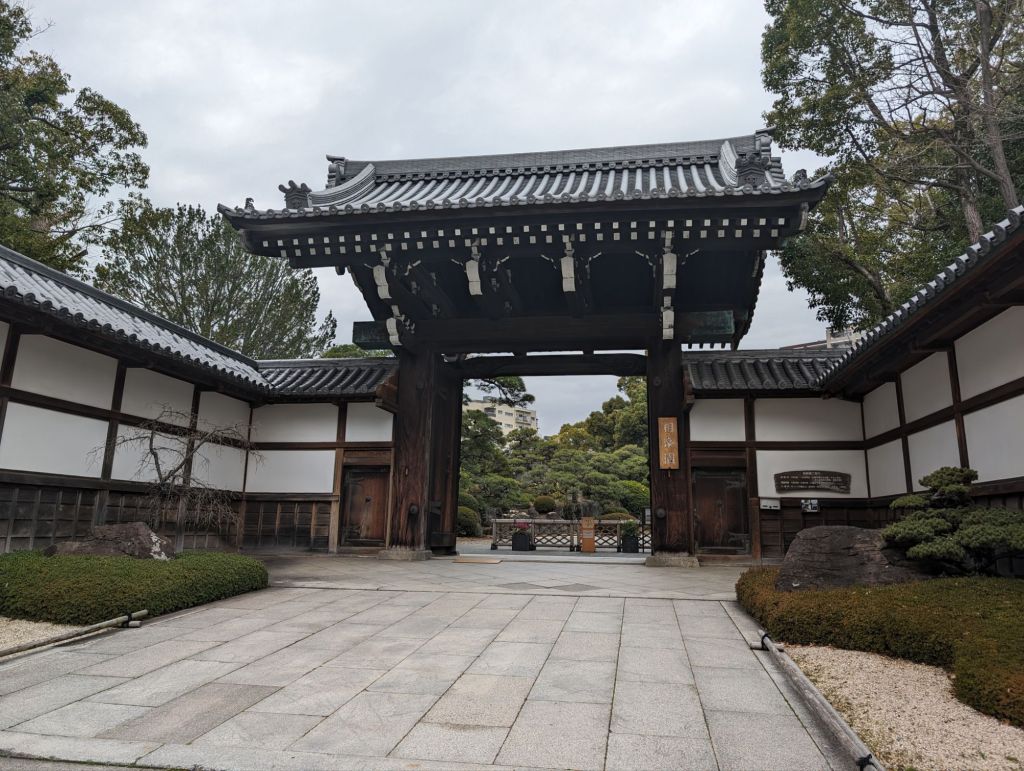
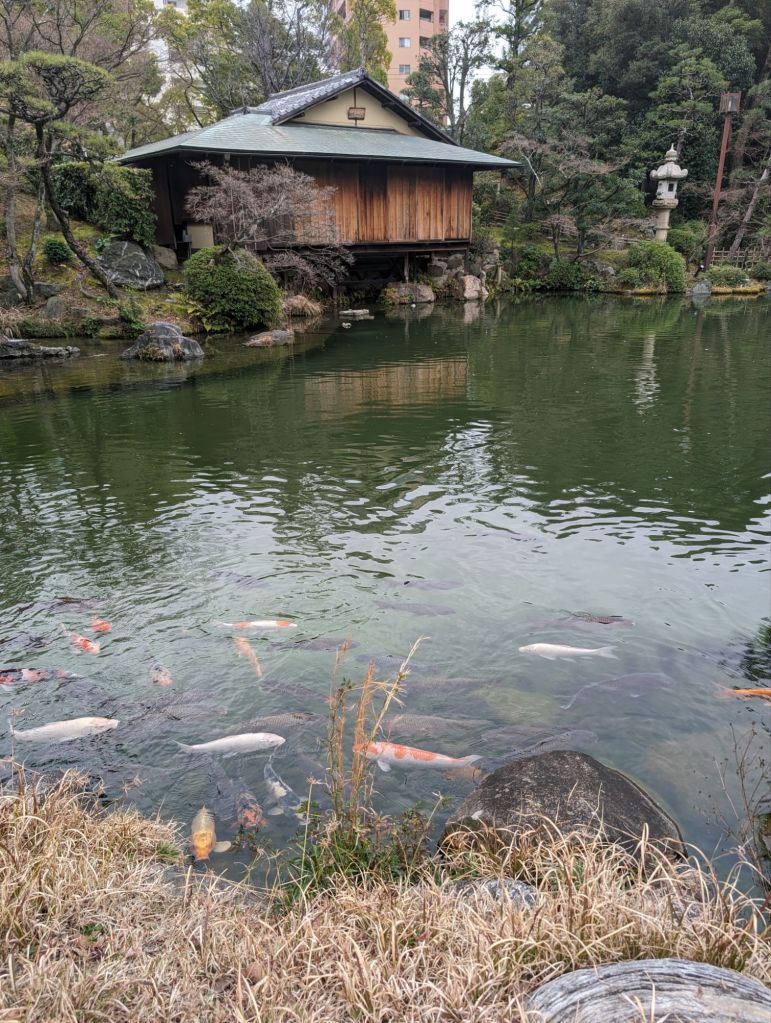
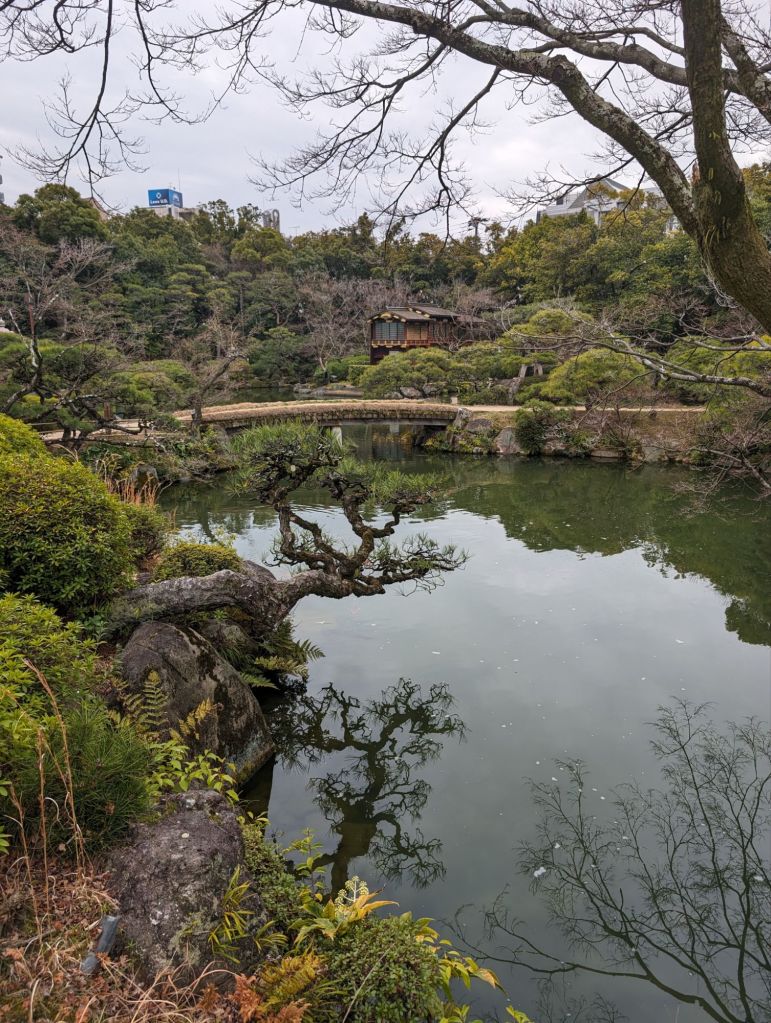
This traditional gate opens the way to the garden.Although the urban environment still surrounds you, the garden has a very calming effect.Like most formal Japanese gardens, there is a koi pond. A teahouse sits on the edge of the pond.
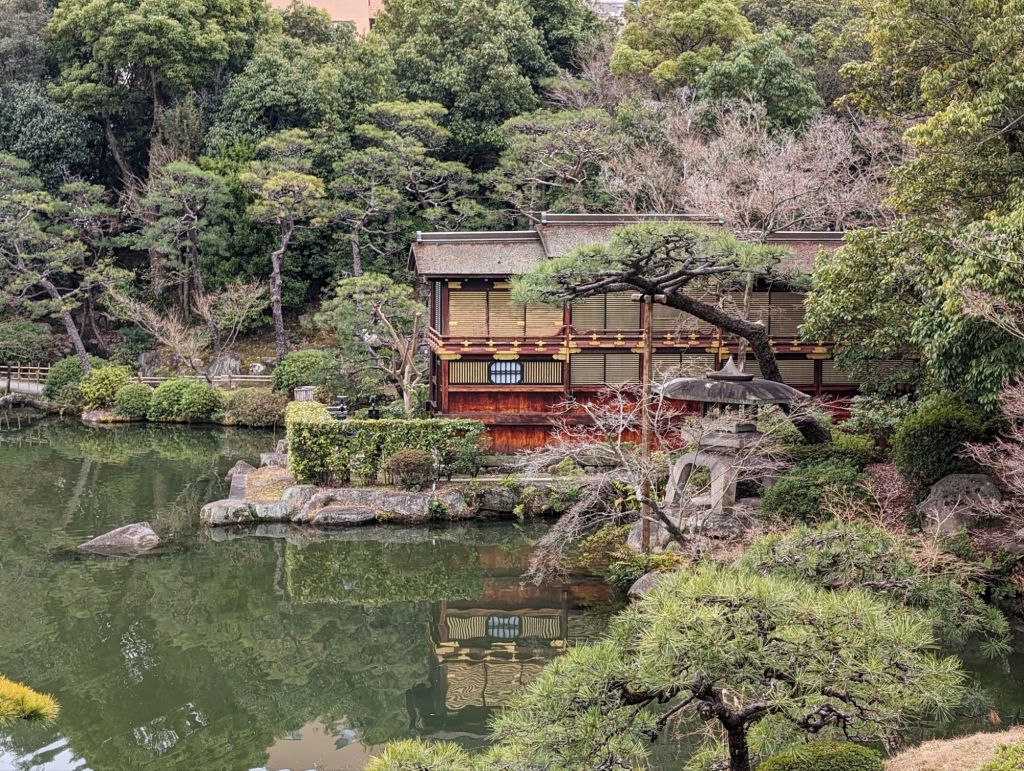
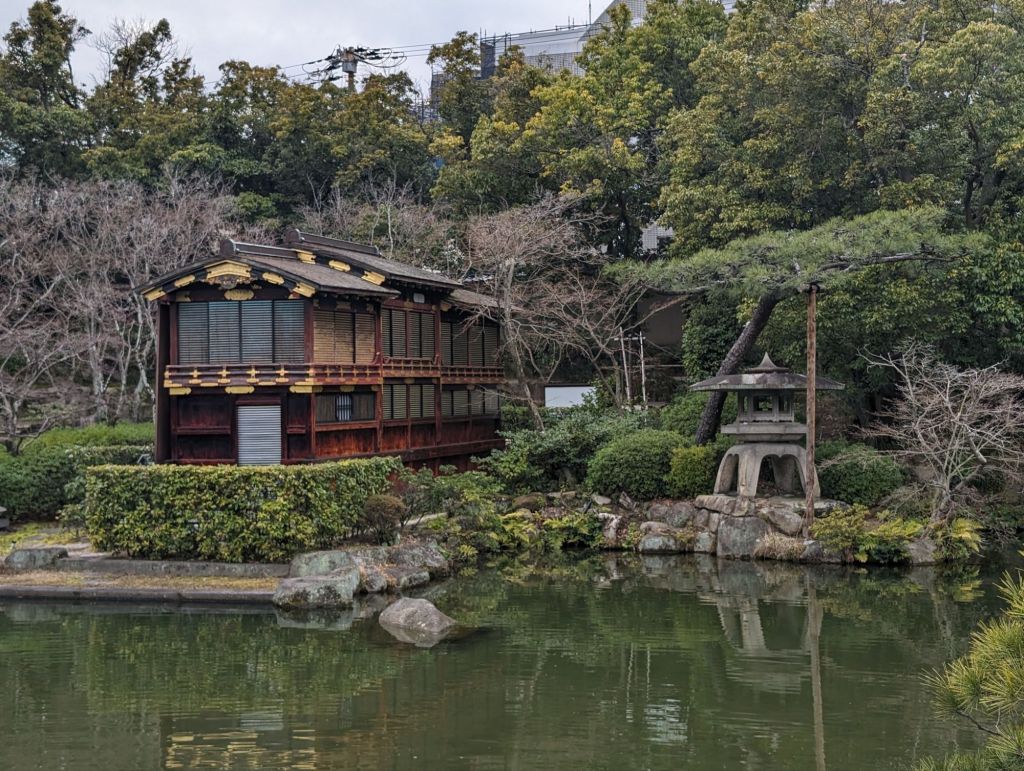
The two pictures below show the Funeyakata building, which was previously a houseboat used by a clan lord during the Edo period. Its Japanese lacquered exterior with gold trim gives the garden an elegant look..
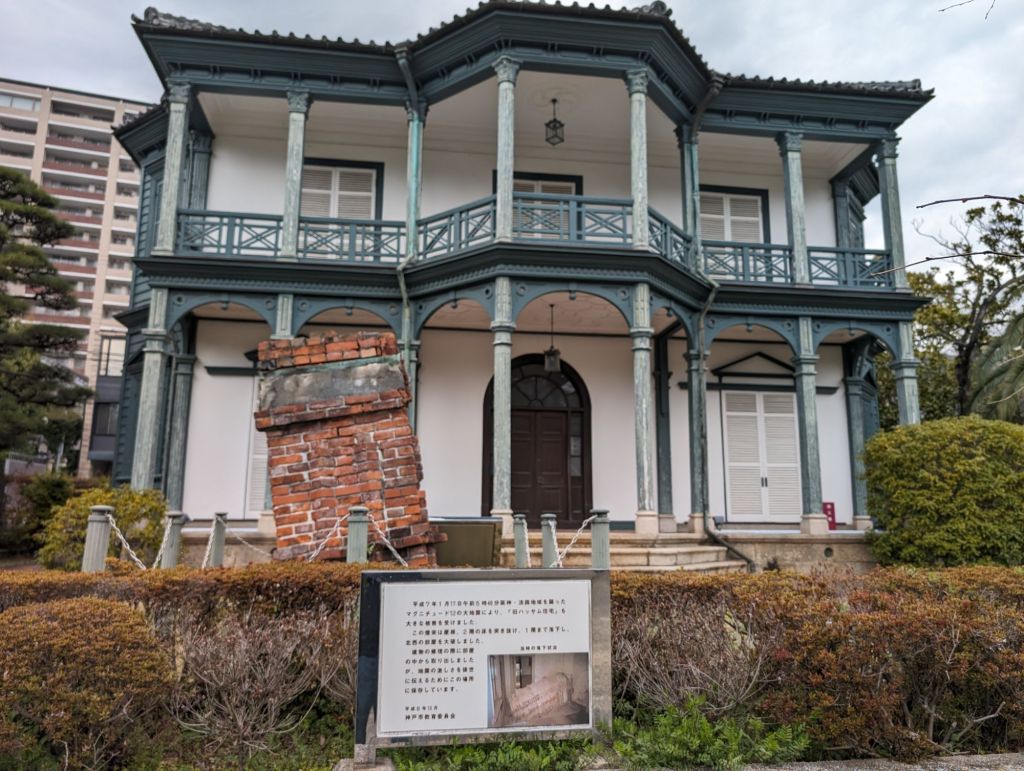
Another feature of the garden is this authentic colonial style house. It was built for the Hassam family by an English trader of Indian background in the 19th century. It was moved to this garden from another part of the city.
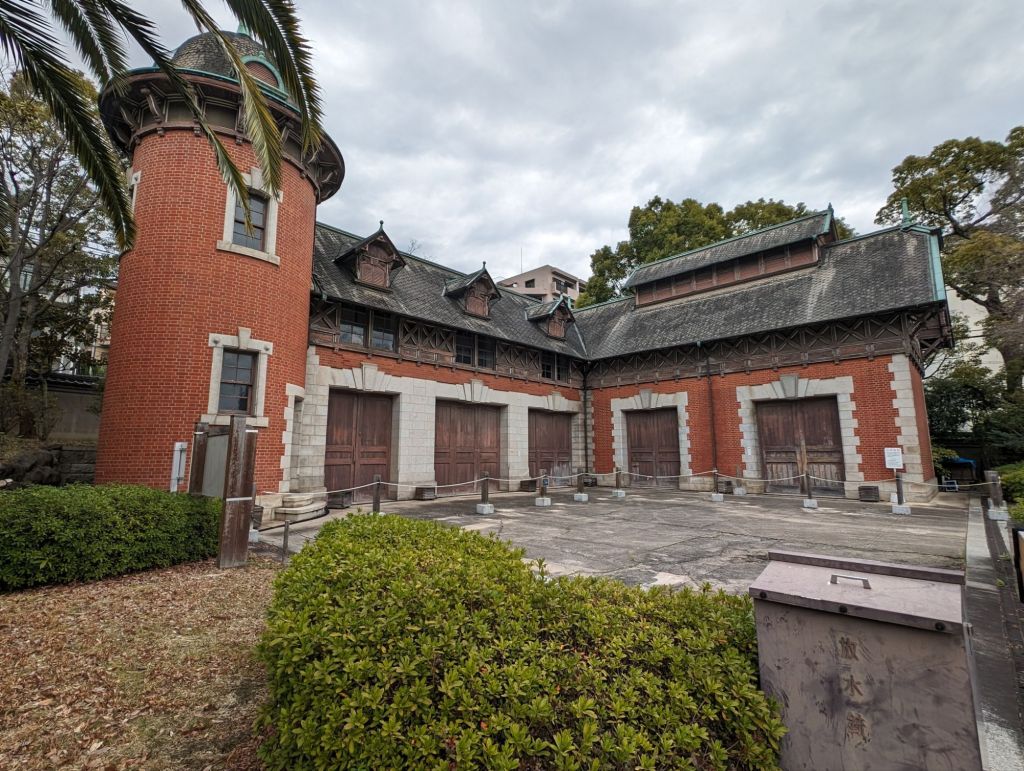
The broken chimney sitting in the front yard fell through the roof during the 1995 earthquake. It was left here to remind future generations of the earthquake’s severity.These stables were part of the original Kodetashi residence.
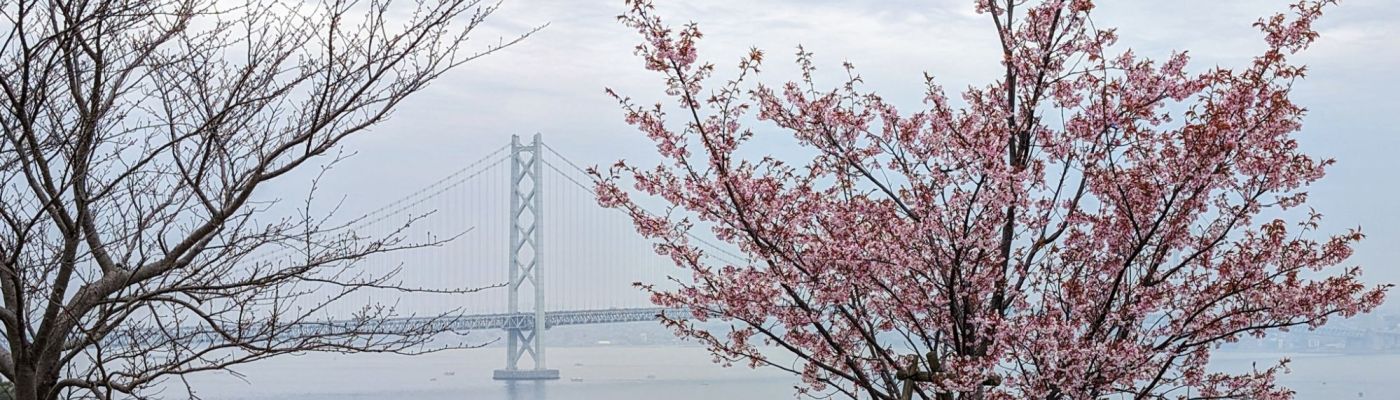
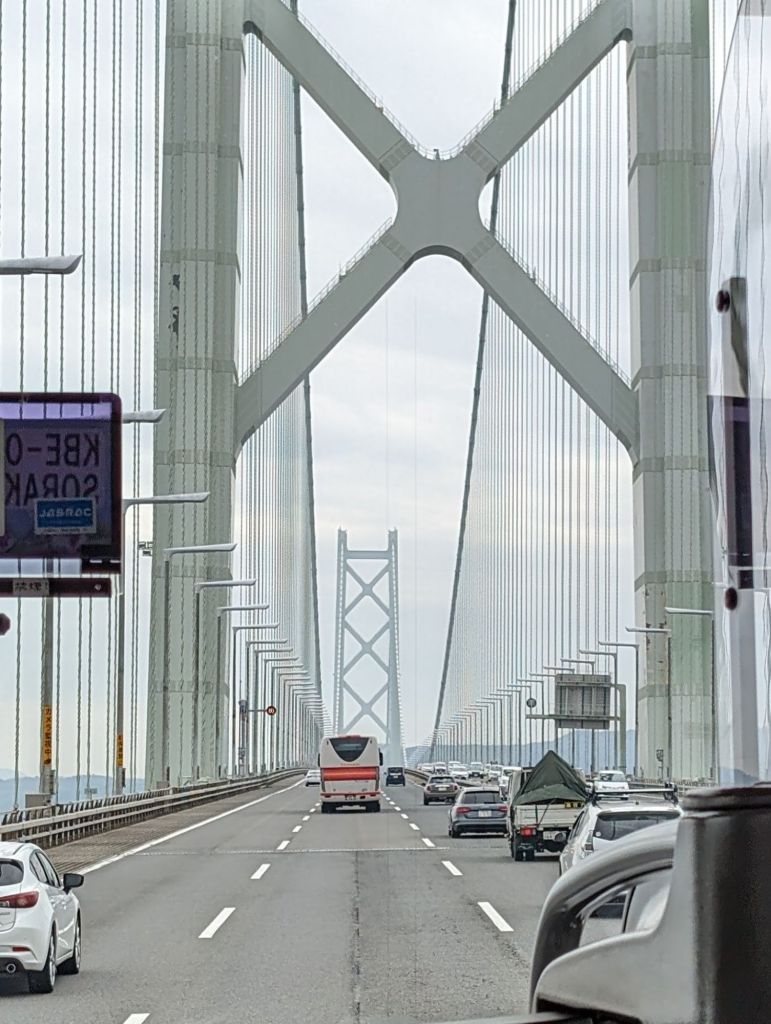
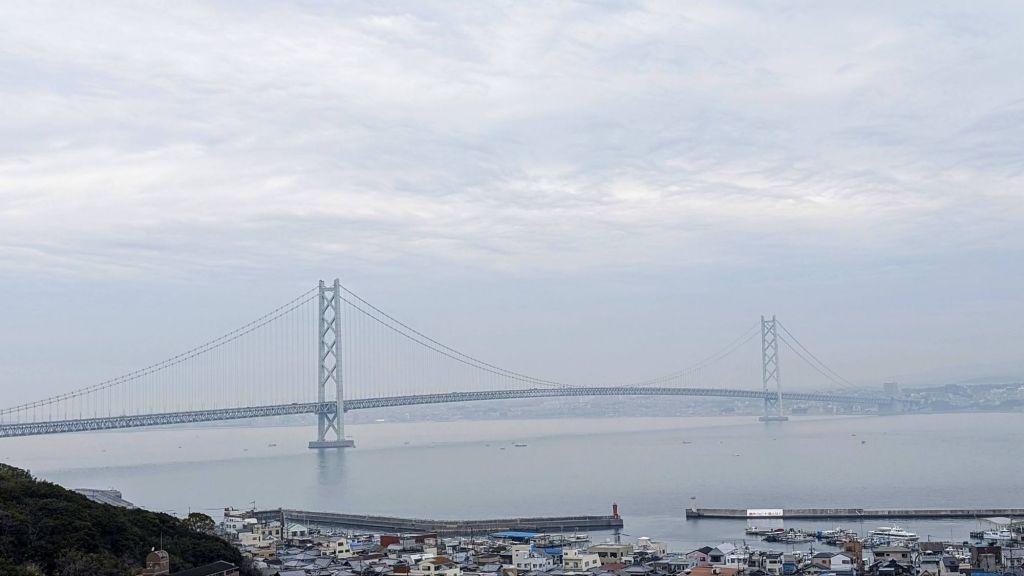
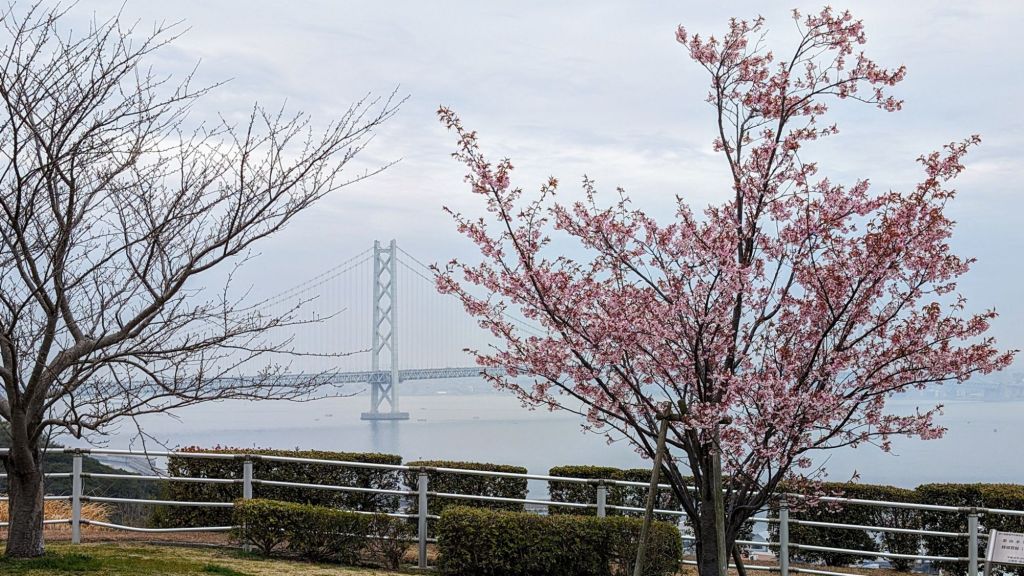
The AkashiKaikyo Bridge was, until 2 years ago, the longest suspension bridge in the world. The 4 km bridge links the city of Kobe with the island of Awaji. It was getting misty as we drove across, so the views from the bridge were shrouded in haze. We looked back on the bridge from a viewing platform on Awaji.
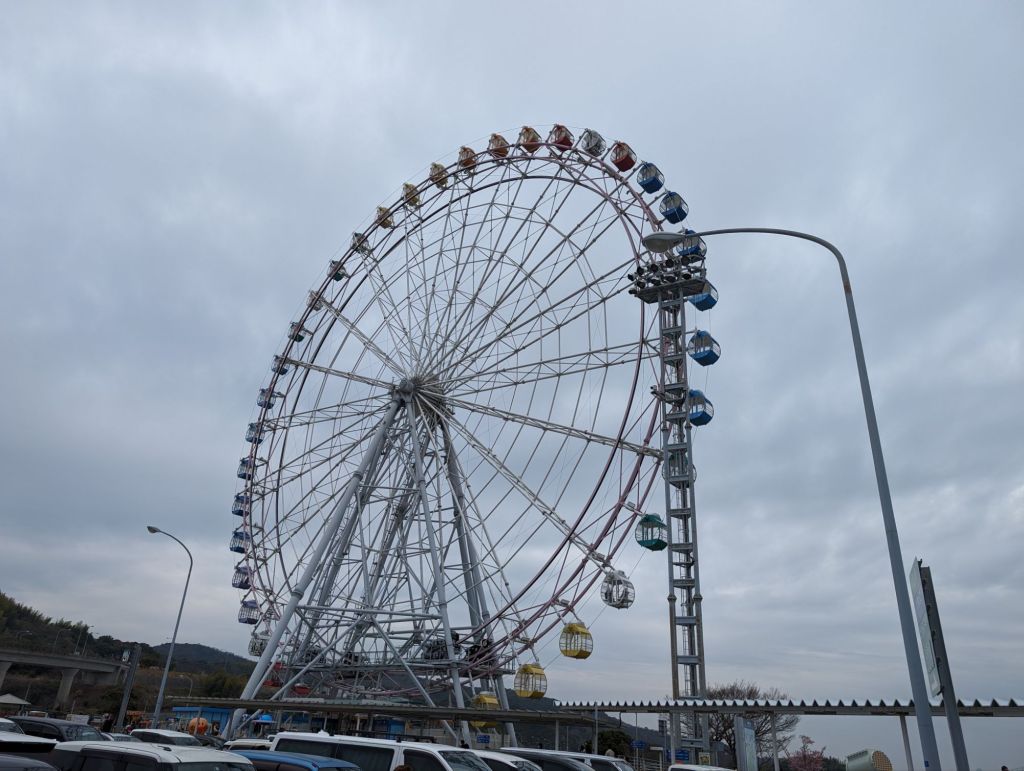
There was one lone cherry tree in full bloom and everyone had to get a picture of it.The bridge viewing area had a festive feel to it. There were food sellers and this Ferris wheel.
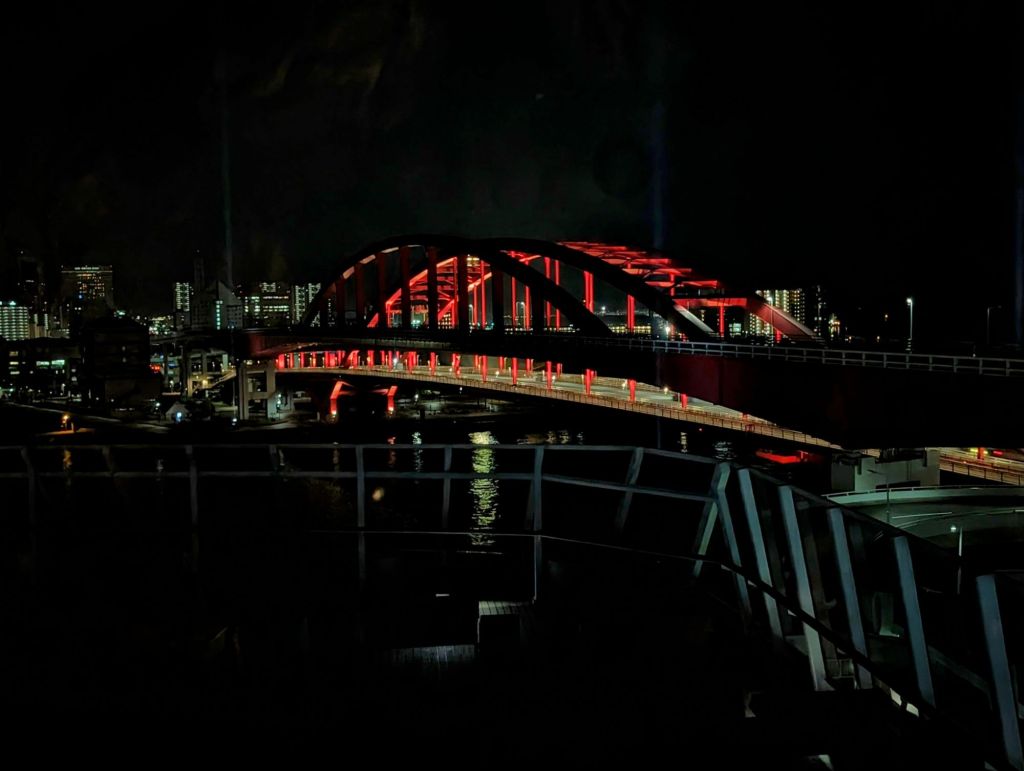
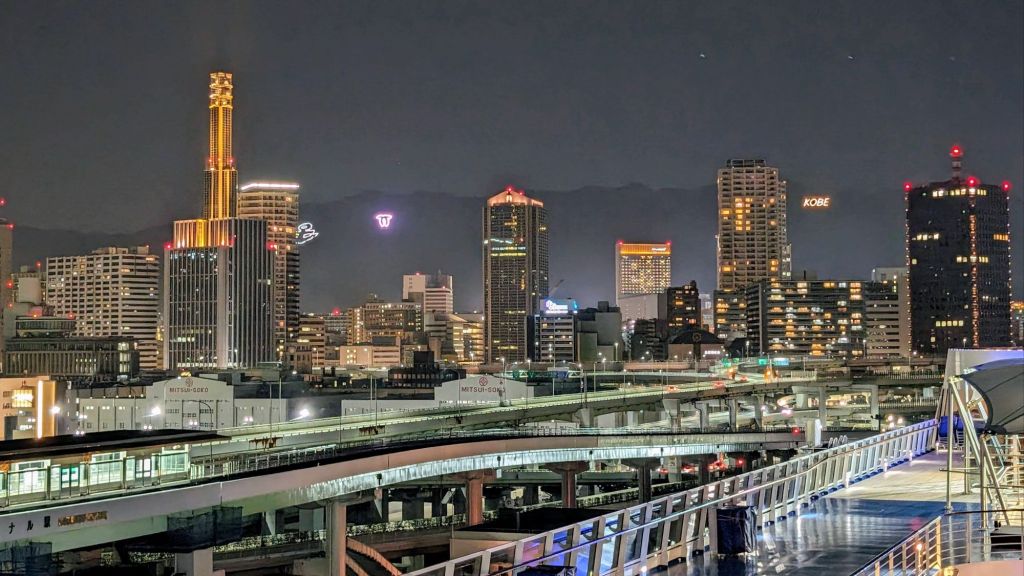
Goodnight Kobe. Thanks for showing us your finery.

 J and J Travel