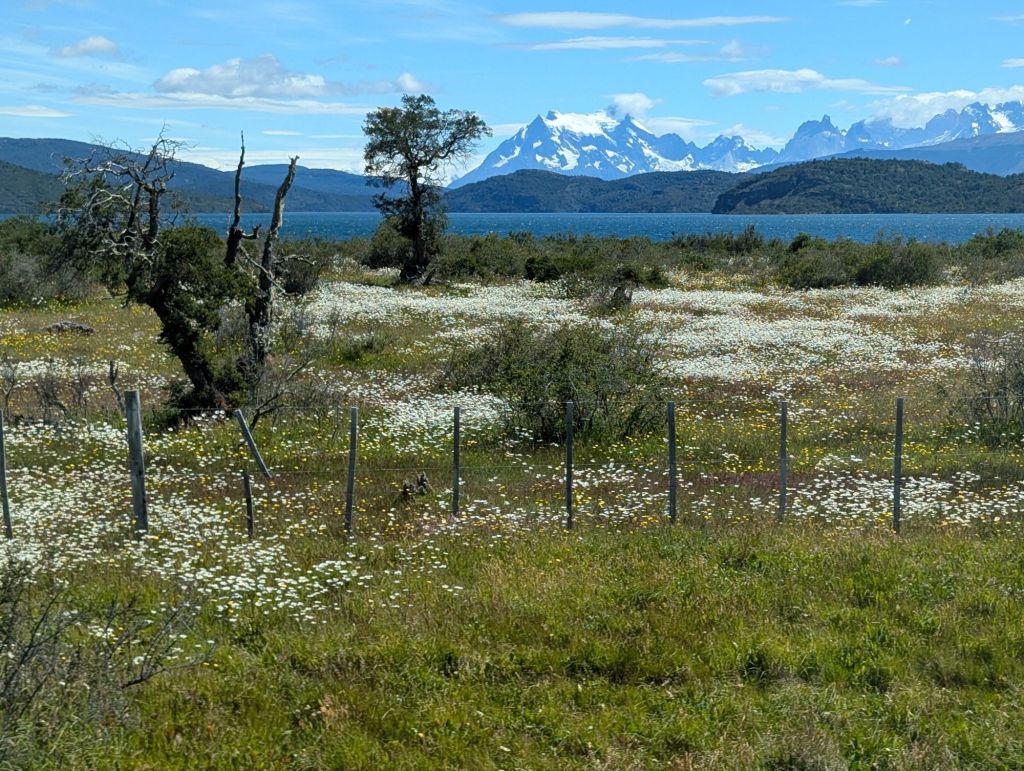
We made the 5-hour drive to the southern Chile side of Patagonia and immediately saw a striking difference in the geography. The moister coastal air brought greenery, flowers, bushes and trees. The rock formations were more colorful and the mountains were spectacular.
As we drove into Chile we saw a softer, greener landscape, very different from the stark, mostly treeless views in El Calafate.
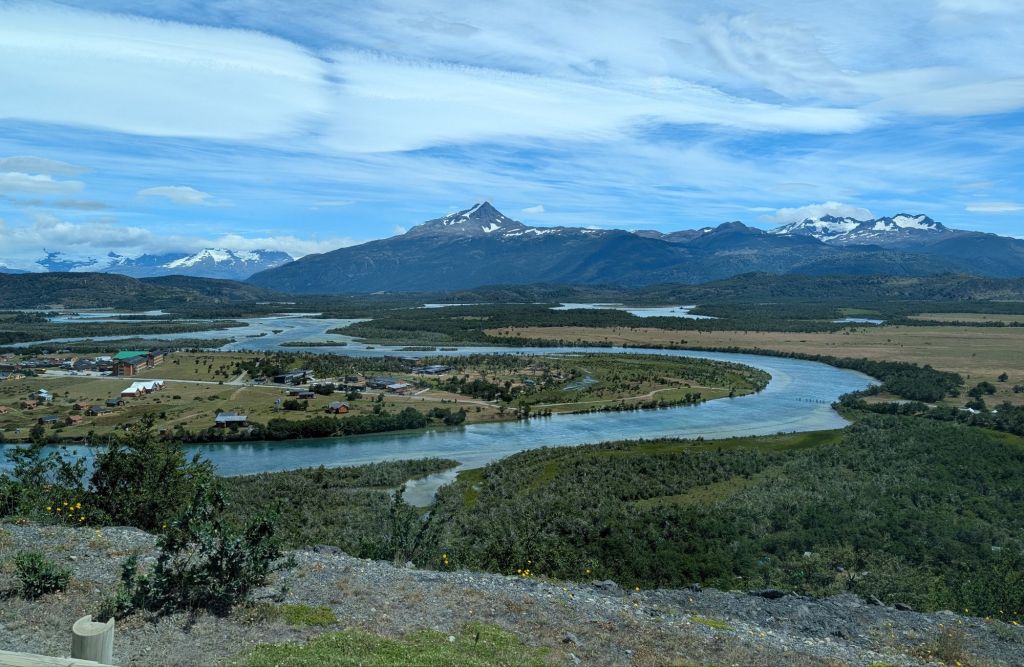
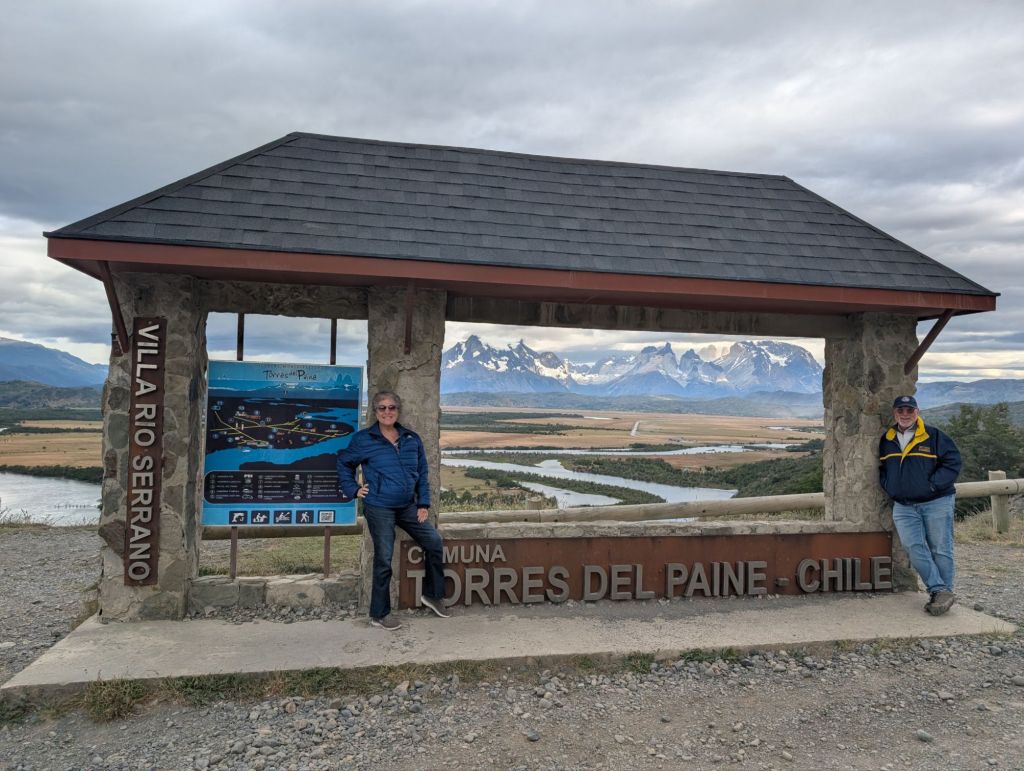
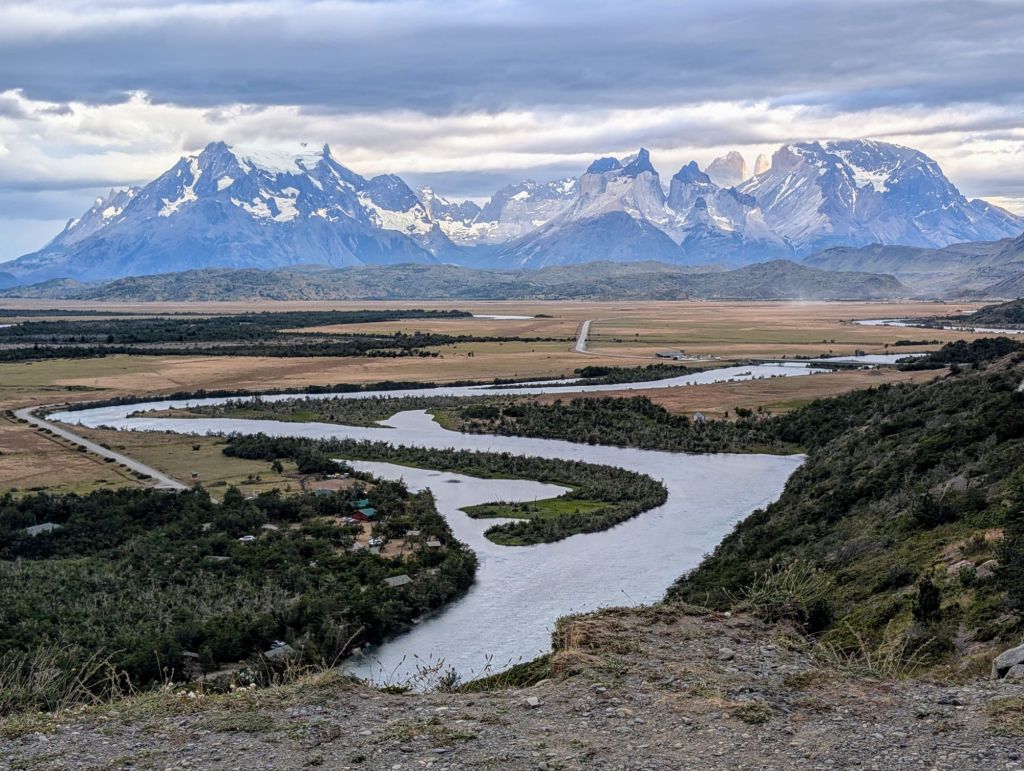
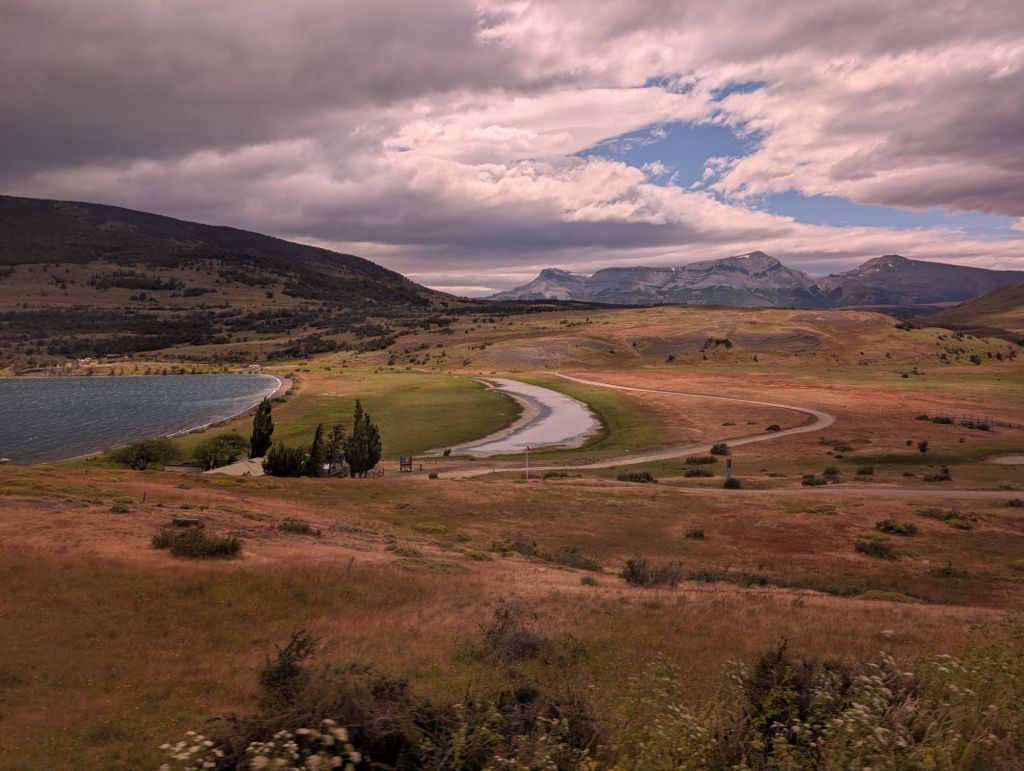
This was our first view of the Rio Serrano Hotel compound, right by the Torres Del Paine National Park.
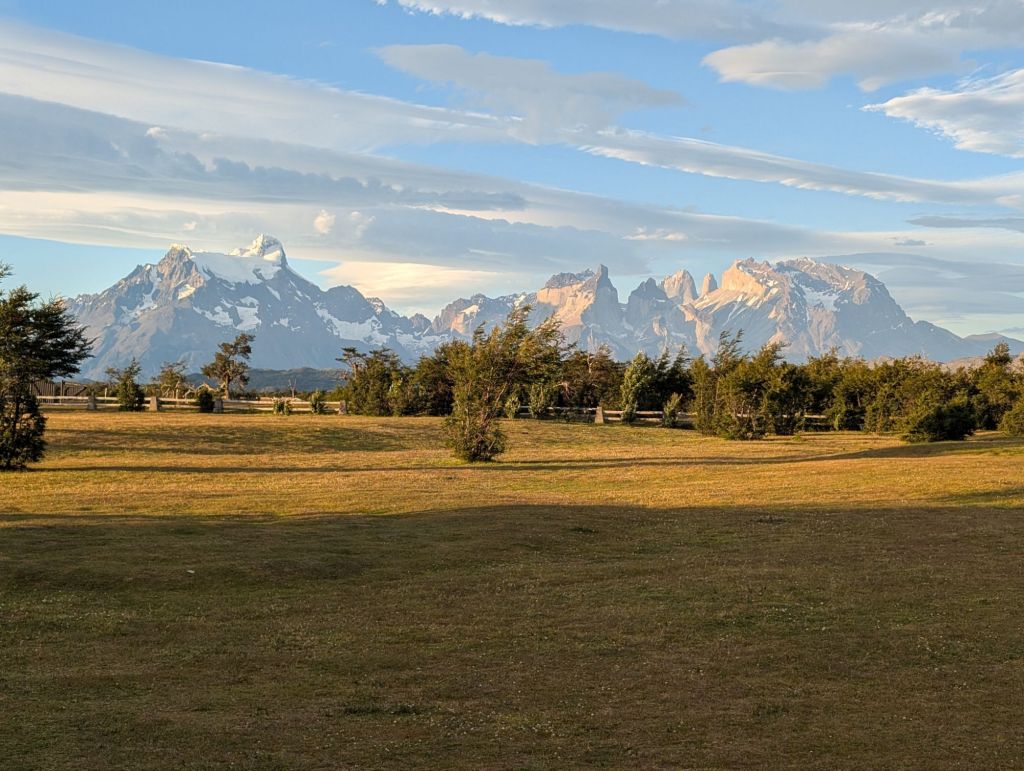
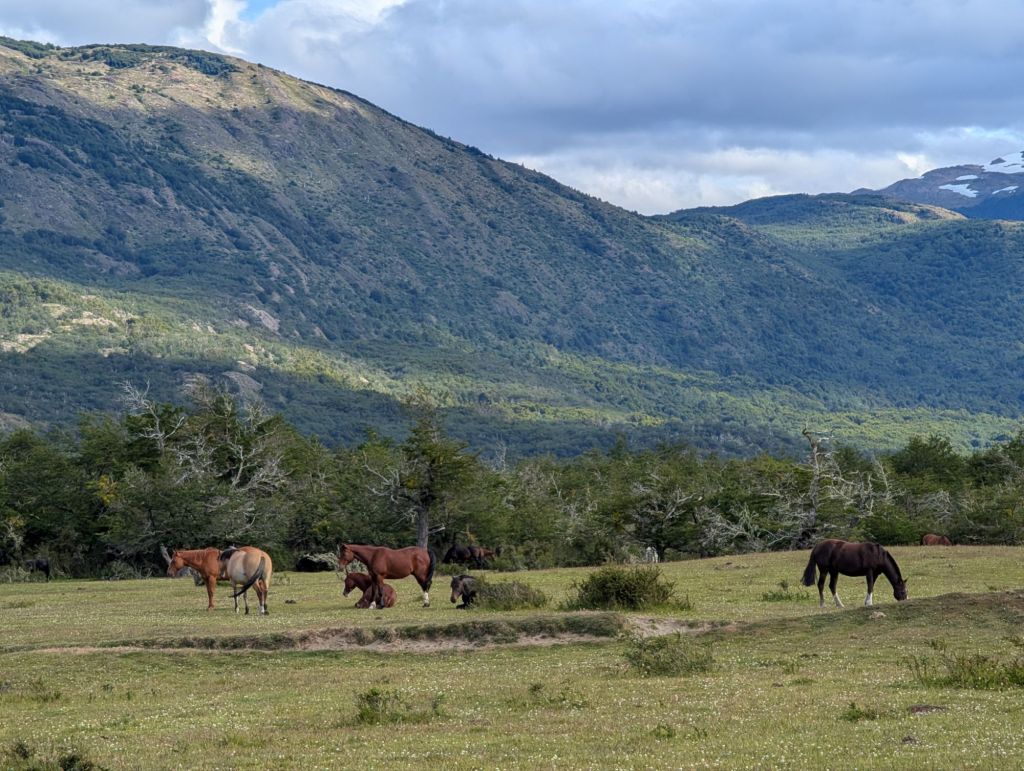
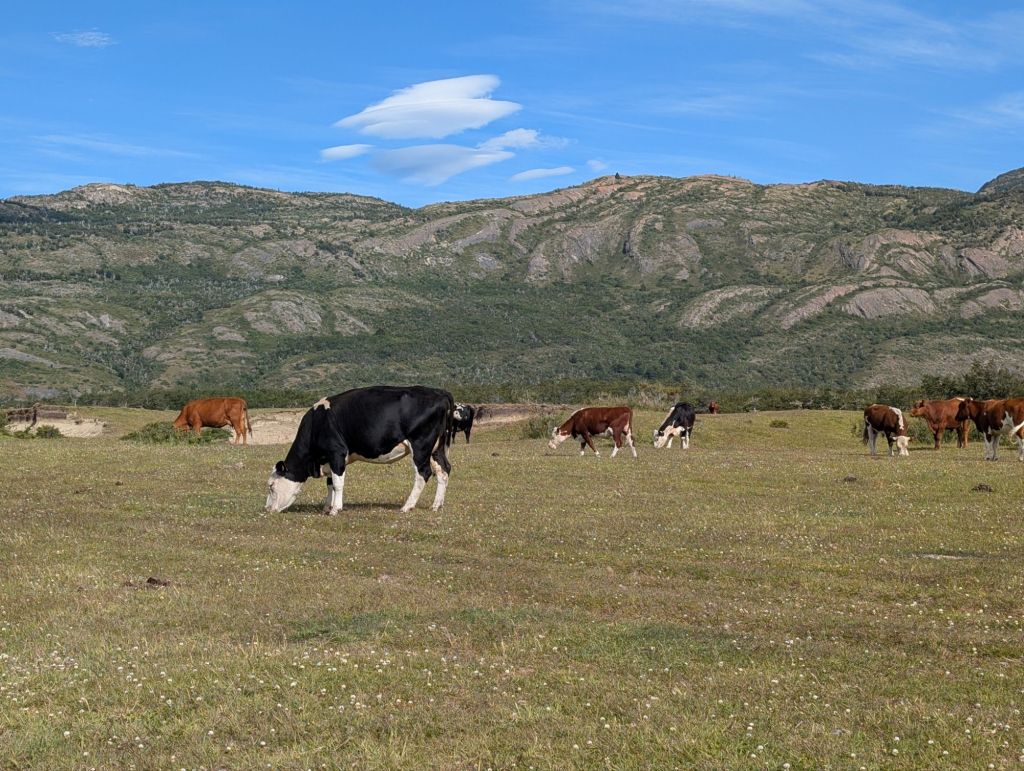
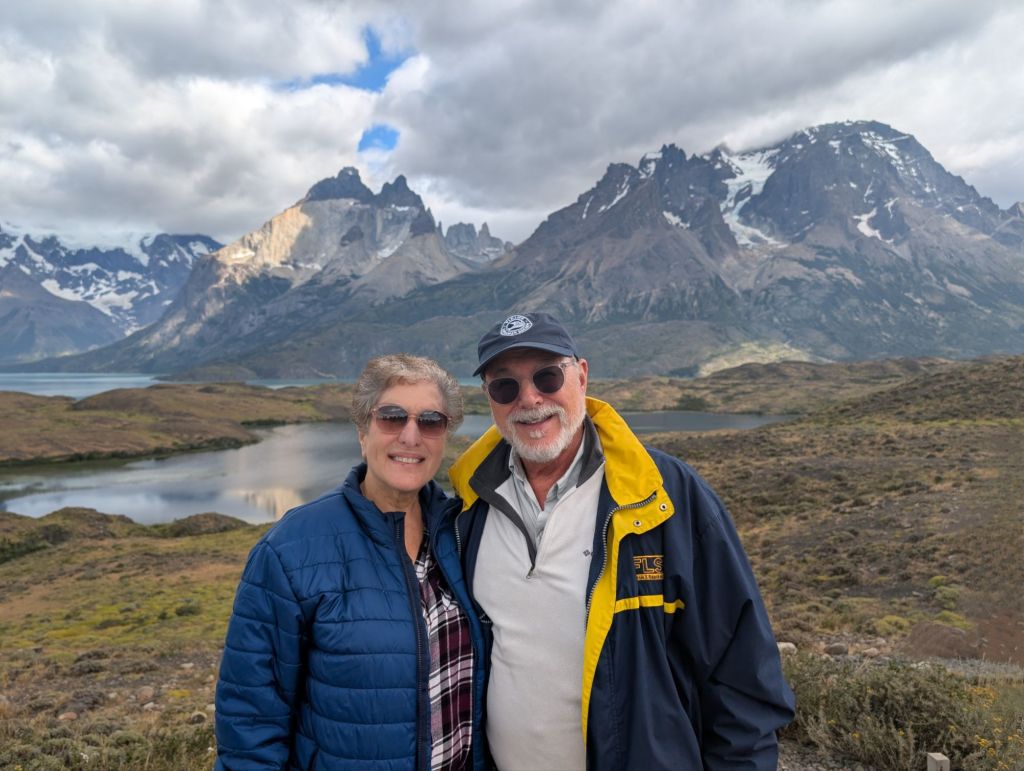
Our walk around the property of the Rio Serrano resort gave us our first view of the Paine Massif, the park’s famous mountain range. There was enough grassland for cattle grazing and there were horses on the property, available for guests to go riding.
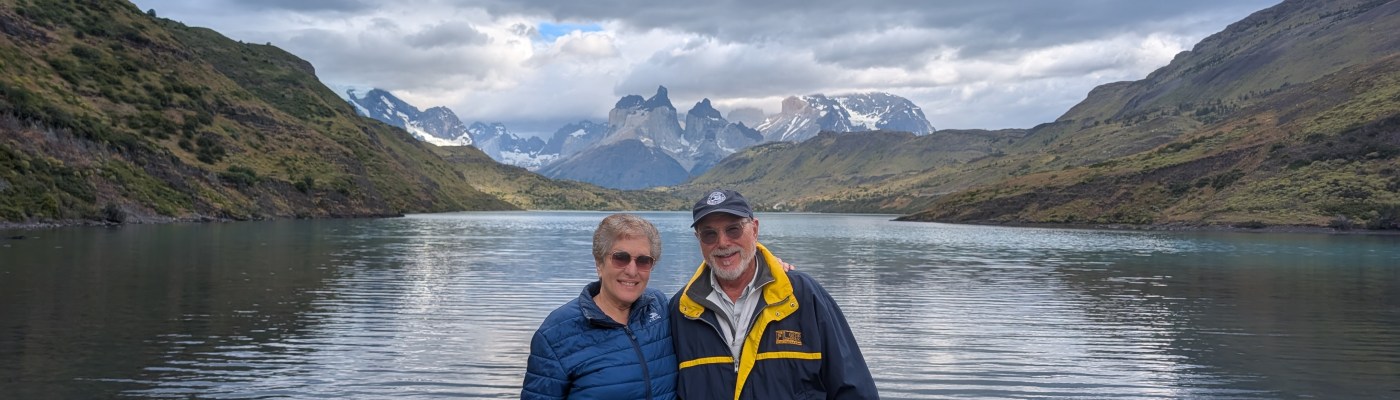
Our day exploring the Torres Del Paine Park was truly glorious. Our guide emphasized how fortunate we were with the weather, which was sunny and breezy. Patagonia is known for stiff winds and lots of rain.
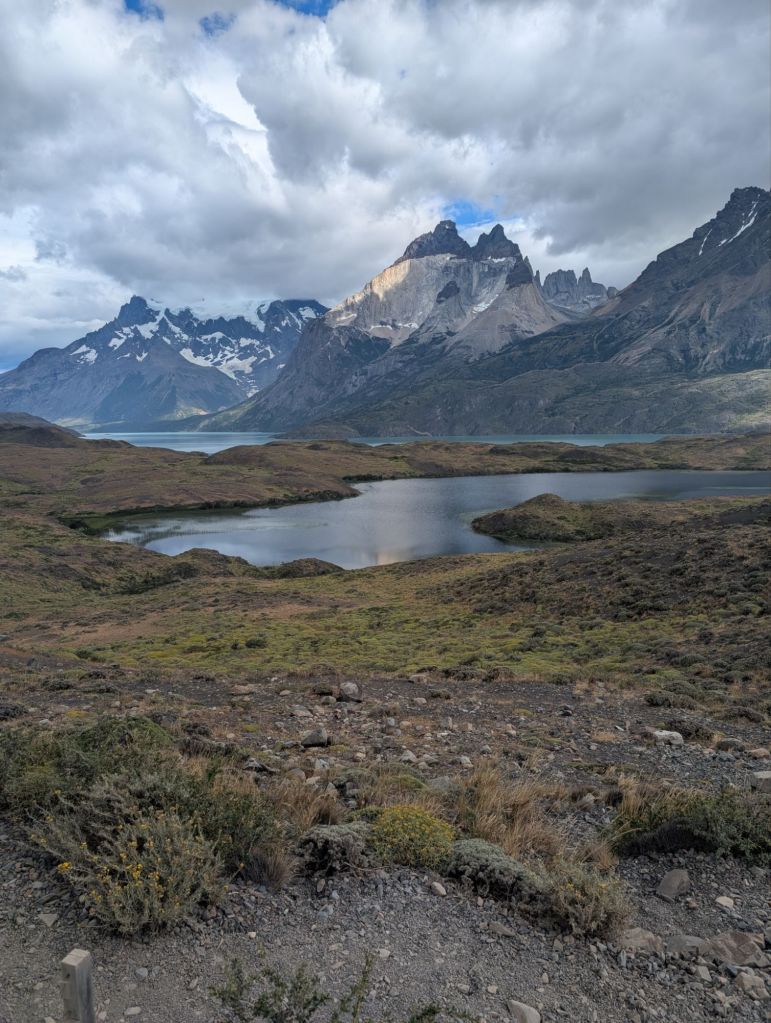
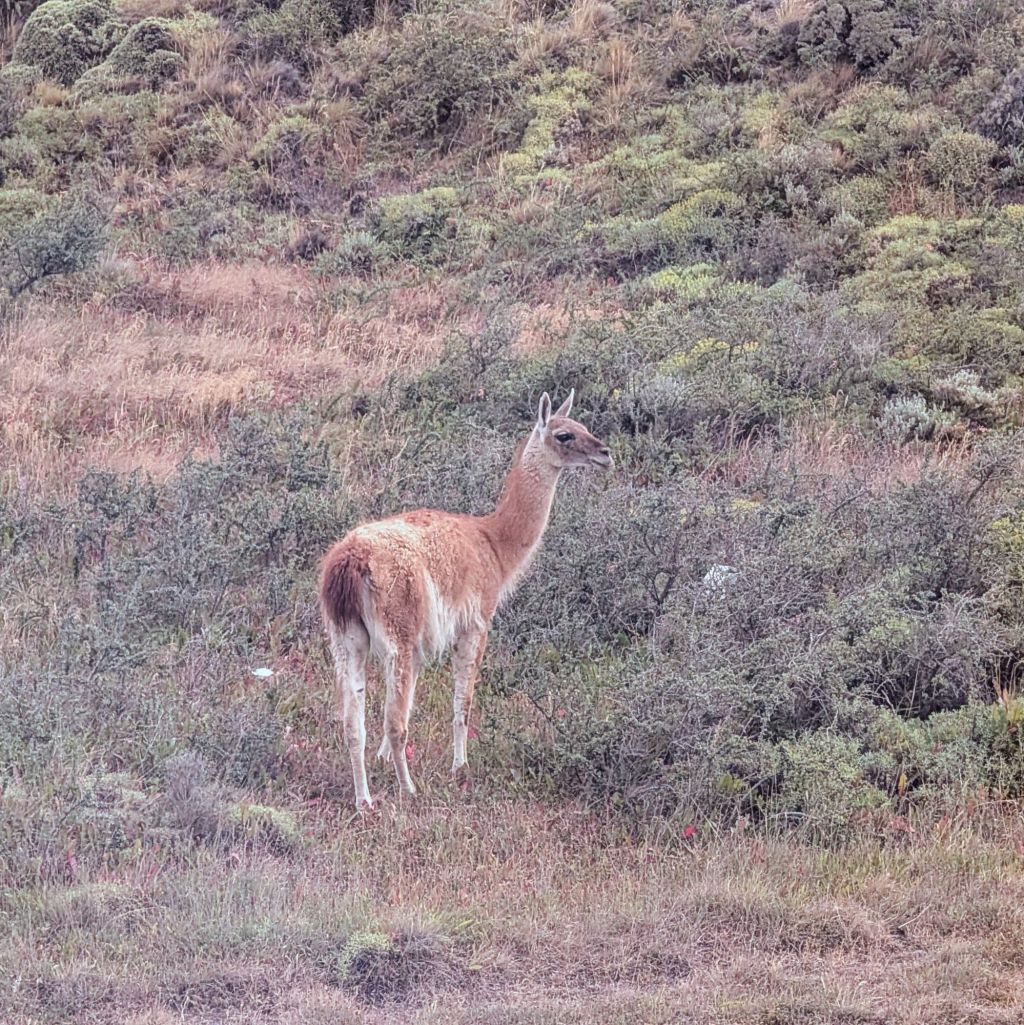
The Torres del Paine, for which the park is named, are the three sharp black tipped peaks standing up among the mountains. Glacial action has scraped the mountains into their twisted shapes. The combination of the granite and the black sedimentary rock also creates a striking contrast. The effect is beautiful and unique.We saw lots of llamas wandering about. This wild llama is called a Guanaco. We saw them watching us from mountaintops and they showed up on restaurant menus.
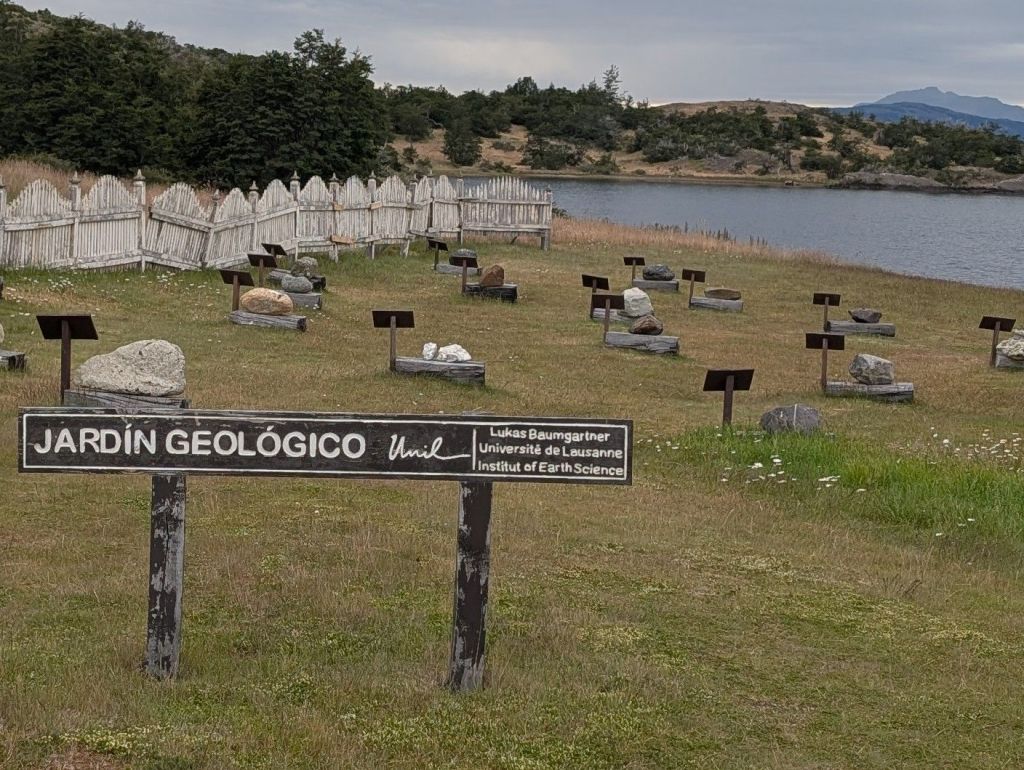
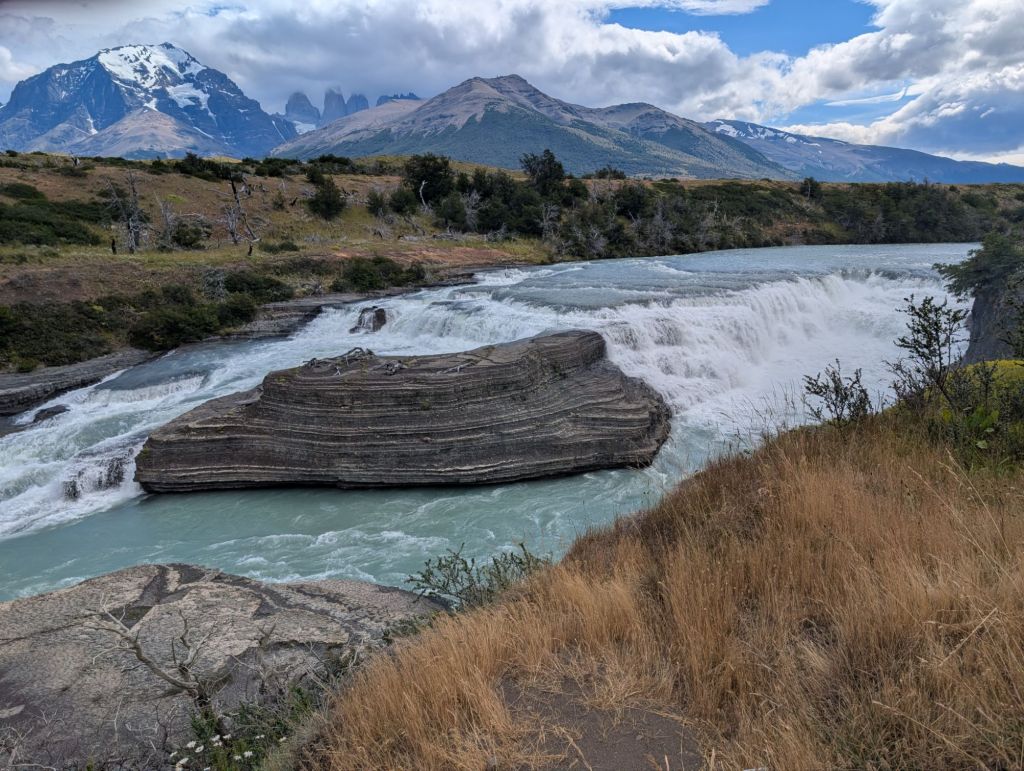
The visitor’s center at the unusual feature of a geological garden. Samples of the local rocks were displayed with their names.The dramatic Cascada Paine, or Paine Waterfall, rushes into the Lake Azul.
The park is huge and even on its borders the open spaces and colorful vegetation goes on as far as the eyes can see.




 J and J Travel