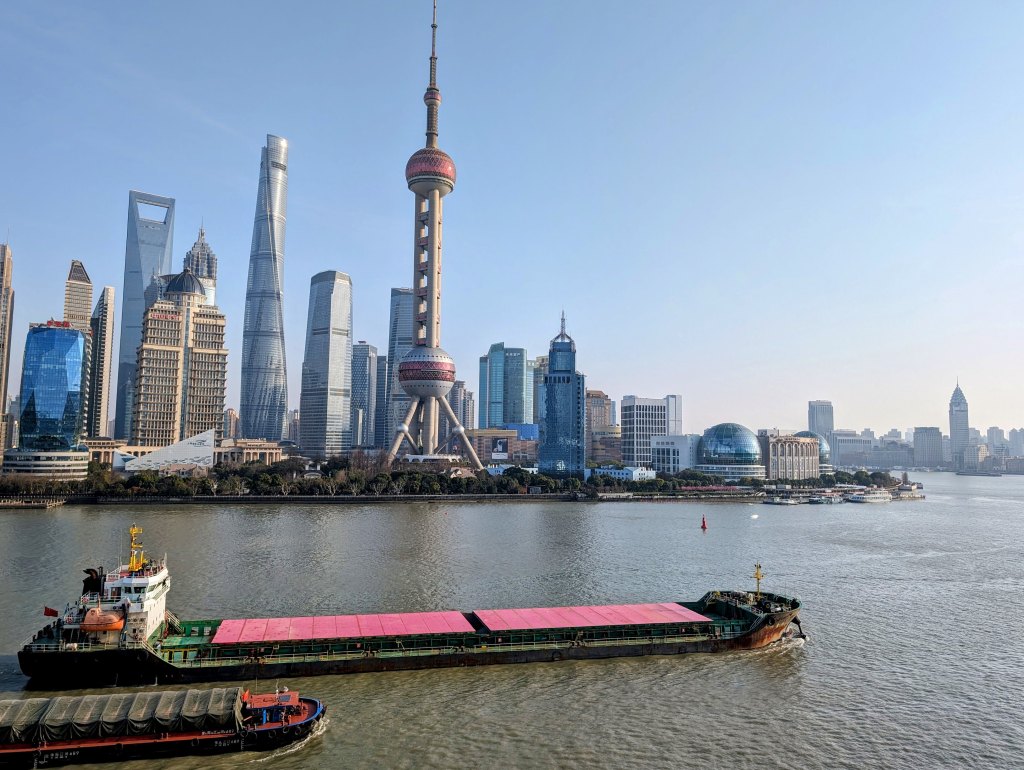
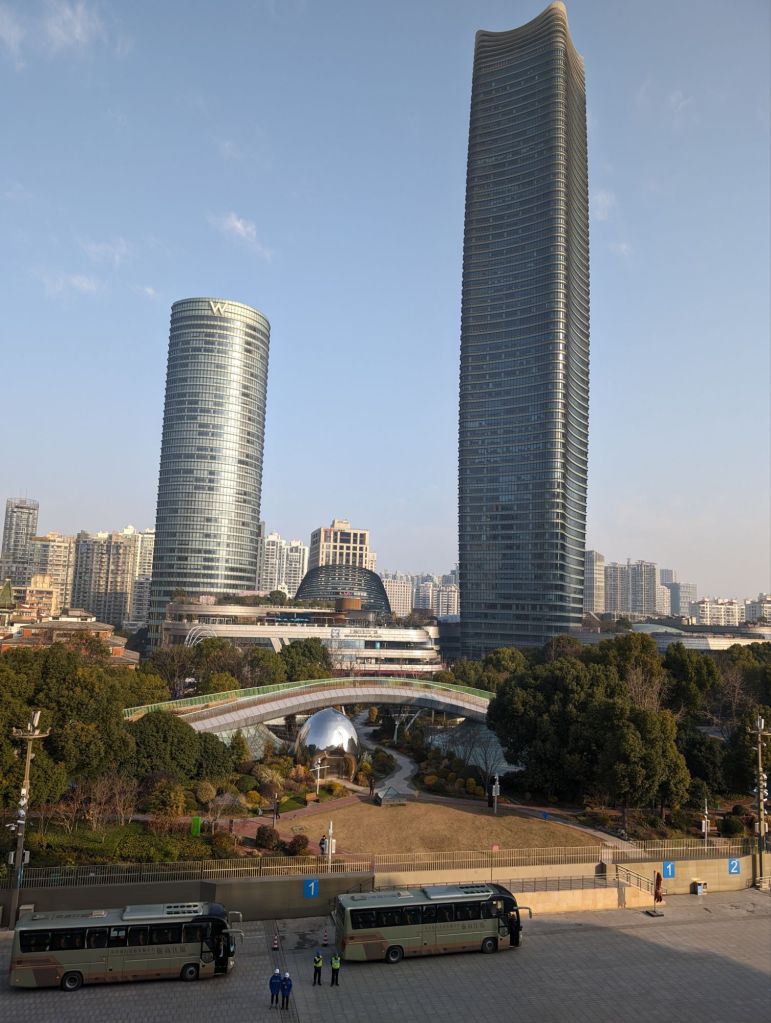
We had an opportunity to see many faces of Shanghai during our visit. We got a taste of its traditional past, which has been rediscovered and rejuvenated, and its powerful present. We saw some heavy handed authoritarianism and lots of warmth and positive spirit. Shanghai is the largest port in the world by volume, and a financial and manufacturing center.
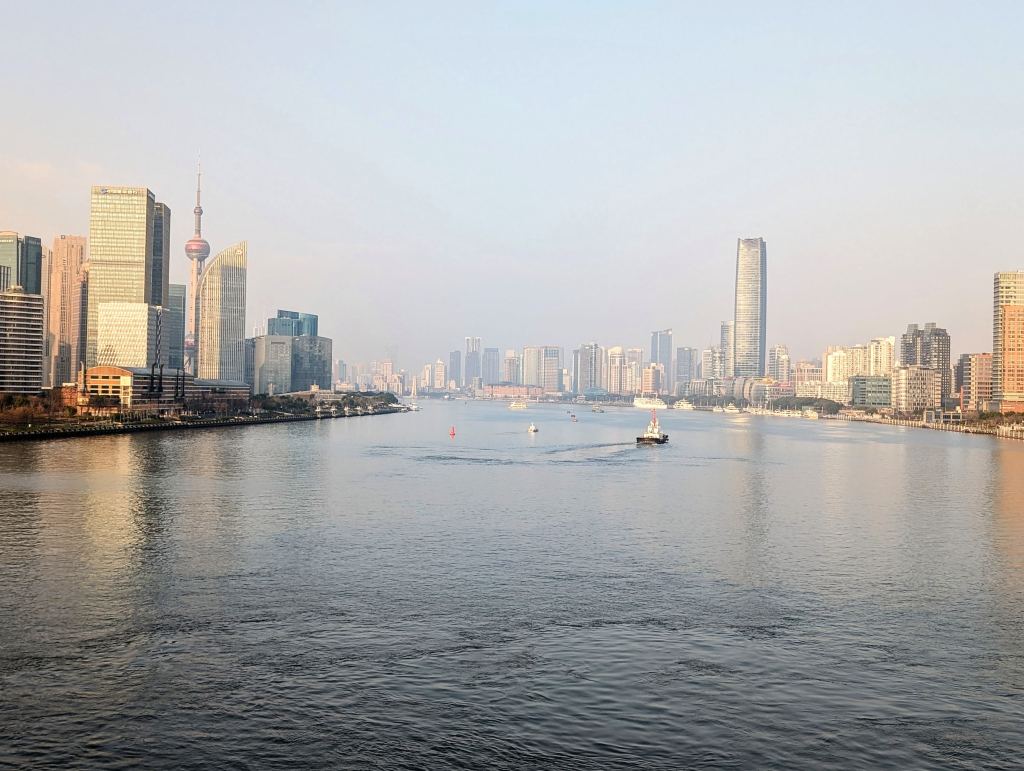
Below is the view as our ship cruised into the harbor. The early morning light was the perfect way to watch the city sights unfold.
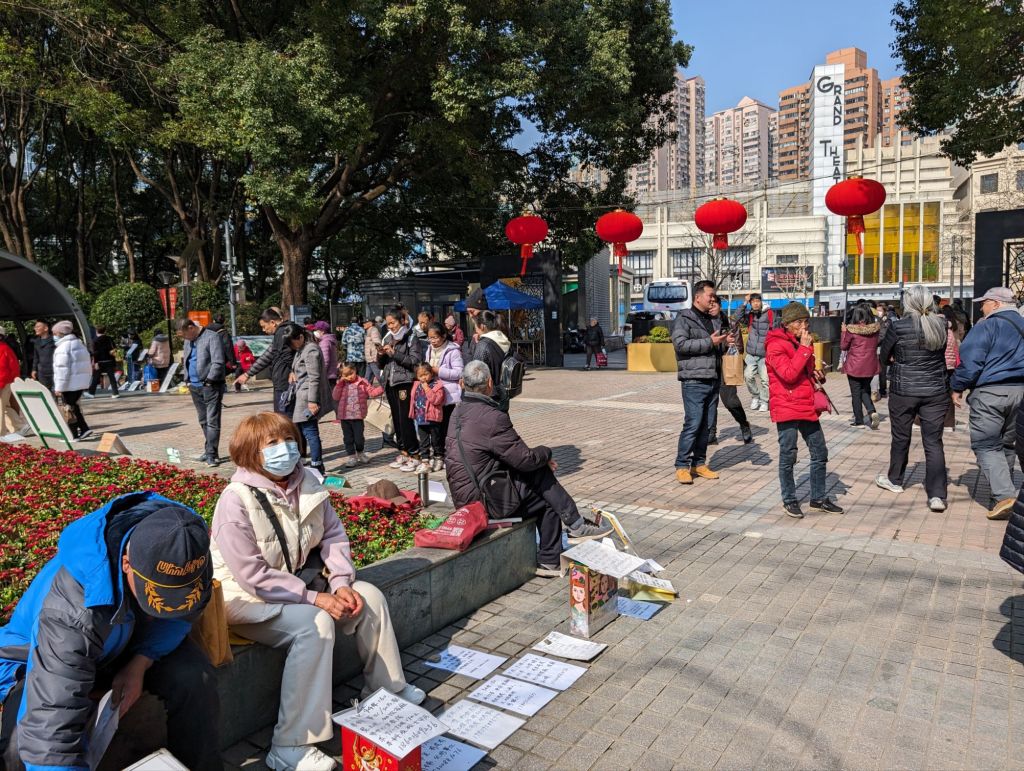
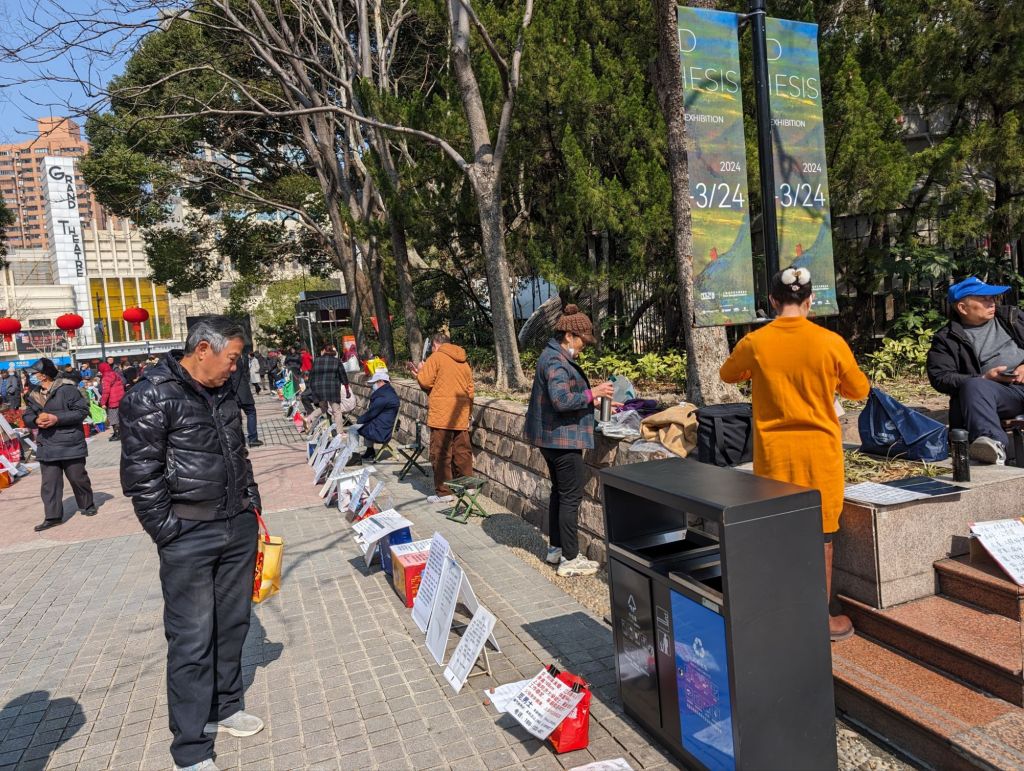
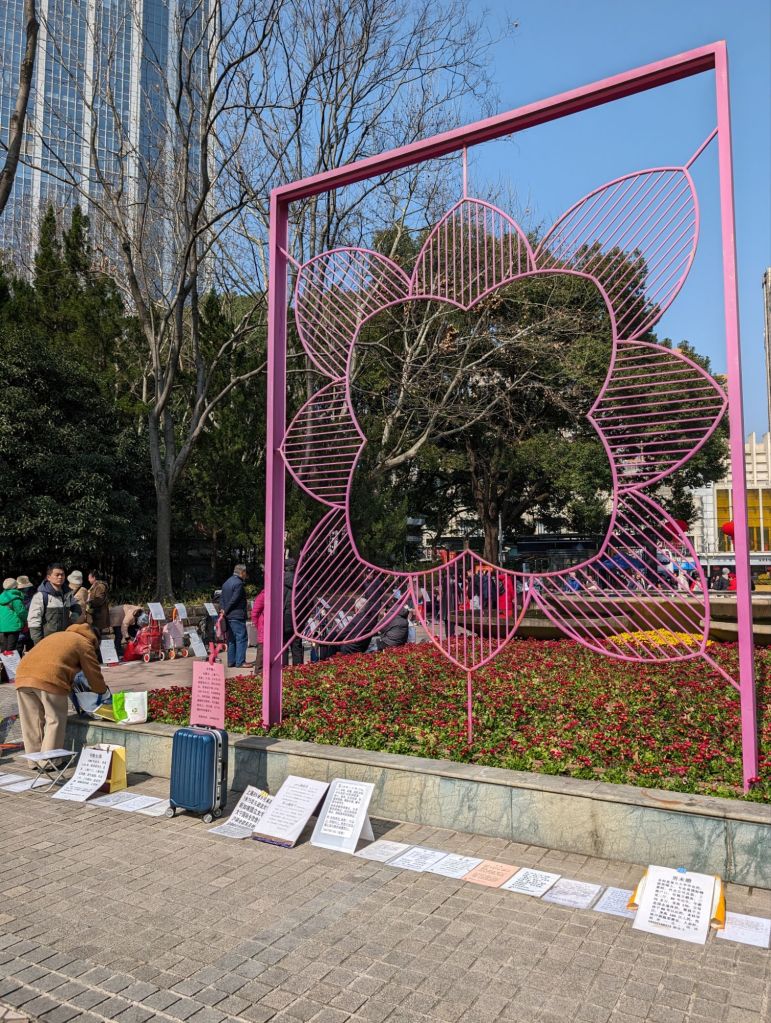
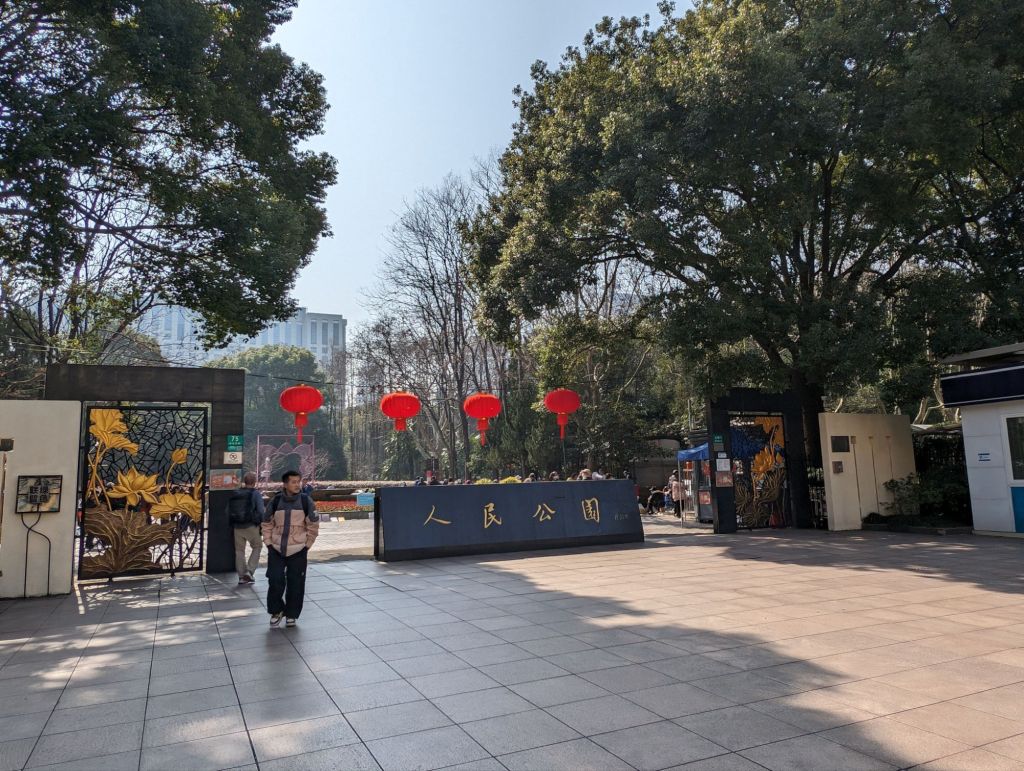
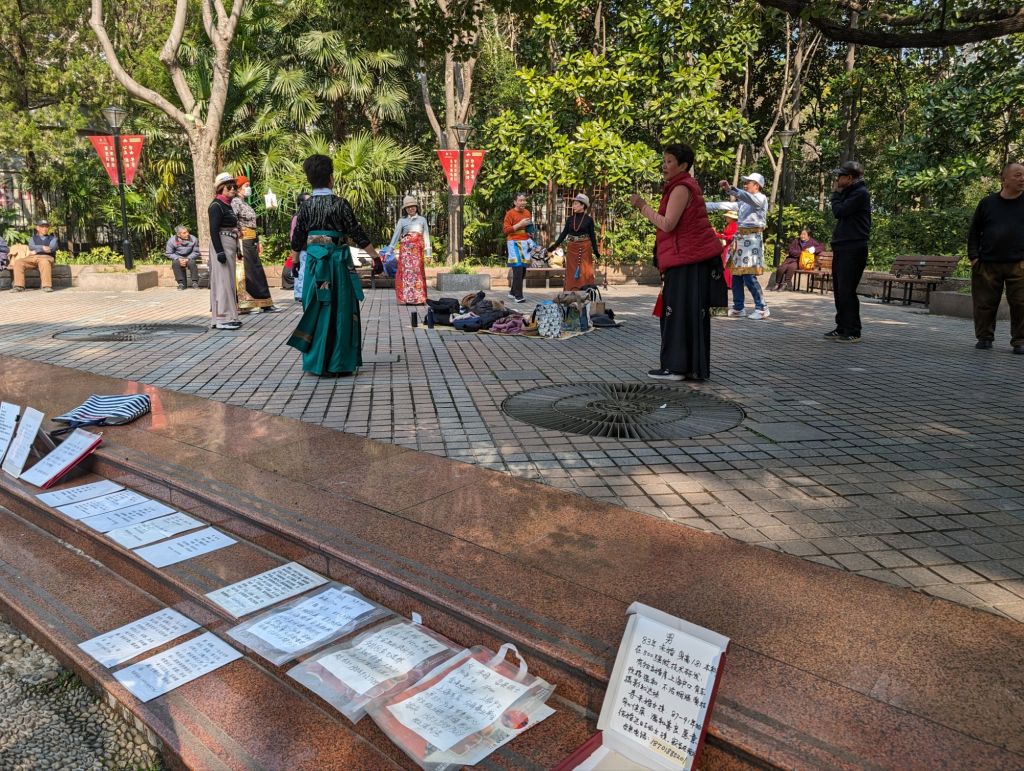
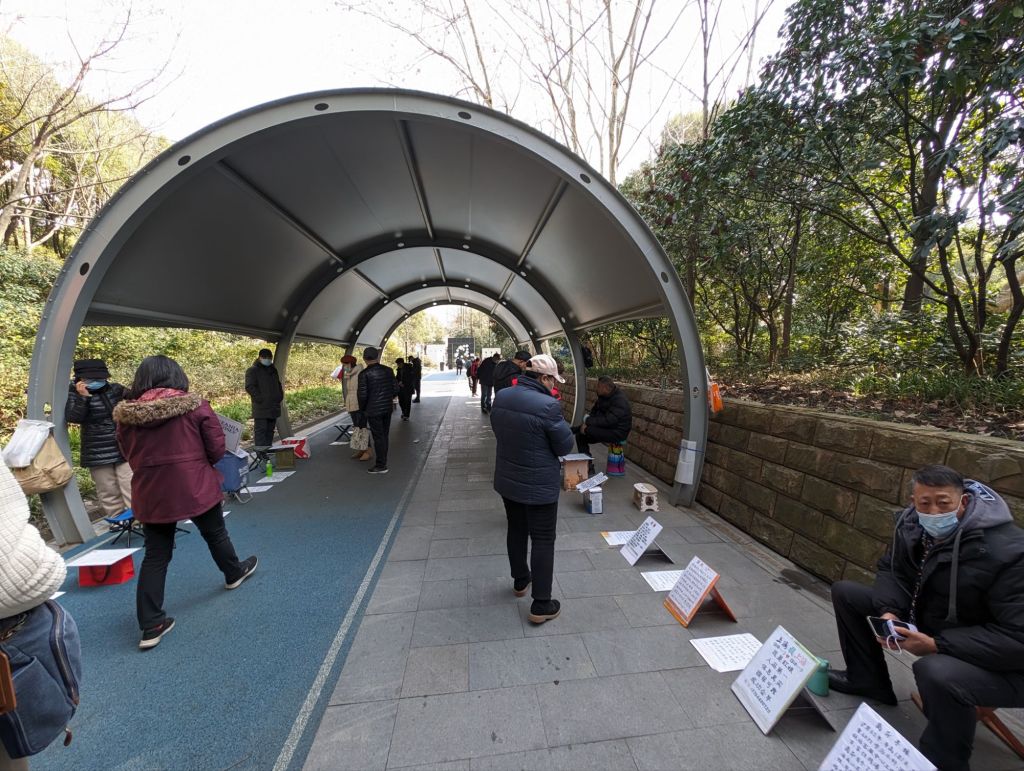
We visited the People’s Park in Shanghai, otherwise known as the marriage market. China has placed itself in a difficult position demographically. After years of aggressively enforcing the one child policy, it’s now trying to get young people to marry earlier and reproduce so China can gain a new generation of workers. And this generation is less interested in having children than ever before. So the parents of these child bearing age adults are anxiously trying to find them mates. People’s Park is lined with parents and their matchmakers setting up signs advertising their adult children–a non digital Tinder. The ads focus mainly on the income and education of the marriage candidates, plus their height and age. Interestingly, there are no pictures. It’s about the practicalities, such as apartment ownership.
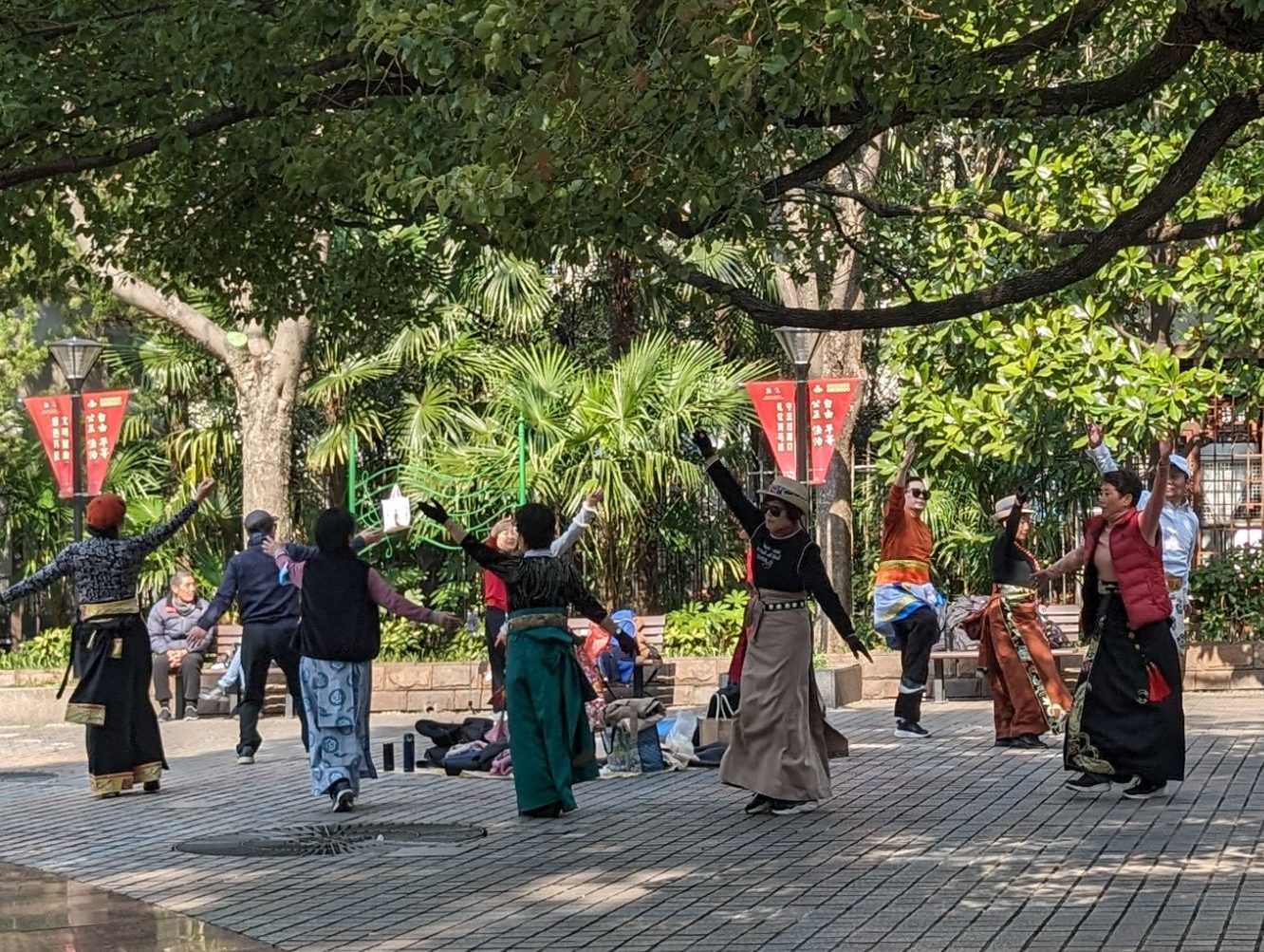
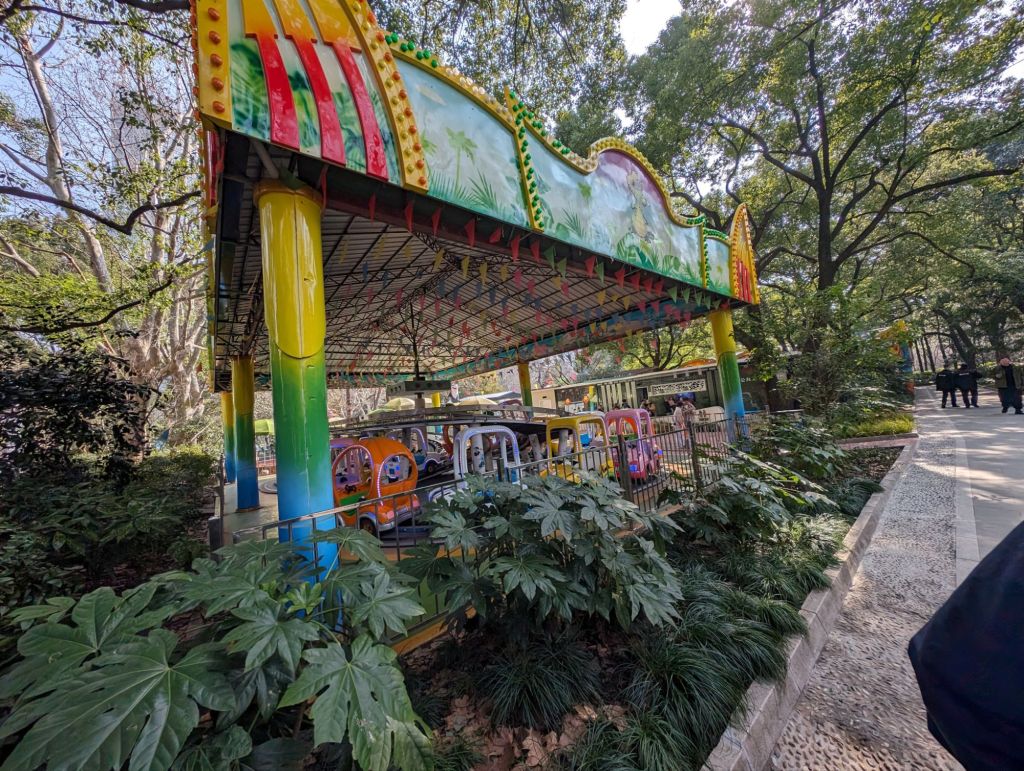
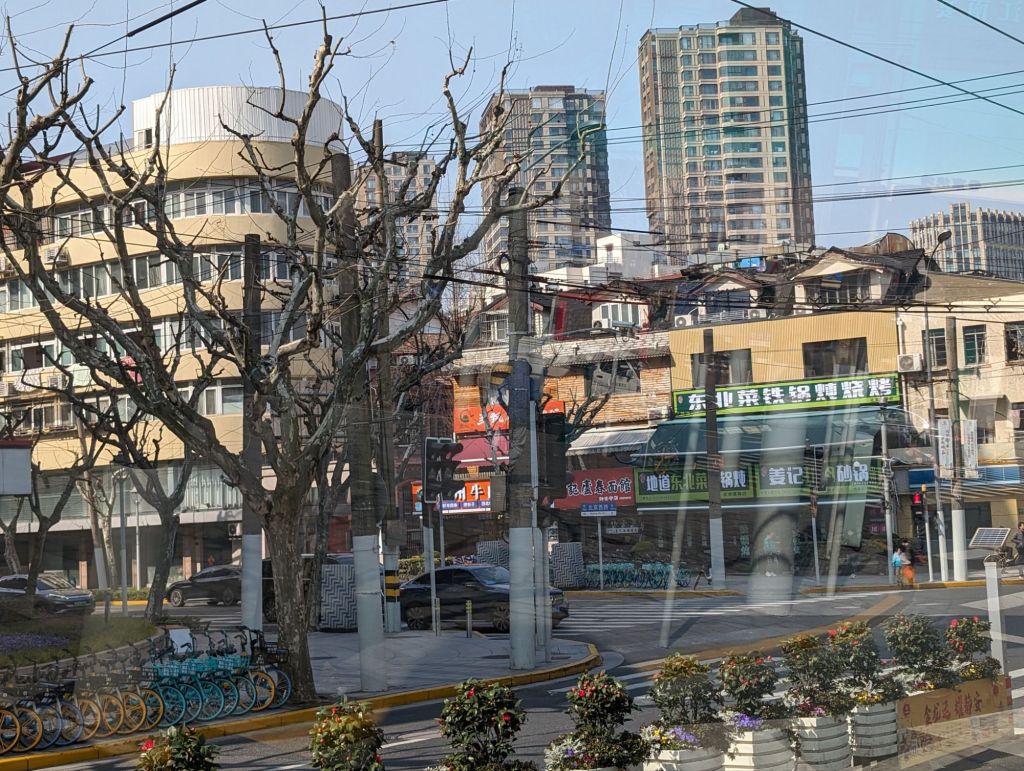
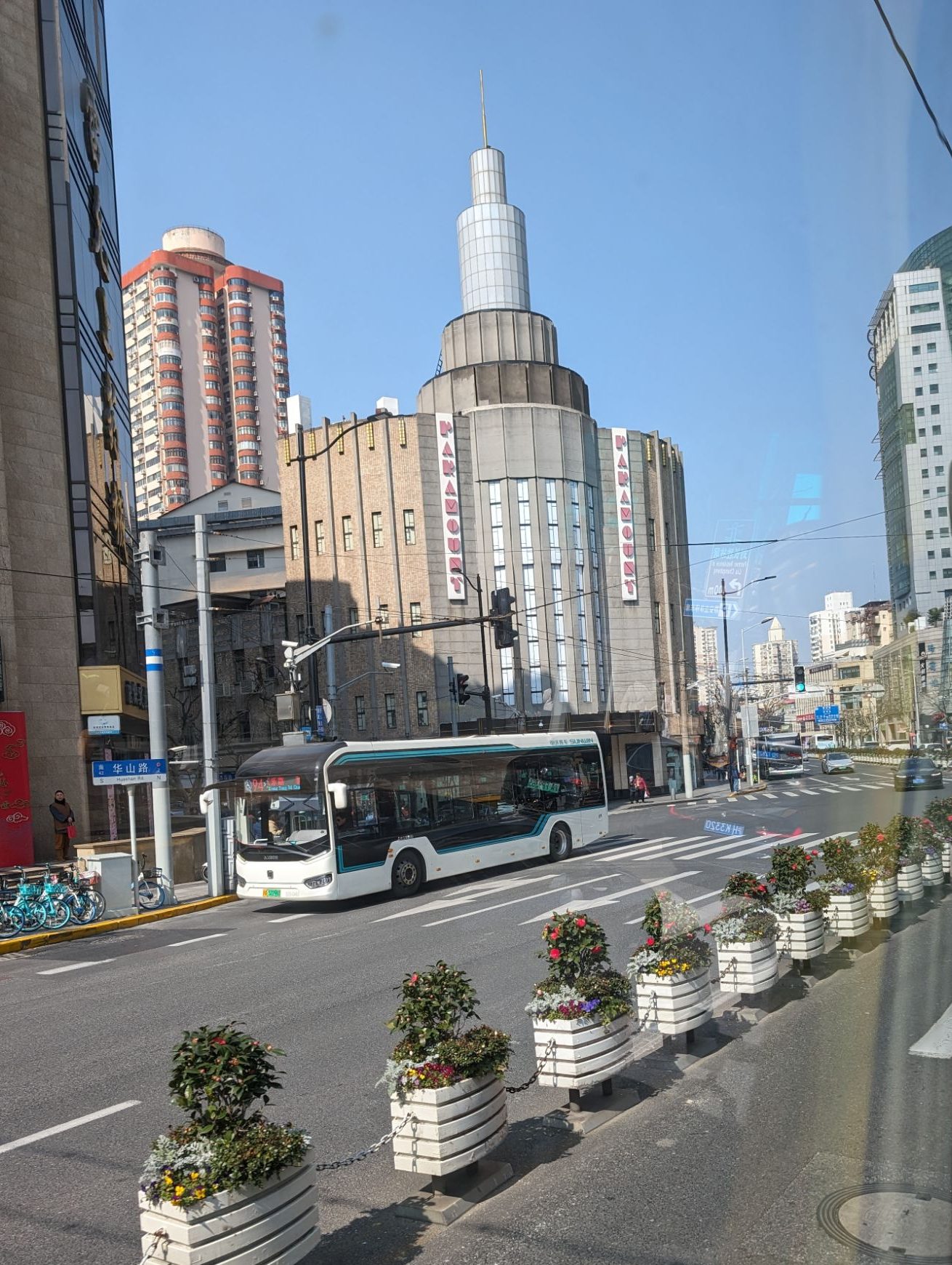
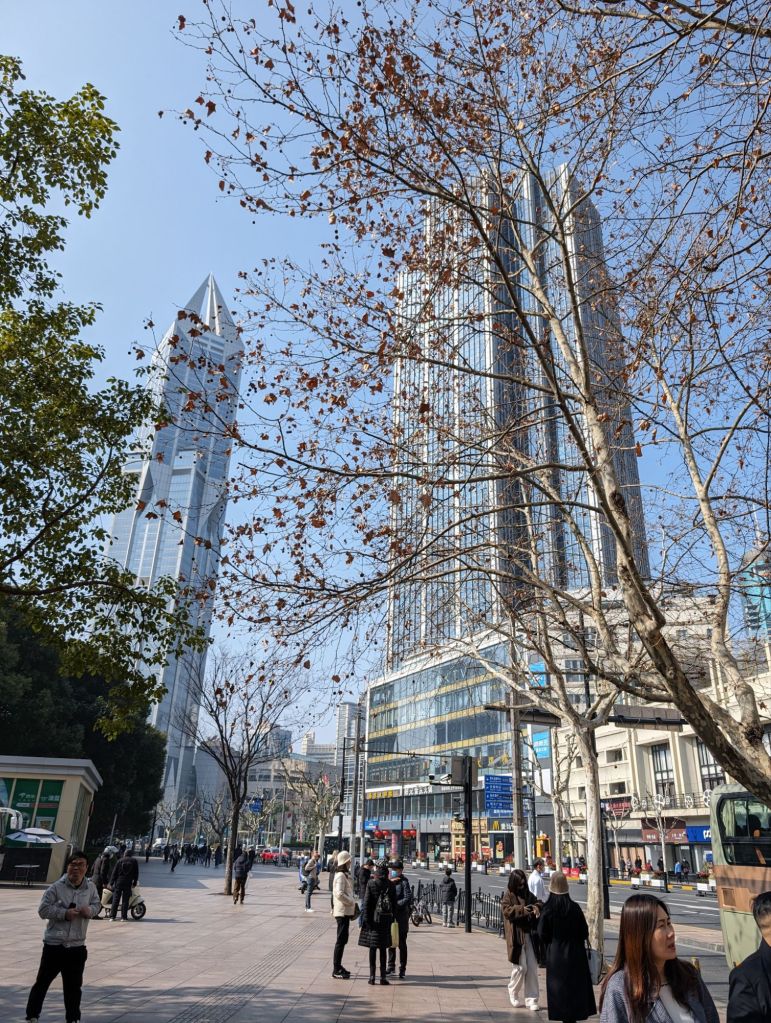
Below are some street scenes of Shanghai. You can see the art deco influence that goes back to its English and French settlement years in the early 20th century.
We walked by some local street markets, where the fish are still swimming and the chickens were sold with their heads and feet on–delicacies for the shoppers.
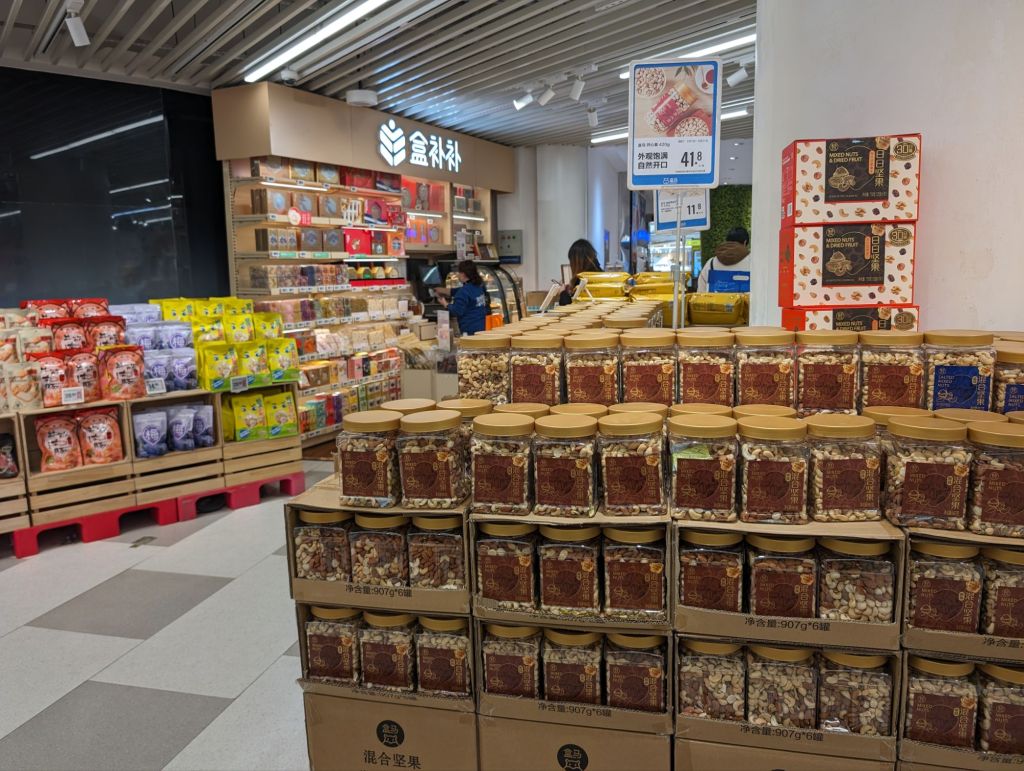
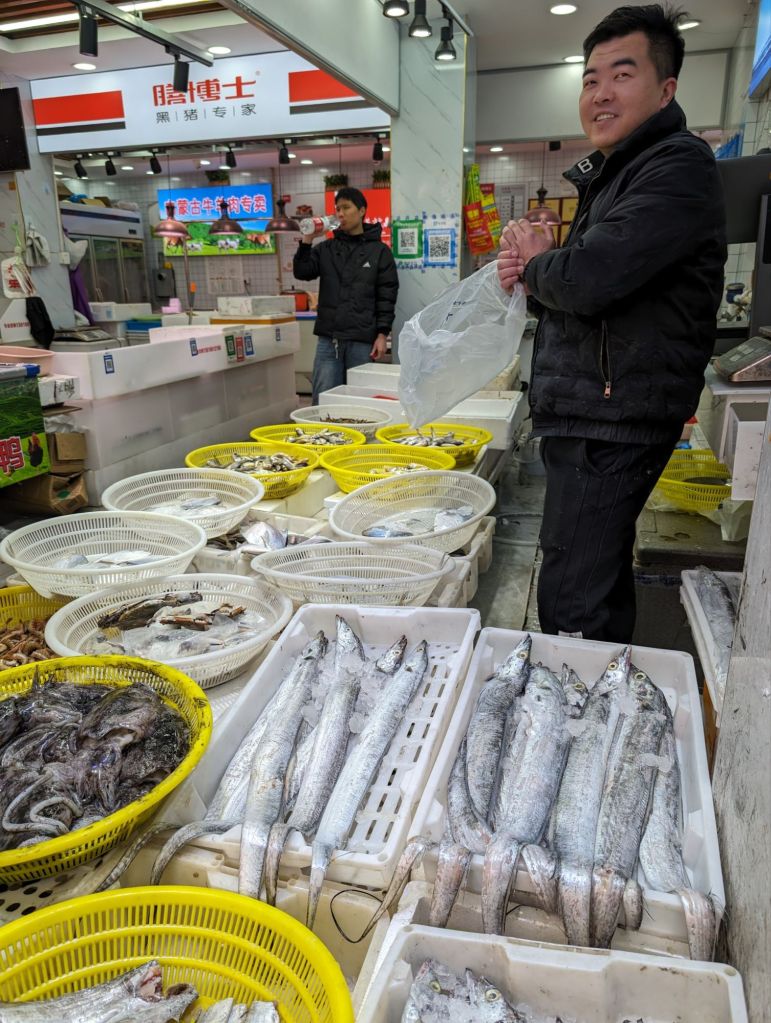
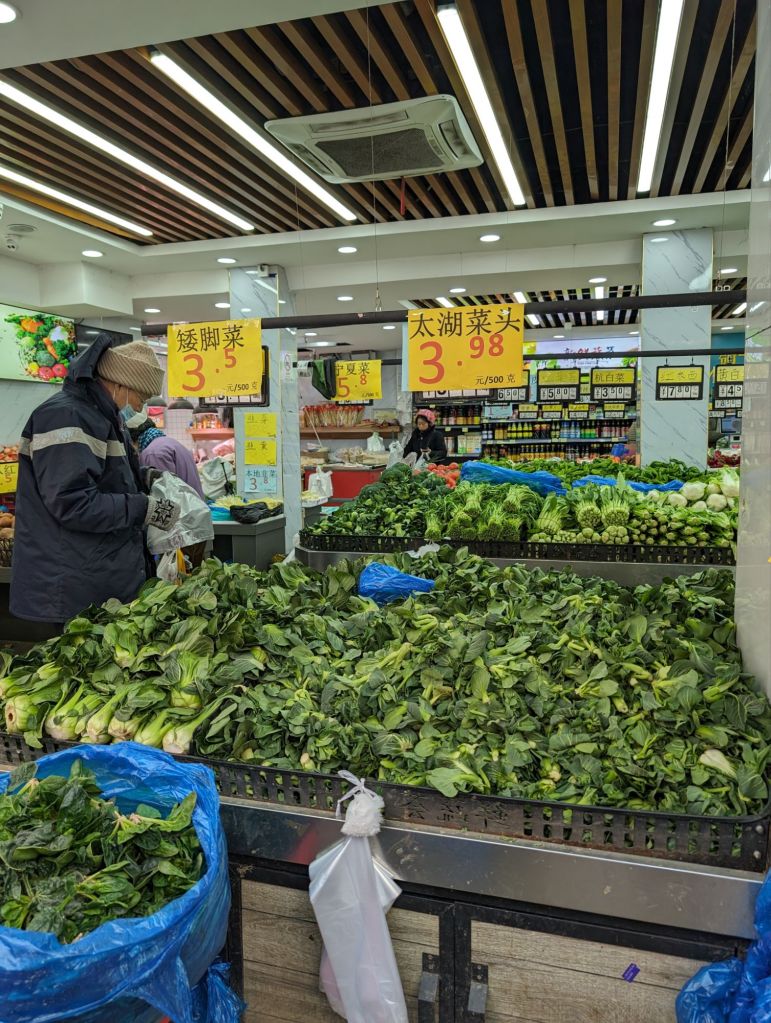
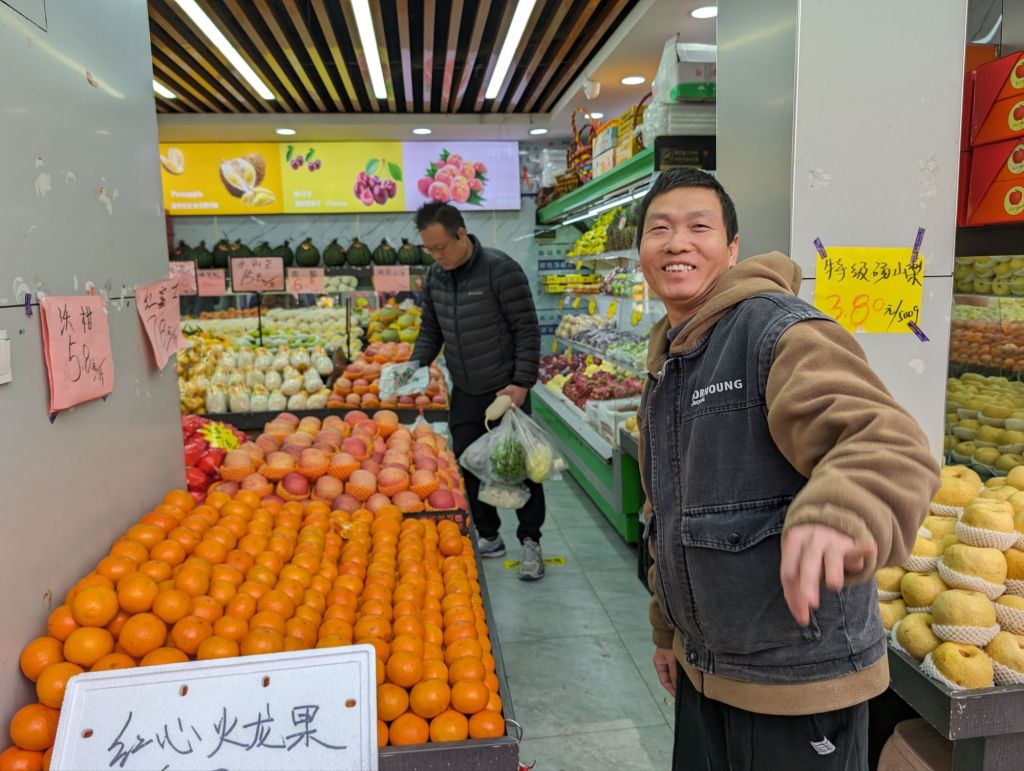
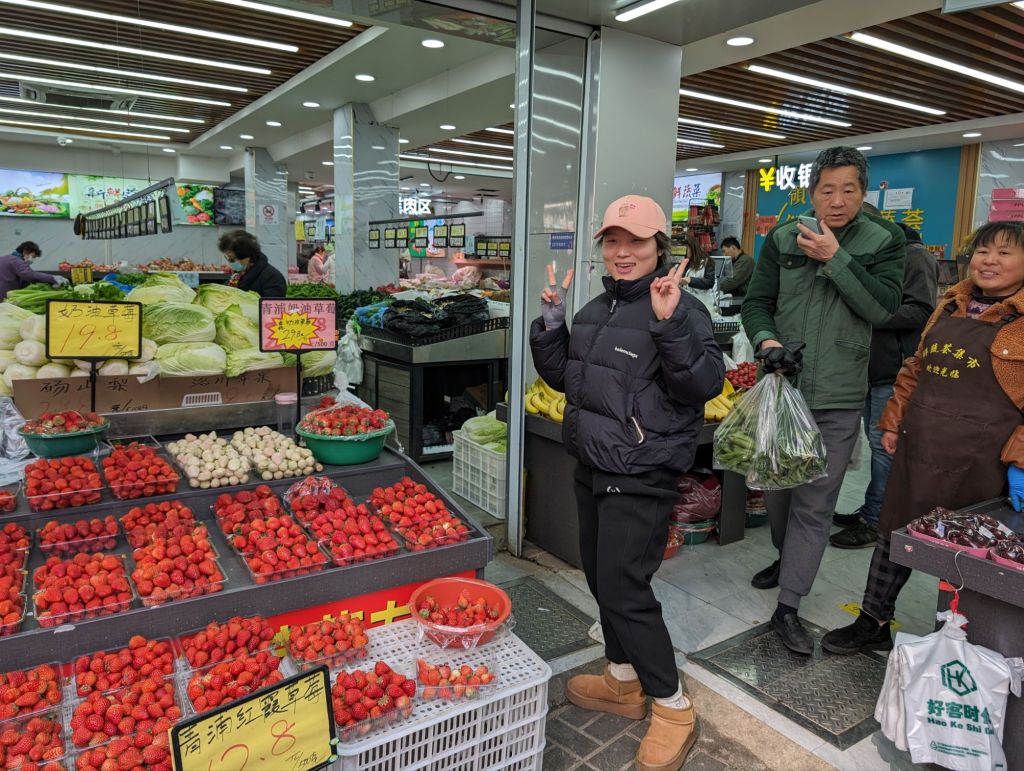
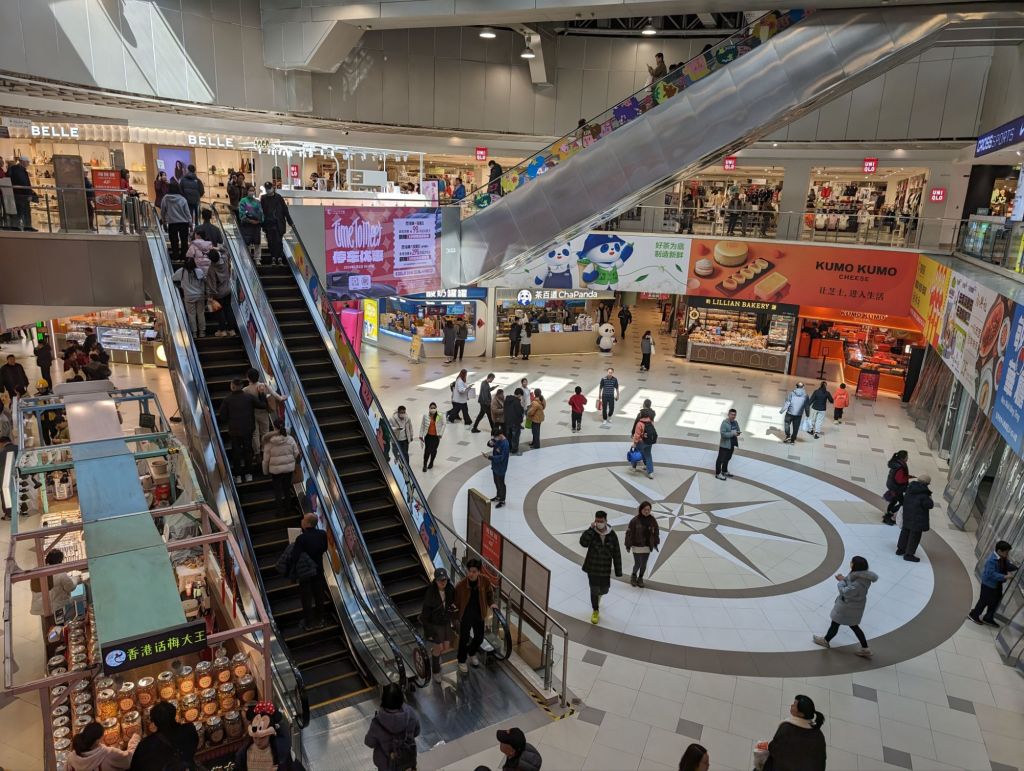
Shanghai also has up to date supermarkets, as beautiful and well stocked as any we have seen. The Hema chain of superstores is owned by Jack Ma, the founder of Alibaba, China’s Amazon. There were lots of fish still in the tank, wonderful looking prepared foods, interesting produce and more.
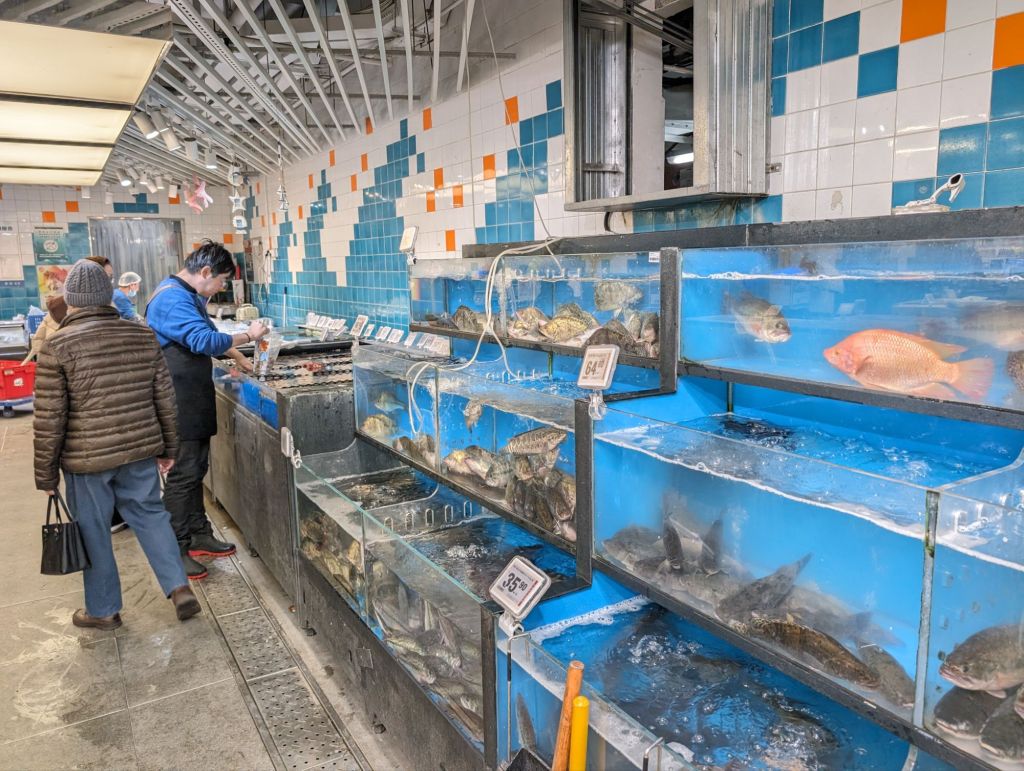
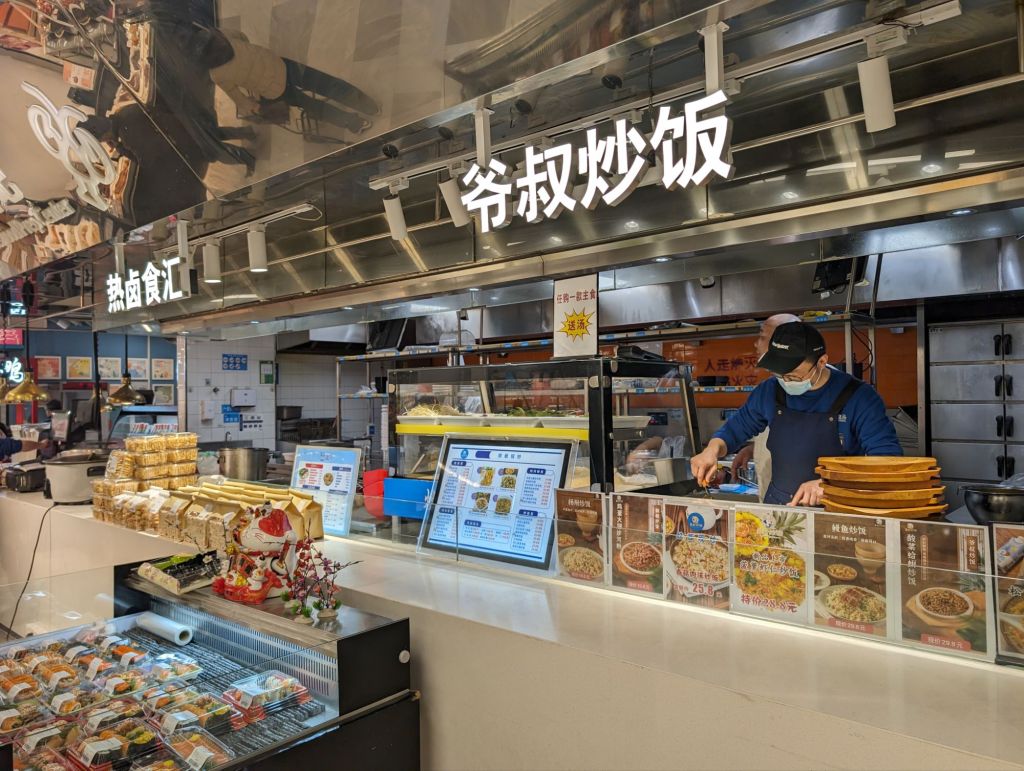
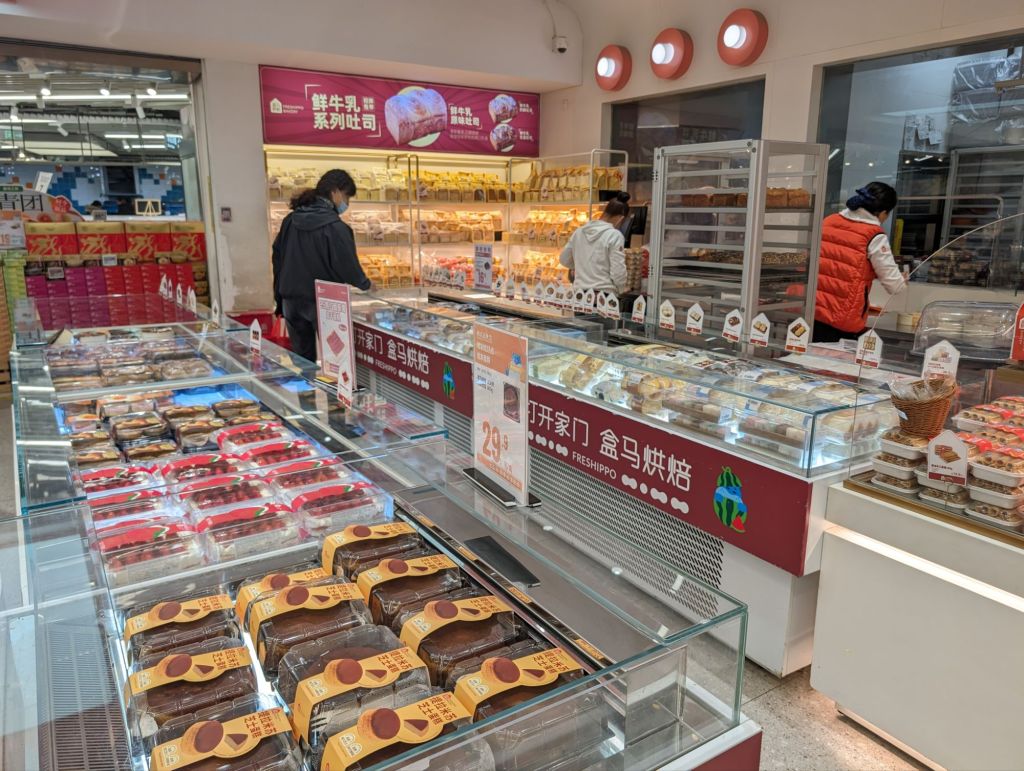
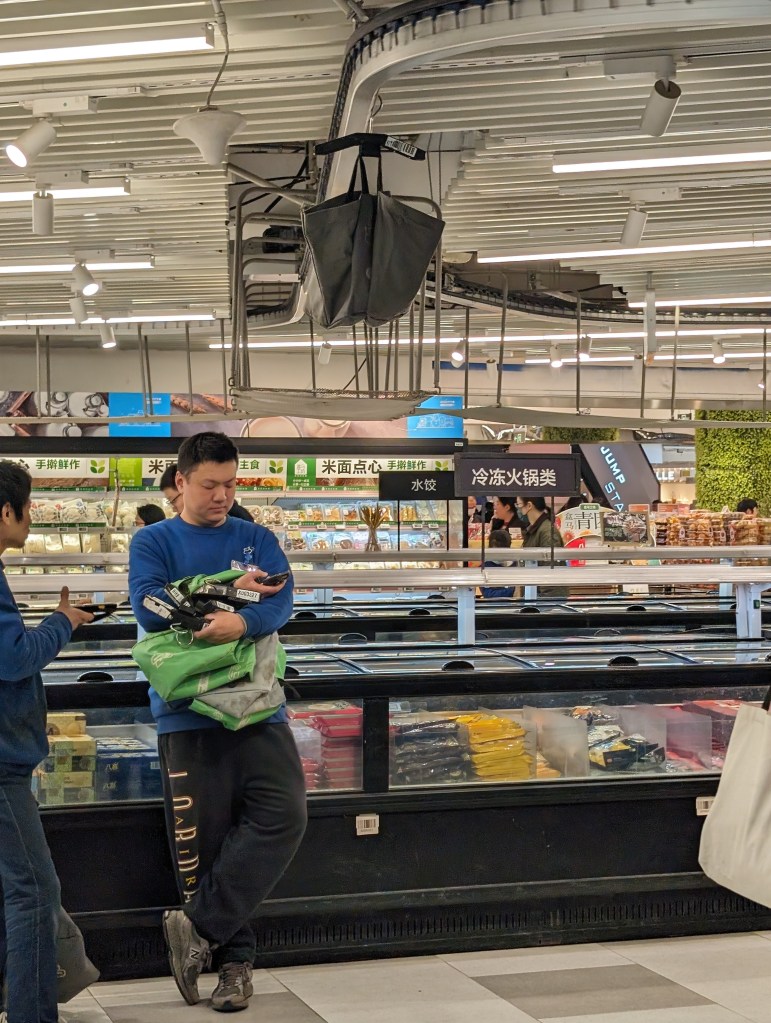
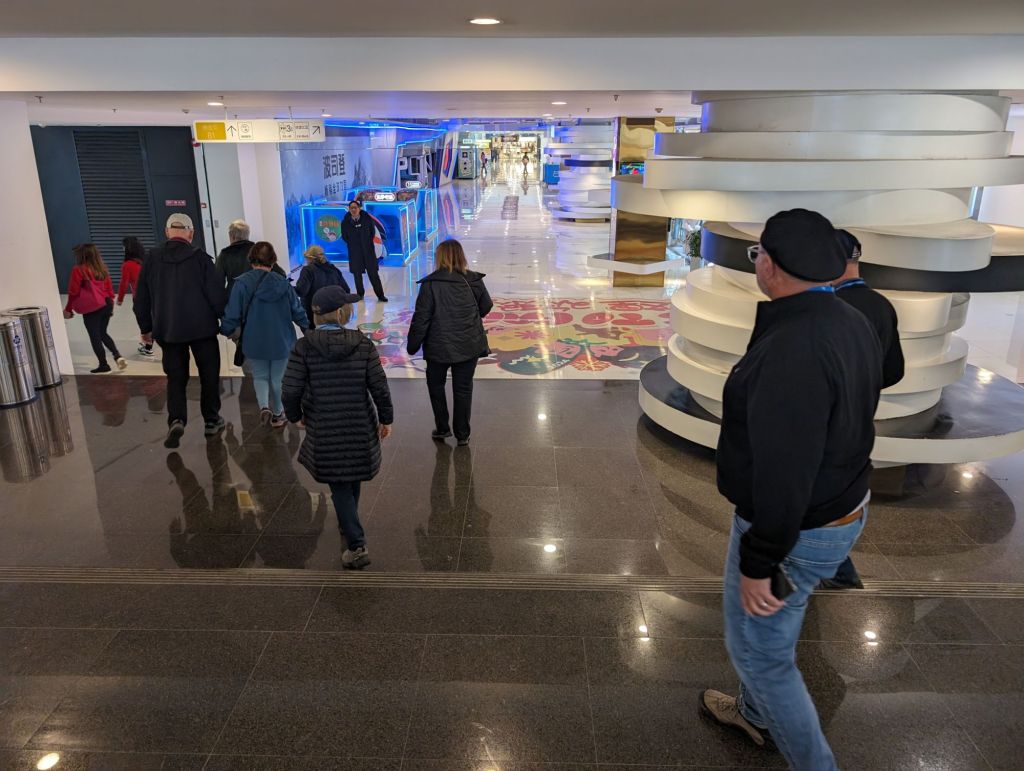
The Hema Supermarket is in the Sun Moon Light Shopping Center, which we are entering below.
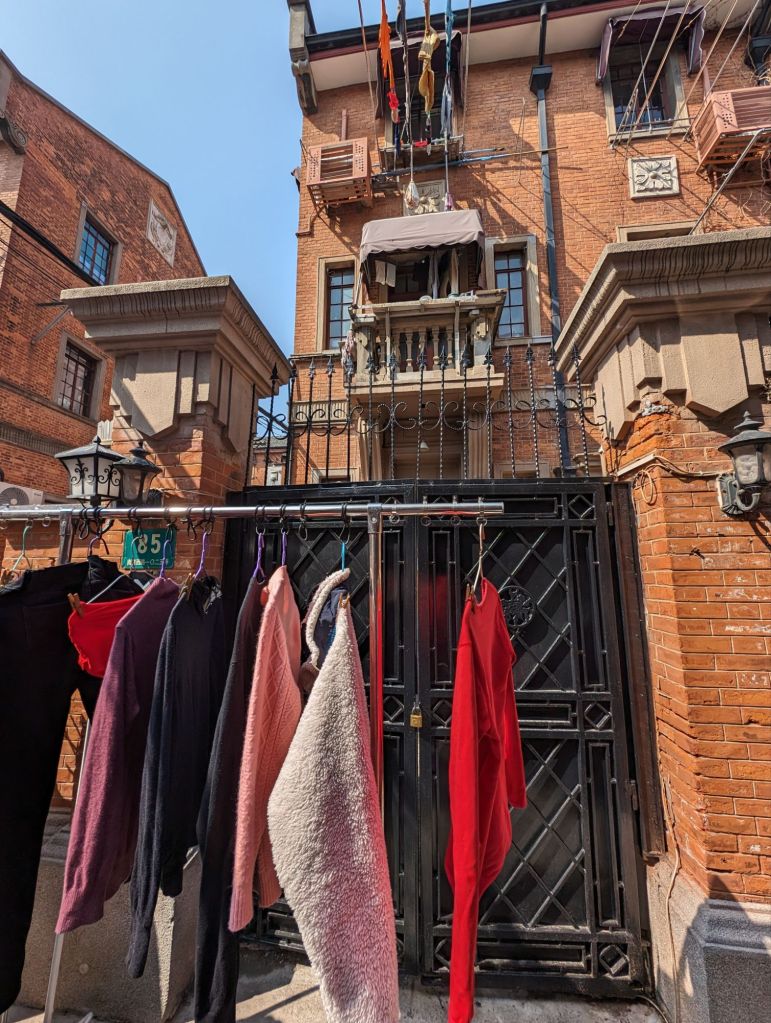
This neighborhood in the Bund district is an example of restored old homes built around the 1920’s. Though the apartments are small and the three story buildings have no elevators, they are very expensive. “Location, location,” our guide reminded us. Many families have lived here for generations and never want to move.
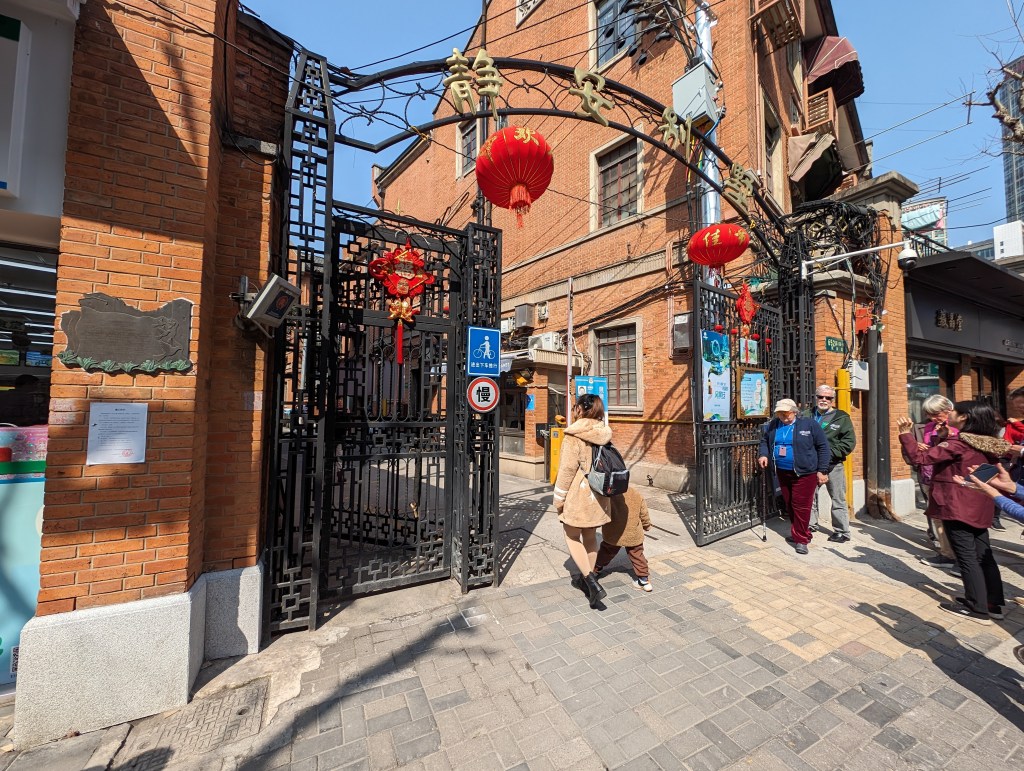
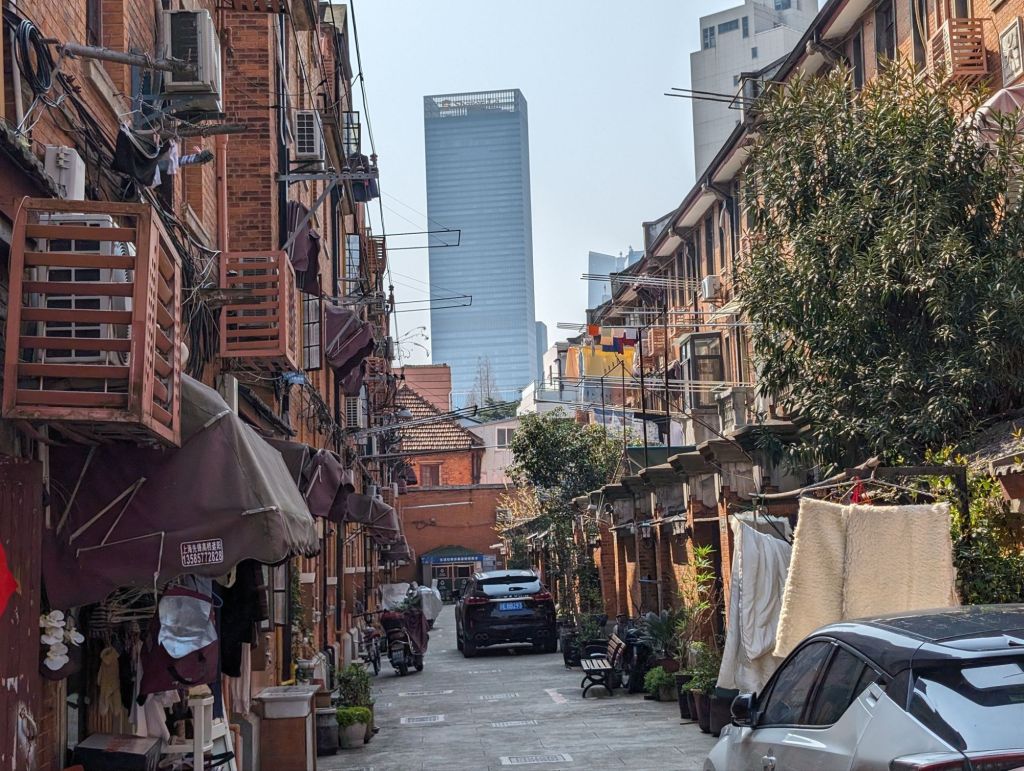
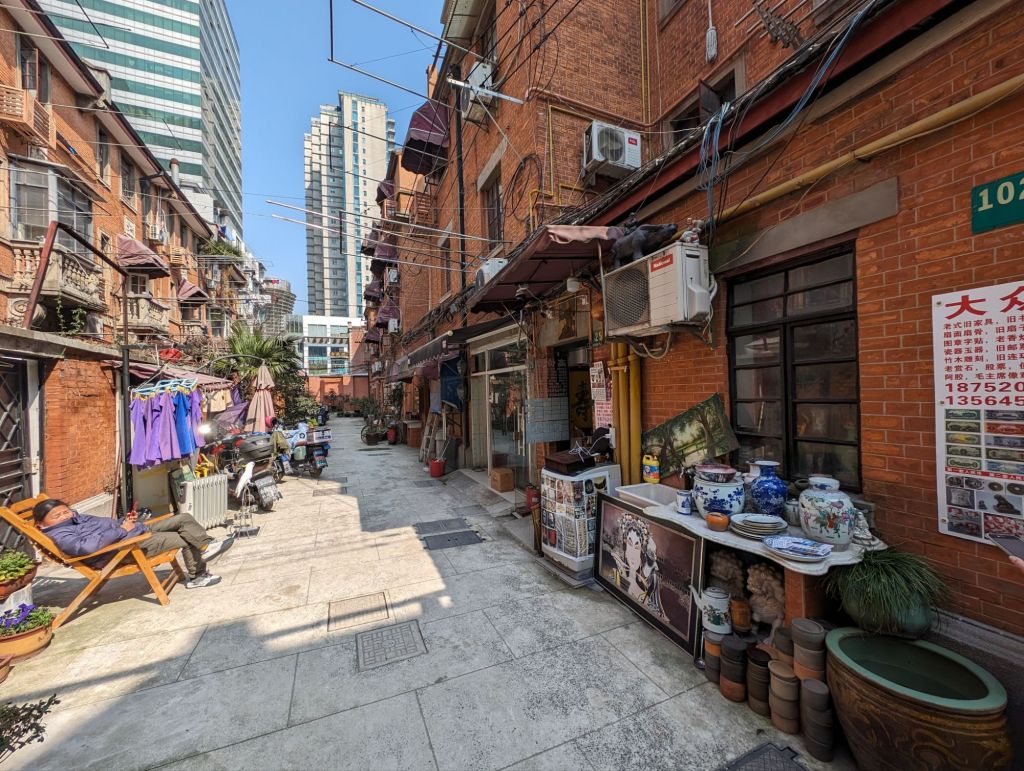
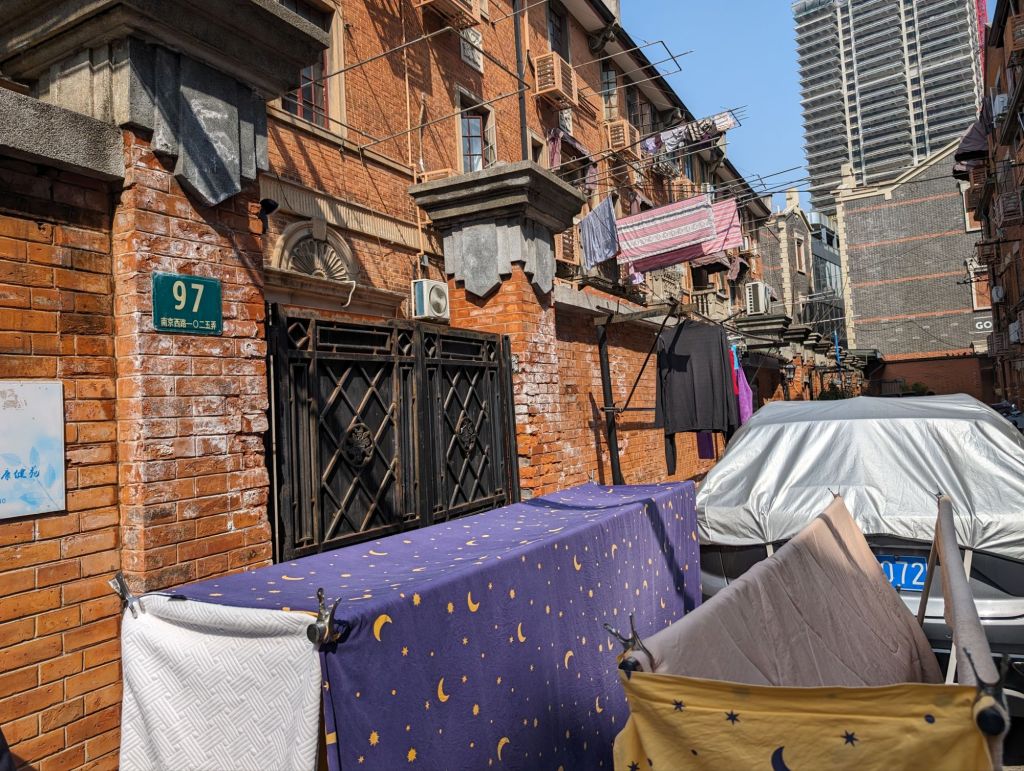
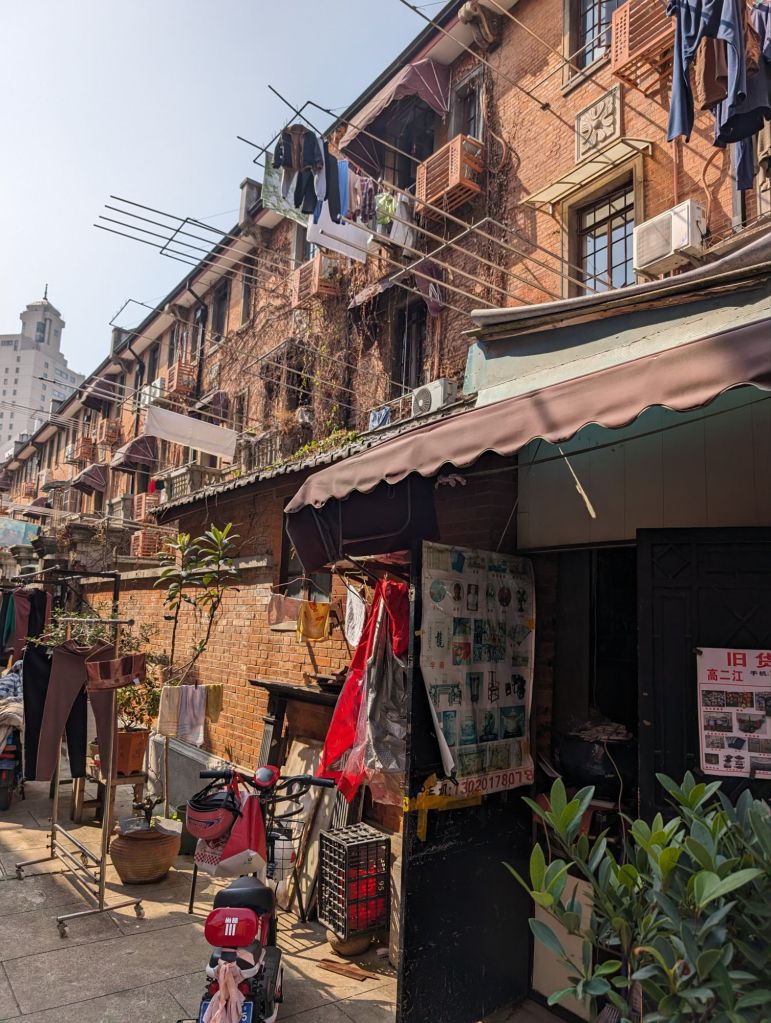
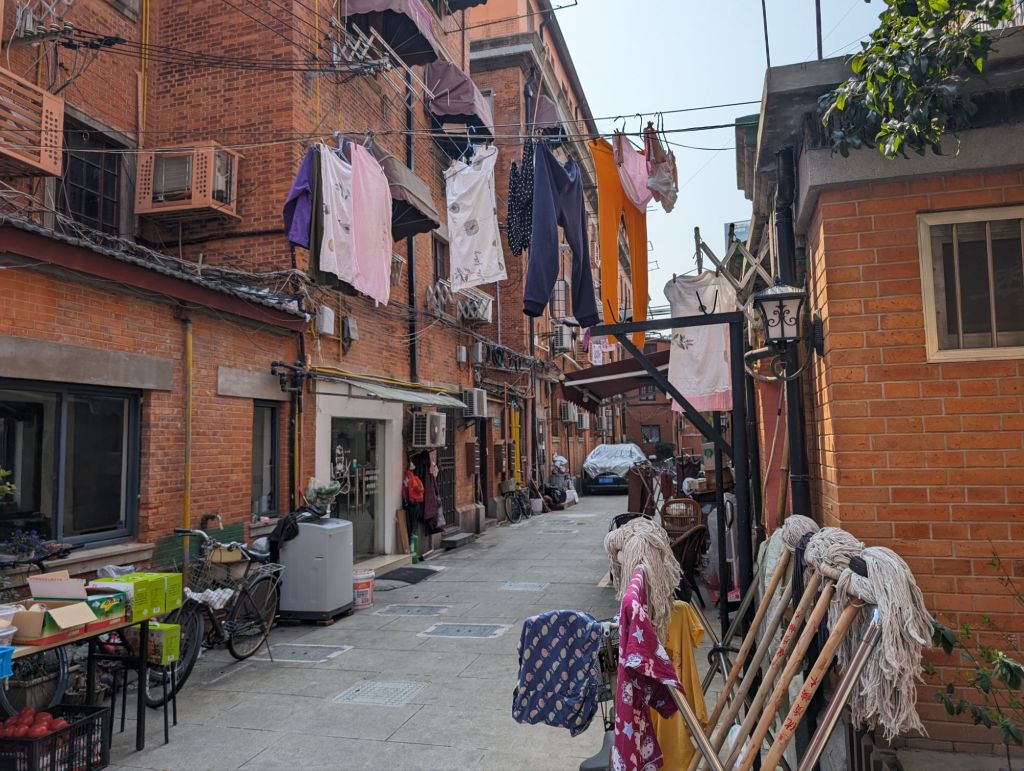
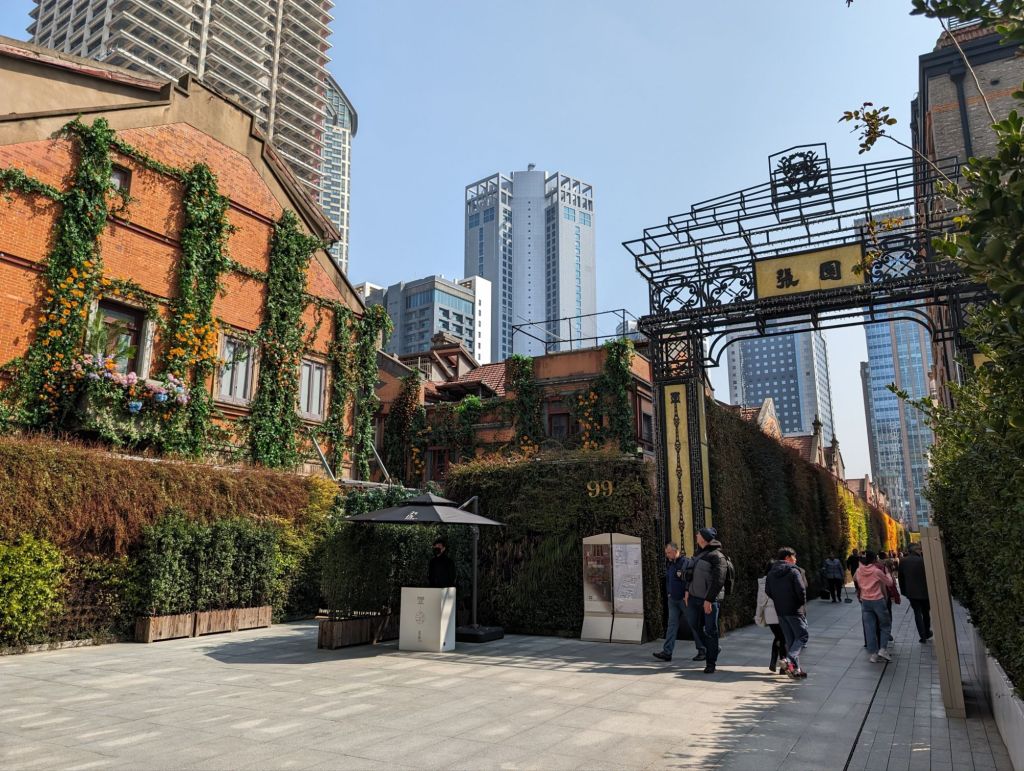
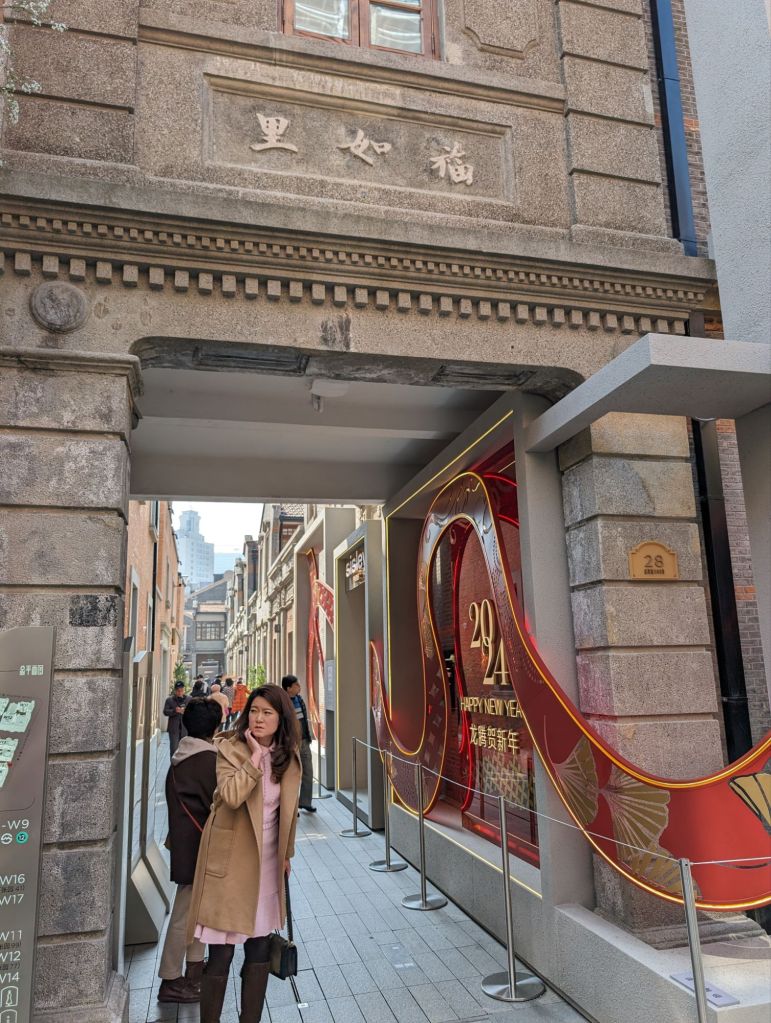
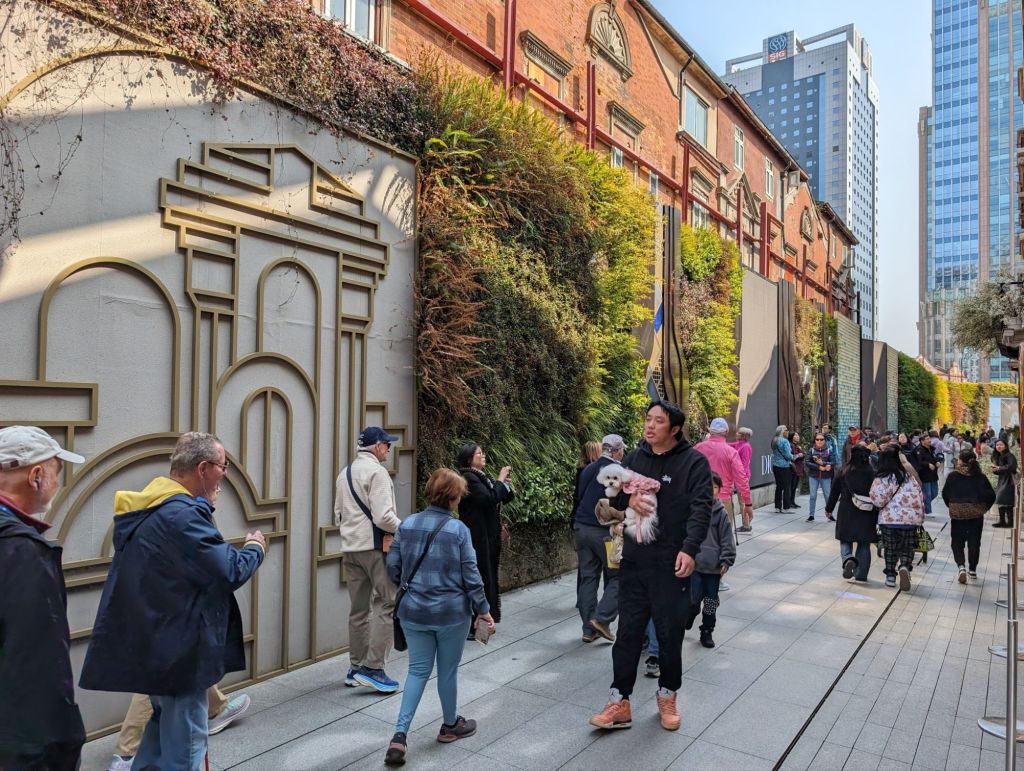
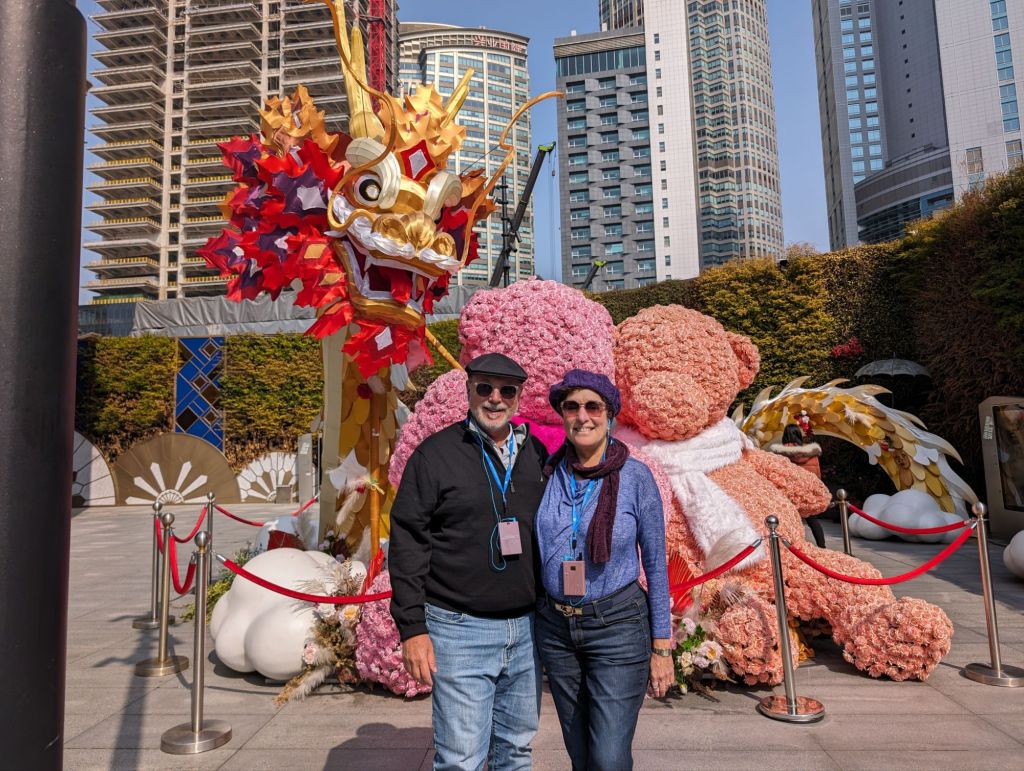
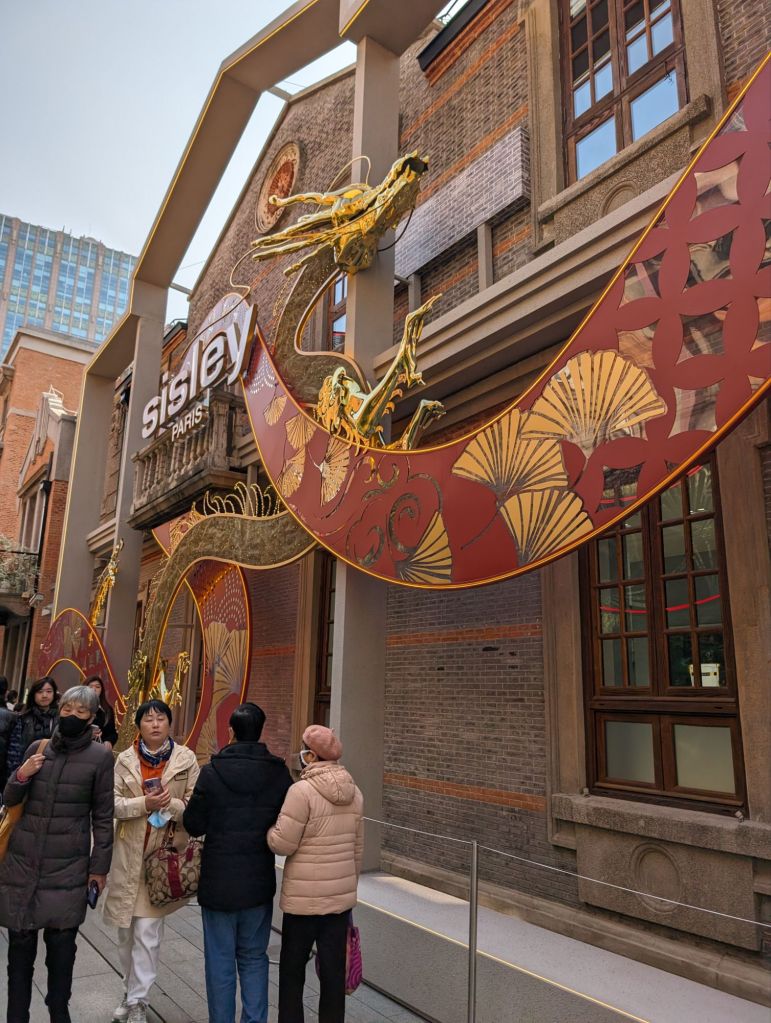
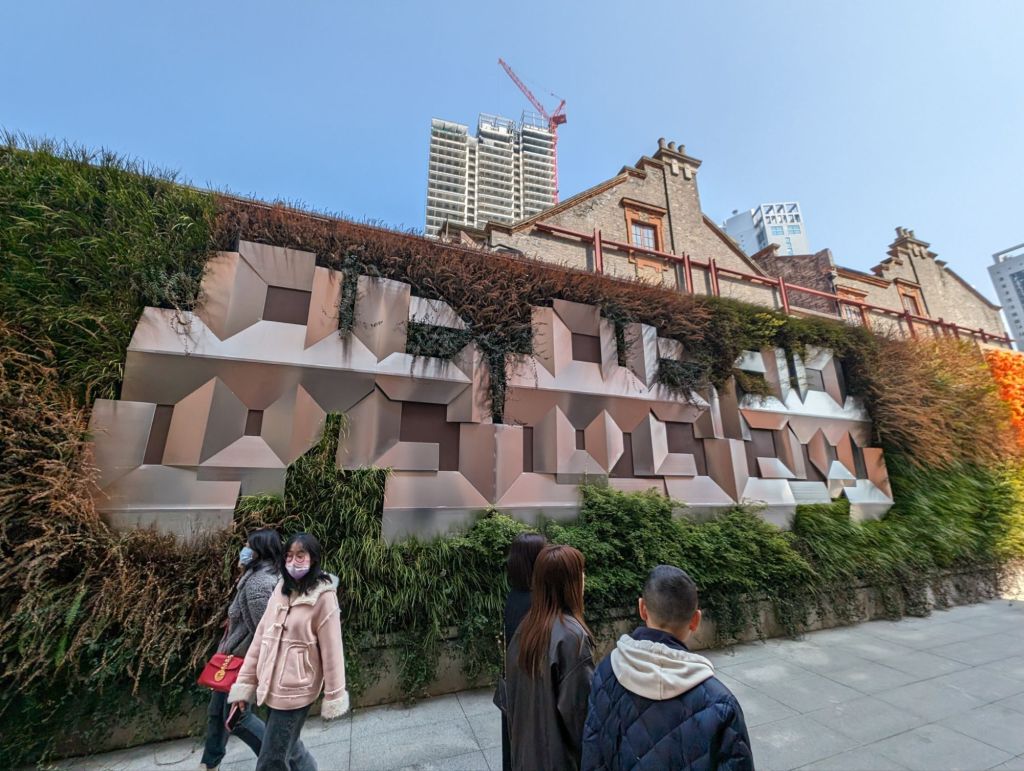
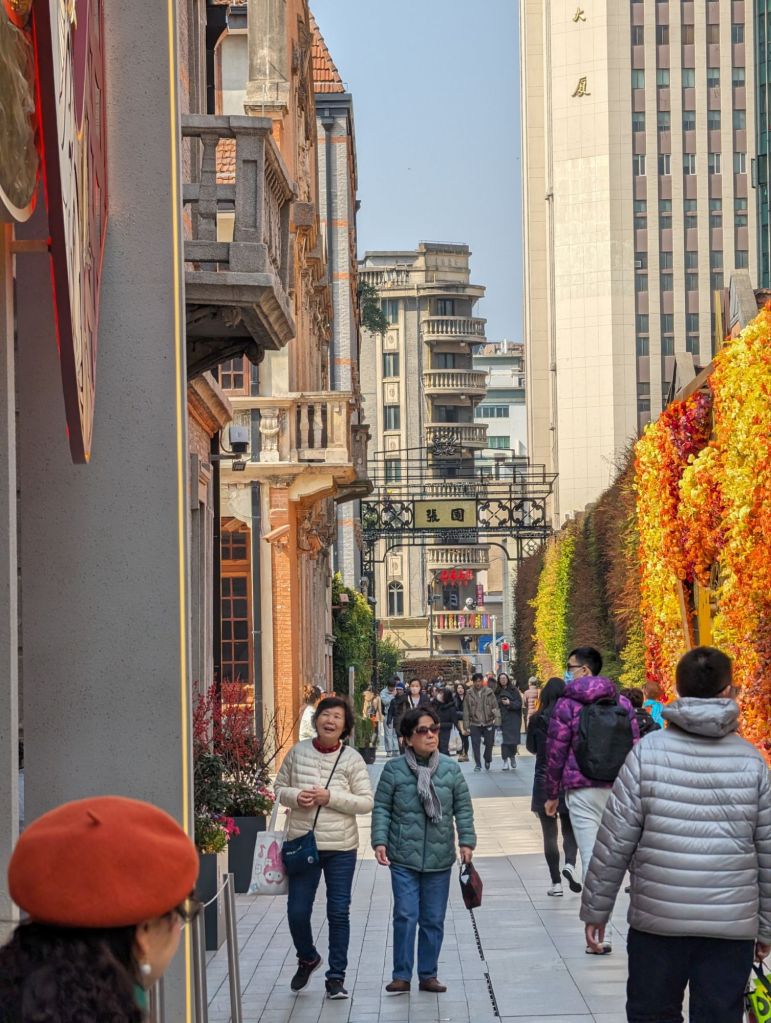
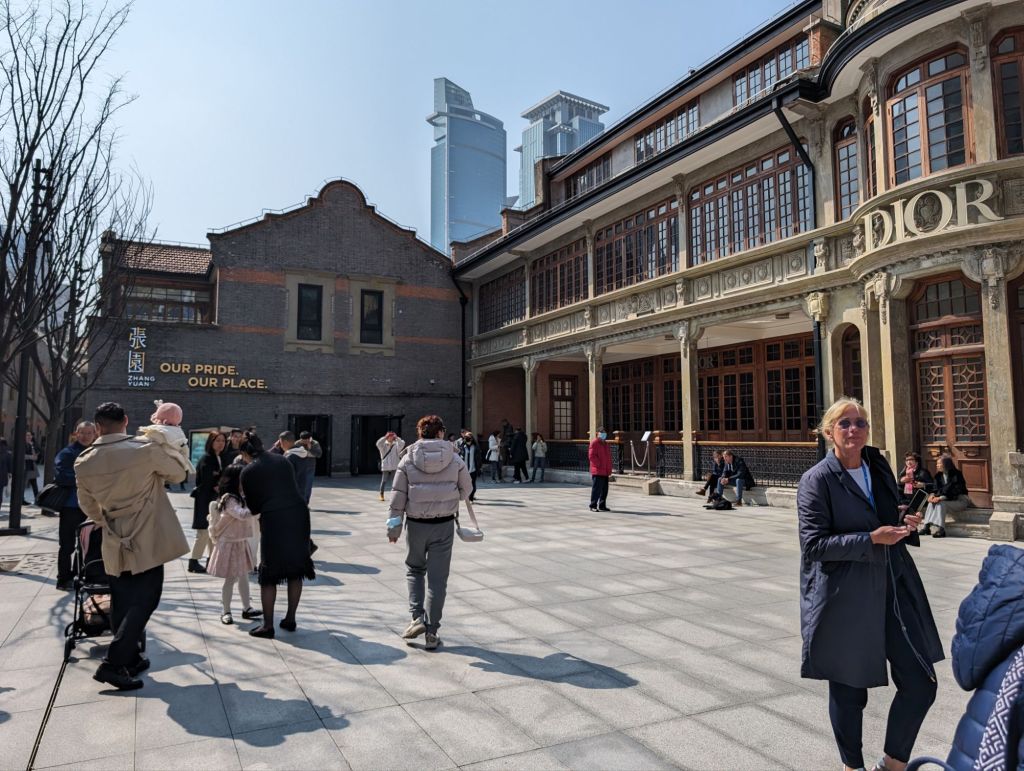
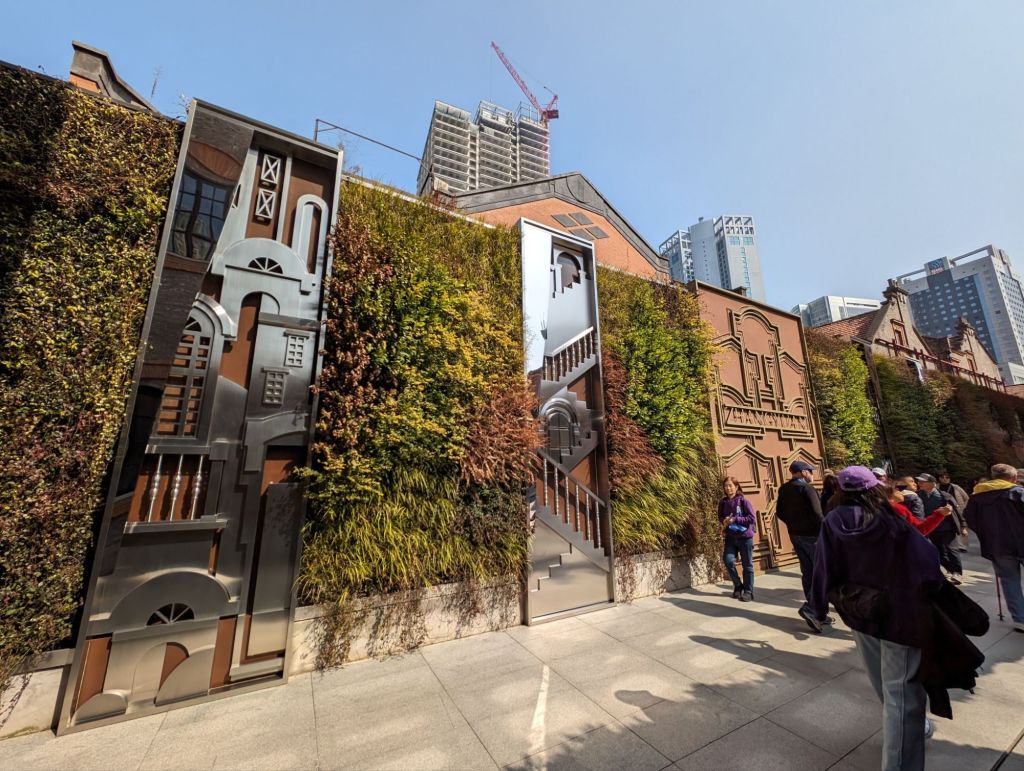
The Zhang Yuan Park was opened in 1885 as China’s first major pleasure park and the place to meet and discuss new ideas. There were fireworks, rides, performances and bike racing. It was also the first park for Chinese people in Shanghai. Remember what I said about foreign powers ruling the area? But when Zhang died in 1919, the property was sold and chopped up into housing subdivisions. The fashionable homes later became more crowded and dilapidated. In the past few years, the area has been restored to some of its past glory. Mixed in with the now rejuvenated and very pricey homes, are luxury stores and beautiful public spaces. Each narrow street and open plaza has its surprises.
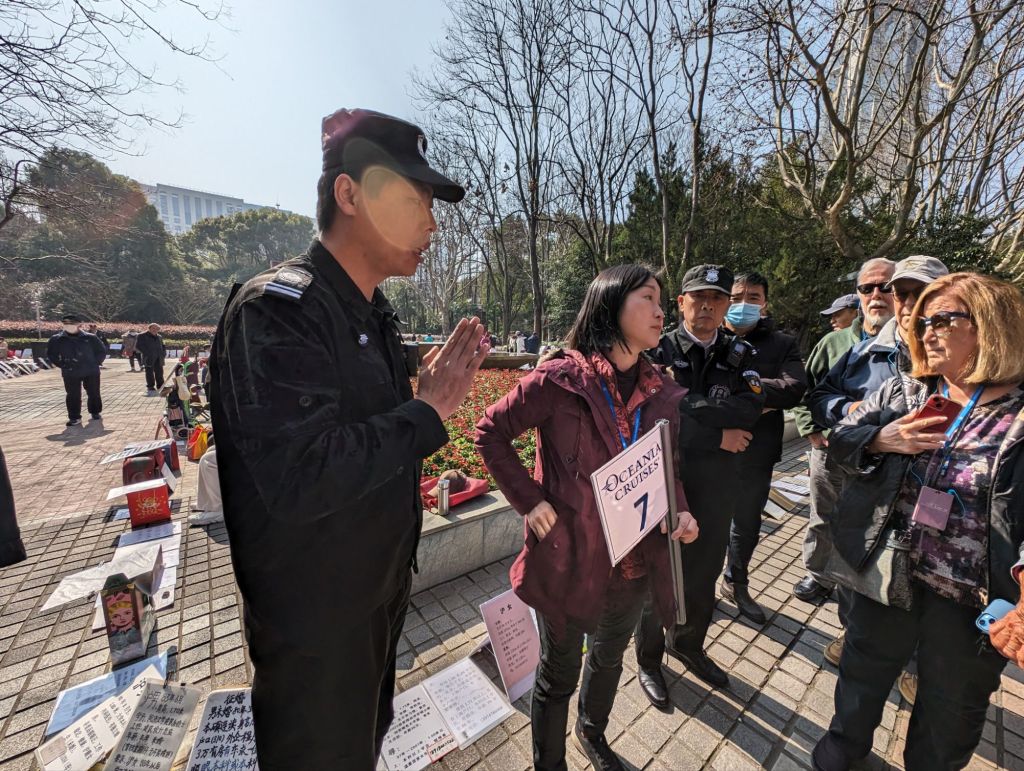
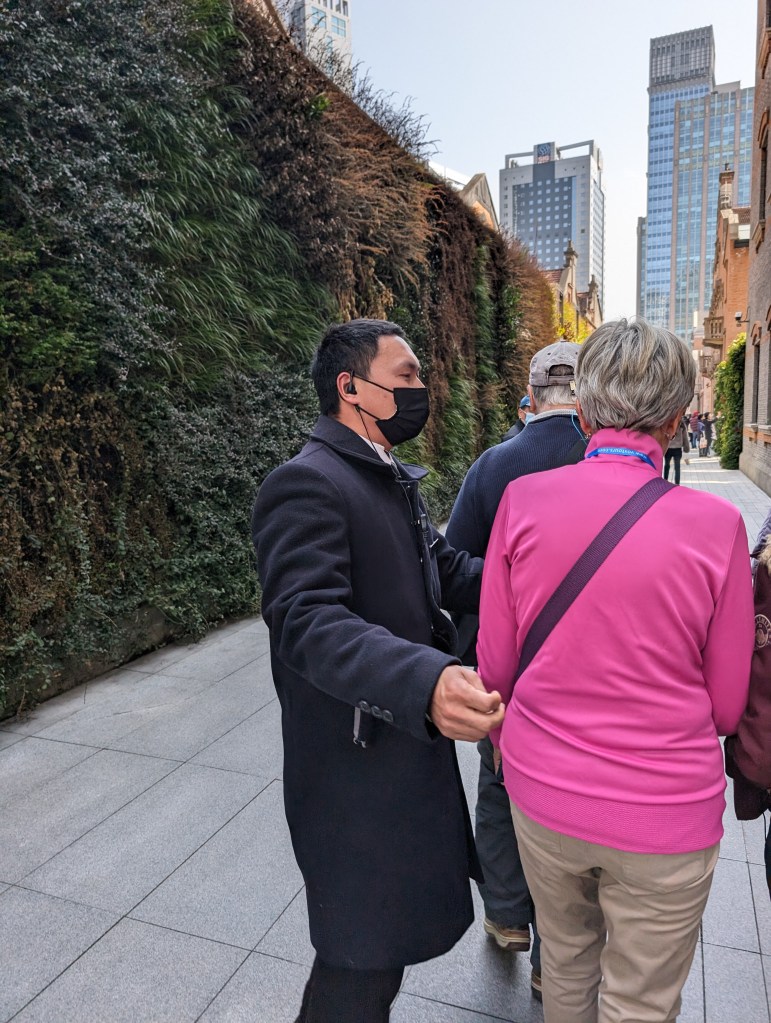
We had our second run-in of the day with an aggressive security guard as our unassuming group began to enter the park. The masked man on the left tried to physically stop members of our group after vociferously arguing with our guide about bringing us in. “Keep walking,” she told us as she sashayed past. “I don’t have to follow you,” she told the guard. “This is a public park.”
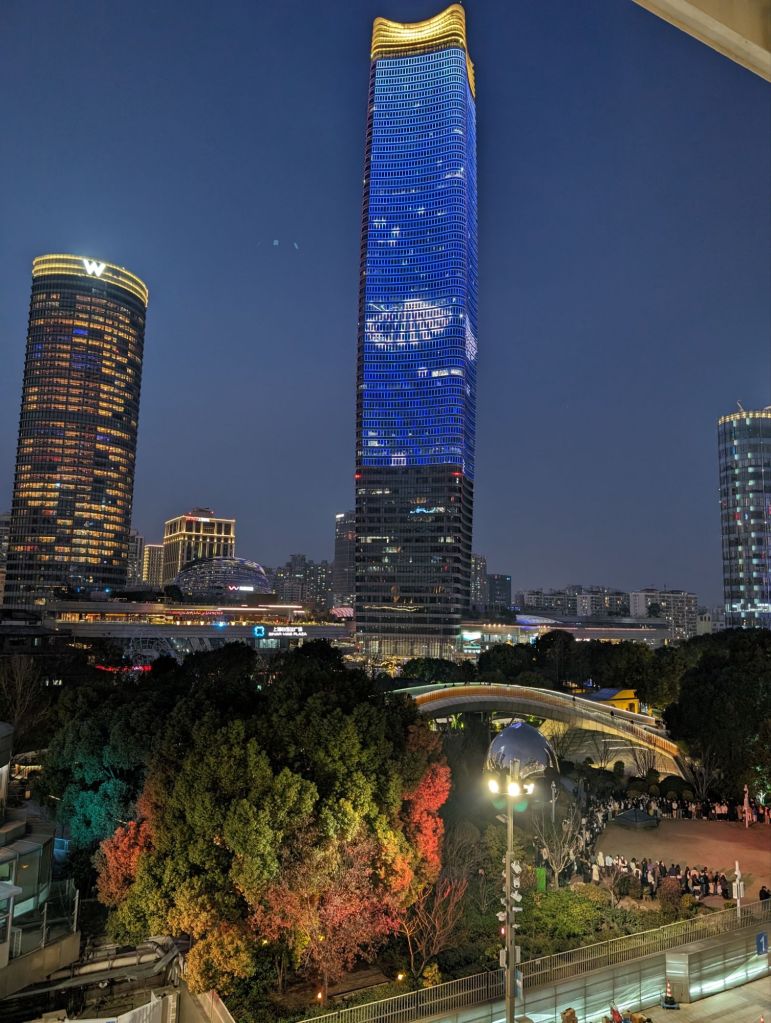
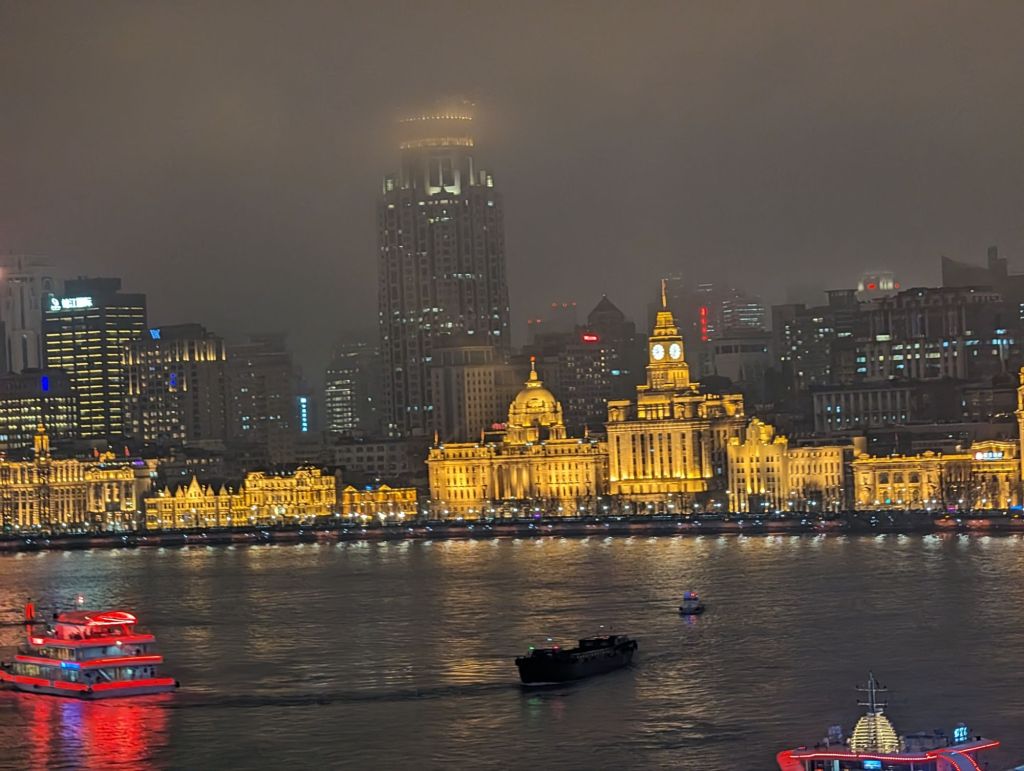
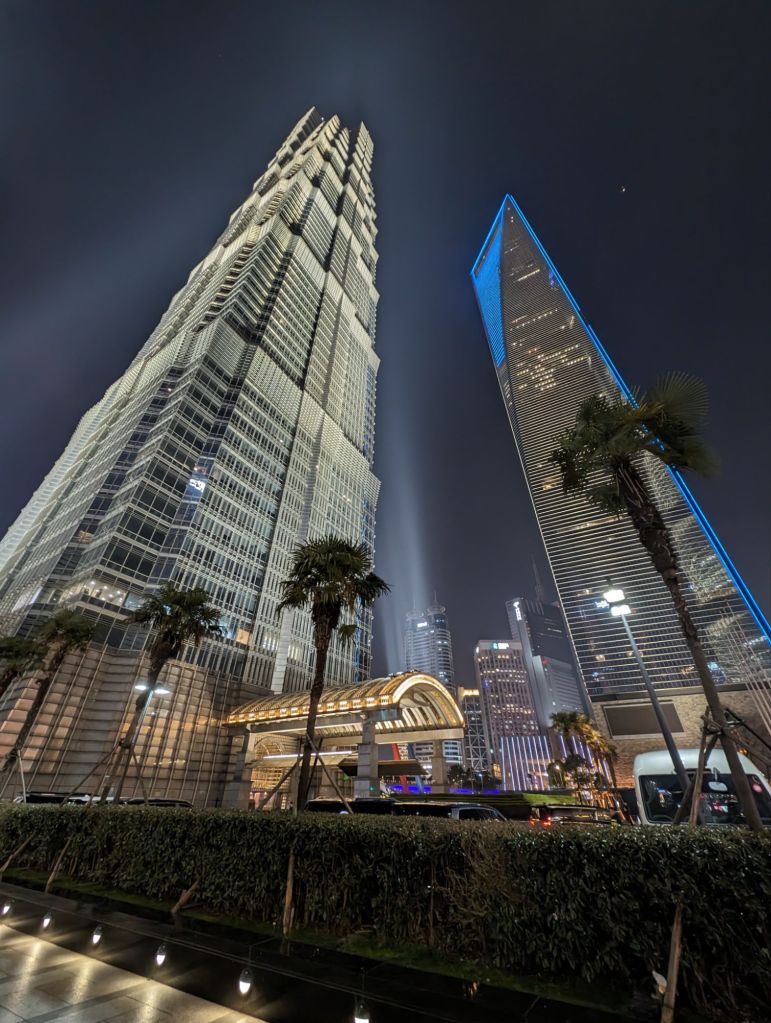
Shanghai takes on an aura of glamor at night when skyscrapers, stately old buildings, bridges and roads light up with changing and colorful patterns. We went to the observatory atop the 88-story Jin Mao Tower and soaked up the view.
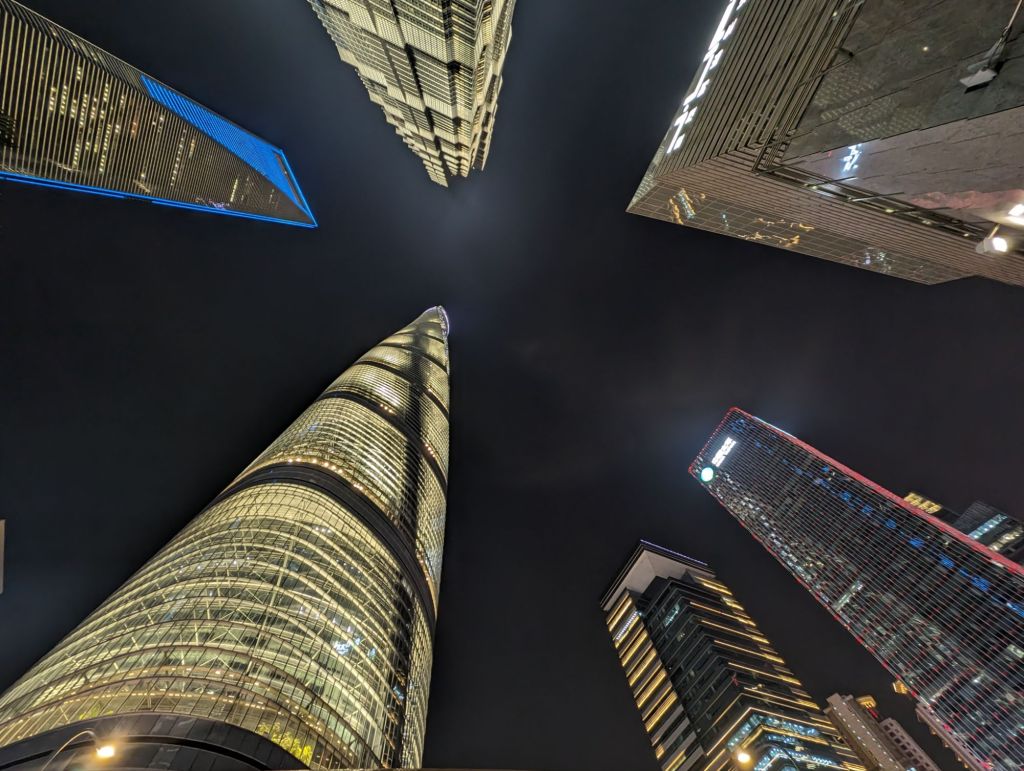
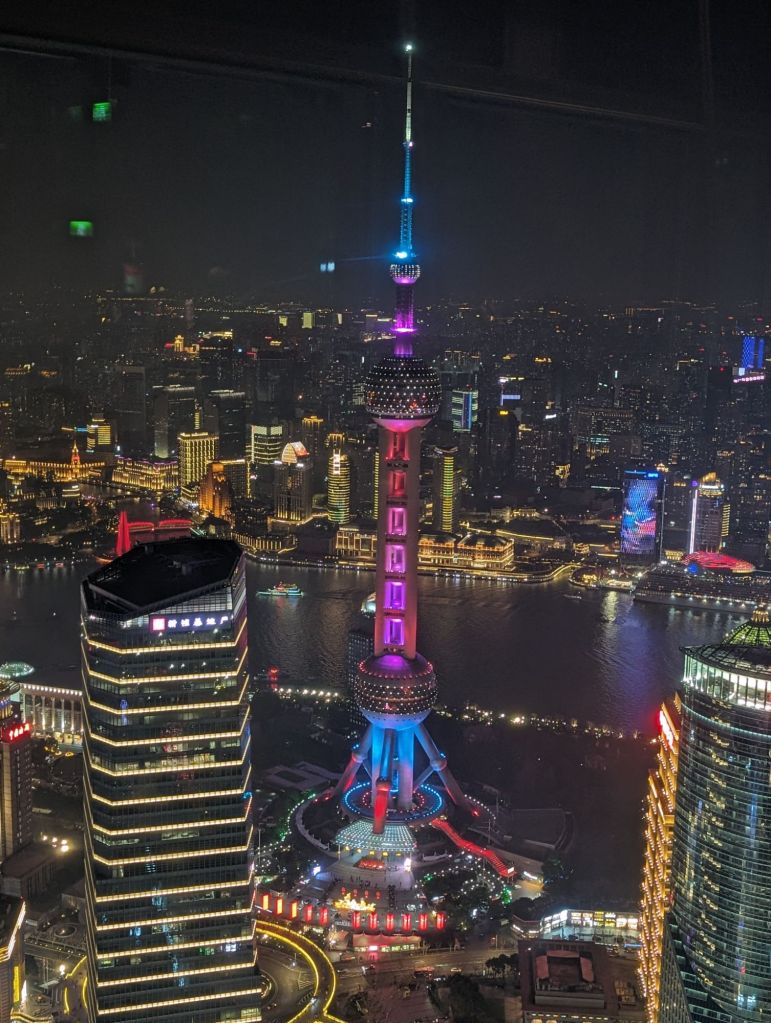
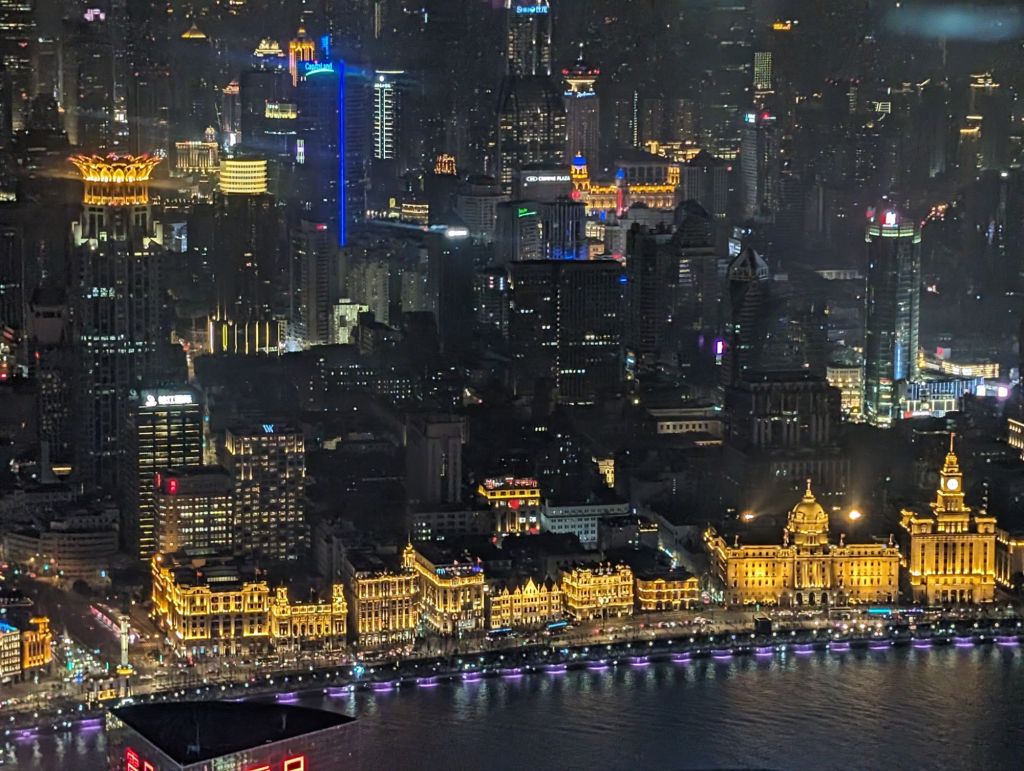
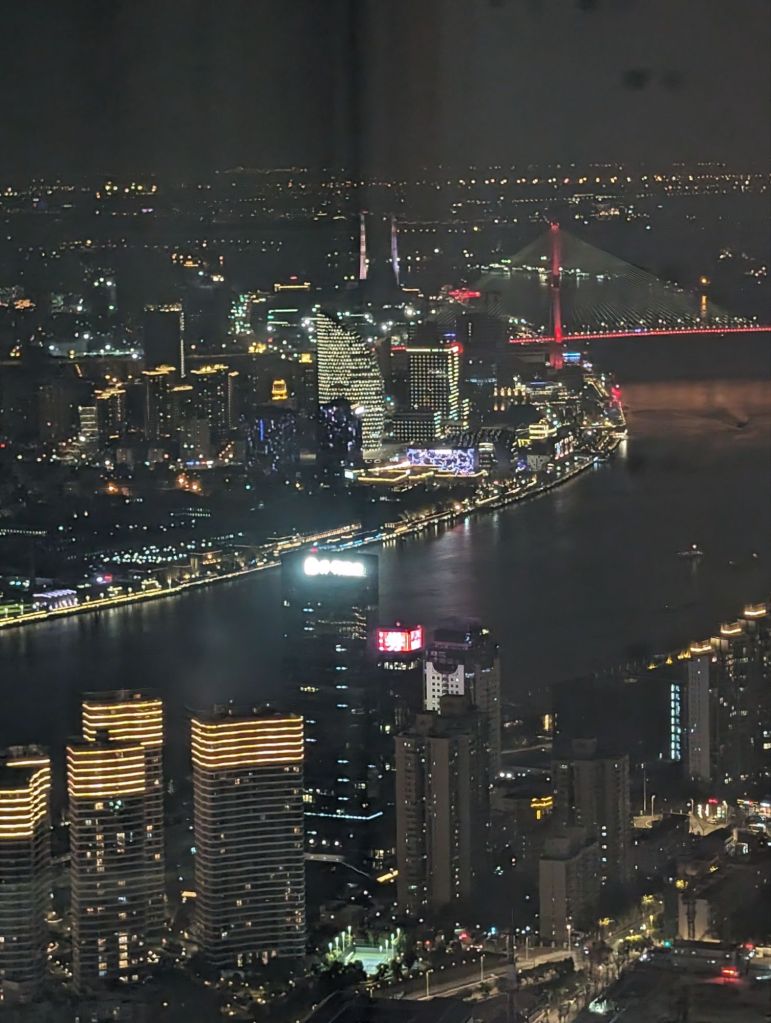
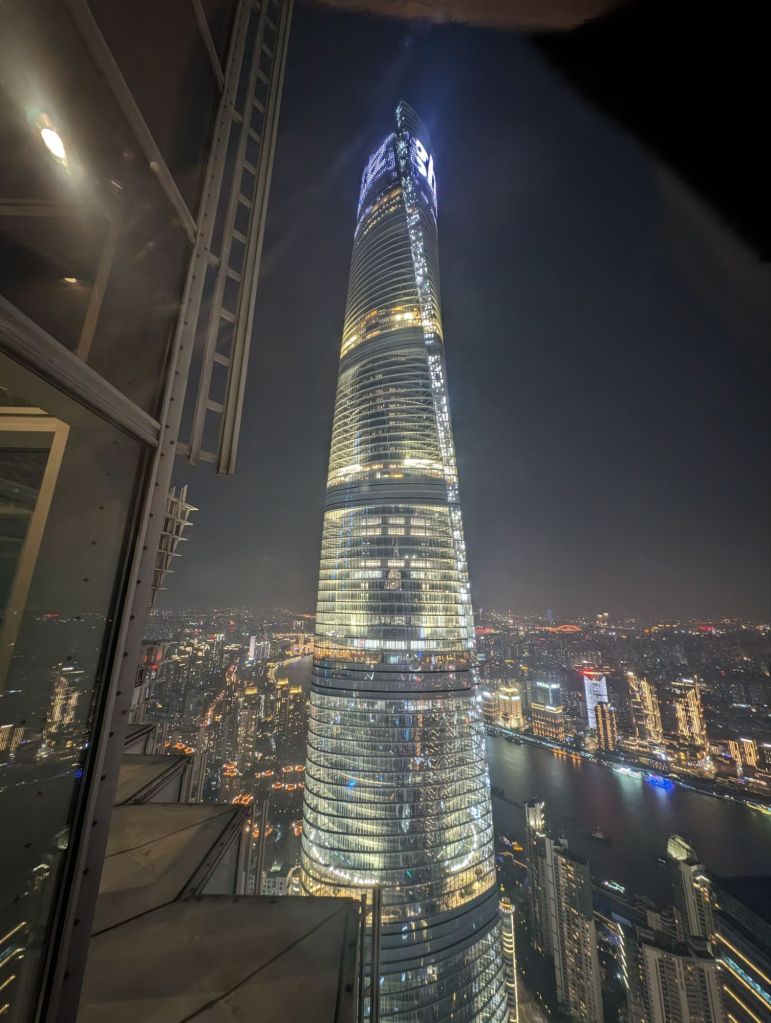
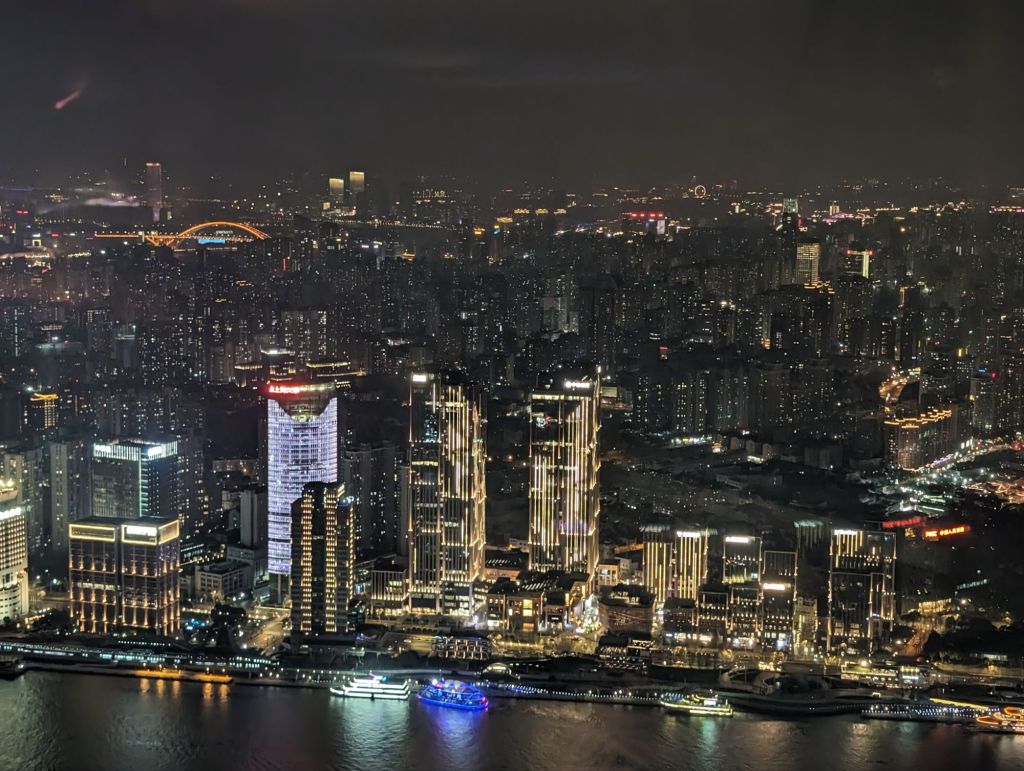
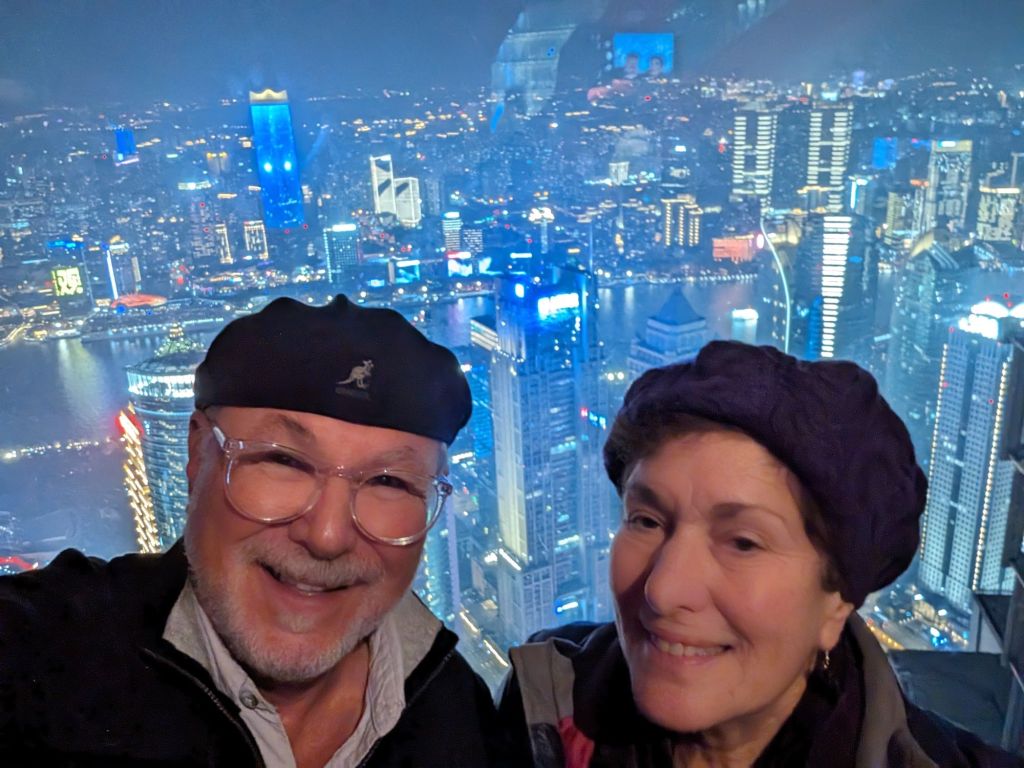
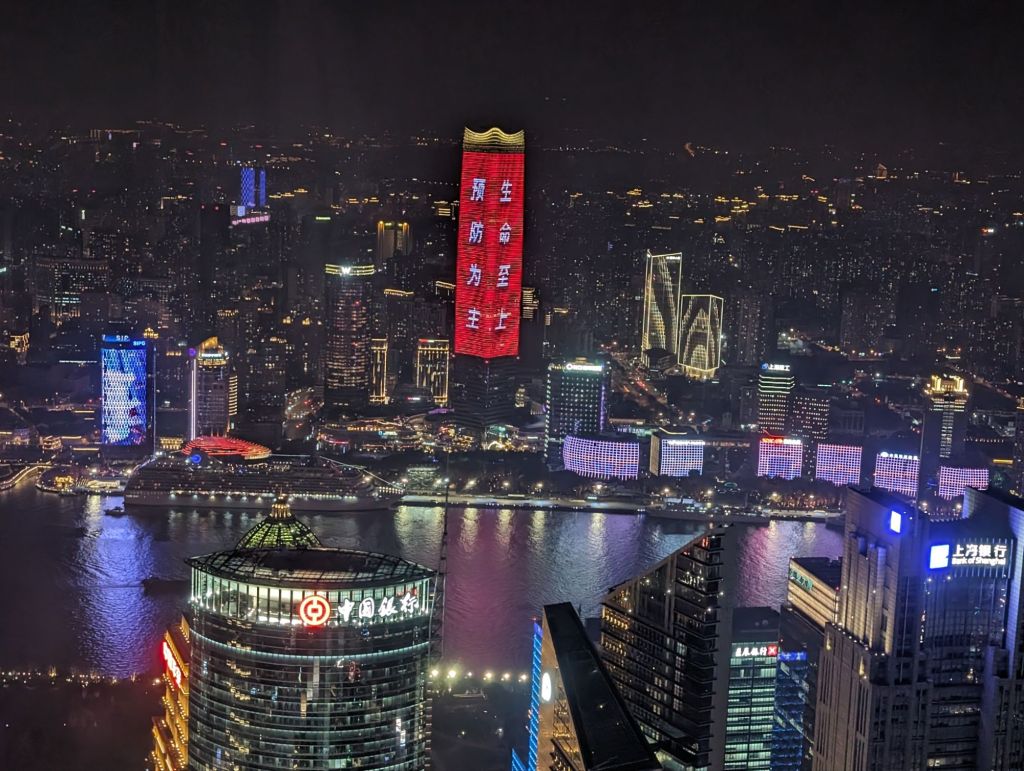
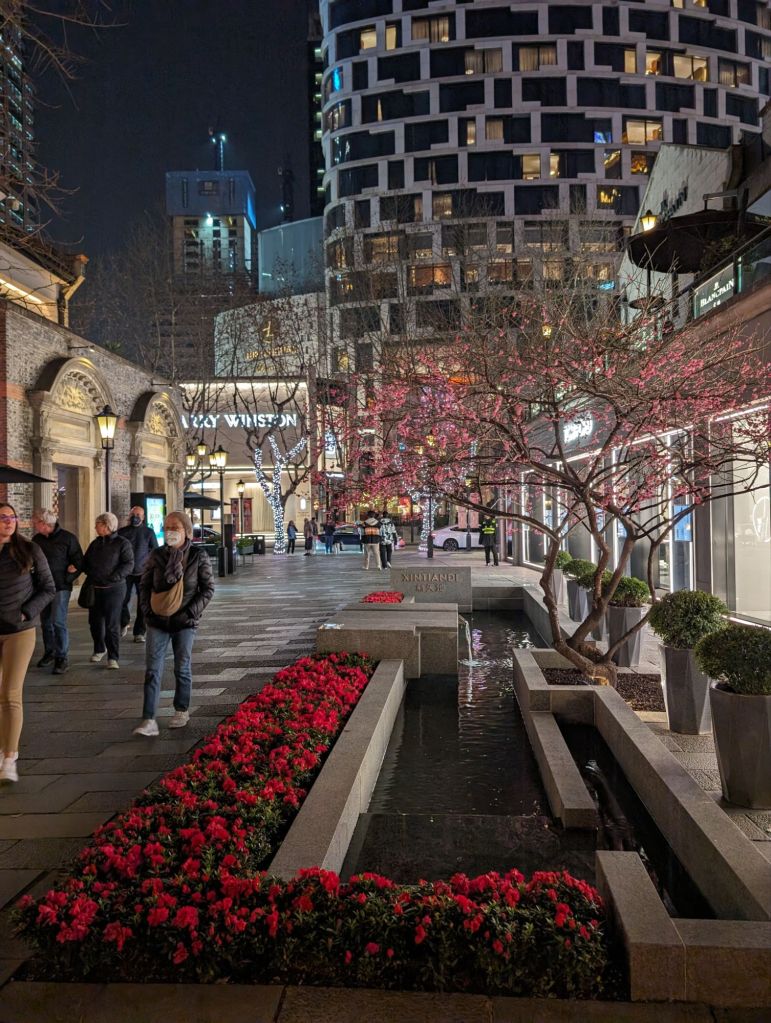
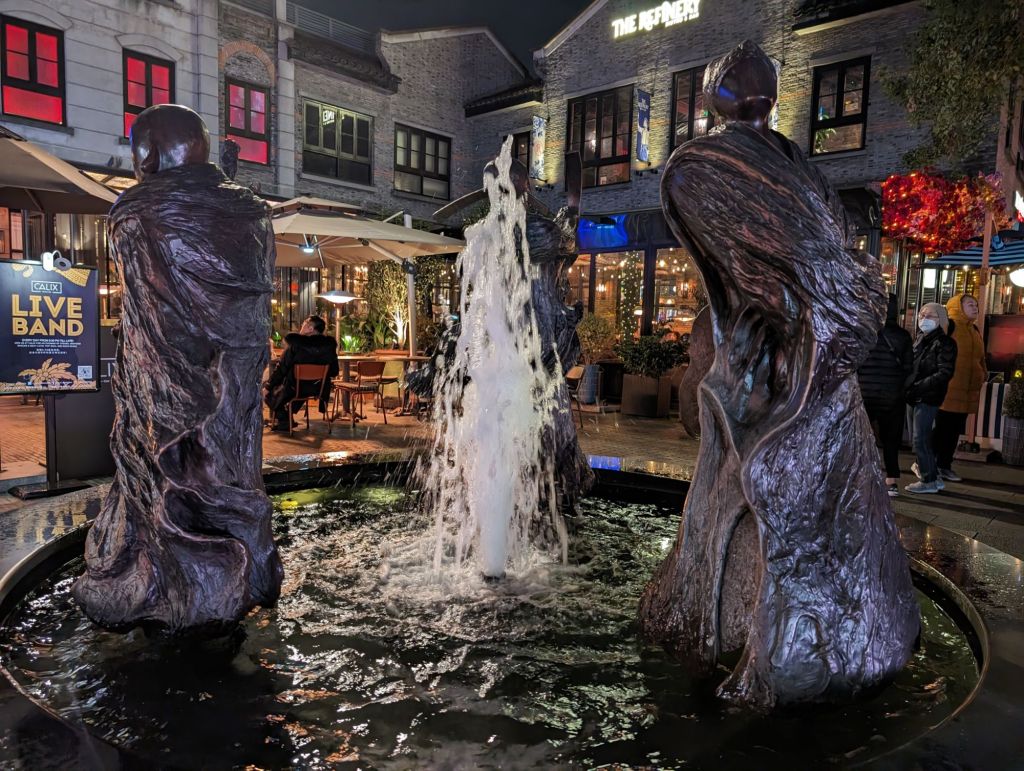
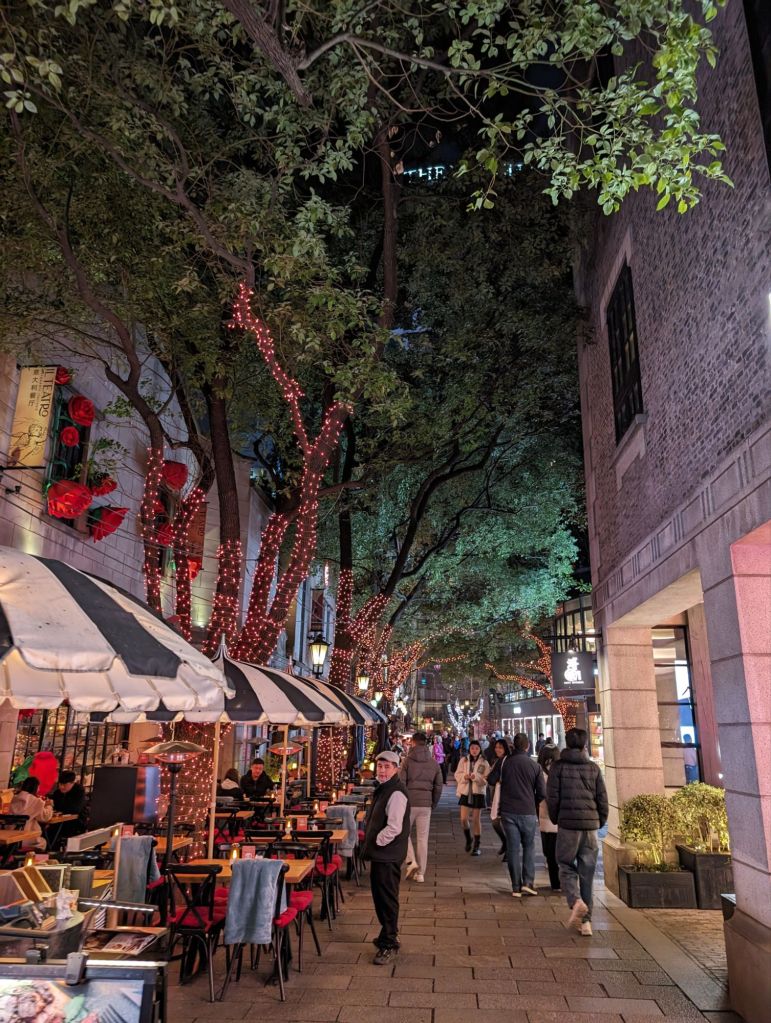
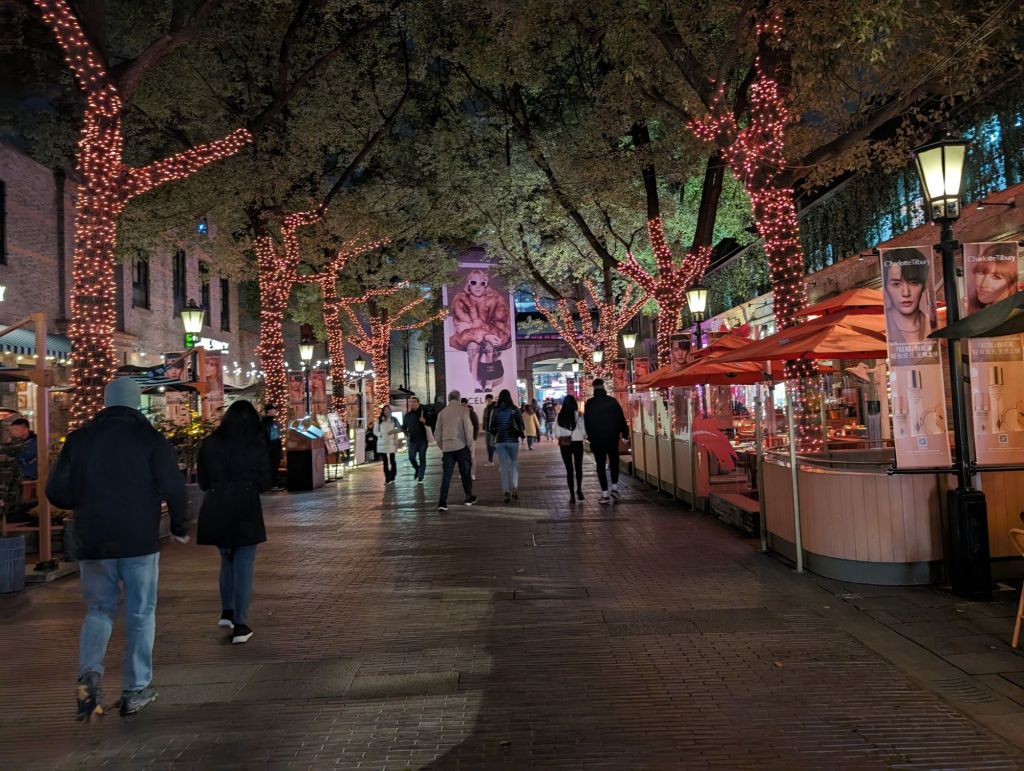
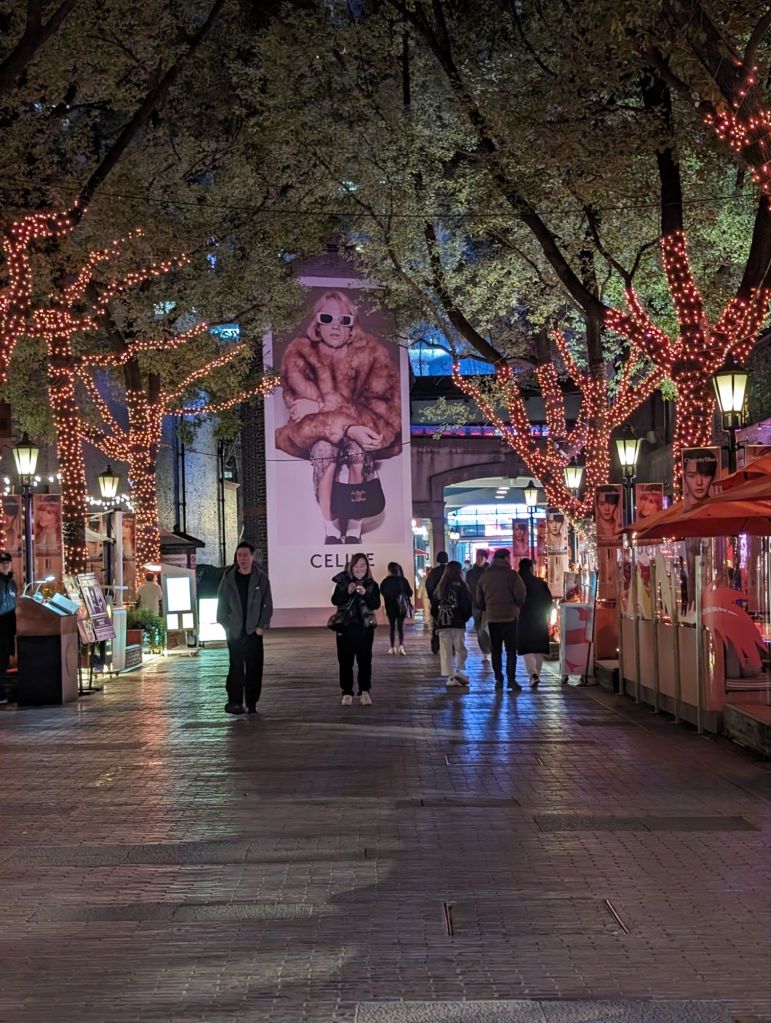
We ended our evening at one of the most trendy sections of Shanghai. This neighborhood of old buildings was redeveloped and given new life. On a Sunday night, the bars and restaurants had lots of action.
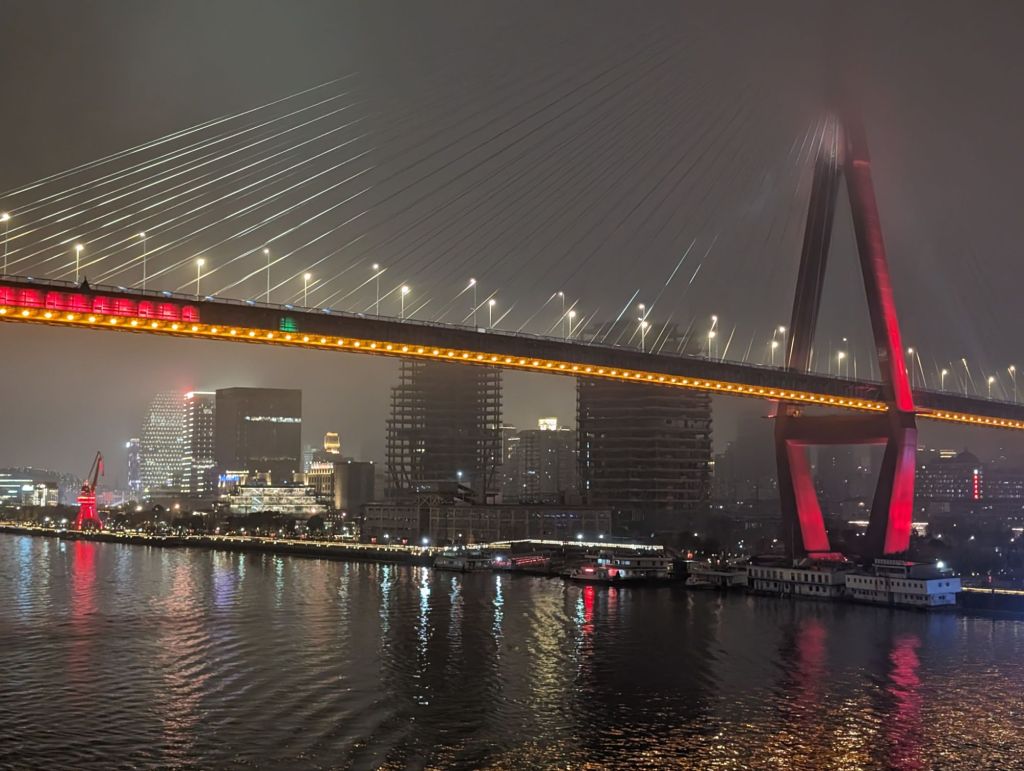
Goodbye, Shanghai. We had one last night time view as we left the harbor and sailed under the bridge. We loved getting to know you.